Boston’s real advantage over most American cities is not what is in it but what is within an hour of it. From North Station you can be in a seventeenth-century seaport in thirty minutes; from South Station you can be in Rhode Island in an hour; and there is a $10 weekend pass that makes two of those in a weekend absurdly cheap. Good day trips from Boston are unusually easy to arrange because, almost uniquely in the United States, you do not need a car to take them.
This guide covers eleven destinations, sorted by how far they are and what they are actually for, with travel times, current costs, the best time of year to go, and honest notes on which ones do not repay the journey. Prices were checked in September 2026 — confirm before you book.
Before You Choose
Three planning rules that will save you a wasted day.
A day trip costs you the whole day. Budget four hours of travel and waiting even when the timetable says ninety minutes each way, and do not schedule anything in Boston that evening. Two day trips in a three-day visit is one too many.
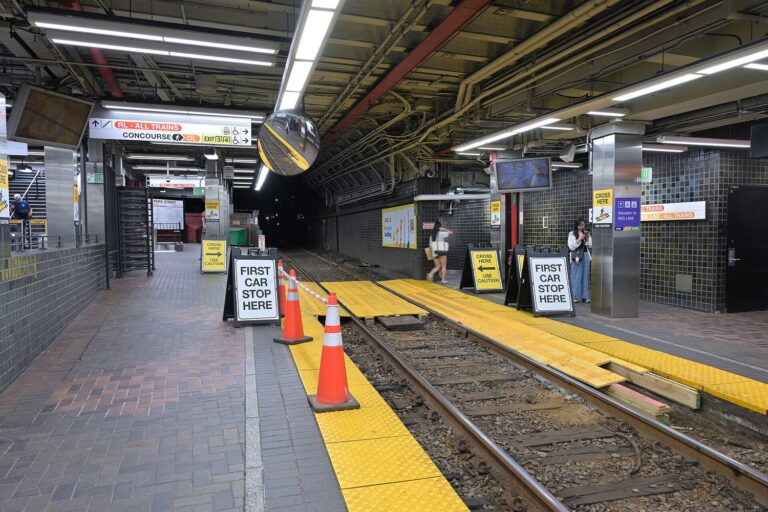
Pick your station first. North Station (Green and Orange Lines) serves everything north — Salem, Gloucester, Rockport, Newburyport, Concord. South Station (Red and Silver Lines) serves everything south and west — Plymouth, Providence, Worcester. They are a mile apart and there is no through service, so a hotel near the wrong one costs you twenty minutes at each end of the day.
Buy the weekend pass. The MBTA commuter rail weekend pass is $10 for unlimited travel on Saturday and Sunday and some holidays. If you are doing even one Saturday day trip and one short Sunday hop, it has paid for itself. It is the best transport bargain in New England and very few visitors know about it.
The Best Day Trips, Ranked by What They Are For
1. Salem — for history and one very good museum
Getting there: commuter rail from North Station, about 30 minutes.
Give it: a full day.
Salem is two towns wearing the same coat. One is a serious historic seaport that was, briefly, one of the richest cities in America on the back of the China trade, and whose museum is genuinely world class. The other is a Halloween theme park built on the deaths of twenty people in 1692.
The good half first. The Peabody Essex Museum is $20 for adults, $18 for seniors, $12 for students, and free for anyone 16 and under and for Salem residents with ID — extraordinary value for a museum of this quality. Its Asian export art collection is the best in the country, and it contains Yin Yu Tang, a Qing dynasty merchant’s house dismantled in Anhui province, shipped across the Pacific and rebuilt on site. That alone justifies the fare.
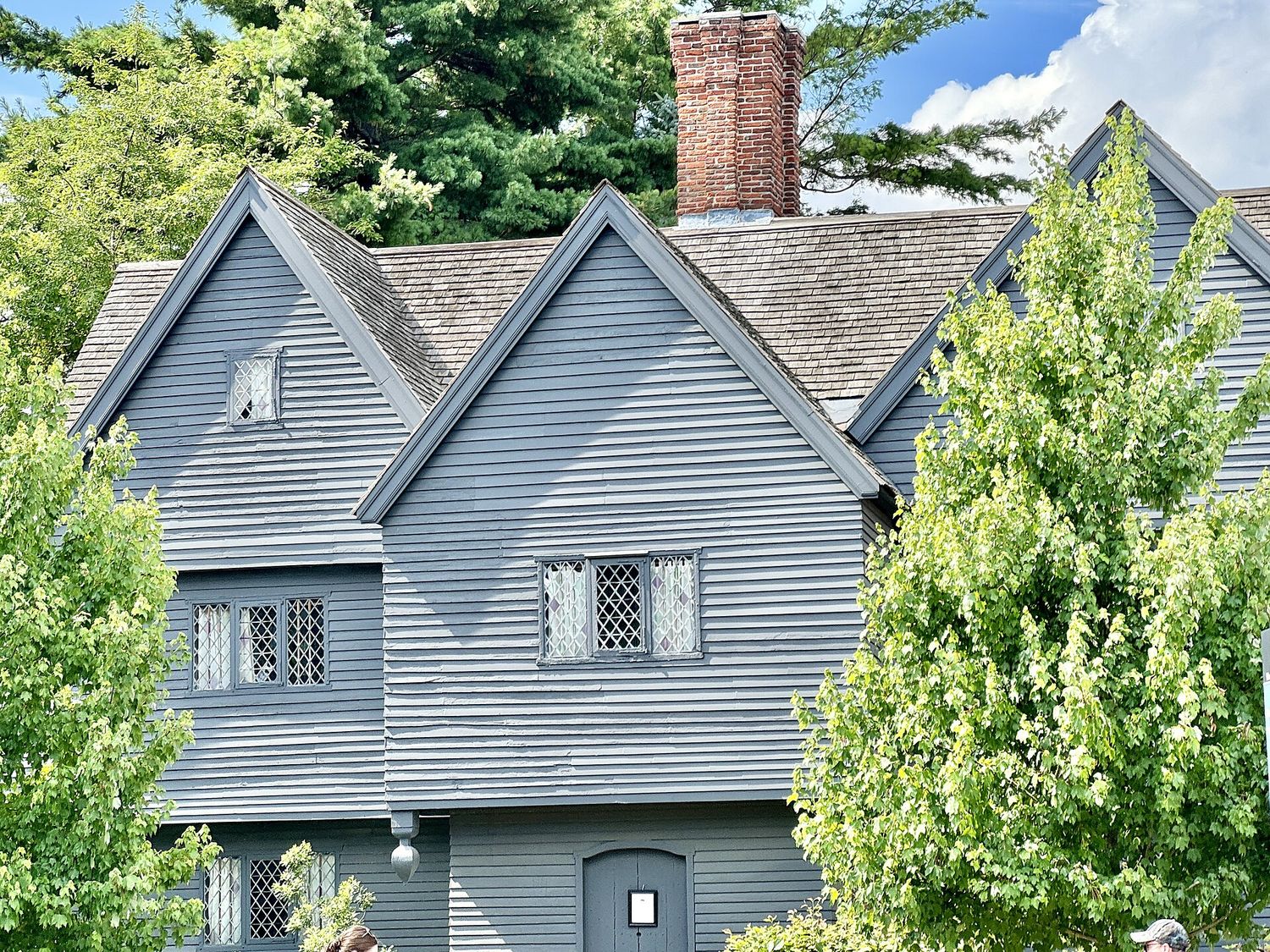
Then the trials. The Witch House on Essex Street was the home of Jonathan Corwin, one of the judges, and is the only building still standing with a direct connection to 1692. The Salem Witch Trials Memorial, beside the Old Burying Point, is a quiet stone enclosure with the victims’ names and their last recorded words cut into the benches. It is the most affecting thing in town and it costs nothing.
The honest verdict: the commercial “witch museums” and haunted attractions along Essex Street are, with few exceptions, poor. They are dark rooms with mannequins and a recorded voice, and several charge close to twenty dollars. Twenty people were hanged or pressed to death here on the evidence of hysteria and property disputes, and the fairground version sits badly against the memorial two hundred yards away.
Timing matters more here than anywhere. Salem runs Haunted Happenings across the whole of October, with a grand parade on the first, and the town becomes genuinely overwhelmed — the MBTA lays on extra weekend trains and the streets are shoulder to shoulder. Go in October only if the crowd is the point. Go in May or September and you get the same town, the same museum, and room to move.
2. Lexington and Concord — for the Revolution
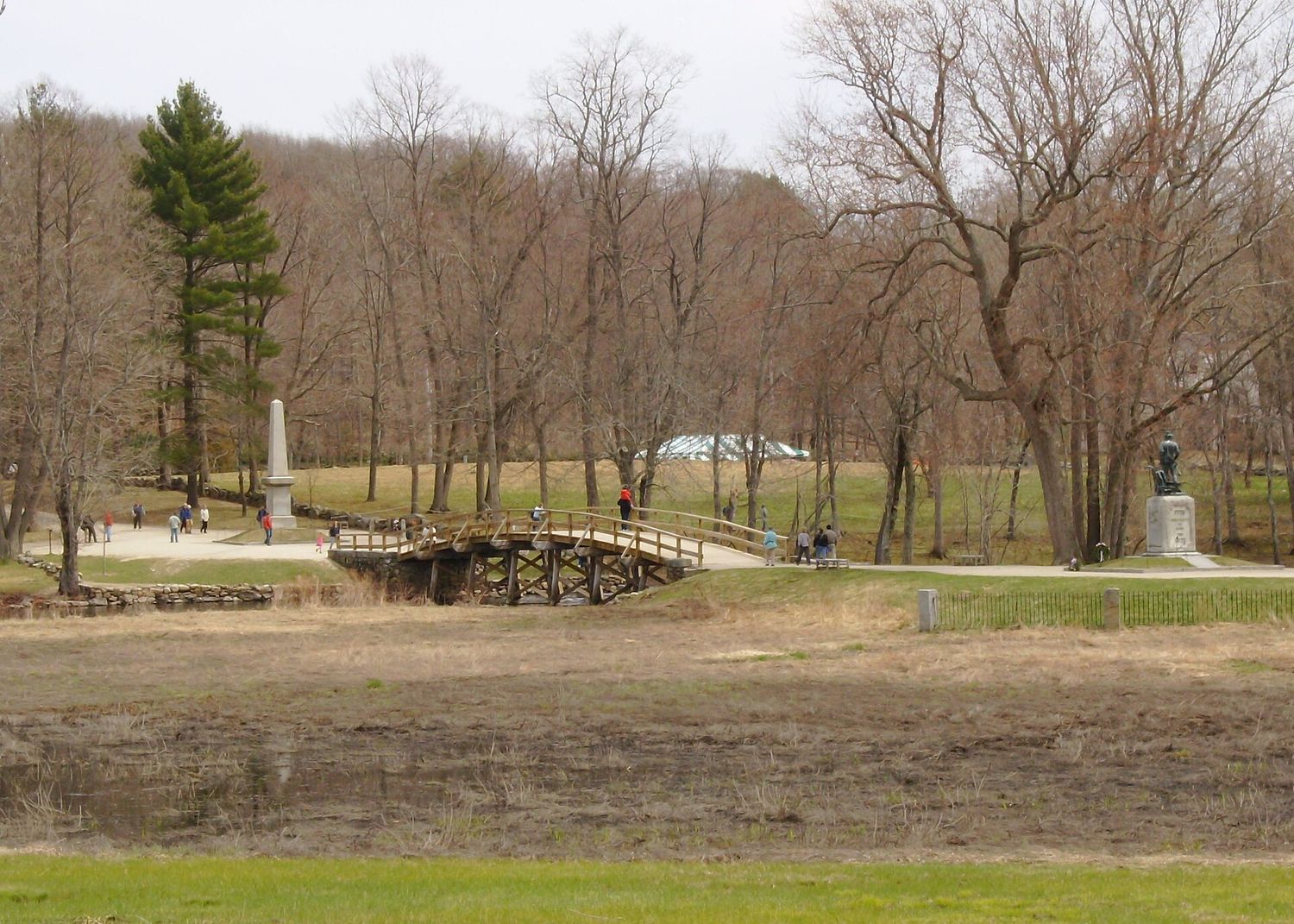
Getting there: commuter rail from North Station to Concord, about 40 minutes. Lexington has no train — bus from Alewife, or drive.
Give it: a full day.
This is where the shooting started. On 19 April 1775 British regulars marched out of Boston to seize colonial munitions, met militia on Lexington Green at dawn, and were then fought back along the road from Concord in a running engagement that lasted all day. Minute Man National Historical Park preserves five miles of that road, free and run by the National Park Service, and walking a stretch of it does something no museum can — you can see the stone walls the militia fired from.
The Old North Bridge in Concord is the set piece, with Daniel Chester French’s Minute Man statue on one bank and the obelisk on the other. It is a reproduction bridge on the original site, and it is still moving.
Concord itself has an extraordinary second life as the center of American literary Transcendentalism. Within a couple of miles: Louisa May Alcott’s Orchard House, where Little Women was written; Emerson’s house; the Old Manse; Sleepy Hollow Cemetery, where Emerson, Thoreau, Hawthorne and Alcott are buried along one ridge locals call Authors’ Ridge; and Walden Pond, where Thoreau built his cabin in 1845. Walden is a state reservation with a swimming beach, a replica cabin and a strict parking limit that fills early on summer weekends.
The honest verdict: this is the one day trip where a car genuinely helps, because the sites are spread across two towns. Without one, take the train to Concord and do Concord properly rather than trying to do both.
3. Rockport and Cape Ann — for the coast
Getting there: commuter rail from North Station, about an hour.
Give it: a full day, or half plus Gloucester.
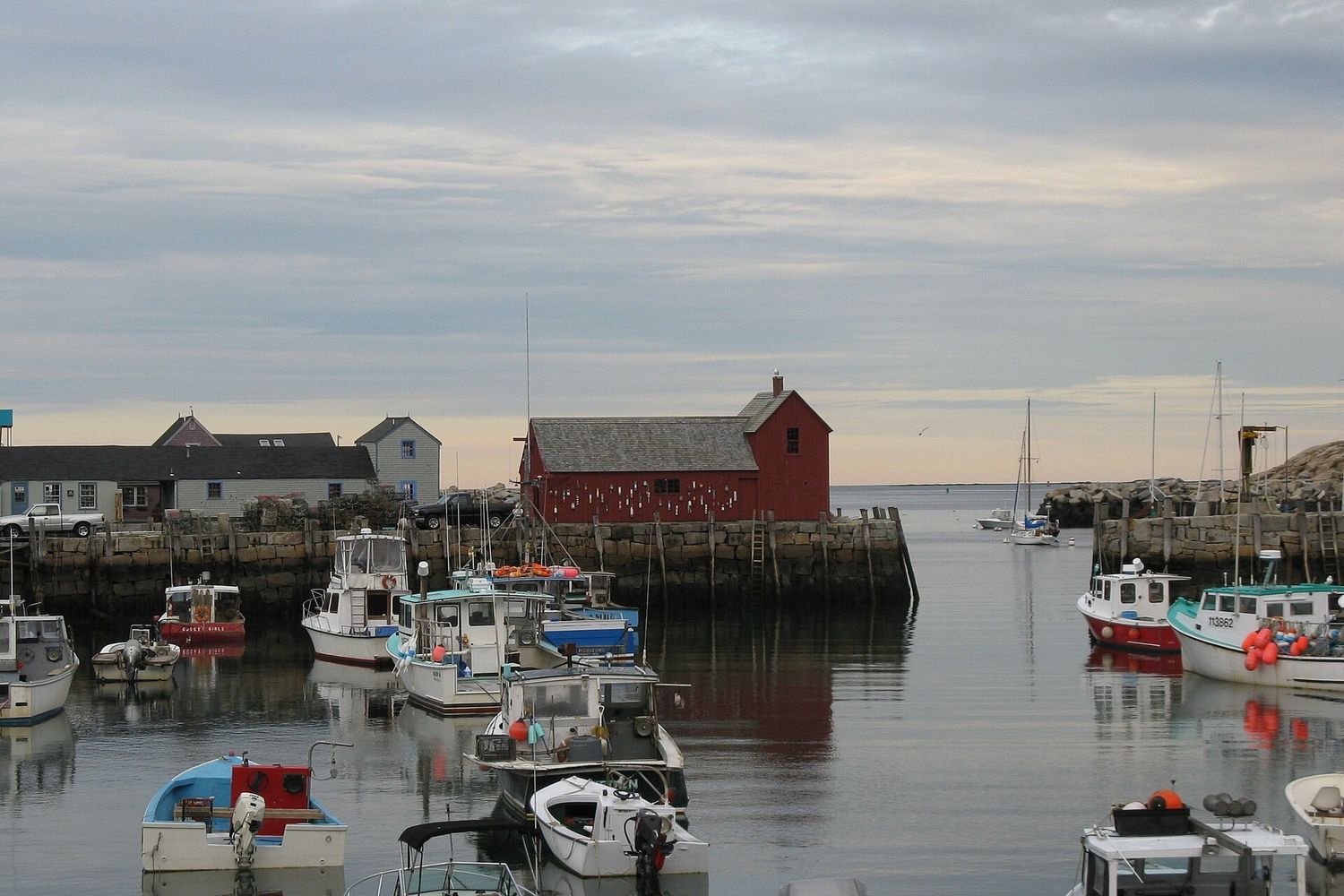
The Rockport line ends about a hundred yards from a working harbor full of lobster boats, which is a rare and lovely thing. Bearskin Neck is a spit of granite covered in fishing shacks converted into galleries and chowder counters, and at the end of it sits Motif No. 1, a red shed on Bradley Wharf that is claimed — plausibly — to be the most-painted building in America.
Gloucester, one stop earlier, is the more substantial town: America’s oldest working fishing port, the Fishermen’s Memorial on Stacy Boulevard commemorating the thousands lost at sea, Good Harbor Beach, and the Cape Ann Museum. Halibut Point State Park at the northern tip has an abandoned granite quarry and the open Atlantic behind it.
Cape Ann is also where American marine painting happened. Fitz Henry Lane, the luminist painter of Gloucester harbor, worked from a stone house on the waterfront that still stands, and Winslow Homer, Edward Hopper and Marsden Hartley all painted here. The Cape Ann Museum holds the largest collection of Lane’s work anywhere, which is a genuinely serious reason to choose Gloucester over Rockport if you have to pick one.
The honest verdict: best from June to October. Out of season, Rockport half-closes and the wind off the water is serious. Note that Rockport was a dry town for well over a century and only changed relatively recently, so licensing is still patchier than you might expect.
4. Plymouth — for the Pilgrim story, told carefully
Getting there: commuter rail from South Station, about an hour, then a bus or a walk into the center.
Give it: a full day.
Let us deal with the Rock first: it is a piece of granite, about the size of a large suitcase, sitting in a hole under a Greek-revival portico on the waterfront, and there is no contemporary evidence anyone stepped on it. It is one of the great anticlimaxes in American tourism and it takes ninety seconds.
Everything else is much better. Plimoth Patuxet Museums is a living-history site where interpreters work a recreated 1620s English village while, next door, the Historic Patuxet Homesite is staffed by Native people presenting Wampanoag life from their own perspective rather than in costume — which makes it one of the more thoughtful history museums in the country. The all-sites ticket, covering the village, the homesite, the craft center, the Mayflower II and the Grist Mill, is $46 for adults, $41.40 for seniors and $29 for children; partial combinations start around $35.
The honest verdict: Plimoth Patuxet is a significant expense for a family and it needs three or four hours to be worth it. If you are only going to skim it, do not go — spend the day in Salem instead.
5. Providence — for a city that is not Boston
Getting there: commuter rail or Amtrak from South Station, about an hour.
Give it: a full day.
An hour south is a different state and a genuinely handsome small city: Benefit Street’s mile of preserved colonial and Federal houses, the RISD Museum, Brown University’s campus, and Federal Hill, an Italian-American neighborhood that gives the North End real competition on food. The Rhode Island State House has one of the largest self-supporting marble domes in the world.
Providence works particularly well as a contrast day. Boston is a walking city with a colonial core; Providence is a hill town with a river running through the middle of it and a distinctly different accent, food and civic personality. It also has a serious dose of American Gothic — H. P. Lovecraft was born, lived and is buried here, and the streets around Benefit Street are recognizably the ones his stories describe.
If your dates line up with a summer or fall WaterFire night — braziers lit along the rivers running through the middle of downtown, with music, from dusk — rearrange your plans and go. It is one of the best public art events in America and it is free.
6. Portsmouth and the New Hampshire coast
Getting there: no direct commuter rail; Amtrak’s Downeaster from North Station to Dover or Exeter, or a coach, about 90 minutes.
Give it: a full day.
A small, beautifully preserved eighteenth-century port on the Piscataqua River, with Strawbery Banke, an outdoor museum of houses from the 1690s to the 1950s on their original sites, and an excellent restaurant scene for a town of 22,000. Quieter and less packaged than Salem, and one of the more rewarding trips if you have already done the obvious ones.
7. Cape Cod and Provincetown — for the beach
Getting there: seasonal fast ferry from Boston to Provincetown, roughly 90 minutes, or a long drive.
Give it: a full day, and check the ferry season.
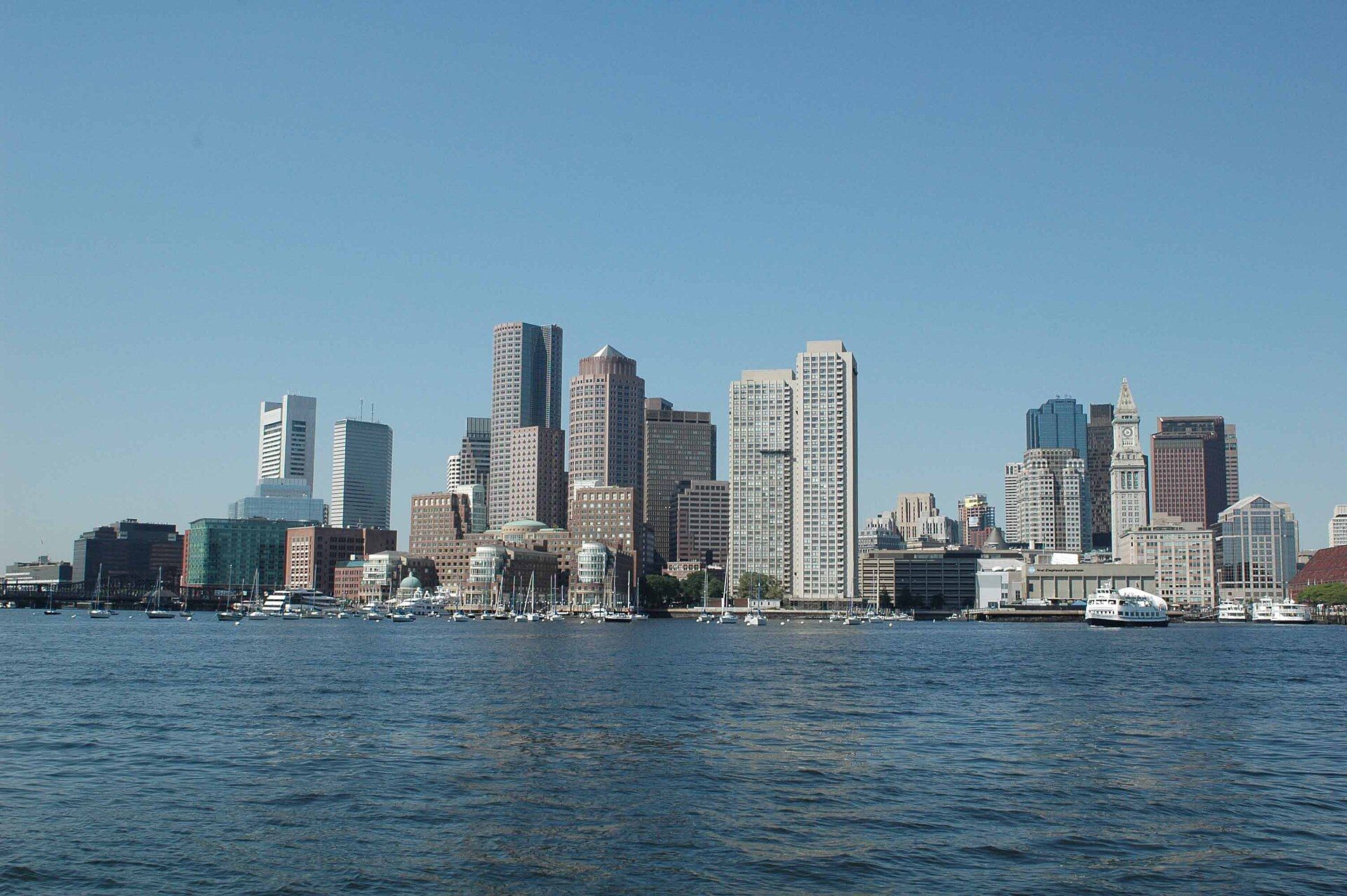
Provincetown, at the very tip of the Cape, is the one Cape town that works as a day trip because the ferry lands you in the middle of it. Commercial Street, the dunes of the Province Lands, the Pilgrim Monument, and the oldest continuously operating art colony in America. It has been a landmark LGBTQ+ resort town for decades and the summer season is genuinely joyful.
The honest verdict: driving to the Cape on a summer Friday or back on a Sunday is a special kind of misery — the bridges across the canal are the bottleneck for the entire peninsula and delays of two hours are routine. Take the ferry or do not go.
8. Newport, Rhode Island — for the Gilded Age
Getting there: no direct rail; commuter rail to Providence then a bus, or drive, about two hours.
Give it: a full day, ideally with a car.
The summer cottages of the Vanderbilts and their peers, built in the 1890s at a scale that has to be seen to be understood, plus the Cliff Walk, a 3.5-mile public path running between the mansion lawns and the open Atlantic. It is free, and it is the single best coastal walk in New England. Newport also holds the oldest synagogue building in the United States, Touro Synagogue of 1763.
The honest verdict: the hardest of these to reach without a car, and the mansion tickets add up quickly. Worth it, but plan it as an overnight rather than a day trip if you can.
9. Portland, Maine — for lobster and a working waterfront
Getting there: Amtrak Downeaster from North Station, about 2.5 hours.
Give it: a long day, or better, an overnight.
Two and a half hours each way is a lot for a day trip, and Portland deserves more than the four hours you would have there. But the Old Port’s cobbled streets, the working fishing wharves, Portland Head Light at Cape Elizabeth and one of the best food scenes per capita in the country make it a strong contender if you have a spare day and like trains.
10. Newburyport and Plum Island — for birds and quiet
Getting there: commuter rail from North Station, about 70 minutes.
Give it: a half or full day.
A well-preserved Federal-era seaport at the mouth of the Merrimack, with a compact brick downtown and, just offshore, the Parker River National Wildlife Refuge on Plum Island — a barrier island of dunes and salt marsh that is one of the best birding sites on the East Coast, particularly during spring and fall migration. Almost no tourists.
11. Worcester and the Blackstone Valley
Getting there: commuter rail from South Station, about 80 minutes.
Give it: a half day.
Included honestly rather than enthusiastically. The Worcester Art Museum is genuinely good and holds an important arms and armor collection acquired from the former Higgins Armory. The rest of the city is a working post-industrial New England town in the middle of a long recovery. Go for the museum; do not expect a day out.
12. Lowell — for the Industrial Revolution
Getting there: commuter rail from North Station, about 45 minutes.
Give it: a half or full day.
The most underrated day trip on this list, and the one most likely to surprise you. Lowell was built from nothing in the 1820s as America’s first large planned industrial city — a system of canals diverting the Merrimack to drive textile mills, staffed initially by young women recruited from New England farms who lived in company boarding houses and produced their own literary magazine. It was, for a while, the most-visited industrial site in the world; Dickens came in 1842 and wrote about it.
Lowell National Historical Park runs the site, and the Boott Cotton Mills Museum has a weave room with rows of working power looms running at full noise. Bring earplugs — they hand them out — because the point of the exhibit is precisely how loud it was, and it changes how you think about the nineteenth century.
Lowell today has the second-largest Cambodian community in the United States, so the food is unlike anywhere else in New England, and it was Jack Kerouac’s hometown, with a small commemorative park downtown.
13. Ipswich and Crane Beach — for a proper beach day
Getting there: commuter rail from North Station to Ipswich, about an hour, then a taxi or a long walk to the beach.
Give it: a full summer day.
Crane Beach is four miles of white sand backed by dunes and a salt marsh, part of a large conservation reservation, and it is the finest beach within reach of Boston. Parking fills by mid-morning on hot weekends and is expensive; arriving by train and taxi sidesteps that entirely. Ipswich itself claims more first-period houses — pre-1725 — than anywhere else in America, and Woodman’s, in nearby Essex, is where the fried clam was invented in 1916.
The honest warning: greenhead flies make the marsh side of the beach genuinely unpleasant for a couple of weeks in mid-to-late July. Locals plan around it. So should you.
Choosing by What You Want
| If you want | Go to | Second choice |
|---|---|---|
| Revolutionary history | Concord | Lexington |
| A serious museum | Salem (PEM) | Worcester Art Museum |
| A working harbor | Gloucester | Rockport |
| A beach | Crane Beach, Ipswich | Provincetown |
| Walking and views | Newport’s Cliff Walk | Halibut Point, Cape Ann |
| Food | Providence’s Federal Hill | Portland, Maine |
| Something nobody else does | Lowell | Newburyport and Plum Island |
| Living history | Plimoth Patuxet | Strawbery Banke, Portsmouth |
| A day with small children | Rockport | Lowell’s mill museum |
How to Actually Plan the Day
A few practicalities that make the difference between a good day out and a frustrating one.
- Check the timetable both ways before you leave. Commuter rail frequencies drop sharply outside commuter hours and are thinner at weekends — on some lines that means one train every two hours in the middle of the day. Know your return options before you get on the outbound train, because the gap between the 4:15 and the 6:40 is where day trips go wrong.
- Buy tickets in the mTicket app or at a machine before boarding. Buying on board can cost more where a machine was available.
- Aim for the 8:30 to 9:30 departure. Later than that and you lose the morning; earlier and most destinations are not open yet.
- Check opening days. Several of the historic houses in Concord and Salem are closed one or two days a week and shut entirely for the winter. The Peabody Essex, Plimoth Patuxet and the national parks are the reliable year-round options.
- Eat where you are going, not at the station. Every town on this list has better food than anything at North or South Station, and most of it costs less than Boston.
- Take a layer more than you think. Coastal Massachusetts runs colder and windier than the city by a noticeable margin, and Cape Ann in particular can be ten degrees cooler than Back Bay on the same afternoon.
At a Glance
| Destination | From | Time each way | Best for | Best season |
|---|---|---|---|---|
| Salem | North Station | 30 min | History, the PEM | May, Sept (avoid October crowds) |
| Concord | North Station | 40 min | Revolution, literature | Apr–Oct |
| Rockport | North Station | 60 min | Harbor, coast, galleries | Jun–Oct |
| Newburyport | North Station | 70 min | Birding, quiet | Apr–May, Sept–Oct |
| Plymouth | South Station | 60 min | Living history | Apr–Nov |
| Providence | South Station | 60 min | A different city | Year round |
| Worcester | South Station | 80 min | The art museum | Year round |
| Portsmouth NH | North Station | 90 min | Colonial port, food | May–Oct |
| Provincetown | Ferry terminal | 90 min | Beach, dunes, town | Summer only |
| Newport RI | Via Providence | 2 hr | Mansions, Cliff Walk | May–Oct |
| Portland ME | North Station | 2.5 hr | Food, waterfront | Jun–Oct |
| Lowell | North Station | 45 min | Industrial history | Year round |
| Ipswich | North Station | 60 min | Crane Beach | Jun–Sept |
One thing that table makes obvious: the best value is clustered in the first hour. Salem, Concord, Lowell and Rockport are all within forty-five minutes to an hour of North Station, all are reachable on a $10 weekend pass, and between them they cover the witch trials, the Revolution, the Industrial Revolution and the New England coast. If you have one day, take one of those four. The two-hour destinations are better as overnights.
Half-Day Escapes That Barely Count as Trips
Not everything has to eat the whole day. Four places inside the MBTA’s own network that feel like leaving the city and are back in time for dinner.
- Mount Auburn Cemetery, Cambridge — bus from Harvard Square, and free. Founded in 1831 as the first garden cemetery in America, it invented an entire landscape tradition and directly influenced the design of public parks including Central Park. It is 175 acres of collection-grade trees, a tower with a view back over Boston, a nationally known spot for spring warbler migration, and the graves of Longfellow, Winslow Homer, Buckminster Fuller and Julia Ward Howe. It is far better than “a cemetery” makes it sound.
- Revere Beach — Blue Line, about 25 minutes, and free. Established in 1896 as the first public beach in the United States, with a long crescent of sand, an art deco bathhouse pavilion and a sand sculpting festival each summer. Also home to Kelly’s Roast Beef, where the North Shore roast beef sandwich is said to have started in 1951.
- Blue Hills Reservation — red line to Ashmont then a bus, or a short drive. Seven thousand acres of woods and 125 miles of trails, and the climb up Great Blue Hill gives you the best natural view of the Boston skyline there is. The oldest continuously operating weather observatory in the United States sits on top.
- The Boston Harbor Islands — ferry from Long Wharf North, $25 adult and $18 child 3–11 return, seasonal from roughly mid-May to Indigenous Peoples’ Day weekend in October. Thirty-four islands; Georges Island has Fort Warren, a Civil War-era granite fort, and Spectacle Island has the best swimming beach and the best skyline view, with hills built from Big Dig spoil.
Any of these fits a half day and none of them requires a train ticket beyond an ordinary fare, which makes them the right answer when you have an afternoon spare rather than a whole day.
Fall Foliage: What Nobody Tells You
The single most-asked question about New England, and the answer is usually wrong in the guidebooks.
Boston’s own foliage peaks mid-to-late October, later than most people expect, because the coast holds heat. The mountains — the White Mountains, the Berkshires, Vermont — turn earlier, typically late September into the first half of October, and they are three to four hours away, which makes them an overnight rather than a day trip. Anyone telling you to drive from Boston to the White Mountains and back in a day is describing eight hours of driving for four hours of leaves.
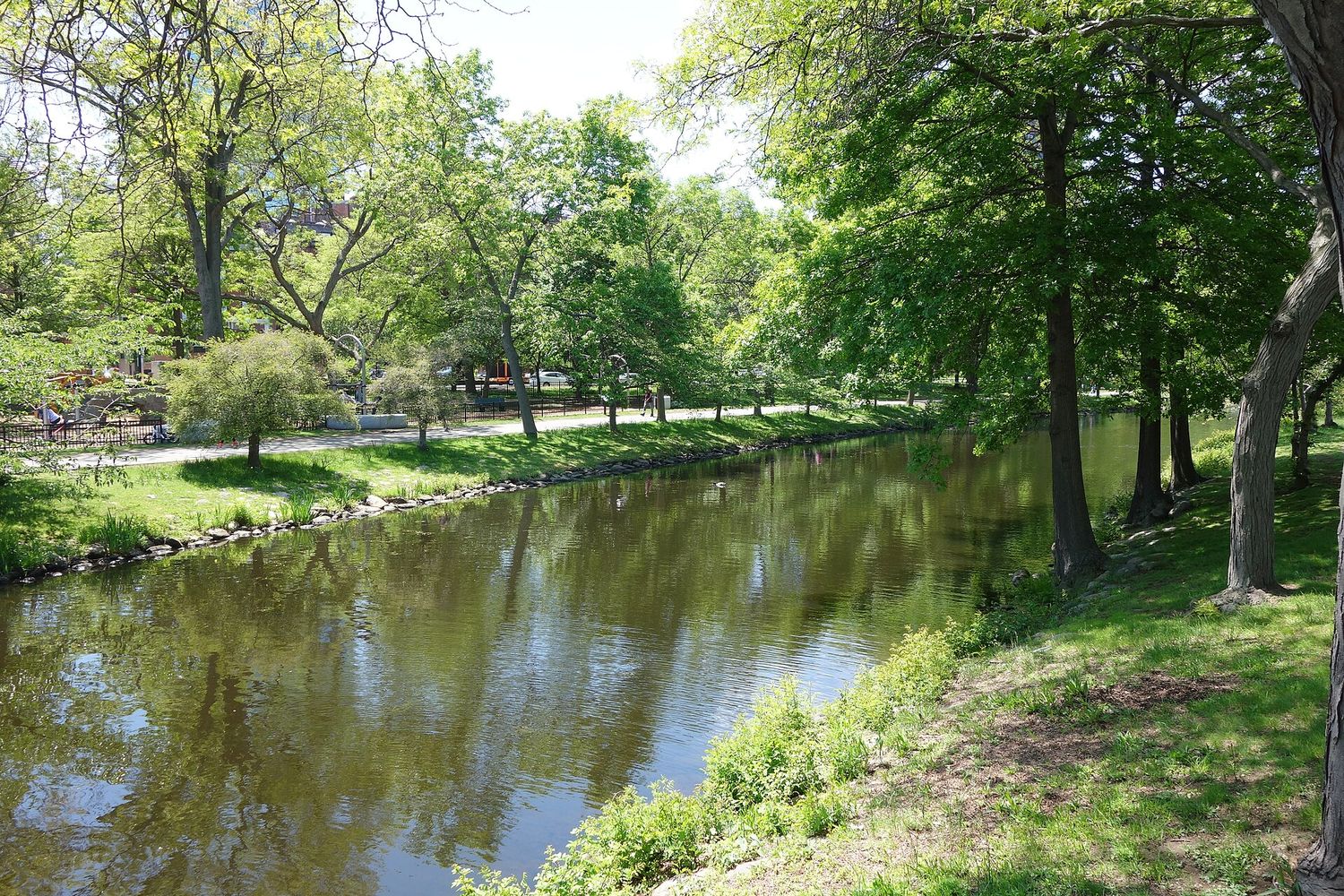
The good news is that you do not need to leave. The Arnold Arboretum in Jamaica Plain, the Emerald Necklace, Mount Auburn Cemetery in Cambridge — a garden cemetery from 1831 that is one of the finest arboreta in the country — and the Blue Hills Reservation just south of the city all deliver serious color within forty minutes of downtown. Concord and the Cape Ann coast are the best reachable day trips for it.
What Not to Bother With
- Organized bus day tours to Salem or Plymouth, which typically cost several times the train fare, run to a fixed schedule and give you less time at the destination than going alone. The commuter rail does this better and cheaper.
- The White Mountains or Vermont as a day trip. Three to four hours each way. Stay overnight or skip it.
- New York City as a day trip. People try. Four hours each way on the fast train, and you will see a station and a street.
- Martha’s Vineyard or Nantucket in a day in high season, unless you are flying. The drive to the ferry plus the crossing plus the line eats the day.
- Salem in October, unless the crowds are what you came for. Genuinely.
- Two day trips in a three-day trip. You came to see Boston.
Frequently Asked Questions
What is the best day trip from Boston?
Salem, for most people — thirty minutes by commuter rail from North Station, with the Peabody Essex Museum at $20 for adults and free for under-16s, the Witch House, and a genuine seventeenth-century seaport underneath the Halloween marketing. If the Revolution is why you came to Boston, Concord and Minute Man National Historical Park is the better choice, and it is free.
Can you do day trips from Boston without a car?
Yes, more easily than from almost any other American city. Salem, Rockport, Gloucester, Newburyport and Concord are all on the commuter rail from North Station; Plymouth, Providence and Worcester from South Station. Provincetown has a seasonal fast ferry. Only Lexington, Newport and the Cape beaches really need a car.
How far is Salem from Boston?
About sixteen miles, and roughly thirty minutes on the commuter rail from North Station. The MBTA runs extra weekend services through October for Haunted Happenings, when the town is at its busiest.
Is Plymouth Rock worth seeing?
The Rock itself takes ninety seconds and is a genuine anticlimax — a granite boulder in a hole under a portico, with no contemporary evidence that anyone stepped on it. Plymouth as a day trip is still worth it for Plimoth Patuxet, whose living-history village and Wampanoag homesite are excellent, and for the Mayflower II. The all-sites ticket is $46 for adults and $29 for children.
When is the best time for fall foliage near Boston?
Mid-to-late October for the city and the coast, which is later than the mountains because the sea holds heat. The White Mountains and Vermont turn from late September, but they are three to four hours away and make a poor day trip. The Arnold Arboretum, Mount Auburn Cemetery and the Blue Hills all deliver good color within forty minutes of downtown.
How much do day trips from Boston cost?
Commuter rail fares are zone-based and rise with distance, but the $10 weekend pass gives unlimited travel across Saturday and Sunday, which makes two trips in a weekend remarkably cheap. On top of that, budget $20 for the Peabody Essex in Salem, nothing at all for Minute Man National Historical Park in Concord, and $46 per adult for the full Plimoth Patuxet ticket.
Can I visit the Cape in a day from Boston?
Provincetown, yes, on the seasonal fast ferry — about ninety minutes each way and it lands you in the middle of town. Driving to the Cape and back in a day in summer is a poor idea; the canal bridges are the bottleneck for the whole peninsula, and two-hour delays on a Friday evening or Sunday afternoon are normal.
Should I book a guided day tour?
Usually not. Organized coach tours to Salem and Plymouth cost several times the train fare, run on a fixed schedule and often leave you less time at the destination. The exception is Lexington and Concord, where the sites are spread out and a tour or a rental car genuinely solves a transport problem.
Which day trip is best with children?
Rockport for the harbor, the beach and the shortest attention span required; Plimoth Patuxet if they will engage with living history and you are willing to pay for it; Salem in a non-October month. Concord is better for teenagers than for young children — Walden Pond has a swimming beach in summer, which changes the calculation considerably.
Most of these trips are seasonal in one direction or another – the ferries stop, the beaches empty, the leaves turn later on the coast than in the mountains. Our guide to the best time to visit Boston lays out month-by-month weather and exactly what is open when, so you do not build a day around something that shut in October.
Salem in October is the day trip everyone wants and the one most likely to go wrong — the town runs at capacity for the whole month and is close to impossible on Halloween weekend. Our guide to Boston events explains when to go instead, and what else the fall calendar puts within reach of a train.
Boston’s real advantage for a weekend away is what sits an hour beyond it, and most of it is reachable without a car. Our guide to romantic things to do in Boston picks the trips that work best for two — Rockport, Concord, Provincetown by ferry — and how to fit one into a long weekend.