The best-known statue in Cambridge is a lie three times over. John Harvard sits in bronze in Harvard Yard with an inscription reading “John Harvard, Founder, 1638”: he was not the founder, the college was founded in 1636, and no likeness of him survives, so the sculptor used a student as the model. Tourists queue to rub his shoe anyway. That is a fair introduction to things to do in Cambridge MA — a city that takes itself extremely seriously and is entirely capable of laughing at itself, sitting across the river from Boston with two of the world’s most famous universities, several free world-class museums, and better bookshops than anywhere else in America.
This guide covers Harvard and MIT and how to see them properly, the museums and which are free, the squares and what each is actually like, where to eat, and how the whole thing fits into a Boston trip. Prices and hours were checked in September 2026; confirm before you go, because two of the museums here raised their rates in July 2026.
First: Cambridge is not a Boston neighborhood
It is a separate city of about 120,000 people with its own mayor, its own police force and a long-running sense of being categorically different from the place across the river. Bostonians and Cantabrigians both feel strongly about this. It matters practically because Cambridge has its own character, its own restaurant scene and its own politics, and treating it as a half-day excursion from Boston sells it short.
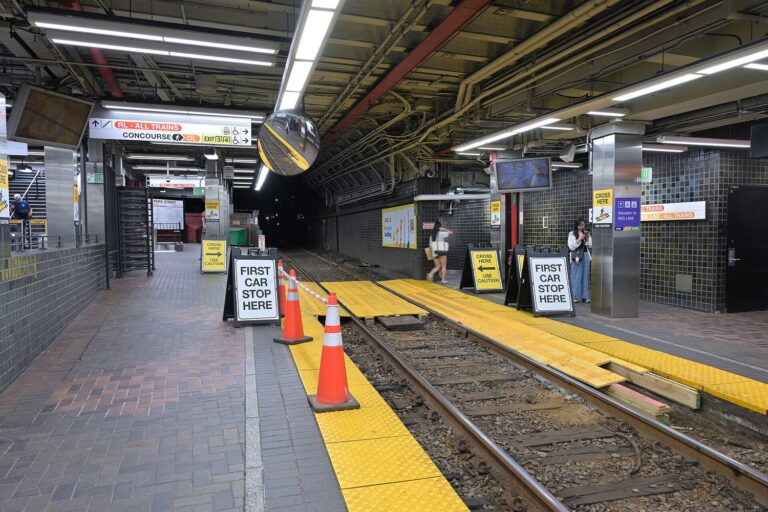
Getting there is trivial: the Red Line runs from Downtown Crossing and South Station to Kendall/MIT, Central, Harvard, Porter and Alewife in a straight line, and the journey from downtown Boston to Harvard Square takes about fifteen minutes for a $2.40 fare. You can also walk — the Longfellow Bridge from Charles/MGH to Kendall takes twenty minutes and has one of the best views in Greater Boston from the middle of it.
Harvard
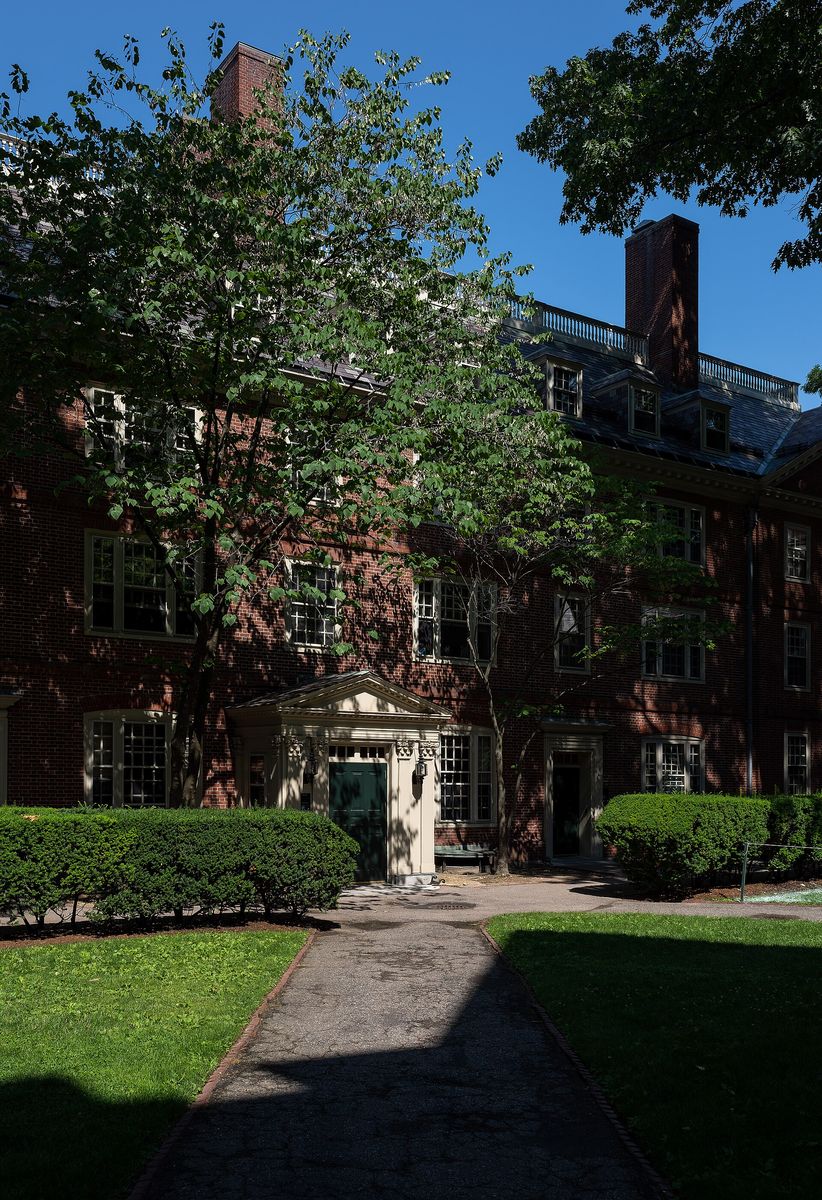
Founded in 1636, six years after Boston itself, and the oldest institution of higher education in the United States. The Yard is the historic core — red brick, mature trees, the old dormitories and Widener Library’s enormous portico — and it is open twenty-four hours a day and free to walk through. Nobody will stop you. This is the single best free thing in Cambridge.
The tours, free and otherwise
Harvard runs its own free student-led walking tours, daily, lasting 45 to 60 minutes and departing from the Harvard Information Center in the Smith Campus Center. Advance registration is required and parties are capped at five people. The Information Center is open weekdays 9am to 5pm. There is also a free self-guided walking tour in Harvard’s own Visit Harvard mobile app, which is the right answer if you turn up without a booking.
You will also see paid Harvard tours advertised heavily around the Square, run by third-party companies using current students as guides. They are not the university’s tour and they cost real money. They are often entertaining — the good guides lean into the absurdities and the gossip in a way an official tour will not — but understand what you are buying: a private company’s product, not access to anything you could not walk into for nothing. If the budget matters, take the free one and book it in advance.
The separate Admissions Visitor Center is in Agassiz House at 5 James Street in Radcliffe Yard, open Monday, Tuesday, Thursday and Friday 9am to 5pm and Wednesday 11am to 5pm. That one is for prospective students rather than tourists.
Harvard Art Museums — free
Three collections under one Renzo Piano glass roof: the Fogg, the Busch-Reisinger and the Arthur M. Sackler. Free to everyone since 2023, open Tuesday to Sunday 10am to 5pm. It holds a serious collection — Renaissance and Baroque painting, one of the best collections of German art outside Germany, and Asian and Islamic holdings — in a building where the central courtyard rises five stories to a glass pyramid.
It is the most under-visited excellent museum in Greater Boston, and it costs nothing. If you have one hour in Cambridge and any interest in art, spend it here.
Harvard Museum of Natural History — $20, and free for locals
Rates rose on 1 July 2026 and now stand at $20 for adults, $18 for seniors over 65, $15 for youth aged 3 to 18, and free under 3. Admission covers all the connected Harvard Museums of Science and Culture galleries, including the Peabody Museum of Archaeology and Ethnology next door, which is a substantial museum in its own right.
Massachusetts residents get in free with proof of residency on Sunday mornings from 9am to 12pm and Wednesdays from 3pm to 5pm. EBT and WIC cardholders enter free with up to five guests, and active-duty military and their families are free year-round.
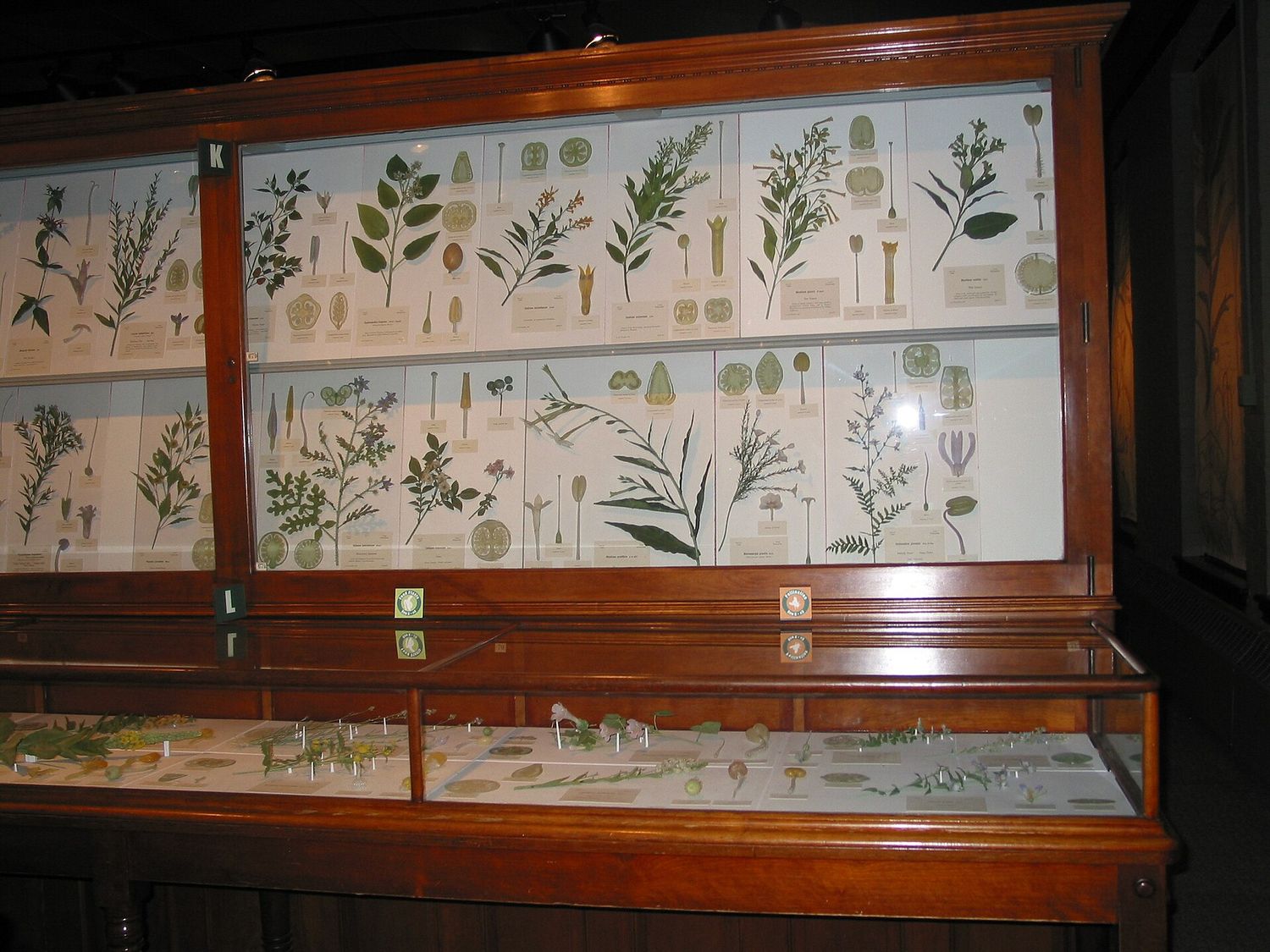
The reason to come is the Glass Flowers — the Ware Collection of Blaschka Glass Models of Plants, over 4,300 pieces representing more than 780 species, made by Leopold and Rudolf Blaschka in Dresden between 1887 and 1936. They are botanical models in glass, life-size and anatomically exact, and photographs do not convey them; the first reaction of almost everyone who sees them is to assume they are real specimens. There is also a good mineral hall, a large collection of taxidermy that feels distinctly nineteenth-century, and a whale skeleton.
This museum is on the Boston CityPASS list, which is worth knowing if you are buying one — see our things to do in Boston guide for the pass arithmetic.
The rest of the campus
- Widener Library — the largest university library building in the world, built as a memorial to a Harvard graduate who died on the Titanic. Not open to the public, but the steps are the campus’s front porch.
- Memorial Hall — a vast High Victorian Gothic pile just north of the Yard, built to commemorate Harvard men who died fighting for the Union. Sanders Theatre inside it is a concert venue and worth checking for a performance.
- The Harvard Lampoon building — a small castle on Mount Auburn Street, headquarters of the humor magazine, and the site of a decades-long feud with the student newspaper that has involved theft of the ibis from its roof more than once.
- Harvard Stadium — across the river in Allston, opened in 1903 and the oldest permanent concrete stadium in the country.
MIT
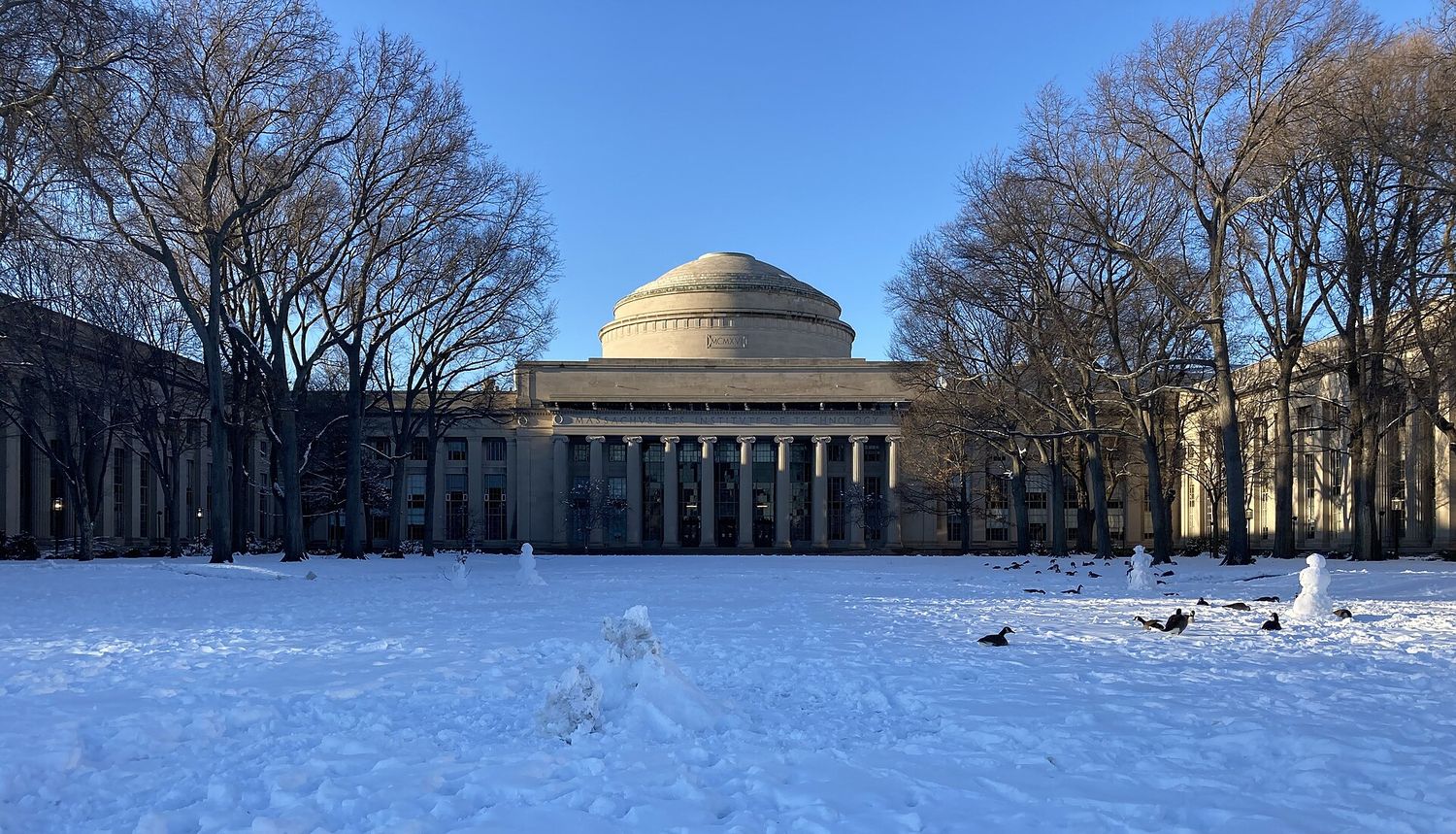
A mile down the river and a completely different institution. Where Harvard is red brick and lawns, MIT is a single enormous interconnected building complex organized by number rather than name, with a neoclassical Great Dome at the center facing Killian Court and the Charles.
The campus is free to walk around and considerably more interesting architecturally than people expect: Eero Saarinen’s Kresge Auditorium and the windowless brick cylinder of the MIT Chapel, Frank Gehry’s Stata Center, Steven Holl’s Simmons Hall. The Infinite Corridor runs 825 feet through the main building, and twice a year the setting sun lines up along it exactly — a phenomenon students call MIThenge.
The other thing to know about MIT is the hacks: elaborate, technically impressive and strictly non-destructive pranks, most famously involving putting things on top of the Great Dome. A campus police car appeared up there in 1994. A fire truck in 2006. A full-size replica of the Wright Flyer on the centenary of the first flight. There is a permanent display about them in the Stata Center.
MIT Museum — $20, family ticket $55
Moved to 314 Main Street in Kendall Square, directly beside Kendall/MIT station on the Red Line, and open daily 10am to 5pm with last entry half an hour before close. Admission is $20 for adults, $15 for seniors over 65, $10 for college students with ID and for youth aged 6 to 18, free under 6, and there is a family ticket for two adults and two youths at $55 — a rare thing in Boston-area museums and a genuine saving.
It is a good museum about how things are made and how research actually works, with robotics, holography, AI and the history of MIT’s inventions. Children from about eight upwards do well here.
MIT tours
Be clear about this one: the student-led public walking tours of MIT are run by a third-party company and are not free. MIT itself operates a free Welcome Center at 292 Main Street in Kendall Square, where you can pick up a campus map, use the restrooms, fill a water bottle and get wifi. Take the map and walk it yourself — the campus is compact, the buildings are numbered, and the interesting parts are all within ten minutes of each other.
The squares
Cambridge is organized around squares rather than a downtown, and they are genuinely different from one another.
Harvard Square
The obvious one, and the most changed. Twenty years of rising rents have replaced a great many independent shops with chains, and locals will tell you at length what has been lost. What survives is still worth the trip: the Harvard Book Store, the Coop, a couple of long-standing record and comic shops, street performers in the pit outside the station, and the Yard itself two minutes away. It is busy, it is touristed, and it remains the right first stop.
Shopping in Harvard Square, and what is left of it
The Square’s retail has thinned, but a few categories still work. The Harvard Coop on Massachusetts Avenue sells university merchandise on a scale that has to be seen, and the crimson sweatshirt is the single most-bought object in Cambridge. Independent record shops, a long-standing comics store and several vintage clothing rooms survive on the side streets. The farmers’ market runs in the warmer months.
What has gone is the density: a Square that once held dozens of independents now holds a good number of national chains, and the change is the standing local grievance. Adjust your expectations and you will still find things worth carrying home; arrive expecting the Harvard Square of the 1970s and you will be disappointed, as every returning alumnus is.
Central Square
Between Harvard and MIT, and the least polished of the squares — which is why it has the best live music, the most interesting cheap food, and the dive bars. It is also the most economically mixed part of Cambridge and looks it. Our Boston nightlife guide covers its venues.
Kendall Square
Twenty-five years ago this was empty lots. It is now one of the densest concentrations of biotech and technology companies anywhere in the world, and it looks like it: glass, lanyards, and a great many people talking about series B funding at lunch. The MIT Museum is here, the food is good and expensive, and there is a roof garden on the Kendall/MIT station block that almost nobody knows about.
Inman and Porter Squares
The residential ones. Inman has a concentration of good restaurants and no tourists at all. Porter, one stop north of Harvard on the Red Line, has a Japanese food arcade in a shopping block that is the best casual eating in Cambridge and is almost entirely undiscovered by visitors. Porter station also has the deepest escalator in the MBTA system, which is a mild attraction in itself.
Beyond the universities
Mount Auburn Cemetery
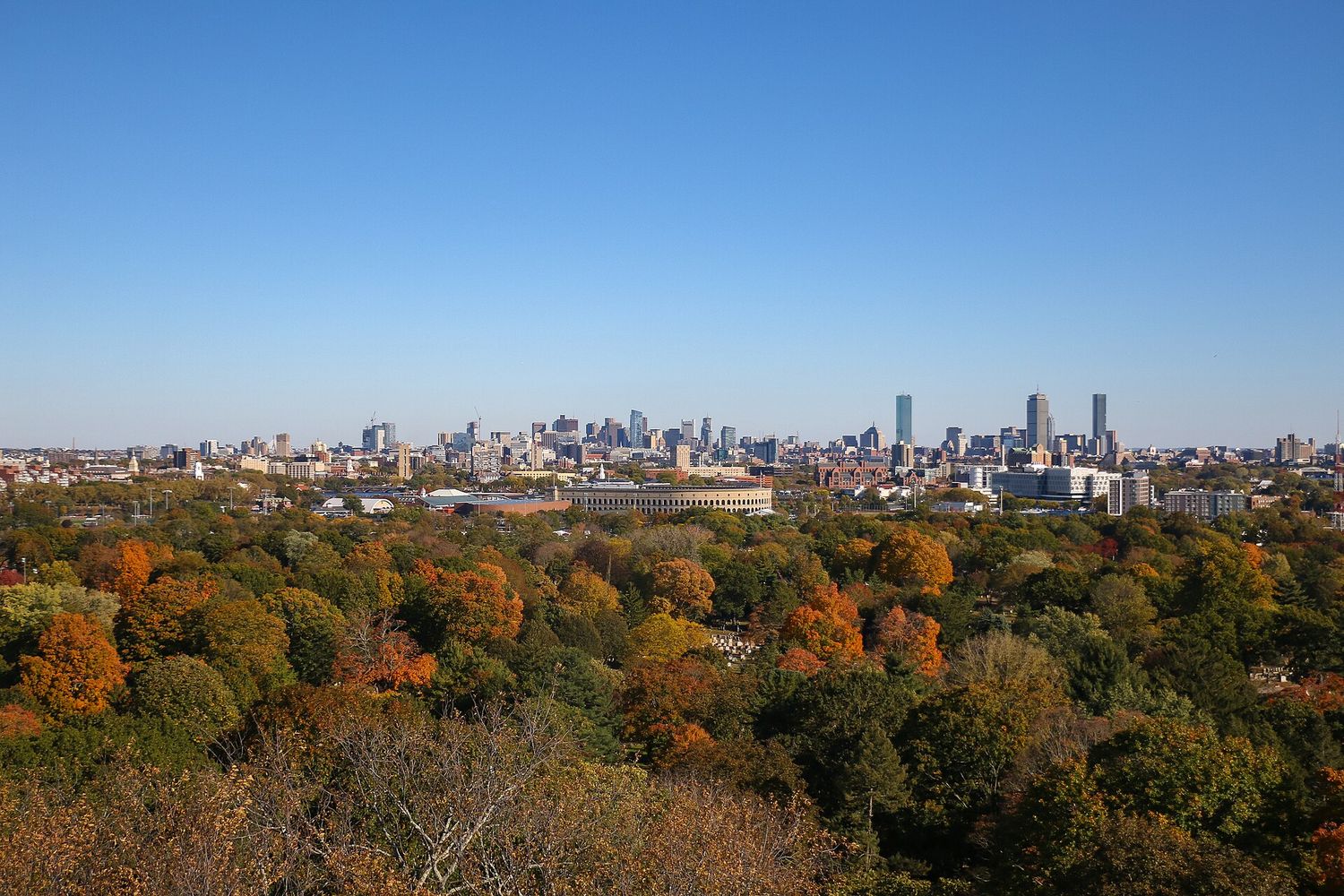
Founded in 1831 and the first landscaped rural cemetery in America, which sounds like faint praise and is not: it invented a form that spread across the country and directly influenced the design of public parks including Central Park. It is 175 acres of arboretum with a tower you can climb for a view over Boston and Cambridge, it is free, and it is one of the best birdwatching sites in eastern Massachusetts during spring migration.
Buried here: Henry Wadsworth Longfellow, Oliver Wendell Holmes, Winslow Homer, Julia Ward Howe, Buckminster Fuller, Bernard Malamud and the chemist who discovered ether anesthesia. It is a mile and a half west of Harvard Square along Brattle Street, walkable in half an hour or a short bus ride.
Brattle Street and Longfellow House
Brattle Street west of Harvard Square was called Tory Row before the Revolution, because the loyalist families who owned its mansions all left in a hurry in 1775. The Longfellow House–Washington’s Headquarters National Historic Site at number 105 is run by the National Park Service, was George Washington’s headquarters during the siege of Boston in 1775–76 and later Longfellow’s home for forty-five years. It is free, and the grounds are open even when the house is not. Check current hours on nps.gov/long.
The Charles River and the Esplanade’s Cambridge side
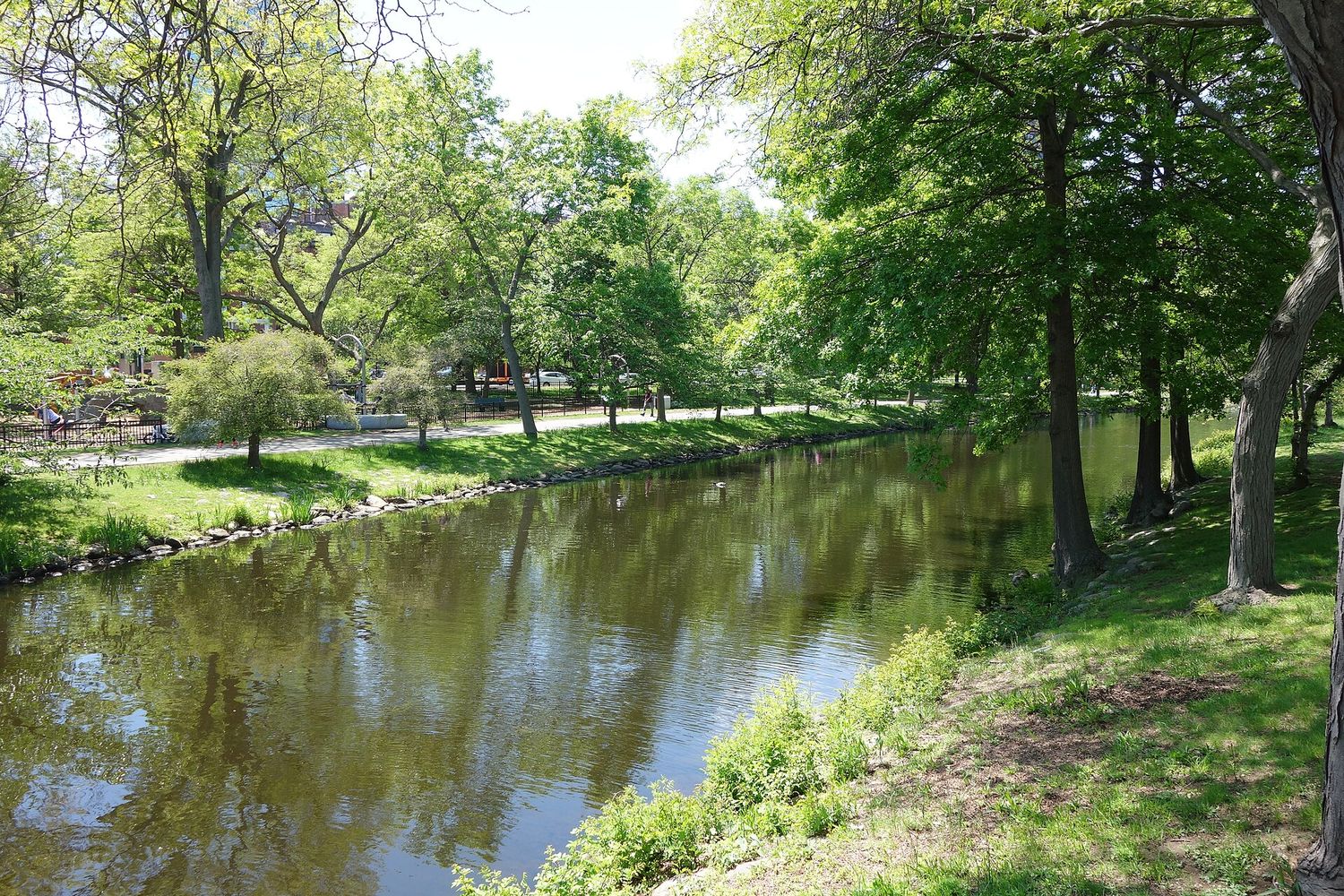
Memorial Drive runs along the Cambridge bank with a path the whole way, and on summer Sundays a stretch of it has traditionally been closed to cars for walking and cycling — check whether the current season’s closures are running. The view of Back Bay across the water from the Cambridge side is the skyline photograph that everyone takes, and the Weeks Footbridge is the best spot on it. In October the Head of the Charles Regatta races directly beneath it.
Cambridge before the universities
Cambridge is older than its colleges and has a history that is not entirely academic, which the Harvard Square version of the city tends to obscure.
It was founded in 1630 as Newtowne, and for a short period it was intended to be the capital of the Massachusetts Bay Colony — the settlement was laid out as a fortified town because the governor thought Boston too exposed. That plan was abandoned within a few years, but the grid of the old village survives around Harvard Square, and the Old Burying Ground beside the First Parish church holds graves from the 1630s onwards, including several of Harvard’s early presidents and a number of enslaved and free Black residents whose stones the city has worked to identify.
The town was renamed Cambridge in 1638 after the English university, in the same year that the first printing press in British North America was set up here. Almost everything printed in the colonies for the next two decades came out of Cambridge, which is a reasonable claim to being the birthplace of American publishing and gets far less attention than the college does.
The Revolution
On 1 July 1775, George Washington took command of the Continental Army on Cambridge Common — the tradition places it under an elm, since replaced by a marker. He then spent the siege of Boston headquartered in a confiscated loyalist mansion on Brattle Street, which is why the Longfellow House is a national historic site twice over. The loyalist owners of Tory Row had already fled; their houses were seized and handed to the revolutionary command, which is a piece of history the street’s elegant frontages do not advertise.
Cambridge Common itself is still there, a public green between Harvard Square and the Radcliffe campus, with monuments and a good deal of student football. It is free and takes ten minutes.
The industrial city
Through the nineteenth century Cambridge was a manufacturing town: soap and candle works, glass, furniture, printing and, in East Cambridge, a confectionery industry substantial enough that the neighborhood smelled of chocolate within living memory. Waves of Irish, Portuguese, Azorean, Italian and later Haitian and Caribbean immigrants filled the triple-deckers. That Cambridge is still visible in East Cambridge and along Cambridge Street, and it is why the best Portuguese food in the metropolitan area is a mile from MIT’s Great Dome.
The biotech and technology campus at Kendall Square is roughly the fourth economy this city has had, built on the site of the third. It is worth knowing when you stand among the glass towers that the ground under them was industrial, then derelict, then — within one working lifetime — the most valuable square mile in American science.
Somerville, next door
Somerville shares a border with Cambridge and increasingly shares its character. It is denser, cheaper, younger, and it has the best small-venue nightlife and some of the best casual food in Greater Boston. Davis Square is on the Red Line one stop past Porter; Union Square and East Somerville are now on the Green Line extension, which opened the neighborhood up considerably.
Two things to know. Somerville has more artists per capita than almost any American city and runs open studios and a long-standing street festival culture to match. And it is a genuinely residential place, which means the pleasures are bars, restaurants and a hill with a view rather than attractions — Prospect Hill Park has a tower and the story of the first flag raised over the Continental Army in January 1776.
Where to stay: Cambridge or Boston?
A real question rather than a rhetorical one, and the answer is not obvious.
Stay in Cambridge if you are here for the universities, you want more room for the money, you like a residential neighborhood with a real restaurant scene, or your trip has a conference or campus reason behind it. Kendall and Harvard both have modern hotels; the fifteen-minute Red Line ride to downtown Boston is straightforward.
Stay in Boston if the historic sites are the point of the trip, you want to walk to the Freedom Trail and the waterfront, or you plan late evenings — because the Red Line stops around 12.30 to 1am and a ride back to Cambridge after that is expensive. Our where to stay in Boston guide compares the neighborhoods on both sides.
One warning that applies to both: graduation season in mid-to-late May fills every hotel room in Cambridge and much of Boston, because dozens of universities hold ceremonies in the same two weeks. Rates double and availability disappears. If your dates are flexible, avoid it; if they are not, book several months out.
Eating in Cambridge
Cambridge eats better than its reputation and considerably better than the Harvard Square tourist frontage suggests.
- Central Square — the widest range and the best value, with strong Ethiopian, Indian and Middle Eastern options and a long tradition of cheap student food.
- Inman Square — the neighborhood restaurant district, small rooms, worth booking.
- Porter Square — the Japanese food arcade, which does ramen, katsu and pastries at a standard that would be notable in Boston and is barely mentioned in Cambridge.
- East Cambridge — Portuguese and Brazilian food along Cambridge Street, from the neighborhood’s long-established Azorean community.
- Kendall Square — expense-account lunch and after-work drinks, priced for people with a badge.
The one thing to skip: the chain restaurants directly on Harvard Square’s main junction. You are two minutes’ walk from better in any direction. Our Boston food and restaurants guide covers the wider area.
Bookshops, because this is the reason some people come
Cambridge has the best concentration of bookshops in the United States, and if that is your thing, allow a day rather than an afternoon. Harvard Square holds the general and academic ones, including the Harvard Book Store with its large used basement and a print-on-demand machine that will make you a copy of almost any out-of-copyright book while you wait. Around it are specialists in poetry, in comics, in secondhand scholarly books, and the Grolier Poetry Book Shop, which has been selling nothing but poetry since 1927 and is one of the oldest such shops in the world.
MIT’s Press Bookstore in Kendall Square is the technical counterpart. Porter Square Books is the excellent neighborhood independent. This is a genuine specialty of the city and it is the sort of thing that survives here because the customers do.
Cambridge with children
Better than it looks from outside. The MIT Museum’s $55 family ticket for two adults and two youths is the best-value museum admission in the metropolitan area, and the museum itself — robots, holograms, kinetic sculpture — holds children from about eight comfortably. The Harvard Museum of Natural History delivers a whale skeleton, a mineral hall and an entire floor of taxidermy, which younger children take to immediately even if the Glass Flowers go over their heads.
Beyond the museums: Harvard Yard is a large lawn that nobody minds children running across; the Charles River path is flat and stroller-friendly for miles; Mount Auburn Cemetery is a quiet arboretum with a tower to climb; and the food arcade at Porter Square solves the everyone-wants-something-different problem better than any restaurant. Our Boston with kids guide has the family arithmetic for the whole region.
Crossing the river on foot and by bike
The Red Line is the fast way and the bridges are the good way. Three crossings are worth knowing.
The Longfellow Bridge from Charles/MGH to Kendall takes about twenty minutes on foot, has wide sidewalks and a bike lane, and gives you the Back Bay skyline on one side and the Zakim Bridge on the other. The Red Line runs down the middle of it, above ground, which makes the whole crossing unexpectedly cinematic.
The Harvard Bridge carries Massachusetts Avenue from Back Bay to MIT, and is measured in Smoots — a unit defined in 1958 by a fraternity pledge named Oliver Smoot, who was laid end over end along it. The bridge is 364.4 Smoots and one ear, the markings are repainted by each new class, and the police have been known to use them to locate incidents. It is the most Cambridge fact available.
Bluebikes, the regional bike share, has dense station coverage on both sides of the river, and the riverside paths are the pleasantest cycling in Greater Boston. Single trips and day passes can be bought at any dock.
What it costs
| Attraction | Adult | Concessions | Notes |
|---|---|---|---|
| Harvard Yard | Free | Free | Open 24 hours |
| Harvard official student-led tour | Free | Free | Register in advance; parties capped at five; from the Smith Campus Center |
| Harvard Art Museums | Free | Free | Tue–Sun 10–5. The best free museum in Greater Boston |
| Harvard Museum of Natural History | $20 | $18 senior, $15 youth 3–18, free under 3 | Rates rose 1 July 2026. Free for MA residents Sun 9–12 and Wed 3–5 |
| MIT Museum | $20 | $15 senior, $10 student and youth 6–18, free under 6 | Family ticket $55 for two adults and two youths |
| MIT campus | Free | Free | Free Welcome Center at 292 Main Street; the guided public tour is a paid third-party product |
| Mount Auburn Cemetery | Free | Free | 175 acres; tower view over both cities |
| Longfellow House NHS | Free | Free | National Park Service; check seasonal hours |
| Red Line from Boston | $2.40 | $1.10 reduced | Fifteen minutes from Downtown Crossing to Harvard |
The striking thing about that table is how much of it is free. A full day in Cambridge — Harvard Yard, the Art Museums, a walk down Brattle Street, Mount Auburn, and the MIT campus — costs two subway fares and lunch.
Three ways to spend the time
Half a day from Boston
Red Line to Harvard. Walk the Yard, rub the shoe if you must, then straight into the Harvard Art Museums for an hour. Lunch off the Square rather than on it. Red Line one stop back to Central or Kendall if you have energy, or back to Boston. Cost: two fares.
A full day
Start at Kendall/MIT: the MIT Museum at opening, then walk the campus with a map from the Welcome Center, past the Stata Center and the Chapel and out to Killian Court. Walk or take the Red Line to Central for lunch. Harvard in the afternoon — Yard, Art Museums, and the Glass Flowers if the Natural History Museum appeals. Dinner in Inman or Central. This is a genuinely full day and it costs under $50 a head including both museums.
A day for the second visit
Skip Harvard Square entirely. Brattle Street west from the Square, Longfellow House, on to Mount Auburn Cemetery for two hours including the tower. Bus or walk back, lunch in Huron Village, then Porter Square for the food arcade and the bookshop, and Inman for dinner. You will not see another visitor all day.
Practical notes
- Getting there — Red Line, fifteen minutes from Downtown Crossing to Harvard, $2.40. Kendall, Central, Harvard and Porter are all walkable from one another along Massachusetts Avenue, about fifteen to twenty minutes between each.
- Driving is a bad idea. Cambridge parking is resident-permit heavy, garages are expensive, and the street layout is worse than Boston’s.
- Term time changes the atmosphere. September to early May, the squares are full of students and everything is open late; in July and August the city is noticeably quieter and some student-facing businesses shorten their hours.
- Graduation in late May fills every hotel in Cambridge and much of Boston. Book early or avoid.
- Harvard’s museums close on some university holidays that are not obvious from outside. Check before making a special trip.
- Cambridge is flat and walkable, with better sidewalks than Beacon Hill and reasonably good step-free transit access at the main Red Line stations.
Frequently asked questions
Can you visit Harvard University for free?
Yes. Harvard Yard is open 24 hours a day and free to walk through, and the university runs free student-led tours daily from the Harvard Information Center in the Smith Campus Center — advance registration required, parties capped at five. The Harvard Art Museums are also free to everyone. Paid tours advertised around Harvard Square are third-party products, not the university’s own.
How much is the Harvard Museum of Natural History?
$20 for adults, $18 for seniors over 65 and $15 for youth aged 3 to 18, free under 3, following a rate increase on 1 July 2026. Admission covers the connected Harvard Museums of Science and Culture galleries. Massachusetts residents get in free with proof of residency on Sunday mornings 9am to 12pm and Wednesdays 3pm to 5pm.
Are the Glass Flowers worth seeing?
Yes, and they are the main reason to pay for that museum. Over 4,300 glass botanical models representing more than 780 plant species, made by Leopold and Rudolf Blaschka in Dresden between 1887 and 1936, anatomically exact and life-size. Almost everyone’s first assumption on seeing them is that they are real plants.
Is the MIT Museum worth it?
For anyone interested in how things are made, yes. It is $20 for adults with a $55 family ticket for two adults and two youths, open daily 10am to 5pm at 314 Main Street beside Kendall/MIT station. It works well for children from about eight upwards.
Are MIT campus tours free?
No. The student-led public walking tours of MIT are run by a third-party company and are ticketed. MIT’s own free provision is the Welcome Center at 292 Main Street, which has campus maps, restrooms, water and wifi — take a map and walk the campus yourself, which is easy since it is compact and the buildings are numbered.
How do you get from Boston to Cambridge?
The Red Line, which runs from Downtown Crossing and South Station to Kendall/MIT, Central, Harvard, Porter and Alewife. Downtown Crossing to Harvard is about fifteen minutes for a $2.40 fare. Walking over the Longfellow Bridge from Charles/MGH to Kendall takes about twenty minutes and has an excellent view.
How long do you need in Cambridge?
Half a day covers Harvard Yard and the Art Museums. A full day adds MIT, a museum and dinner. Two days lets you do Mount Auburn Cemetery, Brattle Street and the outer squares, which is where the city is at its best and least visited.
What is there to do in Cambridge besides the universities?
Mount Auburn Cemetery — 175 acres, free, the first landscaped cemetery in America and a major birdwatching site. Brattle Street’s colonial mansions and the free Longfellow House National Historic Site. The Charles River paths. The bookshops, which are the best concentration in the country. And the food in Central, Inman, Porter and East Cambridge.
Is Harvard Square worth visiting?
Yes, with tempered expectations. Two decades of rising rents have replaced many of the independent shops that made its reputation, and locals will tell you so. What remains — the bookshops, the street performers, the Yard two minutes away and the free Art Museums — still justifies the trip.
Is Cambridge part of Boston?
No. It is a separate city of about 120,000 people with its own government, across the Charles River, and both sides feel strongly about the distinction. Practically it is fifteen minutes away on the Red Line, but it has its own character, restaurants and politics rather than being a Boston neighborhood.
The bookshops here are the reason some people cross the river at all, and they sit inside a wider retail picture that includes a state tax rule worth knowing before you buy anything. Our guide to shopping in Boston covers the Massachusetts clothing exemption, the markets, and where else in the region is worth a morning.
Cambridge has two of the finest viewpoints in the Boston area, and neither costs anything. Our guide to the best views in Boston covers the Washington Tower at Mount Auburn Cemetery, at its best in October foliage, and the Cambridge bank of the Charles, where the Back Bay skyline is reflected in the river basin.