There is a moment on Salem Street, usually around six in the evening, when the line outside Neptune Oyster has reached the corner and nobody in it looks remotely annoyed. Twenty-two seats, no reservations, and people will stand for ninety minutes on a cold sidewalk for a lobster roll. That queue tells you most of what you need to know about eating here: the best restaurants in Boston are rarely the grandest ones, they are frequently very small, and the city has almost no patience for anything that trades on reputation rather than cooking.
This guide covers the dishes that are genuinely worth ordering, the neighborhoods where the eating actually happens, the places that are coasting on tourists, and how to eat well here without spending a fortune. Restaurants open and close constantly, so check a place is still trading before you build an evening around it — and prices below are given as bands rather than menu quotes, because the only honest source for a menu price is the menu.
What Boston Actually Does Well
Boston is not, and has never been, a city of great restaurants in the way New York or Chicago are. What it has instead is unusually good raw material and several immigrant food cultures that have been here long enough to be genuinely native.
Seafood is the obvious one, and it is better than the cliché suggests. The cold water off New England produces oysters, cod, haddock, lobster and clams that are worth crossing the Atlantic for, and the supply chain is short enough that a decent Boston restaurant is working with something landed the previous day.
Italian-American food in the North End, which is a specific cuisine rather than an imitation of Italian food, developed by families from Sicily, Campania and Abruzzo over more than a century in about a third of a square mile.
Chinese, Vietnamese and Cambodian cooking in Chinatown, Dorchester and Lowell, which is where the best value in the region sits and where almost no visitor eats.
Bakeries and coffee, unexpectedly. Boston takes pastry seriously, partly because it has an enormous student population that wants somewhere to sit.
What it does badly: anything that has to be trendy, and anything within two blocks of a major attraction. Those two rules will save you more money than any other advice on this page.
A Short History, Because It Explains the Menu
Boston food makes more sense once you know why it looks the way it does.
The Puritans arrived with a prohibition on working on the Sabbath, which included cooking. The solution was a pot of beans put into a slow oven on Saturday and eaten cold or reheated on Sunday — hence Boston baked beans, sweetened with molasses and studded with salt pork, and hence “Beantown,” a nickname that essentially no resident uses and many actively resent.
The molasses came from the triangle trade: New England rum distilleries bought molasses from Caribbean sugar plantations worked by enslaved people, and Boston’s early wealth is inseparable from that trade. The city’s most famous industrial disaster came from the same source — on 15 January 1919 a storage tank on Commercial Street in the North End burst and sent a wave of molasses through the neighborhood, killing twenty-one people and injuring about 150. There is a small plaque near the site, and older residents used to insist you could still smell it on hot days.
Then came the waves. The Irish from the 1840s, the Italians and Portuguese from the 1880s, the Chinese from the 1870s, and more recently Vietnamese, Cambodian, Cape Verdean, Haitian, Dominican, Salvadoran and Brazilian communities. Each of them put down a neighborhood, and the neighborhoods are still where the food is. This is why a Boston eating itinerary is really a transport itinerary.
What has largely gone is the old Yankee dining room — the plain, enormous, no-nonsense sort of place best represented by Durgin-Park, which fed Boston from the Faneuil Hall market building for around 190 years before closing in 2019. If you were hoping for indian pudding and a waitress who insults you, you have missed it by a few years.
The Dishes Worth Ordering
Clam chowder
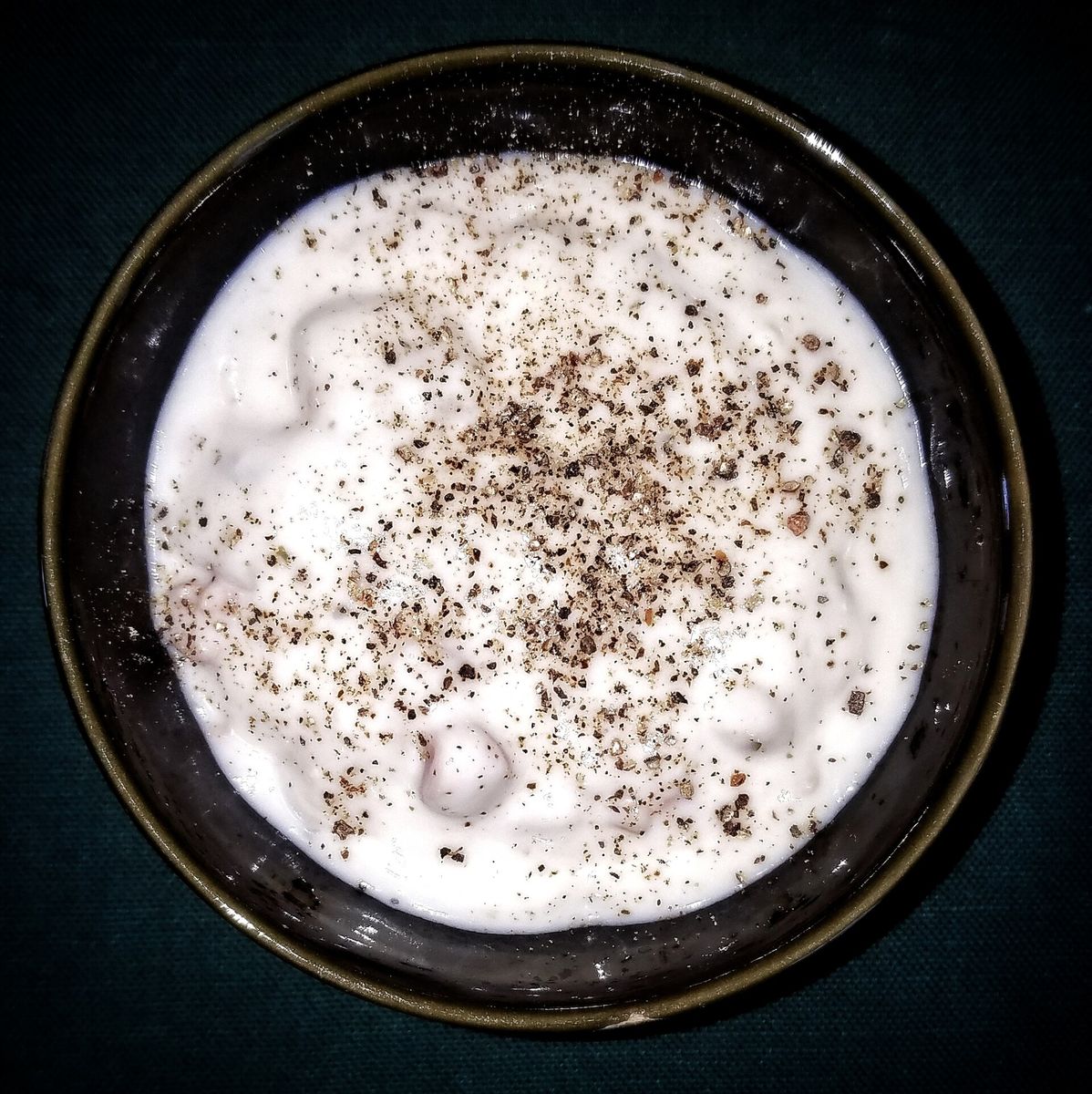
Cream, potato, salt pork, onion and quahogs. No tomatoes, ever — the feeling about this is strong enough that in 1939 a bill was introduced in the Maine legislature to make adding tomatoes to chowder illegal. It was a joke, but only partly.
Good chowder is thick enough to hold a spoon at an angle but not gluey, and you should be able to identify the clams. Bad chowder is a bowl of wallpaper paste with a shellfish rumor in it, and there is a great deal of bad chowder within four hundred yards of Faneuil Hall. Legal Sea Foods is a local chain and its chowder is genuinely good — it has been served at presidential inaugurations since 1981 — which makes it the safe answer when you are somewhere touristy and hungry.
Lobster roll
Two schools, and Boston serves both. Maine style is cold: lobster meat with mayonnaise, sometimes celery, in a split-top bun. Connecticut style is hot: warm lobster meat with melted butter, no mayonnaise. Connecticut style is the better version and this is a hill worth dying on, though the cold one done properly — a lot of meat, very little mayonnaise, a griddled bun — is excellent too.
What to watch: price varies enormously with the market, and a cheap lobster roll in a tourist district generally means shredded knuckle meat and a lot of filler. If it costs conspicuously less than everywhere else, there is a reason. Neptune Oyster on Salem Street has been the benchmark for both styles for two decades, and the line is the price of admission.
Fried clams
Whole-belly, not strips. This matters. The belly is where the flavor is; strips are the clam with the interesting part removed, and they exist to be sold to people who do not know the difference. The dish was invented in Essex, Massachusetts in 1916, when Lawrence “Chubby” Woodman dropped a clam in the fryer of his fried-potato stand, and the best versions are still eaten on the North Shore with your fingers, outdoors, from paper.
Oysters
New England oysters are cold-water, firm and briny, and the regional names — Island Creek from Duxbury, Wellfleet from the Cape, Duxbury, Katama Bay — refer to real places within an hour or two of the city. Order a mixed half-dozen and taste them side by side; the difference between a Wellfleet and an Island Creek is larger than the difference between two wines from neighboring villages.
Happy hour oyster deals are common and are one of the best-value things in the city. Look for them between about 4 and 6pm.
Roast beef sandwiches
A North Shore institution that almost no guidebook mentions: rare roast beef, sliced thin, on an onion roll, with barbecue sauce, mayonnaise and cheese in a combination locals call “three-way.” The classic examples are in Revere, Saugus and Danvers rather than downtown, so this is a day-trip dish, but if you find yourself north of the city, this is what to eat.
Boston cream pie
Not a pie. Two layers of sponge, pastry cream between them, chocolate glaze on top, invented at the Parker House hotel in 1856 and made the official dessert of Massachusetts in 1996. The Omni Parker House still makes it, and the same kitchen produced Parker House rolls and employed, at different times, a young Ho Chi Minh in the bakery and Malcolm X as a busboy.
Baked beans and brown bread
Worth ordering once, mostly for the sake of it. Proper Boston baked beans are slow-cooked for hours with molasses, mustard and salt pork until the sauce is dark and almost sticky, and they are traditionally served with Boston brown bread — a dense, dark, slightly sweet loaf made with rye, cornmeal and molasses and steamed rather than baked, historically in a can. It is stranger and better than it sounds. Very few restaurants still bother with either, which is a shame, and when you find a place that does, it is usually an old one.
Ballpark food
The Fenway Frank is a boiled-then-grilled hot dog in a New England split-top roll, and it is genuinely part of the experience even though, judged as a hot dog, it is unremarkable. The concessions inside Fenway have improved a great deal and now include actual Boston restaurants; the sausage carts on Lansdowne and Jersey Streets outside the park, with peppers and onions on a griddle, are the better bet and always have been.
Cannoli
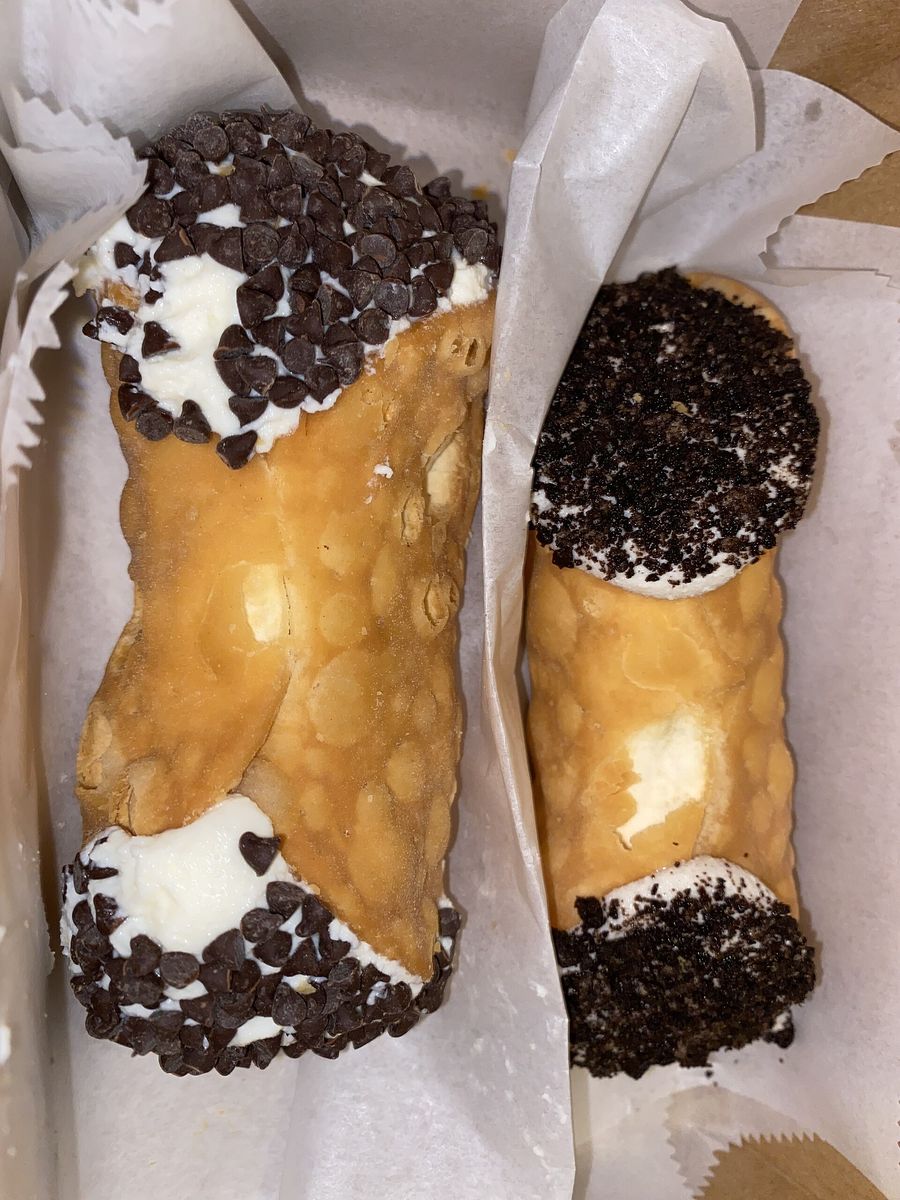
The great North End argument. Mike’s Pastry has the enormous menu, the white boxes tied with string, and a line out the door — and it fills its shells in advance, which means the pastry has been sitting in cream. Modern Pastry, a few doors along Hanover Street, fills to order, so the shell still shatters. Modern is better. Mike’s is more fun. Bova’s Bakery on Salem Street is open around the clock and is where you go at two in the morning, which counts for something.
Order the plain ricotta at least once before you get distracted by the flavored ones.
Neighborhood by Neighborhood
The North End
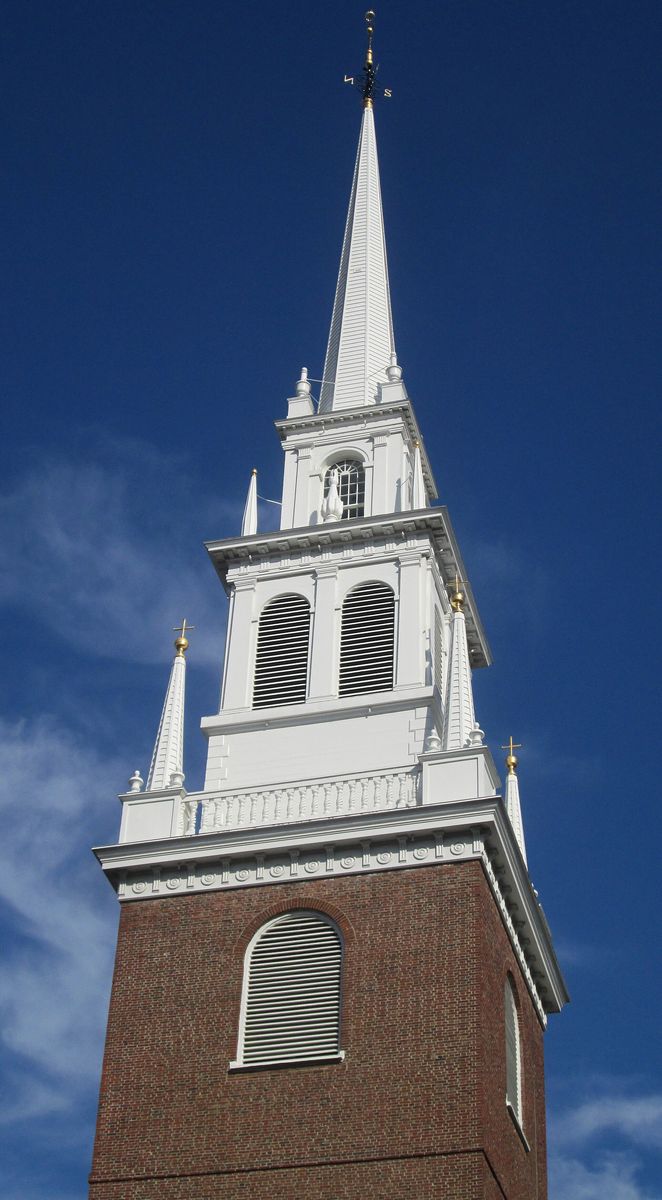
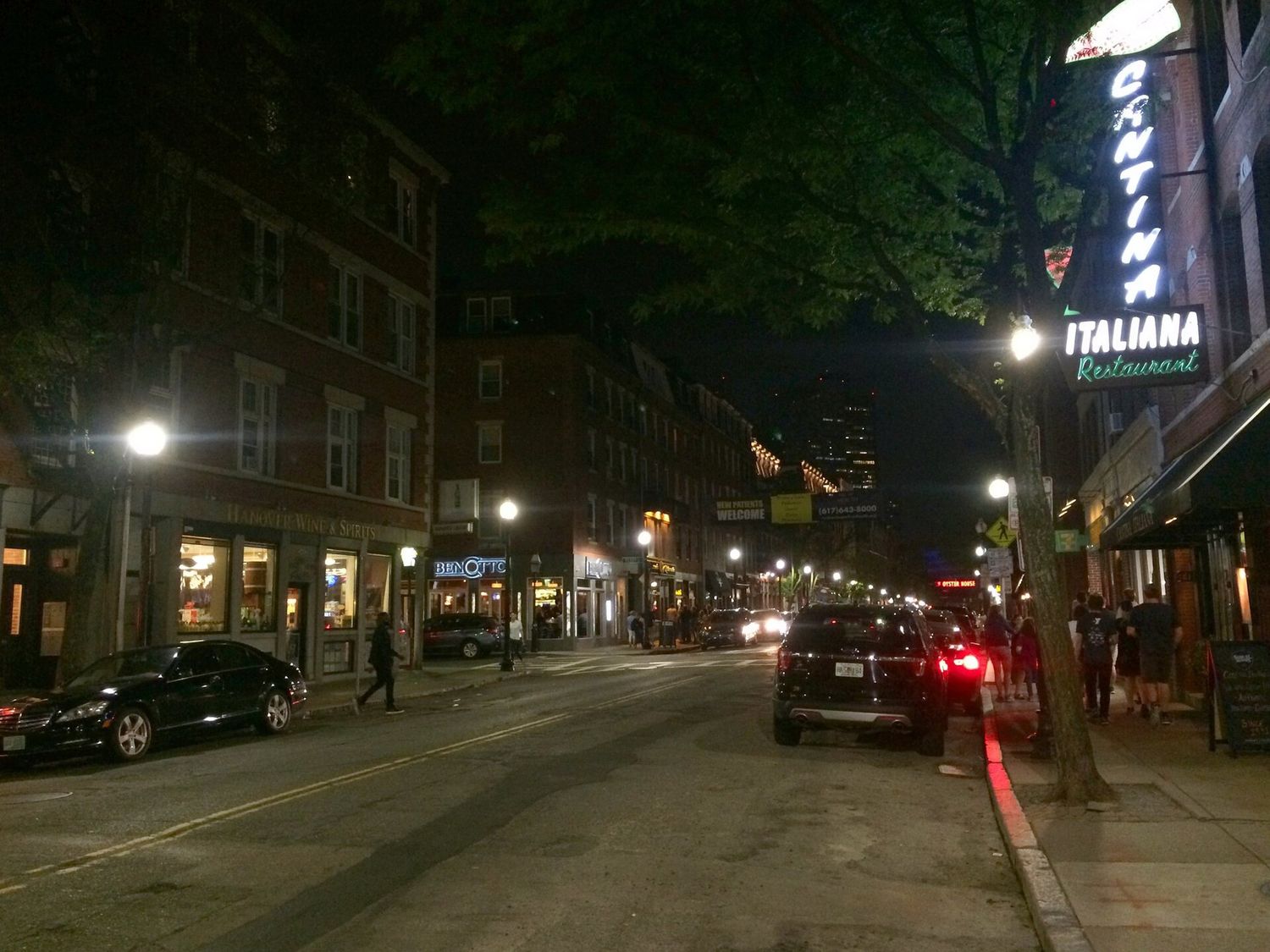
A third of a square mile and well over a hundred restaurants, which means the quality range is enormous. The rule that works: the closer to the Greenway end of Hanover Street, the more the restaurant depends on people who will never come back. Walk further in. Turn off Hanover onto Salem, Prince, North Square or Thacher.
- Neptune Oyster, 63 Salem Street — the best seafood in the city, twenty-odd seats, no reservations, and waits that regularly pass ninety minutes at peak. Put your name down and go walk up Copp’s Hill.
- Giacomo’s on Hanover Street, going since 1985 — cash-friendly, no reservations, a line, and enormous plates of exactly what you want.
- Regina Pizzeria on Thacher Street — the 1926 original, thin, blistered, and worth walking away from Hanover for. Ignore the mall branches.
- Galleria Umberto on Hanover — lunch only, cash only, a Sicilian slice and an arancino for a handful of dollars, and it closes when the trays are empty.
- Daily Catch on Hanover — tiny, loud, and the pasta arrives in the pan it was cooked in.
The North End’s real trick is timing. Between noon and 3pm it belongs to the Freedom Trail, and again from 6 to 9. Eat at 5 or after 9 and the same restaurants are half empty.
The South End
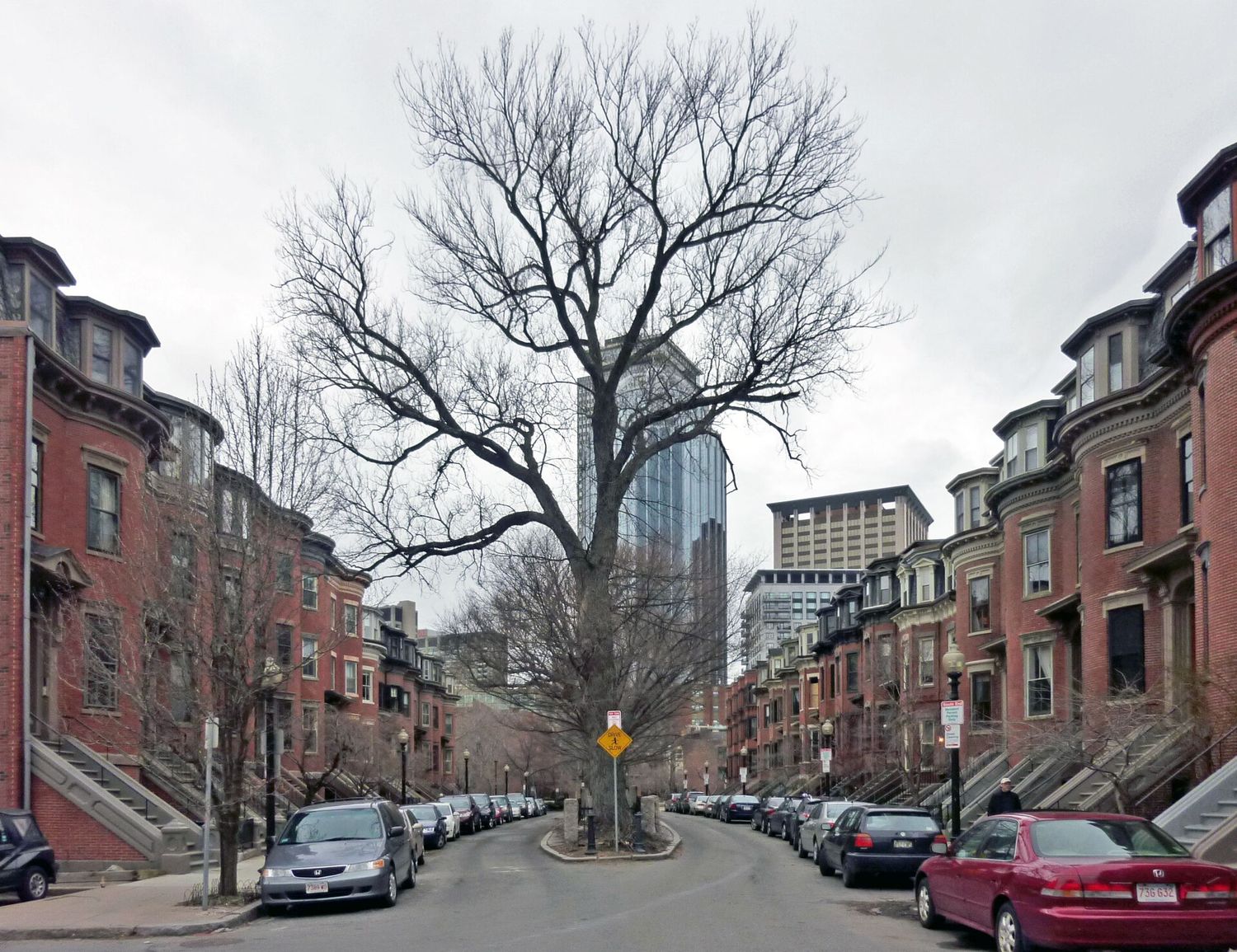
If you ask someone who lives in Boston where to eat, this is what they say. The stretch of Washington Street south of Herald Street — locally the SoWa end — and Tremont Street through the middle of the neighborhood together carry the best concentration of serious cooking in the city, and it is aimed squarely at people who live within ten minutes of it.
Toro at 1704 Washington Street has been doing Spanish tapas since 2005 and is still the reference point; the grilled corn with lime, cheese and aioli is the dish everyone orders and everyone is right to. The neighborhood also has the city’s best brunch density, which on a Sunday means a wait everywhere and nobody minding.
Note the distinction that catches visitors: the South End is not South Boston. They are a mile apart, and Southie’s food scene is a different, more traditional thing entirely — pubs, an excellent old-school Italian bakery culture, and Sullivan’s at Castle Island, a seasonal shack by the water that has been selling hot dogs and fried clams since 1951.
Chinatown
Small, dense, and the best value in central Boston by a wide margin. It is also where the city eats after midnight, because the kitchens run late and restaurant workers finish their shifts and come here.
Dim sum on a weekend morning — pushed around on carts in the older places — is the single best-value meal downtown. Hand-pulled noodles, Cantonese roast meats hanging in the window, Vietnamese pho on the Washington Street edge, and Taiwanese beef noodle soup are all within four blocks of each other. Look for the places with Chinese-language menus on the wall and a line of people who are not carrying maps.
Seaport and the waterfront
New, expensive and competent. The restaurants here are mostly well-run and mostly branches, the rooms are big, and the harbor views from the outdoor tables are genuinely good on a July evening. Oyster bars along Fort Point do well.
What to be careful about: you are paying a premium for the water. A meal that costs a certain amount in the Seaport costs meaningfully less two miles away for the same or better cooking. The Barking Crab, on the channel, is an institution and a good time — a heated tent, paper on the tables, buckets of shellfish — but you are buying the setting, not the kitchen, and that is a fair trade only if you know you are making it.
Back Bay
Newbury Street and Boylston Street, which means a lot of restaurants with excellent sidewalk seating and menus written for people out shopping. There are serious kitchens here — the steakhouses are among the best in the city, and there is a strong run of oyster bars and Greek and Mediterranean cooking on the side streets — alongside a great many places you are paying Newbury Street rent to sit in.
The reliable Back Bay move is bakeries and lunch rather than dinner. This is where the good coffee is, the pastry is excellent, and a sandwich eaten on a bench on the Commonwealth Avenue Mall costs a fifth of what the same block charges after dark.
Cambridge and Somerville
Across the river the food gets more interesting and less expensive at the same time, which is the reverse of how these things usually work, and it is because both cities are full of students and academics who eat out constantly and will not overpay.
Oleana at 134 Hampshire Street in Cambridge has been doing eastern Mediterranean cooking since 2001, has a garden that fills the moment the weather turns, and is one of the few restaurants in greater Boston that a visitor should genuinely plan around. Sarma in Somerville is its livelier sibling, meze brought around on trays. Sofra, on the Cambridge–Watertown line, is the bakery version of the same kitchen and is worth a bus ride.
Harvard Square has the best cheap eating in the region — Mr. Bartley’s has been grilling burgers there since 1960, cash and a line — and Central and Inman Squares have the best bars. Toscanini’s ice cream in Cambridge is the local benchmark, and the burnt caramel is not up for debate.
Dorchester, East Boston and Allston
Where the city’s actual immigrant food cultures live, and where visitors essentially never go.
Dorchester Avenue south of Andrew Square is one of the great Vietnamese food streets in the eastern United States — pho, banh mi, bun cha, at prices that will make you recalculate what you spent in the Seaport. Dorchester also has Cape Verdean, Haitian and Jamaican cooking that exists nowhere else in New England at this quality.
East Boston, one stop on the Blue Line, is the best Latin American food in the city — Salvadoran pupusas, Colombian, Mexican — plus a famous old pizza and grilled-meat institution near the airport. It also has the finest skyline view in Boston from Piers Park, which makes it a genuine evening out rather than just a meal.
Allston, on the Green Line B branch, is Korean, Japanese and Chinese food aimed at students, open late, and cheap.
Drinking
Boston drinks beer, and it has done since long before craft brewing made that respectable. The Boston Beer Company runs a brewery in Jamaica Plain, on the Orange Line, where the tour has been a fixture for decades. Harpoon, on the Seaport waterfront, has a proper beer hall with soft pretzels the size of a dinner plate and is one of the more genuinely enjoyable afternoons in that neighborhood. Trillium, in Fort Point, turned New England hazy IPA into an export.
For actual bars rather than breweries: Cambridge and Somerville have the best of them — Central Square, Inman Square and Union Square in particular, where the cocktail bars are serious and the dive bars are real. Charlestown and Southie keep the old neighborhood pubs. The South End has the best-designed rooms. Downtown around Faneuil Hall has the loudest and the worst.
Two local notes. Massachusetts has no happy-hour drink discounting — the practice has been banned since the 1980s — which is why “happy hour” here means discounted food and oysters rather than cheap drinks. And last call is generally 1am, with the T stopping around the same time, so evenings end more abruptly than visitors expect.
The Places Not Worth Your Money
Every city has these. Boston’s are unusually concentrated, which at least makes them easy to avoid.
- The Quincy Market food court. A shopping-mall food hall inside a handsome 1826 granite building. Faneuil Hall next door is free and genuinely worth twenty minutes; the food behind it is not worth twenty dollars. The North End is an eight-minute walk.
- The Union Oyster House. Trading since 1826 and the oldest continuously operating restaurant in the country, with the toothpicks, the semicircular oyster bar and the Kennedy booth upstairs. Go for a dozen oysters at the bar and the history. Do not go for dinner expecting the food to match the room.
- Cheers on Beacon Hill. The exterior of the Bull & Finch Pub was filmed for the show’s opening. The interior everyone remembers was a soundstage in California, so what is inside looks nothing like it. It is a gift shop with a bar attached. Photograph the door and walk on.
- Anything with a person outside holding a menu. Particularly at the Greenway end of Hanover Street and around Faneuil Hall. A restaurant that needs to catch you on the sidewalk is telling you something.
- Harbor dinner cruises. The harbor is lovely and the food is banquet food. Take a $25 Harbor Islands ferry or a sunset cruise, and eat on land.
- Hotel breakfast at the quoted price, when there is a very good bakery within one block of essentially every central hotel in Boston.
Eating Well Without Spending a Fortune
Boston is expensive, but the gap between the expensive way and the good way is mostly a matter of where you stand.
- Lunch instead of dinner. Many of the serious kitchens serve a version of the same cooking at lunch for a great deal less.
- Oyster happy hour, roughly 4 to 6pm across the city, is the single best-value ritual Boston has.
- Chinatown dim sum on a weekend morning feeds four people properly for what two would spend on brunch in the South End.
- North End lunch counters — Galleria Umberto and its equivalents — feed you for a few dollars.
- Public markets. Haymarket, on Blackstone Street on Fridays and Saturdays, is a genuine open-air produce market that has been running since the 1830s, and the prices are startling. The Boston Public Market near Haymarket station is indoors, year-round and full of New England producers.
- Eat on the Greenway or the Esplanade. A sandwich and a bench beats a mediocre restaurant every time, and Boston in September is built for it.
| Meal | Rough per person | Where |
|---|---|---|
| Bakery breakfast and coffee | $ | Anywhere central |
| North End counter lunch | $ | Hanover and Salem Streets |
| Chinatown dim sum | $ | Beach and Tyler Streets |
| Oyster happy hour | $$ | Seaport, Back Bay, South End |
| Lobster roll and chowder | $$ | North End, waterfront |
| South End or Cambridge dinner | $$$ | Tremont, Washington, Hampshire St |
| Back Bay steakhouse | $$$$ | Boylston and Berkeley |
Where to Eat Near the Main Sights
The practical problem most visitors actually have: it is one o’clock, you are standing somewhere specific, and everything within sight looks like a trap. What to do from each of the main tourist positions.
| You are at | Walk to | How far |
|---|---|---|
| Faneuil Hall / Quincy Market | The North End, via the Greenway | 8 min |
| Boston Common / the State House | Chinatown, or Beacon Hill’s Charles Street | 10 min |
| Boston Public Library / Copley | The South End, over Columbus Avenue | 10 min |
| The Museum of Fine Arts | Mission Hill or the Fenway side streets | 10 min |
| The New England Aquarium | The North End, or a Fort Point oyster bar | 10–12 min |
| Charlestown Navy Yard | City Square, or the ferry back to the North End | 10 min |
| Harvard Square | Stay — the cheap eating here is excellent | 0 min |
| Fenway Park | Brookline’s Beacon Street, or Allston | 12–15 min |
The pattern is consistent: in Boston, ten minutes of walking almost always moves you from a tourist price to a resident price. Because the city is so compact, that ten minutes is rarely a real cost.
Eating by Season
New England food is more seasonal than most American cooking, and a trip in February is genuinely a different menu from a trip in September.
- Oysters are at their best in the cold months. The old rule about only eating them in months containing an R is largely obsolete now that most are farmed and refrigerated, but there is truth underneath it: oysters spawn in warm water and go softer and milkier in high summer. October through April is the good window.
- Lobster prices swing with the catch. Late summer, when the shedders come in, is when soft-shell lobster is at its cheapest and sweetest — and it is messier to eat, which is part of the point.
- Fried clams and seafood shacks are a summer thing, and many of the best ones are seasonal and simply shut from fall.
- Farmers markets run from roughly June to late October across the city, with the SoWa Open Market in the South End on Sundays the biggest of them. Haymarket, by contrast, runs year-round on Fridays and Saturdays.
- Restaurant week comes twice a year, usually late winter and late summer, with fixed-price menus at a large number of the better kitchens. It is the cheapest way into rooms that are otherwise expensive, and it books out.
Vegetarians, vegans and dietary needs
Better than the seafood-heavy reputation suggests. The South End and Cambridge are strong across the board, the eastern Mediterranean restaurants are built around vegetables rather than treating them as an afterthought, Chinatown and Allston have serious Buddhist-vegetarian and tofu-forward cooking, and Boston’s student population means gluten-free and dairy-free are handled competently almost everywhere. The one weak spot is the traditional North End and the old seafood houses, where the vegetarian option can be an obligation rather than a dish.
Practicalities
Booking
Boston is a mid-week city with a corporate base, so Tuesday and Wednesday are easier than you would expect and Friday and Saturday in the South End and Seaport need a reservation two to three weeks out. The North End is largely walk-in by tradition. Neptune Oyster does not take reservations at all, and neither do several of the North End’s best-loved rooms — that is the system, not an oversight.
Timing
Kitchens close earlier here than in most large American cities. Outside Chinatown and Allston, plan to have ordered by 9:30pm on a weeknight. The T stops running around 12:30 to 1am, which quietly ends a lot of evenings.
Tipping and tax
Standard American practice: 18 to 20% at a full-service restaurant, and Massachusetts adds meals tax on top of the menu price. Both are on top of what you read on the menu, so a listed price is roughly four-fifths of what you will actually pay.
Local vocabulary
A frappe has ice cream in it; a milkshake, traditionally, does not. A regular coffee means with cream and sugar, so specify if you want it black. Quahog, pronounced “co-hog,” is a hard-shell clam. And Dunkin’ — founded down the road in Quincy in 1950 — is not a joke here; it is genuinely how a large part of the city starts the day.
Frequently Asked Questions
What food is Boston famous for?
Seafood above all: New England clam chowder, lobster rolls, whole-belly fried clams and cold-water oysters from Wellfleet, Duxbury and Island Creek. Beyond that, Italian-American cooking in the North End, Boston cream pie — invented at the Parker House in 1856 and the official state dessert — and Boston baked beans, which give the city its nickname and which almost nobody actually orders any more.
Where do locals eat in Boston?
The South End for serious dinners, Chinatown for value and late nights, Cambridge and Somerville for interesting cooking at fair prices, and Dorchester Avenue for the best Vietnamese food in the region. Locals eat in the North End too, but further in from the Greenway than most visitors get, and rarely between noon and 3pm.
Is the North End worth it for food?
Yes, with a rule: walk past the first two blocks of Hanover Street and turn off onto Salem, Prince, North Square or Thacher. The restaurants nearest the Greenway rely on Freedom Trail traffic; the ones further in rely on people coming back. Anywhere with someone outside holding a menu is not the one you want.
Where is the best lobster roll in Boston?
Neptune Oyster on Salem Street in the North End has been the benchmark for both hot buttered and cold mayonnaise versions for two decades. It has around twenty seats, takes no reservations, and the wait regularly passes ninety minutes at peak times. If that is not practical, the waterfront seafood shacks and the better oyster bars do good versions, and a conspicuously cheap lobster roll anywhere is a warning rather than a bargain.
Should I eat at Quincy Market?
Not if you have a choice. It is a shopping-mall food court inside an 1826 granite market building, and the North End is eight minutes’ walk away. Faneuil Hall next door is free, historically significant and worth visiting — the food hall behind it is not the same thing.
Is the Union Oyster House good?
It is historically remarkable — trading since 1826, the oldest continuously operating restaurant in the United States, with the original oyster bar and the booth John F. Kennedy used. Go for a dozen oysters at the bar and to sit in the room. Do not go expecting the kitchen to match the reputation, because it does not, and there is much better seafood four hundred yards away.
How much does dinner cost in Boston?
A North End counter lunch or Chinatown dim sum runs to a few dollars a head. A casual dinner with a drink lands in the mid-range, and a South End or Cambridge dinner with wine is a serious sum. Remember that Massachusetts meals tax and an 18 to 20% tip both sit on top of the menu price, so budget about a quarter more than the listed cost.
Do Boston restaurants take reservations?
Most do, but several of the best-known deliberately do not — Neptune Oyster and a number of the older North End rooms are walk-in only, and the line is part of the arrangement. Book two to three weeks ahead for the South End and Seaport on a Friday or Saturday. Weeknights are much easier than in comparable American cities.
What should I eat if I only have one meal in Boston?
Oysters and a hot buttered lobster roll, somewhere small, in the North End or on the waterfront. If seafood is not for you, a plate of pasta in the North End away from Hanover Street, followed by a plain ricotta cannoli filled to order at Modern Pastry.
Boston’s food map is really an immigration map, and it rewards knowing which community settled where and when. Our guide to Boston neighborhoods goes district by district through the whole city, including the outer ones – Dorchester, East Boston, Roxbury, Allston – where the best eating is and where almost no visitor goes.
The best eating in the North End all year happens on four evenings in August, when the feast streets fill with stalls and nobody is taking reservations. Our guide to Boston events has the feast dates, along with Dine Out Boston and the rest of the year’s food-adjacent calendar.
Most kitchens in this city stop serving by around ten on a weeknight, which is a fact worth planning dinner around. Our guide to Boston nightlife covers what happens afterwards — the bars worth walking to, the breweries, and Chinatown, which is the only reliable answer to a one o’clock appetite.
If you want to take some of this home, the Boston Public Market at Haymarket sells nothing but New England producers and is open year-round. Our guide to shopping in Boston covers it alongside Haymarket’s open-air produce market next door, which has run on the same site since the 1830s.
This city’s strength is small rooms with close tables, which is exactly what a good dinner for two needs. Our guide to romantic things to do in Boston covers which neighborhoods suit that best, why a 5.30pm table is often the better one, and what to do with the hours either side.
The Quincy Market food hall is where most visitors eat on the Freedom Trail, and it is rarely where they should. Our guide to Faneuil Hall Marketplace is honest about the food court, points out what is worth ordering there, and lists four better options within ten minutes’ walk, from the Union Oyster House to the Boston Public Market.