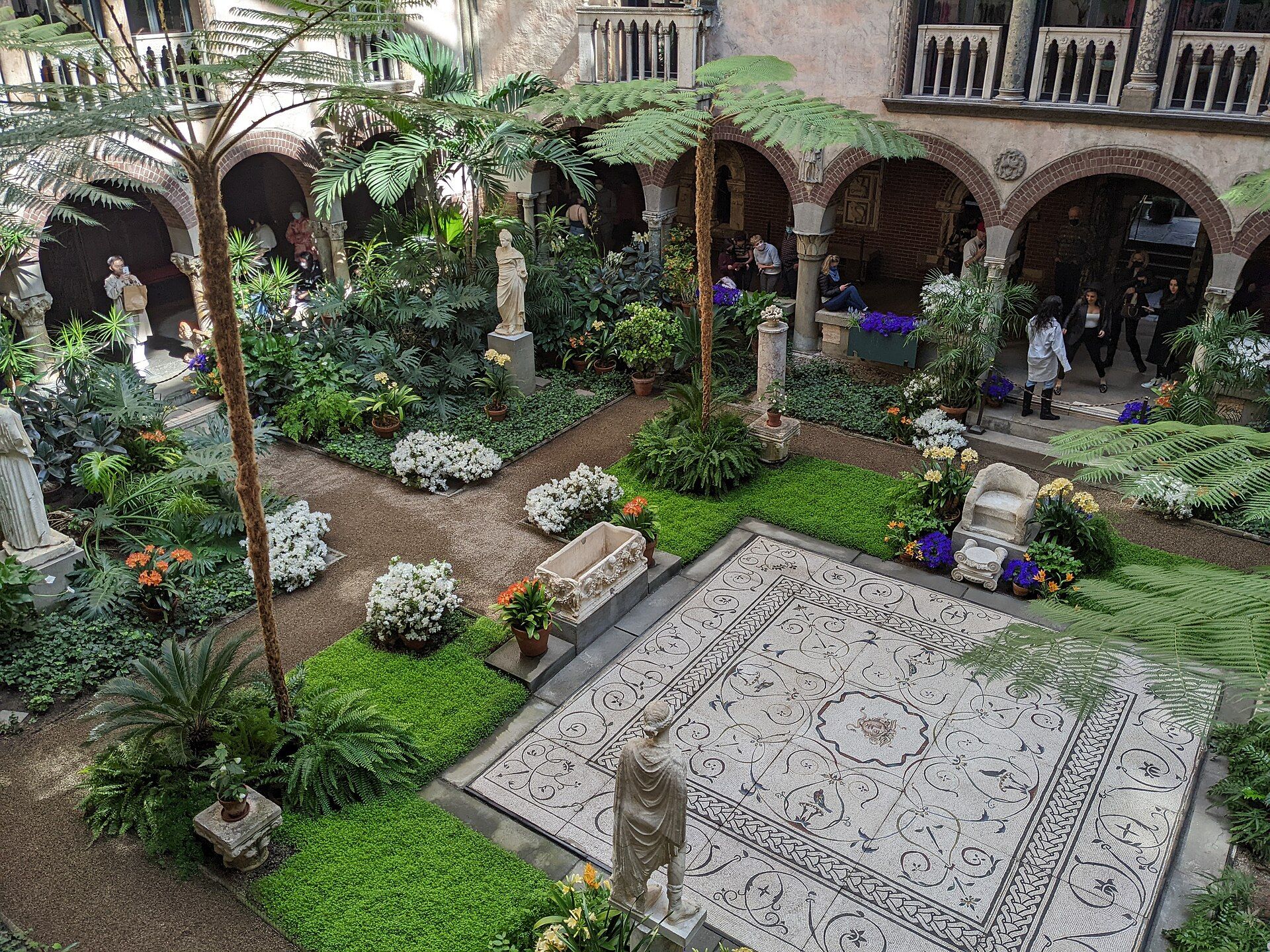
In a courtyard on the Fenway there are thirteen empty frames still hanging on the walls, because the will of the woman who built the place forbids anyone from rearranging a single object, and the paintings that belong in them were cut out and carried away in March 1990 and have never been found. That is a fairly good summary of what makes Boston museums worth the trip: a city with the collections of a much larger one, several of them assembled by obsessives, and a habit of doing things its own way regardless of what anyone else thinks.
This guide covers the major museums with current prices and closing days, the substantial free tier that almost nobody uses properly, the smaller and stranger institutions, and the classical music and theater that sit alongside them. Prices were checked in September 2026 — confirm before you travel.
Start Here: Which One Should You Pick?
- One museum, three hours: the Isabella Stewart Gardner. It is a complete object rather than a collection, and it is the one you will still be thinking about a year later.
- One museum, a whole day: the Museum of Fine Arts. Genuinely world class and far too big to do properly in less.
- With children: the Museum of Science, then the New England Aquarium.
- On no money at all: the Harvard Art Museums and the Boston Public Library. Both free, both serious.
- Something you cannot see anywhere else: the glass flowers at Harvard, or the Mapparium.
- An evening: Thursday, when the Gardner and the ICA are both free from 5pm and the MFA is open until 10.
The Closing-Day Problem
Deal with this before you plan anything else, because it wrecks more Boston itineraries than the weather does.
- Museum of Fine Arts — closed Tuesdays.
- Isabella Stewart Gardner — closed Tuesdays.
- Institute of Contemporary Art — closed Mondays.
- Harvard Art Museums — Tuesday to Sunday, so closed Mondays.
- Museum of Science and the New England Aquarium — open daily.
So Tuesday is the bad art day and the good walking day: put the Freedom Trail, Cambridge or a day trip there. Thursday evening is the best-value slot in the entire city.
Why a City This Size Has These Collections
Boston’s population is a little under 700,000 — smaller than Denver, smaller than Nashville — and it holds art that belongs in a city five times the size. There are three reasons, and they are all visible in the galleries.
The China trade. From the 1780s Boston and Salem merchants made enormous fortunes shipping to Canton, and they brought back porcelain, lacquer, textiles and paintings alongside the tea. The result is that American collections of Asian art were seeded here first, which is why the MFA’s Japanese holdings are among the best outside Japan and why Salem’s Peabody Essex has the finest Asian export art collection in the country.
Brahmin philanthropy. The families who made that money spent the nineteenth century convinced that Boston should be the Athens of America, and they founded institutions accordingly. The MFA in 1870, the Boston Symphony Orchestra in 1881, the Boston Public Library’s palace on Copley Square in 1895 — all within a generation, all funded by private money and given to the public, and all built to a standard meant to argue a point about what a city owed its citizens.
Individual obsessives. Then there is the Gardner, which is what happens when one person with money, taste and no interest in anyone’s opinion builds exactly the museum she wants. Boston has an unusual number of institutions like this — the Athenaeum, the Gibson House, the glass flowers at Harvard — where the collection reflects a single mind rather than a committee. They are the ones worth going out of your way for.
The Major Museums
Museum of Fine Arts
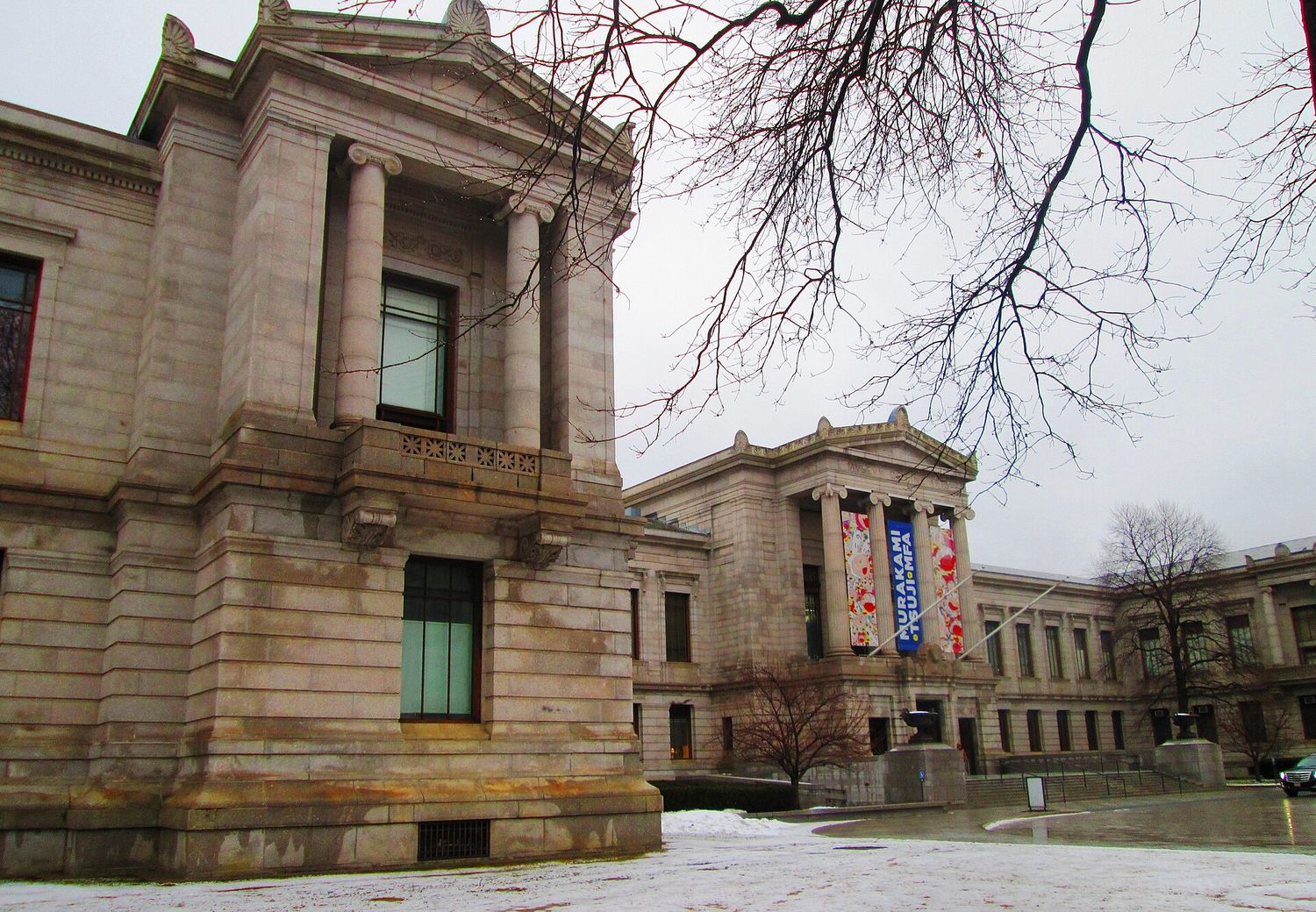
$30 adult, $14 children 7–17, free under 7. Closed Tuesdays; open until 10pm Thursday and Friday. Green Line E to Museum of Fine Arts.
Founded in 1870 and one of the largest art museums in the world, with something on the order of half a million objects. That scale is the problem and the point: you cannot see it, so choose.
The three collections that make it internationally significant:
- Ancient Egypt and Nubia. Built largely from a joint Harvard–MFA excavation at Giza that ran for decades, and outside Cairo it is among the finest anywhere. The Old Kingdom sculpture is the reason to come.
- American art. The Art of the Americas wing covers pre-Columbian work through to the twentieth century, and includes Copley, Sargent, Homer and Revere’s silver — including the Sons of Liberty Bowl, which is as close to a national relic as a punchbowl gets.
- Japanese art. One of the best collections outside Japan, assembled in the late nineteenth century when Boston had a peculiar and productive obsession with the country.
How to do it: pick two wings and ignore the rest. Three hours is a minimum, five is comfortable, and a full day is possible but only if you like museums more than you like your feet. The Thursday and Friday late openings are the best time to go — quieter, and the light in the courtyards is better.
Isabella Stewart Gardner Museum
$25 adult, free under 18, $22 senior, $15 student. Closed Tuesdays; free Thursday 5–9pm. Free for life if your name is Isabella, with 24 hours’ notice and ID.
Not really a museum. Isabella Stewart Gardner built a Venetian palazzo on the Fenway, arranged her own collection inside it exactly as she wanted, and left a will stipulating that nothing be moved, added or sold — on pain of the whole collection being auctioned and the proceeds sent to Harvard. So what you walk through is one woman’s taste, frozen in 1924, four galleried floors around a glass-roofed courtyard planted for the season.
There is no chronology, no wall text to speak of, and a Titian hung above a chair. It is disorienting and it is the best museum experience in the city.
In March 1990, two men in police uniforms talked their way in overnight and left with thirteen works, including Vermeer’s The Concert — one of only thirty-odd Vermeers in existence — and three Rembrandts. It remains the largest unsolved art theft in history, nothing has been recovered, and because the will forbids rearrangement, the empty frames still hang exactly where the paintings were. Standing in front of them is the strangest thing you will do in a museum anywhere.
What is still there is remarkable in its own right: Titian’s Rape of Europa, generally considered the finest Italian Renaissance painting in America, which Gardner bought in 1896 and hung in a room built around it; Botticelli, Raphael, Piero della Francesca; John Singer Sargent’s portrait of Gardner herself, which caused enough scandal in 1888 that her husband refused to let it be shown publicly again in his lifetime. Sargent’s late El Jaleo occupies its own Spanish cloister downstairs, lit to look like a stage.
The 2012 Renzo Piano wing next door handles everything the palace cannot — ticketing, café, a concert hall, temporary shows — and leaves the original building to be itself. It is one of the more tactful modern additions to a historic museum anywhere.
Allow two to three hours. Go on a Thursday evening if you can; it is free from 5pm and the courtyard is best in low light.
Museum of Science
Around $33 adult, $28 children 3–11, $29 senior. Open daily 9–5. Planetarium and Omni theater around $6 each on top. Green Line to Science Park.
Sits on a dam across the Charles, which means it is technically in both Boston and Cambridge. Over 700 exhibits, a large lightning show in the Theater of Electricity, a full-scale Tyrannosaurus, and the sort of hands-on programming that absorbs a child for six hours without either of you noticing.
Honest note for adults traveling without children: it is aimed squarely at families and school groups, and on a rainy Saturday in February it is extremely loud. Go early on a weekday or go elsewhere.
Institute of Contemporary Art
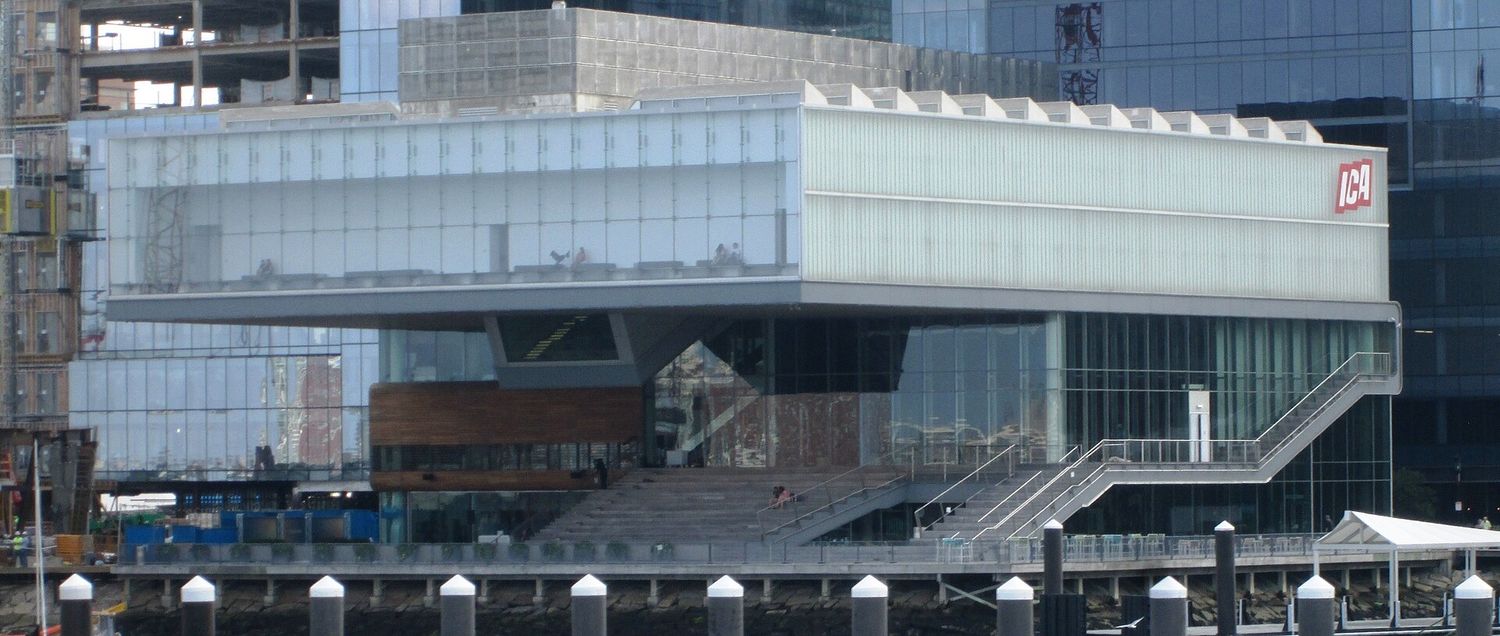
$20 adult, free under 18, $17 senior, $15 student. Closed Mondays; free Thursday 5–9pm. Silver Line to Courthouse.
Founded in 1936 — it is older than the Museum of Modern Art in New York, though it spent most of its life without a permanent collection — and rehoused in 2006 in a Diller Scofidio + Renfro building that cantilevers its top floor out over the harbor. The building is the main event, and the glass-walled reading room at the water end is one of the best rooms in Boston.
The collection is modest and the exhibition program is where the strength is. Ninety minutes is plenty. In summer the ICA also runs the Watershed, a converted industrial space across the harbor in East Boston, free and open seasonally, reached by a short water shuttle — one of the best-kept secrets on this list.
New England Aquarium
$39.95 adult, $30.95 children 3–11, $37.95 senior 60+. Weekdays 9–5, weekends 9–6. New England residents get $5 off outside peak. Blue Line to Aquarium.
Built around a four-story cylindrical Giant Ocean Tank holding a Caribbean coral reef, which you spiral down around on a ramp. Sea turtles, penguins, and a serious conservation and rescue program behind the scenes.
It is expensive for its size, and on a summer weekend the ramp becomes a slow-moving queue. Go at opening. The whale watches that leave from the Aquarium’s own dock, roughly April to November, are arguably the better product from the same organization.
The Free Ones, Which Are Better Than They Sound
Harvard Art Museums
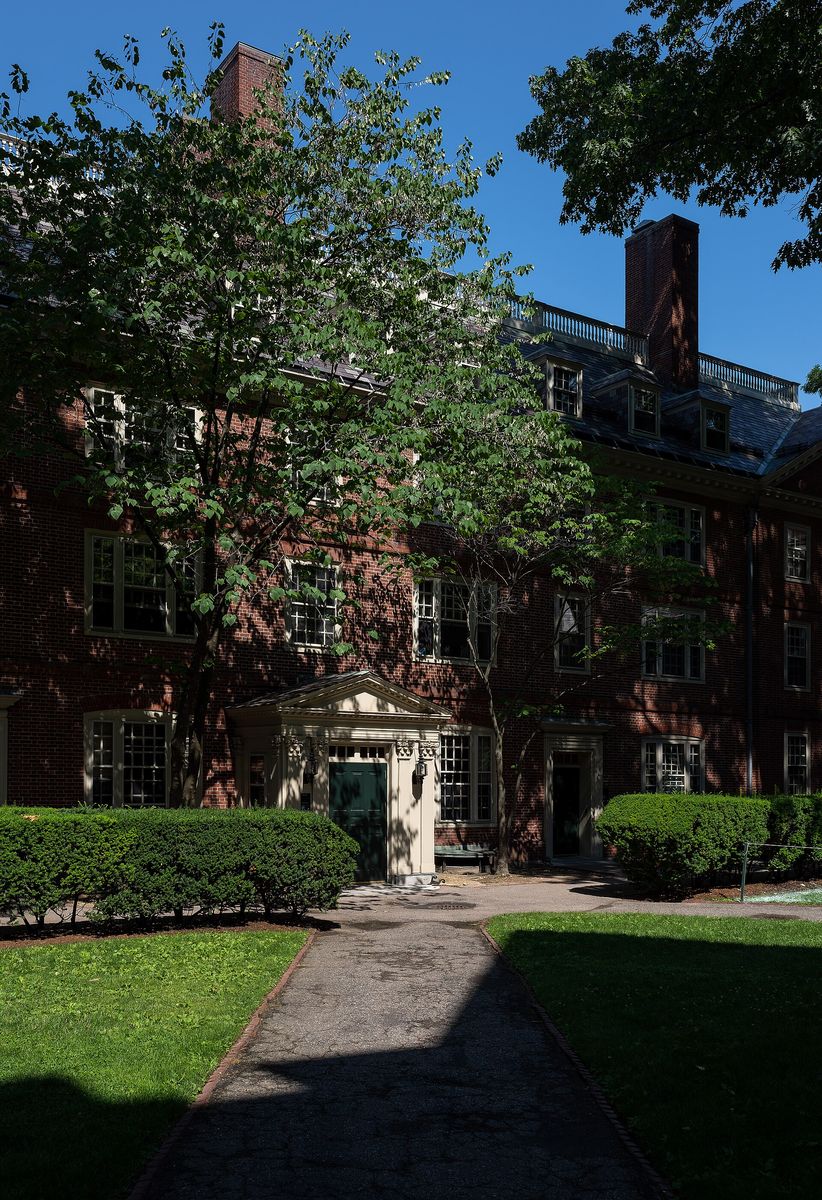
Free to all. Tuesday to Sunday, 10–5. Red Line to Harvard.
Three museums — the Fogg, the Busch-Reisinger and the Arthur M. Sackler — combined under a Renzo Piano roof, and free to everyone since 2023. That is remarkable, because this is a serious collection: French Impressionists and post-Impressionists, the best Bauhaus holdings outside Germany in the Busch-Reisinger, Asian and ancient Mediterranean art in the Sackler, and a top-floor conservation center you can look into.
It is the best value in the region by a distance, and most visitors to Boston have never heard of it. Two hours.
Boston Public Library
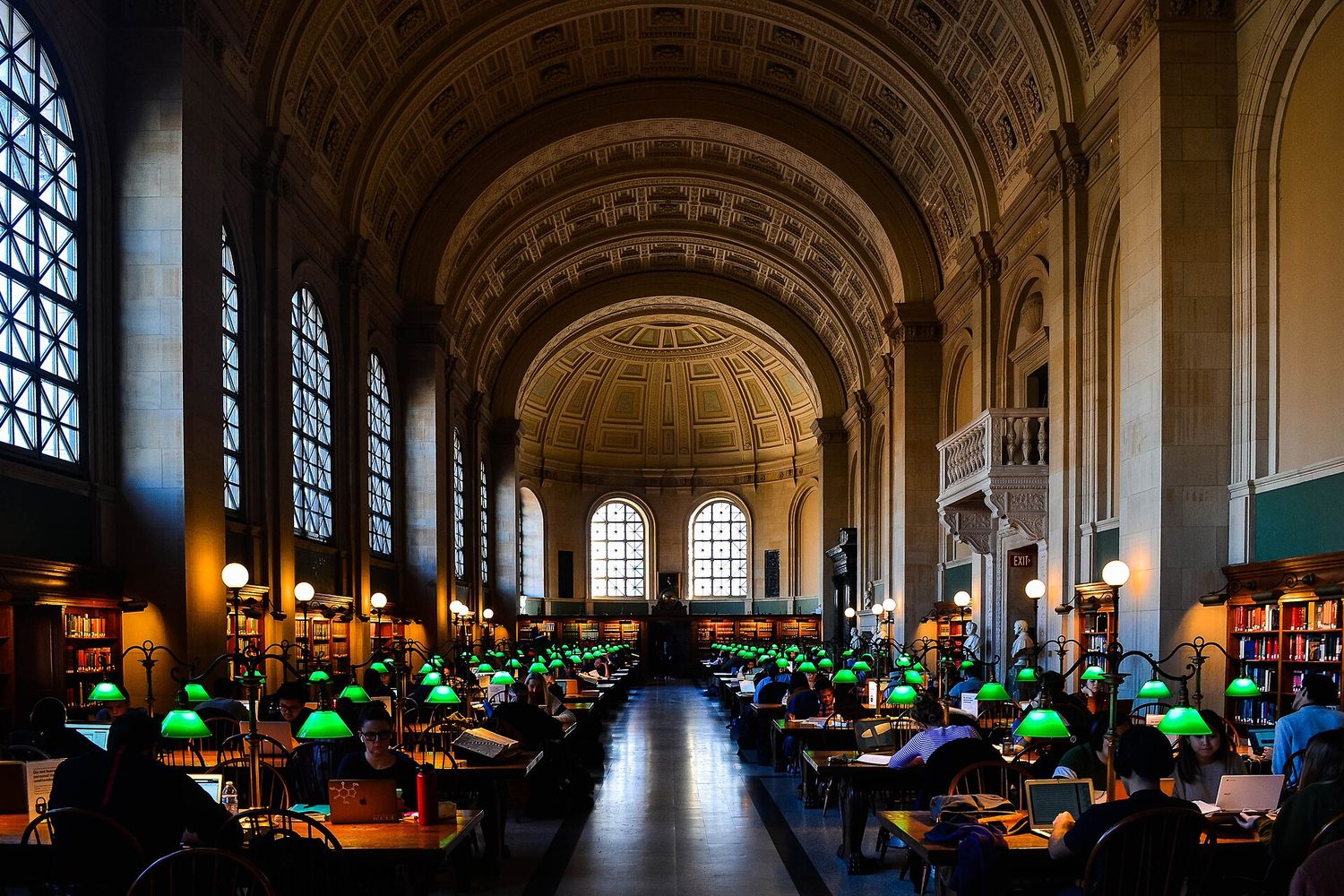
Free. Copley Square, Green Line to Copley or Orange Line to Back Bay.
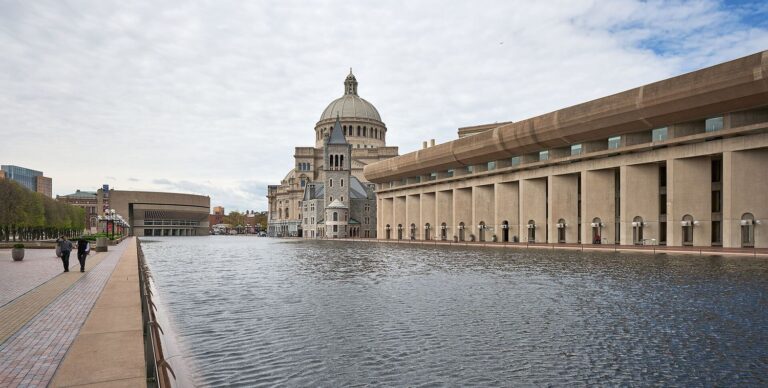
The McKim Building opened in 1895 as the first large free municipal library in America, and it was built like a palace on purpose — the founders’ argument was that a public institution should be as fine as a private one. Bates Hall, the 218-foot barrel-vaulted reading room lined with green lamps, is the room everyone photographs.
What almost nobody does is go to the third floor, where John Singer Sargent spent nearly thirty years painting a mural cycle on the history of religion. There are also Puvis de Chavannes murals on the staircase, Edwin Austin Abbey’s Holy Grail series, and a courtyard modeled on a Roman palazzo. Free architecture and art tours run most days.
USS Constitution Museum
Free; suggested donation $10–15 adult, $5–10 child. Charlestown Navy Yard.
The most child-friendly museum in Boston and it costs nothing. You haul on a rope, try a hammock, and vote on whether to engage a British frigate. The ship herself, next door, is also free — bring photo ID if you are 18 or over, since it is an active Navy installation.
Museum of African American History
Modest admission; check current rates. Beacon Hill, Charles/MGH or Park Street.
Two buildings on the north slope of Beacon Hill: the African Meeting House of 1806, the oldest surviving Black church building in the United States, where William Lloyd Garrison founded the New England Anti-Slavery Society and where the 54th Massachusetts Regiment was recruited; and the Abiel Smith School of 1835, the first public school in the country built for Black children. It is the anchor of the 1.6-mile Black Heritage Trail, which National Park Service rangers lead free in season.
For historical weight per square foot, nothing on the Freedom Trail beats it.
Smaller and Stranger
The Mapparium
A three-story stained-glass globe that you walk through, on a glass bridge, at the Mary Baker Eddy Library in Back Bay. It was completed in 1935 and, because it has never been updated, it shows the political boundaries of the world as they were that year — an accidental time capsule of empire. The acoustics are extraordinary: the glass sphere reflects sound perfectly, so a whisper at one end arrives at the other with full clarity. Twenty minutes, modest admission, and unlike anything else in America.
Harvard Museum of Natural History
Home to the Blaschka Glass Flowers: roughly four thousand botanical models made entirely of glass by Leopold and Rudolf Blaschka, a father and son working in Dresden between 1887 and 1936, commissioned because dried specimens lose their color and wax models melt. They are botanically exact and they look alive. Nobody has ever fully reproduced the technique. It is one of the strangest and most beautiful things in New England.
JFK Presidential Library and Museum
Out at Columbia Point in Dorchester, in an I. M. Pei building on a spit of land with water on three sides. Consistently underrated and genuinely moving — the 1960 campaign, the Cuban Missile Crisis, and a glass pavilion at the end that simply looks out at the harbor. Red Line to JFK/UMass and a free shuttle.
The house museums
Boston does small historic houses well. The Nichols House on Beacon Hill preserves a Brahmin family home; the Gibson House in Back Bay is a Victorian interior essentially untouched since the 1860s, hoarded intact by a descendant who intended it as a museum; the Otis House is Bulfinch. Each takes under an hour and each shows you a version of the city no gallery can.
The MIT Museum and the Boston Athenaeum
The MIT Museum moved into a purpose-built home in Kendall Square in 2022 and covers robotics, artificial intelligence and the history of an institution that has shaped a good deal of the modern world. The Boston Athenaeum on Beacon Street, founded in 1807, is one of the oldest independent libraries in the country and admits visitors to part of the building — a genuinely nineteenth-century reading room in continuous use.
The history museums proper
Boston’s Revolutionary sites are covered in detail in our Freedom Trail guide, but three of them are museums in their own right and belong on this list.
Revolutionary Spaces runs the Old State House and the Old South Meeting House on a single $18 adult ticket ($16 senior, $10 children 6–17), both open daily 10–5, both downtown and eight minutes apart. The Old State House museum sits inside the 1713 building the Declaration was read from; Old South is the room where five thousand people argued about tea in December 1773.
The Boston Tea Party Ships and Museum on the Congress Street Bridge is $35–39 for adults and $26 for children 3–12 on timed entry — a full-scale immersive production with costumed actors, a replica brig and a chest to throw overboard. It is genuinely well made and genuinely expensive, and it is either exactly your thing or exactly not.
The Paul Revere House, at $6 for adults and $1 for children 5–17, is the cheapest historic interior in the city and the only c.1680 house you will stand in.
Very small, very specific
- The West End Museum — free, and tells the story of the neighborhood that urban renewal demolished in the late 1950s, displacing around 7,000 people. Short, sharp and told from the inside.
- The Sports Museum at TD Garden — for anyone who cares about the Celtics or the Bruins, and mystifying for anyone who does not.
- The Commonwealth Museum at Columbia Point, free, which holds the Massachusetts state archives including the 1780 constitution — the oldest written constitution still in effect anywhere in the world, and the model for the federal one.
- The Museum of the National Center of Afro-American Artists in Roxbury, in a Gothic Revival mansion on Walnut Avenue, with a collection of Black art from Africa, the Caribbean and the Americas.
- Larz Anderson Auto Museum in Brookline, which holds America’s oldest private car collection in a carriage house built to look like a French château.
Music, Theater and the Rest
Symphony Hall and the Boston Symphony Orchestra
Symphony Hall, which opened in 1900, was the first concert hall in the world designed using scientific acoustics — the young Harvard physicist Wallace Clement Sabine worked out the mathematics of reverberation specifically for it. It is still regularly ranked among the two or three best-sounding halls anywhere, and the Boston Symphony Orchestra, founded in 1881, has played there ever since.
The same organization becomes the Boston Pops for the lighter season, plays the Fourth of July concert on the Esplanade, and decamps to Tanglewood in the Berkshires for the summer. Rush tickets and open rehearsals are the affordable way in; ask at the box office rather than assuming you cannot afford it.
Theater
The Theater District holds the big restored houses — the Boston Opera House, the Emerson Colonial, the Wang and the Shubert — which take touring Broadway productions, and Boston has a long history as the pre-Broadway try-out town where shows were fixed before New York saw them. For new work rather than tours, the American Repertory Theater in Cambridge and the Huntington are the serious companies, and several ART productions have gone on to Broadway.
Live music
A student city with a music college in the middle of it produces a lot of live music at every scale. Berklee has free and cheap student performances almost nightly during term. Cambridge and Allston hold the small rooms — folk, indie and jazz — and Boston’s folk revival history is real: this is where a young Joan Baez played coffee houses in Harvard Square in the late 1950s.
Public and street-level art
The SoWa district in the South End has galleries and studios with open evenings on the first Friday of the month. The Rose Kennedy Greenway commissions rotating public art including large-scale murals. And Boston’s older public sculpture is worth a walk in itself — the Shaw Memorial by Augustus Saint-Gaudens, facing the State House across Beacon Street, is the finest of them by a distance.
Getting In for Less
| Route | What it saves | Catch |
|---|---|---|
| Thursday 5–9pm | Gardner and ICA free; MFA open to 10pm | Busy, and one evening only |
| Harvard Art Museums | Free always | Closed Mondays |
| Boston Public Library | Free always | None |
| Under-18 pricing | Free at the Gardner and the ICA | Not the MFA, which charges from 7 |
| Student and senior rates | $5–8 off at most museums | Bring ID |
| Boston CityPASS, $84 adult / $72 child 3–11 | About $53 across four of seven | Only pays if you do the big paid attractions |
| New England resident discounts | $5 off at the Aquarium off-peak | Residents only |
A note on CityPASS: at $84 for adults you choose four of seven — the Aquarium, Museum of Science, Boston Harbor City Cruises, View Boston, Franklin Park Zoo, Harvard Museum of Natural History and the MFA. The popular four come to roughly $137 at the gate, so it saves about $53. It is good value for a family doing the big attractions. It includes nothing on the Freedom Trail, and it is poor value if your museum plan is the Gardner, the ICA and the Harvard Art Museums, none of which are on it.
One route that will not work for you: Boston-area public libraries lend heavily discounted museum passes to cardholders, which is a wonderful system and is for residents. Do not plan around it.
Practicalities
Bags, coats and cameras
Most of the larger museums require you to check anything bigger than a small bag, and backpacks generally have to be carried on one shoulder or checked entirely. Coat checks are usually free and worth using in winter. Photography without flash is permitted in the permanent collections of most of them and prohibited in temporary exhibitions; the Gardner does not allow photography at all, which after ten minutes stops feeling like a restriction and starts feeling like the point.
Accessibility
The purpose-built and recently renovated institutions — the MFA, the ICA, the Museum of Science, the Aquarium and the Harvard Art Museums — are fully step-free with lifts and accessible restrooms, and most lend wheelchairs at the entrance. The historic houses are the difficulty: eighteenth- and nineteenth-century buildings with narrow staircases and no elevator shafts, where upper floors are frequently inaccessible. The Gardner’s palace has lift access to all four levels. Call ahead for anything small and old.
Eating
Museum cafés here are better than average and priced accordingly. The MFA has several options including a proper restaurant; the Gardner’s café opens onto a garden and is a genuinely nice lunch. The cheaper move at the MFA and the Gardner is to walk five minutes into the Fenway or Mission Hill, where the student population keeps prices down.
Timing your visit
Weekday mornings between opening and about 11am are the quietest hours everywhere. School groups arrive mid-morning and leave by two. Weekend afternoons are the worst, particularly in bad weather, and February vacation week fills the family museums completely. If you have any flexibility, a Wednesday morning is worth more than a Saturday afternoon.
Two Museum Days That Work
The Fenway day. Green Line E to the Museum of Fine Arts. Three hours in two wings — Egypt and the Americas. Lunch. Ten minutes’ walk to the Isabella Stewart Gardner for two hours. Out into the Back Bay Fens, and if it is a Thursday, stay for the free evening at the Gardner and eat afterwards. Two of the best collections in America inside half a mile.
The Cambridge day. Red Line to Harvard. Harvard Art Museums, free, two hours. Lunch in Harvard Square. Harvard Museum of Natural History for the glass flowers. Walk down to the river and along to MIT for the museum in Kendall Square. Red Line home. Total admission cost: less than one MFA ticket.
What Is Not Worth It
- Trying to do the MFA in ninety minutes. You will pay $30 to walk through galleries at speed. Go to the Gardner instead, which is designed to be seen whole.
- The Aquarium on a summer Saturday afternoon. The central ramp becomes a standing queue. Open at 9, or go on a weekday.
- Buying CityPASS for an art trip. The Gardner, the ICA and the Harvard museums are not on it.
- Skipping the Boston Public Library because it is a library. It is free, it is one of the great American interiors, and it takes an hour.
- Paying for a hop-on hop-off bus between museums. The MFA and the Gardner are ten minutes apart on foot; everything else is on the T.
- Arriving anywhere at 3:30pm. Most of these close at 5, and the last hour is when the galleries start clearing.
Frequently Asked Questions
What is the best museum in Boston?
The Museum of Fine Arts is the most significant collection and the Isabella Stewart Gardner is the better visit. The MFA has around half a million objects, including world-class Egyptian, American and Japanese holdings, and needs most of a day. The Gardner is a single Venetian-style house arranged exactly as its founder left it in 1924, takes three hours, and is the one people remember.
How much do Boston museums cost?
The Museum of Fine Arts is $30 for adults and $14 for children 7 to 17; the Isabella Stewart Gardner is $25 and free under 18; the Institute of Contemporary Art is $20 and free under 18; the Museum of Science is around $33; the New England Aquarium is $39.95. The Harvard Art Museums, the Boston Public Library and the USS Constitution Museum are free.
Are there free museums in Boston?
Several, and they are good. The Harvard Art Museums have been free to everyone since 2023. The Boston Public Library is free and holds Sargent murals and Bates Hall. USS Constitution and its museum are free. On top of that, the Gardner and the ICA are both free on Thursday evenings from 5pm, and the MFA stays open until 10pm on Thursdays and Fridays.
Which Boston museums are closed on Tuesdays?
The Museum of Fine Arts and the Isabella Stewart Gardner Museum are both closed on Tuesdays. The Institute of Contemporary Art and the Harvard Art Museums are closed on Mondays. The Museum of Science and the New England Aquarium are open daily. Plan the Freedom Trail, Cambridge or a day trip for your Tuesday.
What was stolen from the Isabella Stewart Gardner Museum?
Thirteen works, in March 1990, taken overnight by two men dressed as police officers — among them Vermeer’s The Concert, three Rembrandts including his only seascape, and a Manet. Nothing has been recovered and it remains the largest unsolved art theft in history. Because Gardner’s will forbids any rearrangement of the collection, the empty frames still hang in their original positions.
Is the Boston CityPASS worth it for museums?
Only for the big paid attractions. At $84 adult and $72 child 3 to 11 you choose four of seven, and the common combination — Aquarium, Museum of Science, View Boston and the MFA — saves around $53 against gate prices. It does not include the Gardner, the ICA or the Harvard Art Museums, so an art-focused trip gets nothing from it.
How long do you need at the Museum of Fine Arts?
Three hours as an absolute minimum, five to do it comfortably, and you still will not see it all — pick two wings and accept the rest. The Thursday and Friday late openings until 10pm are the quietest time to visit and the best use of the ticket.
What are the best things to do in Boston for art beyond the museums?
Symphony Hall, which opened in 1900 as the first concert hall designed with scientific acoustics and is still among the best-sounding in the world; the SoWa gallery district in the South End, with open studios on the first Friday of the month; the Sargent murals on the third floor of the Boston Public Library; and Augustus Saint-Gaudens’s Shaw Memorial facing the State House, which is the finest public sculpture in the city.
Which museum is best for young children?
The Museum of Science, which is built for them and can absorb a full day, followed by the New England Aquarium. The USS Constitution Museum in Charlestown is the sleeper choice — free, hands-on, and the most genuinely entertaining hour on the Freedom Trail for anyone under twelve.
The free tier here is not the leftovers – the Harvard Art Museums, the Boston Public Library and two free museum evenings a week are among the best things on this page. Our guide to free things to do in Boston pulls all of it together, from the Freedom Trail’s eleven free sites to the parks, viewpoints and ranger-led tours that cost nothing at all.
Two of the museums on this page are aimed squarely at children and one of them charges adults the full child price. Our guide to Boston with kids covers the Museum of Science, the Aquarium and the Children’s Museum from a family angle, including the ages each one stops working at and the closing days that ruin more family trips here than anything else.
Two of the best museums in the metropolitan area are across the river, and one of them costs nothing at all. Our guide to Cambridge and Harvard has the Harvard Art Museums, the Glass Flowers at the Natural History Museum with the July 2026 price rise, and the MIT Museum in Kendall Square.
Four of the collections on this page sit inside the city’s overall top twelve, and two of them are free on one evening a week. Our ranking of the top attractions in Boston places them against the Freedom Trail, the harbor and the ballpark, and says which is worth the ticket first.
Some of the finest American murals of the 1890s are not in a museum at all, but on the walls of a working library. Our Boston Public Library tour guide covers Sargent’s Triumph of Religion and the controversy over one of its panels, Abbey’s Holy Grail cycle and the Puvis de Chavannes staircase, all free to see.
Beyond the major collections, Boston has a handful of small museums that few visitors find. Our guide to hidden gems in Boston covers the Gibson House, preserved as an 1860s Back Bay home, the Nichols House on Beacon Hill, the Boston Athenaeum, the $6 Mapparium and the free Warren Anatomical Museum, with opening days for each.
Most of these museums double as the city’s rainy-day plan, and they fill up accordingly. Our guide to things to do in Boston when it rains explains which ones to reach at opening, which close on Mondays or Tuesdays, and how to combine them into an art, family, history or Cambridge day.