Boston is small enough that the usual advice — stay central, everything else is a compromise — mostly stops applying. The historic core is about three miles end to end, the subway crosses it in ten minutes, and a room in Cambridge or the South End can put you closer to a good dinner than a room two hundred yards from Faneuil Hall. Deciding where to stay in Boston is therefore less about distance than about which version of the city you want to walk out into at eight in the morning, and what you are willing to pay for the privilege.
This guide goes through every neighborhood a visitor would realistically consider, with what each one is actually like, its T access, who it suits, and where it falls down. It also covers the two costs people forget — Boston’s 14.95% hotel tax and downtown overnight parking — and the short-term rental rules that catch people out. Everything here was checked in September 2026; confirm current rates and rules before you book.
The Short Answer
- First visit, no strong preferences: Back Bay. Walkable to almost everything, on three subway lines, and it looks the way people picture Boston.
- Best food and the least touristy: the South End.
- Cheapest that is still convenient: Cambridge, Brookline or Somerville, on the Red or Green Line.
- Families: Back Bay or the Seaport, for the space and the elevators.
- History-focused, walking the Freedom Trail: downtown or the North End.
- Romantic, quiet, and you do not mind stairs: Beacon Hill.
- Business or a conference: the Seaport or Back Bay.
- One night before an early flight: East Boston, and only then.
If you read no further: Back Bay is the right answer for most first-time visitors, and the South End is the right answer for most repeat ones.
Let Geography Decide, Not the Map Pin
Two facts about Boston should shape this decision more than any hotel review.
The first is that the city is genuinely walkable. Public Garden to the North End is about thirty minutes on foot. Back Bay to Faneuil Hall is twenty-five. The Freedom Trail is 2.5 miles end to end. So “walking distance to the sights” is not much of a differentiator downtown — nearly everywhere central qualifies.
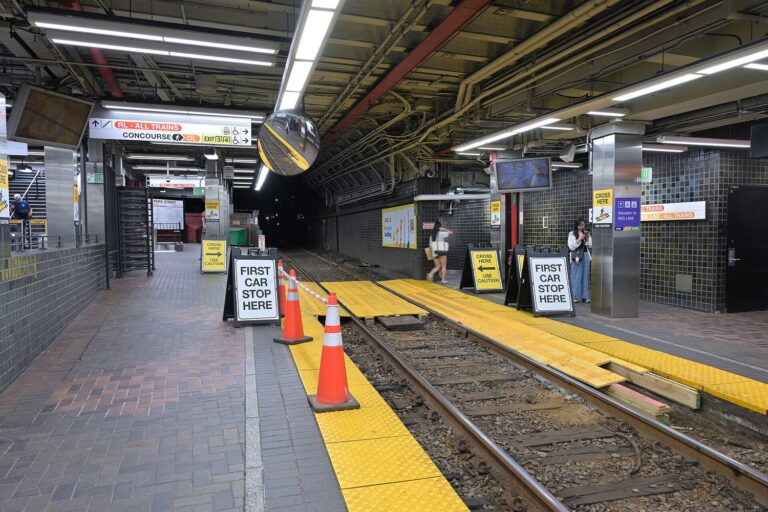
The second is that Boston’s T lines all cross downtown and radiate outward, which means the useful question is not “how far from the center is this?” but “how many changes?” A hotel in Cambridge on the Red Line is twelve minutes from Park Street with no changes. A hotel the same physical distance away in a suburb served by a bus that connects to a Green Line branch is forty-five minutes and two changes, and you will feel every one of them at the end of a long day. Before booking anywhere outside the core, put the address into a journey planner and look at the number of changes, not the number of miles.
A single ride is $2.40 on any payment method, a day pass is $11 and a seven-day pass is $22.50. If you are staying outside walking distance, the seven-day pass usually pays for itself on day three. The T is not a 24-hour system — last trains leave downtown roughly between 12:30 and 1am — which matters if you are planning late dinners in one neighborhood and sleeping in another.
What a Boston Room Actually Costs
Boston is an expensive hotel city, and it is expensive in a lumpy, seasonal way rather than a steady one. Rates in late October, during graduation weekends in May, at Marathon time in April and across the fall conference season can be double what the same room costs in February. There is no single honest nightly figure to quote, and any guide that gives you one is guessing — so check live rates for your actual dates and treat the bands below as relative positions rather than promises.
| Neighborhood | Relative price | Walk to Freedom Trail | Best for |
|---|---|---|---|
| Back Bay | $$$ | 10–20 min | First visits, families, all-round convenience |
| Beacon Hill | $$$$ | 2–10 min | Charm, quiet, couples |
| Downtown / Faneuil Hall | $$$ | On it | History, short trips, business |
| North End | $$ | On it | Food, atmosphere, walkers |
| Seaport | $$$$ | 20–25 min | Business, new hotels, families |
| South End | $$$ | 20–25 min | Restaurants, repeat visitors |
| Fenway / Kenmore | $$ | 25–30 min | Baseball, museums, students |
| Cambridge | $$ | 20 min by T | Value, Harvard and MIT, quiet evenings |
| Charlestown | $$ | At the far end | Quiet, the ferry, repeat visitors |
| Brookline / Somerville | $ | 25–35 min by T | Budget, longer stays |
| East Boston | $ | 15 min by T | Early flights only |
The two costs people forget
Tax. Boston hotel rooms carry a combined 14.95% occupancy tax: 5.7% Massachusetts room occupancy excise, 6.5% City of Boston local excise, and a 2.75% Convention Center Financing Fee. On a five-night stay that is a real number, and it is almost never included in the headline rate you see on a comparison site. Add roughly a seventh to whatever you are quoted before you compare Boston against another city.
Parking. Overnight hotel parking downtown is charged per night, on top of the room, and it is one of the most expensive parking markets in the country. If you are arriving by car, ask what the nightly rate is before you book, and then seriously consider whether you need the car at all — you almost certainly do not, unless you are driving out to Lexington and Concord. Several hotels in Cambridge, Brookline and Somerville include parking, which can swing the value calculation entirely.
The Neighborhoods
Back Bay — the default, and usually the right one
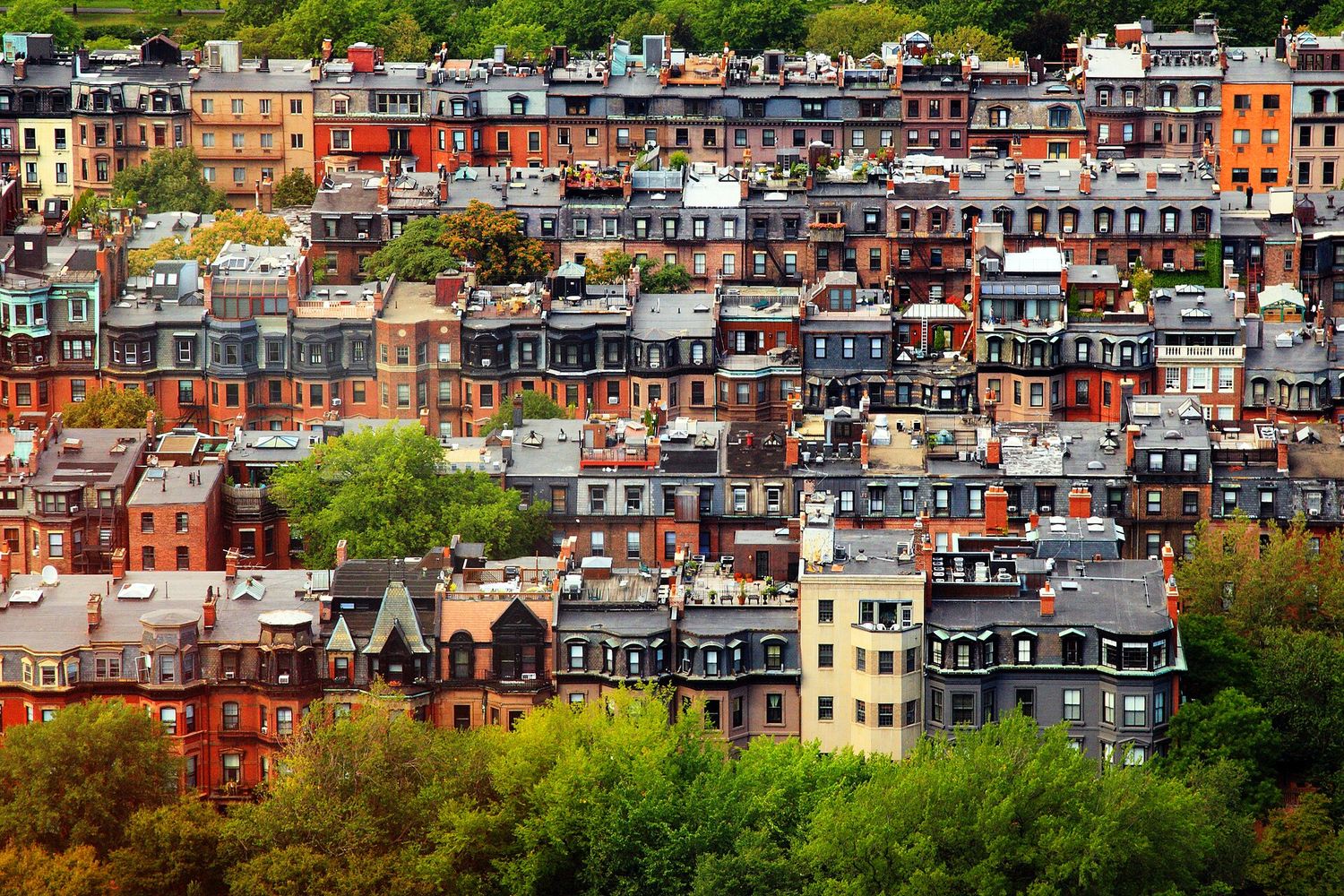
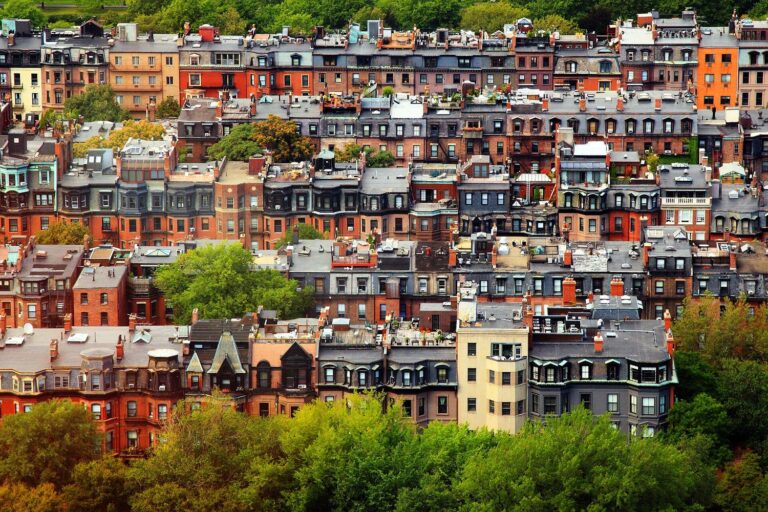
Back Bay is nineteenth-century Boston at its most confident: a grid of brownstones built on filled tidal flats from the 1850s onward, with the cross streets running alphabetically from Arlington through Berkeley, Clarendon, Dartmouth and on to Hereford. It is the only part of the city where you can navigate by alphabet, which after two days in the North End feels like a gift.
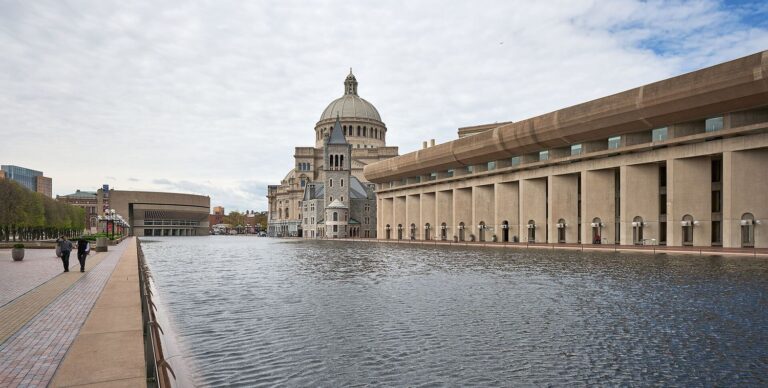
What is here: Newbury Street’s eight blocks of shops and restaurants, Copley Square with Trinity Church and the Boston Public Library, the Prudential Center and View Boston, and Commonwealth Avenue Mall, a tree-lined central promenade that runs straight into the Public Garden. The Esplanade is on the river side.
Transport: as good as it gets. The Green Line runs under Boylston Street with stops at Arlington, Copley and Hynes; the Orange Line stops at Back Bay station, which is also where Amtrak and the commuter rail come in.
Who it suits: nearly everyone on a first visit. It is central without being a business district, it has real restaurants rather than tourist ones, the streets are wide and flat and stroller-friendly, and the hotel stock runs from big convention properties to small townhouse hotels.
The catch: it is expensive, and the stretch immediately around the Prudential and Copley is heavily trafficked by conference crowds. Book toward Commonwealth Avenue or Beacon Street rather than Huntington Avenue if you want quiet.
Beacon Hill — the postcard, with stairs
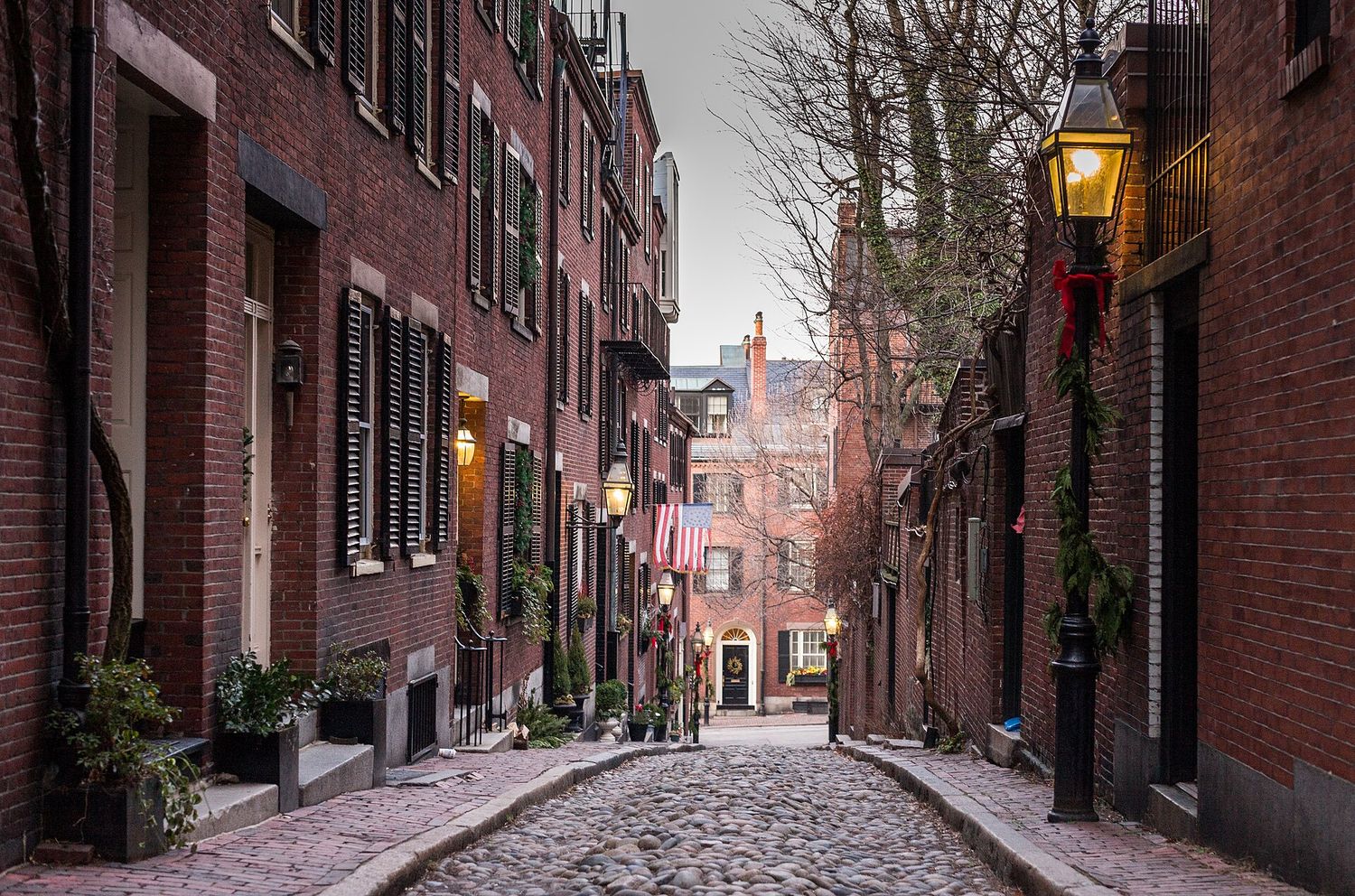
Gas lamps, brick sidewalks that heave where the tree roots run under them, and the purple window panes at 63–64 Beacon Street, which came from a bad batch of nineteenth-century glass that turned violet in sunlight and are now the most prized windows in the city. Charles Street at the bottom has antique shops, good coffee and a handful of small restaurants.
Transport: Charles/MGH on the Red Line at the bottom of the hill, Park Street at the other corner, Bowdoin on the Blue Line.
Who it suits: couples, quiet trips, and anyone whose priority is the Freedom Trail — the trail literally starts across the street.
The catch: there are very few hotels, so the ones that exist charge accordingly. It is a genuine hill, the sidewalks are uneven, and it is nearly all residential, which means it goes quiet early. If you have mobility issues or heavy luggage, be honest with yourself about the gradient before you book at the top of the hill.
Downtown, the Financial District and Faneuil Hall
The most convenient location for the Freedom Trail, because you are standing on it. Government Center, State Street, Downtown Crossing and the blocks around Faneuil Hall put you within a few minutes’ walk of nine of the sixteen trail stops.
Transport: every line. State, Government Center, Downtown Crossing and Park Street are all here, and this is where the Red, Orange, Blue and Green Lines cross.
Who it suits: short trips built around the historic sites, business travelers, and anyone who wants to walk out of the lobby into the middle of things.
There is a real advantage here that people underrate: on a short trip, waking up inside the sightseeing area means you can do two hours before breakfast. The Granary Burying Ground at 9am on a weekday, before the walking tours arrive, is a completely different experience from the same place at noon, and you can only do that if you are staying five minutes away.
The catch: the Financial District empties on evenings and weekends, and parts of it are dead by seven. The immediate Faneuil Hall area has the opposite problem — it is loud, it is where the bachelor parties end up, and the food within two blocks is mostly aimed at people who will never come back. Downtown Crossing has improved considerably but still has rough patches after dark. Look at the specific block, not just the neighborhood name.
North End — the best food, the least space
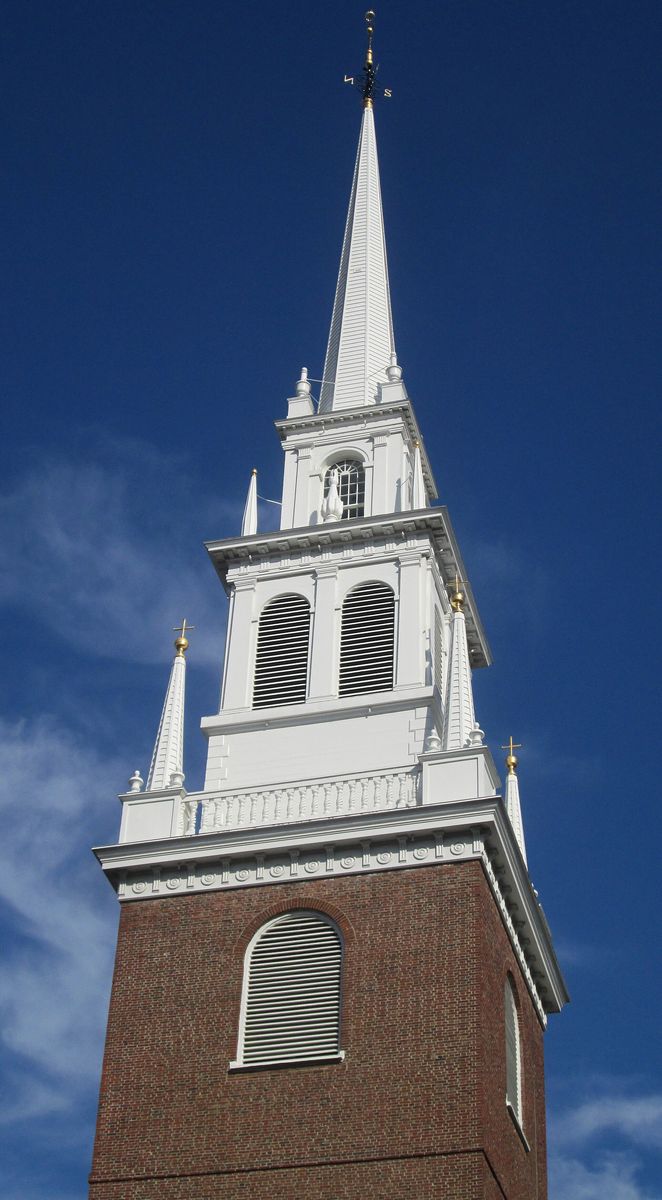
Narrow streets, brick, four inches of sidewalk, and more good restaurants per square foot than anywhere else in New England. Boston’s oldest continuously settled neighborhood, Italian since the late nineteenth century, and still enough of a real neighborhood that people sit outside on folding chairs in August.
Transport: Haymarket and North Station on the Green and Orange Lines, both about five minutes’ walk.
Who it suits: people who came to eat, and walkers. You can do the entire Freedom Trail, the Greenway and the Charlestown Navy Yard from here on foot.
The catch: almost no hotels. The stock is small guesthouses and apartments, rooms are small, buildings are old and elevators are rare. It is also loud on summer weekends — Hanover Street at 11pm on a Saturday in July is not a quiet place to sleep. Check which street the room faces.
Seaport — new, shiny, and slightly beside the point
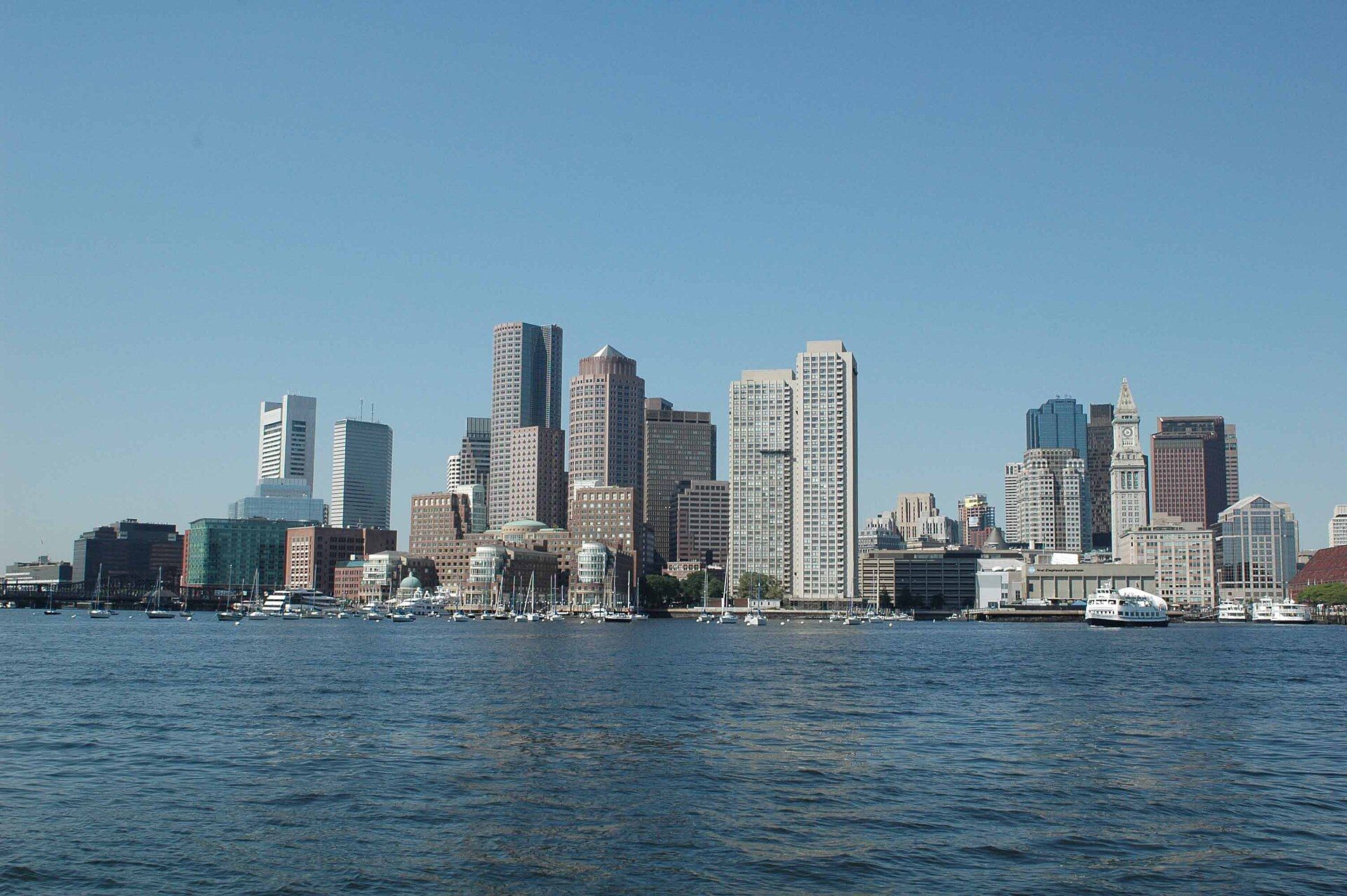
Fifteen years ago this was parking lots. It is now glass towers, wide sidewalks, the Institute of Contemporary Art hanging out over the water, and the highest concentration of hotel rooms built this decade. Rooms are large, everything works, and the harbor views from the upper floors are the best in the city.
Transport: the Silver Line bus runs from South Station and, usefully, direct to the airport terminals. Courthouse and World Trade Center stops serve the district.
Who it suits: business travelers, conference delegates at the convention center, families who want space and a pool, and anyone flying in and out who values a fifteen-minute transfer.
It is also the only central neighborhood built to modern standards throughout, which has practical consequences: big rooms, reliable air conditioning, working elevators, pools, and the kind of step-free access that Beacon Hill simply cannot offer. For families and for anyone with mobility needs, that is worth a great deal more than atmosphere.
The catch: it does not feel much like Boston. The restaurants are good and expensive and mostly branches of things. It is a twenty-five-minute walk or a T ride to the historic core, and the wind coming off the water in winter is unlike anywhere else in the city. If you have come to see old Boston, do not sleep in the newest part of it.
South End — where locals would tell you to stay
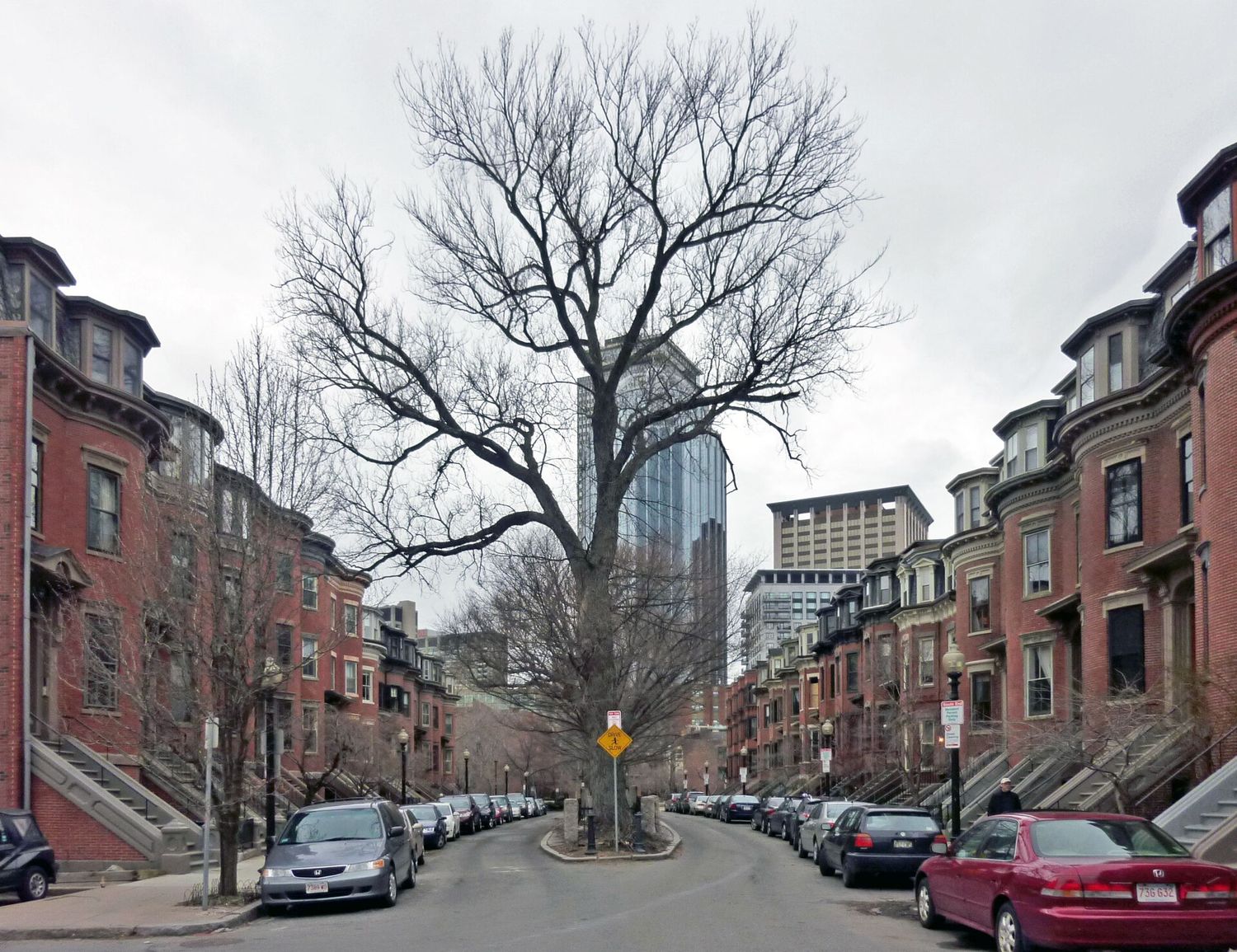
Not to be confused with South Boston, which is a different place entirely and a mile east. The South End is the largest intact Victorian bowfront row-house district in the United States: brick, stoops, small leafy squares, and along Tremont and Washington Streets the densest concentration of genuinely good restaurants in Boston. It is also the historic heart of the city’s LGBTQ+ community and has been for decades.
Transport: Back Bay station on the Orange Line, or the Silver Line along Washington Street. Twenty-five minutes’ walk to the Common.
Who it suits: second and third visits, food-led trips, and anyone who would rather have a good dinner five minutes from their room than a view of a landmark.
The catch: it is residential, so hotel options are limited and lean toward boutique and guesthouse. It is a real walk to the Freedom Trail. And the neighborhood changes character block by block — the stretch toward Massachusetts Avenue is not the stretch around Union Park.
Fenway and Kenmore
Built around the ballpark and three universities, which tells you most of what you need to know. Loud and packed on game nights, cheerful and student-heavy the rest of the time, and home to two of the best museums in the country — the Museum of Fine Arts and the Isabella Stewart Gardner — within a few minutes of each other.
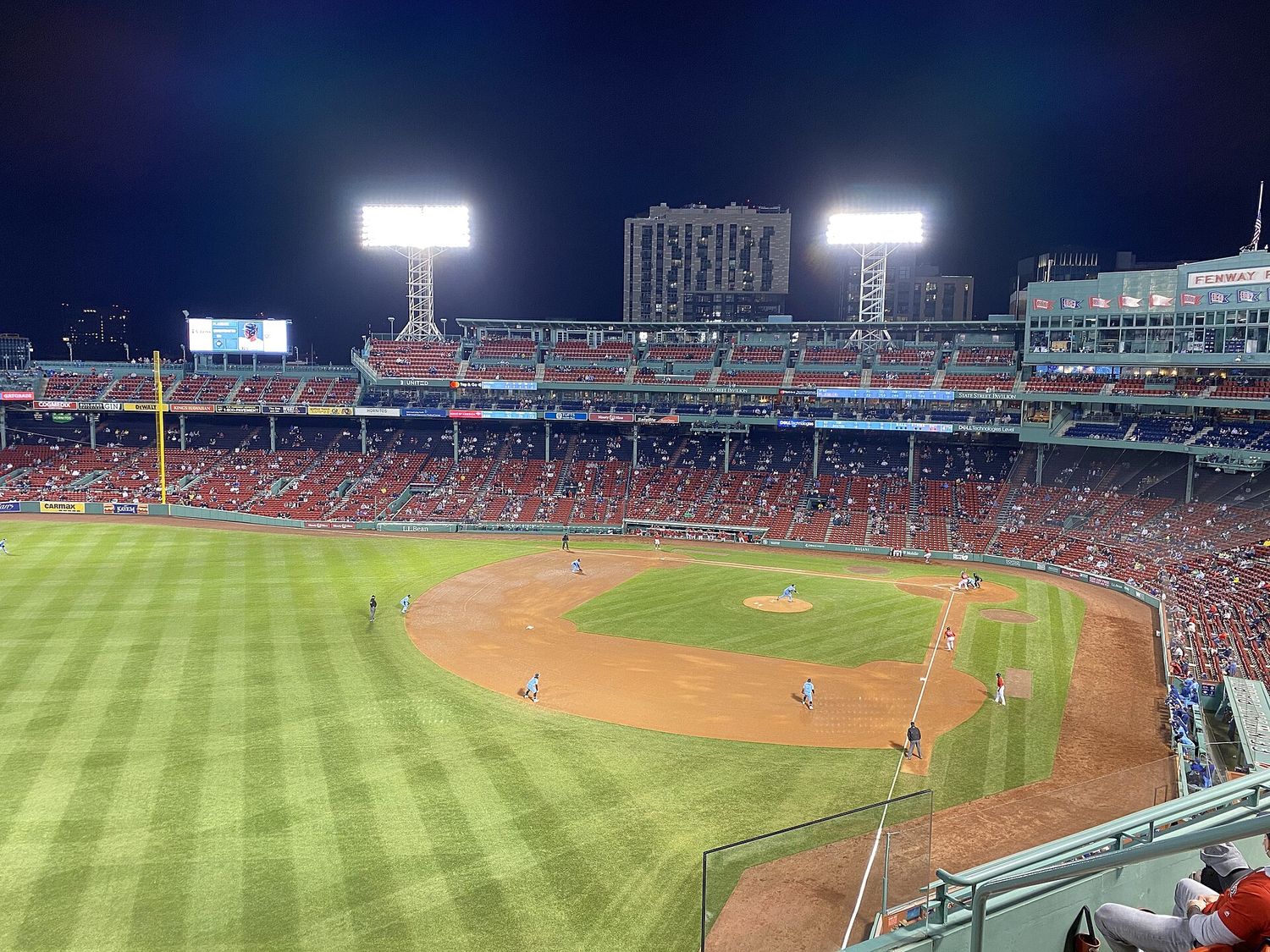
Transport: Kenmore on the Green Line, with the B, C and D branches; Fenway and Longwood stops on the D branch.
Who it suits: baseball trips, museum trips, and travelers who want central-ish Boston at a lower rate.
The catch: the Green Line above ground is the slowest thing in the transit system, and on the B branch in particular it stops constantly. Check which branch your hotel is on. And if the Red Sox are home, Kenmore Square at 11pm is a crowd.
Cambridge — the value play
Across the river and a different city, legally and in feel. Harvard Square is bookshops, buskers and a startling number of good cheap restaurants; Kendall Square is biotech and modern hotels; Central Square is scruffier, cheaper and has the best live music in the area.
Transport: the Red Line, which is the fastest line in the system. Harvard to Park Street is about fifteen minutes with no changes.
Who it suits: anyone trying to get Boston at a discount, university visitors, and repeat travelers. Several Cambridge hotels include parking, which downtown properties almost never do.
The catch: you are commuting to the sights, and after a long day the river crossing feels longer than it is. Kendall Square is quiet in the evening in a way that surprises people.
Charlestown
The far end of the Freedom Trail: steep residential streets, gas lamps, the Navy Yard, and the ferry across to Long Wharf. Quiet, handsome and almost entirely residential.
Transport: Community College on the Orange Line, the 93 bus, and the MBTA ferry from Pier 4 to Long Wharf, which is the nicest ten-minute commute in the city. Check ferry times at mbta.com, because the schedule thins on weekends.
Who it suits: repeat visitors, quiet trips, and anyone who likes the idea of arriving at their hotel by boat.
The catch: very few rooms, limited dinner options, and if you miss the last ferry you are on a bus.
Theater District and Chinatown
Central, well connected, and cheaper than Back Bay for the same walking distance. Chinatown has the best late food in the city — this is where restaurant workers eat after their shifts — and the theaters are on your doorstep.
The catch: it is the busiest, loudest, least attractive part of central Boston, the blocks around Boylston and Washington can feel unsettled late at night, and rooms tend to be older and smaller. Fine for a short stay if the rate is right; not where you want to spend a week.
Brookline, Somerville and the outer neighborhoods
Brookline is leafy, safe and on the Green Line C and D branches. Somerville, particularly around Davis Square on the Red Line and Assembly Row on the Orange, is younger, cheaper and has an excellent food scene of its own. Both are legitimate choices for longer stays and both routinely cost meaningfully less than anything central.
The catch: the same one every time — count the changes. A place four stops from Park Street on a single line is fine. A place the same distance away that needs a bus first is not.
Near North Station or South Station — if you are day-tripping
An underrated consideration. If your trip includes two or more day trips, the station you leave from matters more than the neighborhood you sleep in. North Station serves Salem, Rockport and Cape Ann, and sits on the Green and Orange Lines at the top of the North End — so a room in the North End or the West End gets you onto a Salem train in five minutes. South Station serves Plymouth, Providence and the Amtrak corridor, and sits at the edge of the Financial District and Chinatown.
The difference is not academic. Rockport in October means a train at 8:15am, and walking twenty minutes to the platform in the dark before you have had coffee sours a day quite effectively. If day trips are a real part of your plan, pick the station first and the neighborhood second.
East Boston and the airport
There is exactly one reason to stay out here: a flight before 7am. Logan is genuinely close to the city — the Blue Line, the Silver Line from South Station and the water shuttle all serve it — so for any normal itinerary you should stay in town and travel out. Maverick and Airport are on the Blue Line, and East Boston has a good stretch of harborfront with the best skyline view in the city from Piers Park. It is not somewhere to base a sightseeing trip.
Matching the Neighborhood to the Trip
| You are | Stay in | Why |
|---|---|---|
| A first-time visitor with three days | Back Bay | Central, three lines, walkable to the trail and the museums both |
| Here for the history | Downtown or the North End | You wake up on the Freedom Trail |
| Here for the food | South End or North End | Different cuisines, same logic: walk to dinner |
| Traveling with young children | Back Bay or Seaport | Bigger rooms, elevators, flat sidewalks, pools |
| On a tight budget | Cambridge, Somerville or Brookline | One line to downtown, often parking included |
| Here for a conference | Seaport | The convention center is there and so is the airport bus |
| Here for the Red Sox | Fenway or Kenmore | You can walk home after the ninth |
| Visiting Harvard or MIT | Cambridge | Obvious, and cheaper than the equivalent downtown |
| Here for a weekend with a partner | Beacon Hill or the South End | Quiet streets, good dinners, no conference crowds |
| Flying out at dawn | East Boston | And only for that one night |
What Boston Hotel Rooms Are Actually Like
Worth setting expectations, because Boston’s building stock skews old and the photographs rarely tell you.
Rooms are small in the old buildings, and there are a lot of old buildings. A converted townhouse in Back Bay or Beacon Hill can be beautiful and still give you a room a Midwestern traveler would consider a walk-in closet. If square footage matters, the Seaport, the Financial District and the larger Back Bay properties are where the modern floor plates are.
Air conditioning is not universal in the smallest properties, and Boston in July and August is humid enough that it matters. Check rather than assume, particularly in guesthouses and converted row houses.
Elevators are not guaranteed. This is the single most common unpleasant surprise in the North End and on Beacon Hill, where four- and five-story buildings from the eighteenth and nineteenth centuries were converted without adding one. If you are traveling with heavy luggage, a stroller, or anyone who cannot manage four flights, ask the property directly. Listing sites are unreliable on this.
Historic does not mean quiet. Single-glazed sash windows on a street where the bars close at 1am are exactly as loud as that sounds. Ask which side of the building the room faces.
Breakfast is usually extra and usually not worth it at the price. Boston has excellent coffee and pastry within a block of almost anywhere central.
Accessibility
Boston is a difficult city for step-free travel in its oldest quarters and a straightforward one everywhere else. Back Bay and the Seaport are flat, wide and modern, with the best step-free hotel stock. Downtown is flat but the sidewalks are uneven in places. Beacon Hill is a genuine hill with brick sidewalks heaved by tree roots, and the North End has narrow sidewalks and old buildings. On the T, not every station is step-free — check the accessibility status of your nearest station before booking, since two stops on the same line can differ.
Short-Term Rentals: Read This Before You Book One
Boston regulates short-term rentals more tightly than most American cities. Whole-unit investor listings are not permitted — the ordinance restricts short-term rentals to owner-occupied units — and operators must register with the city. In practice this means the supply of legal apartment rentals is far smaller than the listings you will see, and an unregistered booking can be canceled at short notice when the city acts on it.
If you book a rental, check that the listing displays a city registration number, and have a fallback in mind. For a stay of under a week in Boston, a hotel is usually the less stressful choice, and the price gap is smaller than in most cities precisely because the rental supply is constrained.
Hostels and the genuine budget end
Boston has a small but real hostel scene, concentrated around the Theater District and Fenway, and because the city is packed with students it is a more normal choice here than in most American cities — dorm beds and private rooms both. University accommodation also opens up in summer, when the campuses empty, and a handful of the colleges rent rooms to visitors from roughly June to August. It is basic, it is central, and it is a fraction of hotel rates.
The other budget lever is the calendar rather than the property. A February trip to Boston costs a different amount of money from an October one for exactly the same room, and the city in winter is not a lesser experience — the museums are the same, the Freedom Trail is the same walk in a warmer coat, and Frog Pond skating and the Common’s Christmas tree only exist in the cold half of the year. If your dates are flexible and your budget is tight, moving the trip is worth more than any amount of comparison-site optimizing.
When to Book, and When Rates Spike
Boston’s hotel calendar is driven by universities, conferences and one marathon. The predictable spikes:
- Mid-April — Patriots’ Day and the Boston Marathon, on the third Monday in April. Rates go up and minimum stays appear. In 2027 that is 19 April.
- May — graduation weekends across a city with more than fifty colleges. The worst value two weeks of the year.
- September and October — conference season plus fall foliage plus the Head of the Charles Regatta, which is 16 to 18 October in 2026 and fills every room within reach of the river.
- Late June through August — steady, busy, hot.
- January to March — the bargain window. Cold, shorter museum hours, and rooms at a fraction of October’s rate.
Book three to four months out for the spike periods and three to four weeks out for anything else. Boston does not reward last-minute booking the way some cities do, because the business-travel base keeps the floor high on weeknights.
One quirk worth exploiting: because so much of Boston’s demand is corporate, weekend rates downtown and in the Seaport often drop below weekday rates, which is the reverse of a leisure city. If your dates are flexible, a Friday-to-Sunday stay in the Financial District can be the best value in town.
Mistakes People Make
- Booking by distance rather than by line. Two changes on the T costs you more time than a mile of walking.
- Confusing the South End with South Boston. They are a mile apart and completely different neighborhoods. Read the address twice.
- Bringing a car and not asking about parking. It is charged per night, it is expensive, and you will not use the car.
- Comparing headline rates without the 14.95% tax. Boston looks cheaper than it is until checkout.
- Staying by the airport to save money on a normal trip. You will spend the savings on transit and lose an hour a day.
- Booking a Hanover Street-facing room in July. The North End is wonderful and it is not quiet.
- Assuming a Green Line address is convenient. Above ground, the B branch in particular is very slow. Check the branch letter.
- Booking a fifth-floor North End walk-up with two suitcases. Many of these buildings predate elevators by two centuries. Ask.
For what to do once you have unpacked, our guides to Boston itineraries and things to do in Boston cover the days themselves, and the Freedom Trail guide covers the walk most visitors build day one around.
Frequently Asked Questions
What is the best area to stay in Boston for first-time visitors?
Back Bay. It is central without being a business district, it sits on the Green and Orange Lines with Back Bay station for rail arrivals, it is a flat and pleasant walk to the Public Garden, the Freedom Trail and the museums, and the restaurants are aimed at people who live there rather than people passing through. Beacon Hill and downtown are the strong alternatives if you are focused on the historic sites.
Is it better to stay in Boston or Cambridge?
Stay in Boston if it is a short first visit and you want to walk to the sights. Stay in Cambridge if you want better value, a quieter evening, or you are visiting Harvard or MIT. The Red Line puts Harvard Square about fifteen minutes from Park Street with no changes, and Cambridge hotels are more likely to include parking. The trade-off is that you commute to everything.
How much is hotel tax in Boston?
14.95% on the room rate — 5.7% Massachusetts room occupancy excise, 6.5% City of Boston local excise, and a 2.75% Convention Center Financing Fee. It is generally not included in the rate shown on comparison sites, so add roughly a seventh before comparing.
Do I need a car in Boston?
No, and it is an active liability. Overnight parking downtown is charged per night at high rates, the street layout predates the automobile, and the T plus your own feet cover everything a visitor needs. The commuter rail reaches Salem, Rockport, Providence and Plymouth. The only itinerary that genuinely benefits from a car is a day out to Lexington and Concord.
Which Boston neighborhood has the best food?
The South End for range and quality across the board, and the North End for Italian and for atmosphere. Chinatown has the best late-night food in the city. Avoid basing a food trip on the immediate Faneuil Hall and Quincy Market area, where the restaurants are aimed at people who will not return.
Is the Seaport a good place to stay?
It is if you want a big modern room, a harbor view, a pool and a fifteen-minute Silver Line ride to the airport, and it is excellent for conferences at the convention center. It is not if you came to see historic Boston — it is a twenty-five-minute walk from the Freedom Trail, it was mostly parking lots fifteen years ago, and it does not feel like the rest of the city.
When are Boston hotels cheapest?
January through March, by a wide margin. The expensive periods are mid-April around the Marathon and Patriots’ Day, May for university graduations, and September and October for conference season, foliage and the Head of the Charles Regatta. Because Boston’s midweek demand is heavily corporate, downtown weekend rates are often lower than weekday ones.
Can you use Airbnb in Boston?
Legally, but within limits. Boston restricts short-term rentals to owner-occupied units and requires operators to register with the city, so the legal supply is much smaller than the number of listings you will encounter. Check that a listing shows a city registration number and keep a fallback booking in mind, because unregistered listings do get removed.
Is Boston walkable from most hotels?
From central ones, yes — the historic core is about three miles end to end, and Back Bay, Beacon Hill, downtown and the North End are all within twenty-five minutes on foot of each other. From anywhere further out the question is not distance but how many changes the T journey takes. One line and no changes is fine at any distance; two changes will cost you an hour a day.
Half the argument for a neighborhood is what you can walk to for dinner, which is why the South End and the North End keep coming out well above their convenience scores. Our guide to the best restaurants in Boston goes neighborhood by neighborhood, covers the seafood dishes worth ordering, and names the places near the main sights that are trading on the view rather than the kitchen.
Choosing a base is easier once you know what these places actually are and how they came to be so different from one another. Our guide to Boston neighborhoods covers all twenty-plus districts – how filling and annexation shaped the map, what to see in each one, and which are worth an afternoon even if you would never sleep there.
The advice to count changes rather than miles only helps if you know how the network is put together. Our guide to getting around Boston explains every T line and Green Line branch, what each fare and pass costs, and which stations are step-free – all of which should feed straight back into where you decide to book.
Timing moves Boston room rates further than neighborhood does. Our guide to the best time to visit Boston covers the whole calendar – the Marathon and graduation spikes, the October peak, and the January-to-March window when the same room costs a fraction of what it does in the fall.
In a city where the trains stop before the bars do, the walk home matters more than it does elsewhere — and that should influence which neighborhood you book. Our guide to Boston nightlife sets out which districts put a good evening within walking distance of a bed, and which leave you at the mercy of surge pricing.
Basing yourself across the river is a real option rather than a compromise, and in some weeks it is the cheaper one. Our guide to Cambridge and Harvard weighs Cambridge against Boston for a visitor, including the graduation two weeks in May that fills every room on both sides of the water.
Whatever rate you are quoted, add 14.95% before you compare it with anywhere else — and check parking separately. Our guide to Boston travel tips works through the tax rules, a daily budget by travel style, and the three levers that move the cost of a Boston trip more than any other choice.