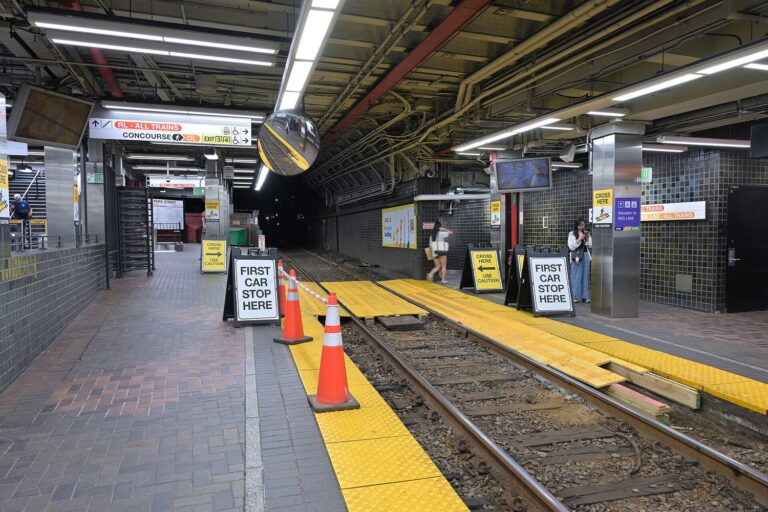
At twenty past midnight on a Friday, the Green Line platform at Park Street holds a particular kind of crowd: people who have done the arithmetic and are leaving a bar an hour before it closes because the alternative is a $40 ride home. That is the single most important thing to understand about Boston nightlife — last call is 2am and the last train is around 12.30, and the gap between those two numbers shapes every night out in this city.
This guide covers what is actually good: the neighborhoods worth drinking in, the breweries, the live music that still exists after decades of venue closures, the late-night food, the honest verdict on the club scene, and the practical business of getting home. It also corrects a widely repeated claim about 3am closing that was true for six weeks in 2026 and is not true now. Prices and hours were checked in September 2026; confirm before you go, because licensing here changes more than you would expect.
First, the licensing situation
Boston’s standard last call is 2am, and that is where it stands as of September 2026.
In June 2026 the state passed a bill, signed by Governor Healey, allowing municipalities to extend last call by an hour, and Mayor Wu opened a pilot in Boston: any venue already licensed to 2am could apply online to the Licensing Board for a one-hour extension to 3am, with same-day approval. Around 144 establishments took it up. The program was tied to the World Cup and the summer event season, and it ran only through the end of July 2026.
So: if you read that Boston bars now serve until 3am, that was a summer pilot and it has finished. Something similar may return — the enabling legislation exists and the city liked the results — but do not plan an evening on the assumption. Check the Boston Licensing Board’s own notices for the period you are visiting.
Two related rules that catch visitors out. Massachusetts does not permit happy hour drink discounts, so nowhere will advertise cheap drinks by the hour; food deals and fixed-price bar menus are the workaround you will see instead. And ID checks are strict and near-universal regardless of apparent age — bring a passport or a driving license, because many venues will not accept a photocopy or a photo on a phone.
The defining problem: the last train
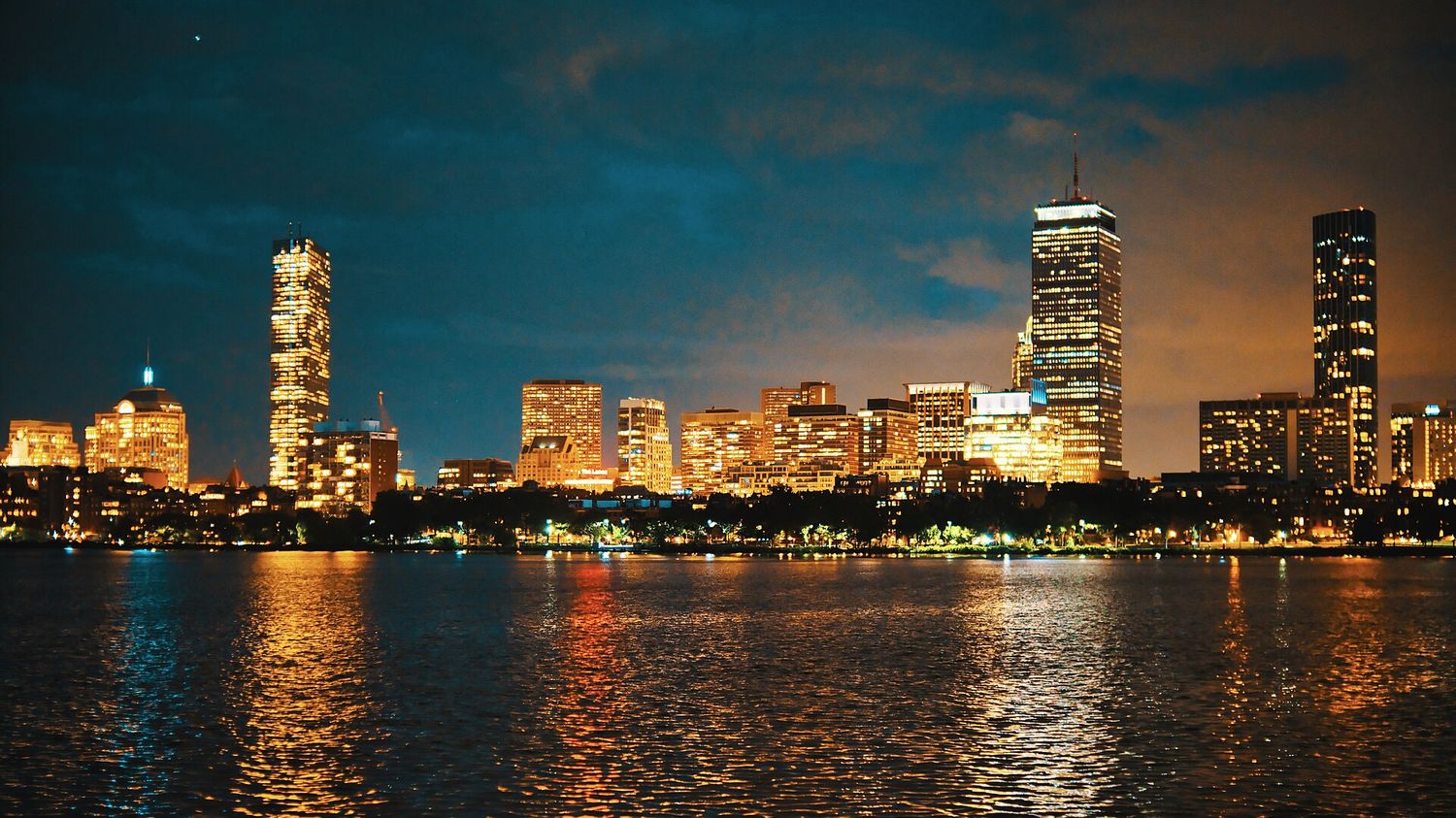
The MBTA is not a 24-hour system. Last trains leave downtown roughly between 12.30 and 1am, and the last one on your particular branch may be earlier than that. Buses run later on some routes but not usefully so on most.
The practical consequences are worth spelling out, because they change where you should drink:
- Stay walking distance from where you sleep. This is the single best piece of nightlife advice for Boston. A hotel in Back Bay, downtown or the North End puts several good neighborhoods within a twenty-minute walk and removes the problem entirely.
- Rideshare surge after last call is severe, and it is worse after a game at Fenway or the Garden. A short ride can cost more than the round you just bought.
- Cambridge and Somerville are a trap at 1am if you are sleeping in Boston. They are excellent for a night out and a genuine distance home once the Red Line stops.
- Walking is often realistic. The city is small. Back Bay to the North End is about thirty-five minutes on foot and perfectly safe on a Friday night.
Our getting around Boston guide has the full fare and service picture; for nightlife purposes, assume the system stops before you want it to.
Why Boston closes early: a short history
The 2am last call is not an accident of scheduling. It is the residue of four centuries of Massachusetts having strong opinions about what people do in the evening, and it explains more about this city’s nights than any list of bars will.
The colony’s Puritan founders regulated drinking, entertainment and Sunday behavior by statute, and the resulting body of law — the blue laws — outlived the theology by a very long way. Sunday alcohol sales were restricted into living memory; Sunday retail trading was restricted later still; and the ban on happy hour promotions, introduced in the 1980s after a series of drunk-driving deaths, remains in force today when almost every other state has softened. Boston did not arrive at an early close by neglect. It legislated its way here on purpose, repeatedly.
The city also actively demolished its own late-night district. The Combat Zone, a few blocks of adult theaters, strip clubs and bars around Washington Street, was formally designated in 1974 as a way of containing the trade in one place — a genuinely unusual piece of zoning — and then squeezed out of existence over the following thirty years by redevelopment and by the expansion of Chinatown and the Theater District around it. Whatever you think of what was there, the effect was to remove the one part of central Boston that stayed open late.
Meanwhile the live music scene lost its rooms one by one to rising rents: the legendary clubs of Kenmore Square and the Fenway, most of them gone by the early 2000s and replaced by student housing and chain retail. Musicians who came up in this city speak about it with a specific bitterness. What remains has largely moved across the river or out to Allston, which is exactly where the cheap rent went.
None of this is fatal to a good evening. It just means that Boston’s nights are shaped like its licensing: earlier, smaller and more neighborhood-based than a city of this size would otherwise produce. Plan for a long dinner and a couple of good rooms, not for a progression that ends at four.
Where to drink, neighborhood by neighborhood
The North End
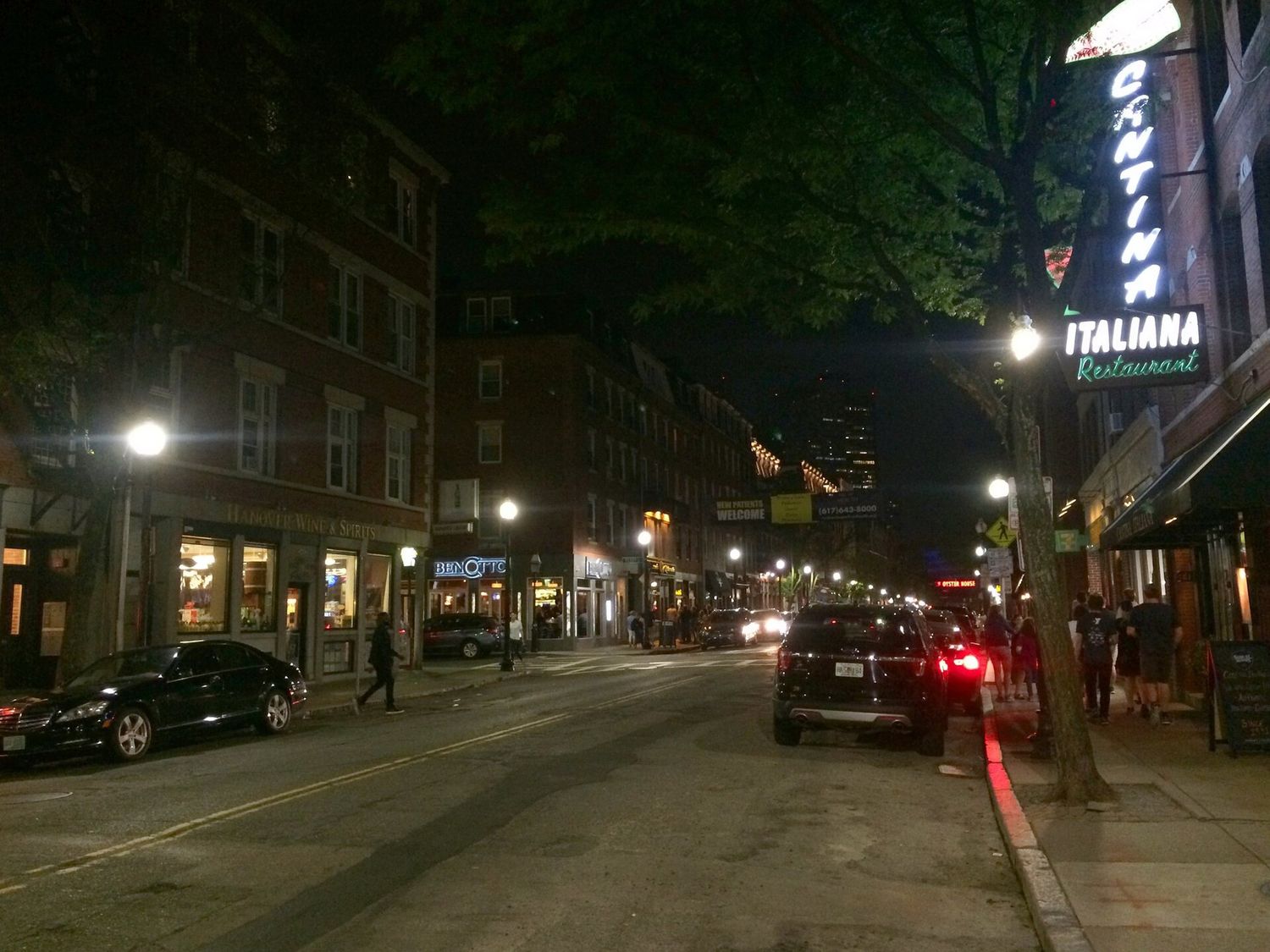
Not a bar district in the conventional sense, and that is the appeal. The North End is small rooms, wine with dinner, and a handful of long-standing neighborhood bars that have nothing to do with tourism. Hanover Street and the lanes off it stay busy until around midnight and then empty quickly. Go for a long dinner that turns into drinks rather than for a night out that includes food. Our Boston food and restaurants guide has the eating side.
Back Bay and the Theater District
Boylston and Newbury Streets carry the polished end of the scene: hotel bars, rooftops in summer, cocktail rooms with a dress code that is unstated but real. It is expensive, it is comfortable, and it closes early relative to the rest. The Theater District next door fills before and after curtain and empties by eleven on a weeknight.
The honest note: Back Bay is where a visitor staying in Back Bay drinks, which is a circular kind of recommendation. It is fine and it is safe and nobody has ever had the best night of their life there.
Fenway and Lansdowne Street
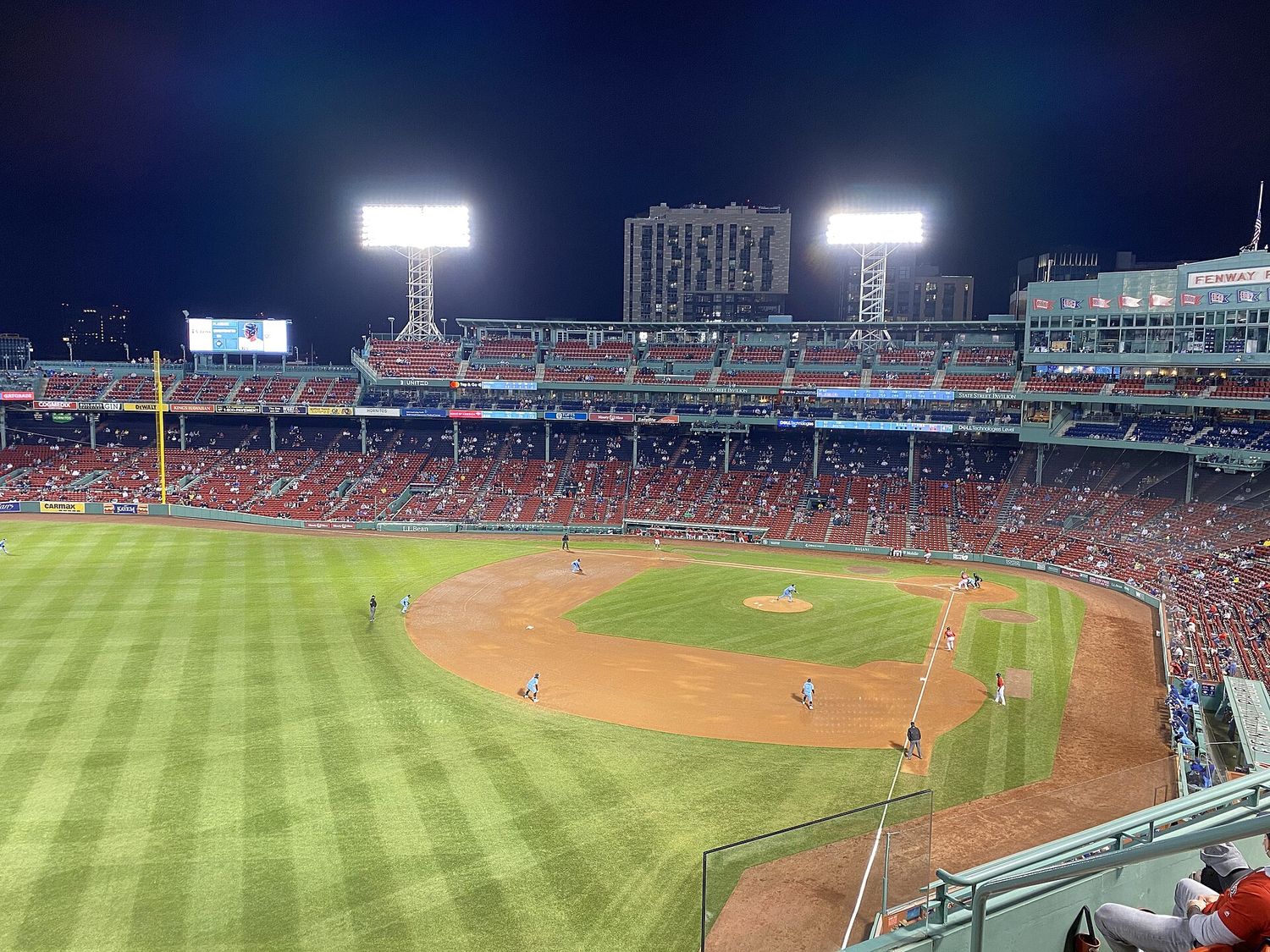
Lansdowne Street, immediately behind the Green Monster, is Boston’s closest thing to a nightlife strip: large venues, late licenses, and a crowd that on game nights is overwhelmingly students and out-of-towners. Away from Lansdowne, the wider Fenway neighborhood has better and quieter bars.
The verdict depends entirely on who you are. If you want a loud room and a crowd, this is where it is. If you are over about thirty, go one street back. On a night when the Red Sox are at home, the whole area is at capacity from two hours before first pitch — see our Boston sports guide for the fixture calendar.
Allston, and the student city
Boston has one of the highest concentrations of university students of any city in the world, and Allston is where a great many of them drink. It is scruffy, cheap by Boston standards, loud, and home to the best small live rooms left in the city proper. Harvard Avenue and Brighton Avenue are the spine of it, twenty minutes out on the Green Line B branch.
Two honest notes. The crowd skews very young, which is either what you want or emphatically not. And the first week of September, when the leases all turn over on the same day, is a local spectacle — furniture on every sidewalk, streets impassable, and a genuinely notorious low bridge on Storrow Drive that removes the roof from at least one rental truck every year. Locals call it Allston Christmas and it is worth seeing once.
Downtown and Faneuil Hall
The stretch around Faneuil Hall and Quincy Market is where visitors end up by default, and it is the weakest nightlife in central Boston: themed pubs, chain bars, and a crowd made almost entirely of other visitors and office parties. The building is beautiful and the drinking is not. Walk ten minutes in any direction — the North End, the waterfront, Chinatown, Beacon Hill’s handful of small pubs — and the quality improves immediately.
The Seaport
New, glass, expensive, and busy with a young professional crowd from Thursday onwards. The rooftops have real harbor views and the cocktails are priced accordingly. It is comfortable and it is characterless, and it is windy enough that a rooftop in May can be genuinely unpleasant. Good for a first drink, less good for a whole evening.
The South End
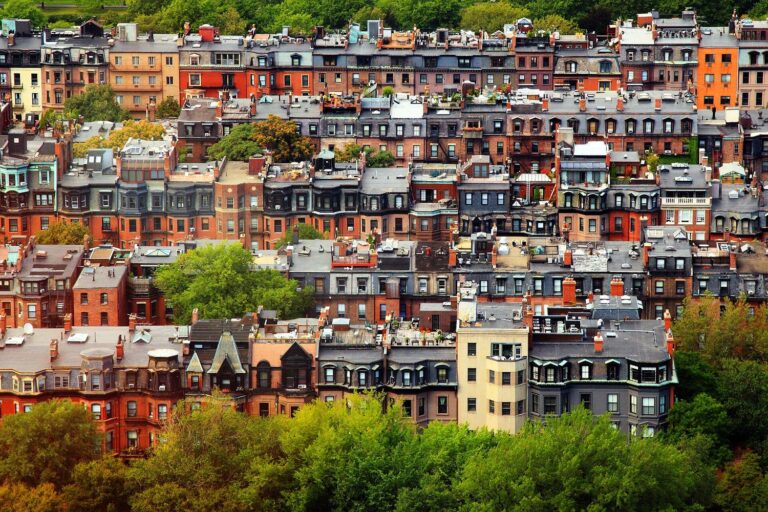
The best neighborhood in Boston for a grown-up evening. Restaurant bars in nineteenth-century bowfront row houses, a strong cocktail culture, no crowds of the Lansdowne kind, and a genuinely mixed local crowd — this is the historic center of Boston’s LGBTQ+ nightlife and remains its most visible. It is residential, so it is quiet by midnight, which is either the point or the problem depending on your evening.
Cambridge and Somerville
Across the river, and worth the trip if you are staying on that side. Central Square in Cambridge has the live music and the dive bars; Harvard Square has the student-adjacent version; Davis and Union Squares in Somerville have the best beer and the most interesting rooms in Greater Boston right now. Inman Square is the quiet expert’s answer.
The catch is the one above: the Red Line stops, and a taxi from Somerville to Back Bay at 1.30am is not cheap. Drink here if you sleep here. Our Boston neighborhoods guide covers the geography.
Southie, Charlestown and Dorchester
The neighborhood bars. These are not destinations in the guidebook sense and they are the most enjoyable rooms in the city for anyone who likes a bar with regulars in it. East Broadway in South Boston has shifted upmarket with the neighborhood; Charlestown’s bars around City Square are old and unbothered; Dorchester’s Irish pubs along Dorchester Avenue are the real thing rather than the exported version.
Breweries and taprooms
Boston’s brewery scene is genuinely good and it is spread out, which means picking one or two rather than attempting a crawl.
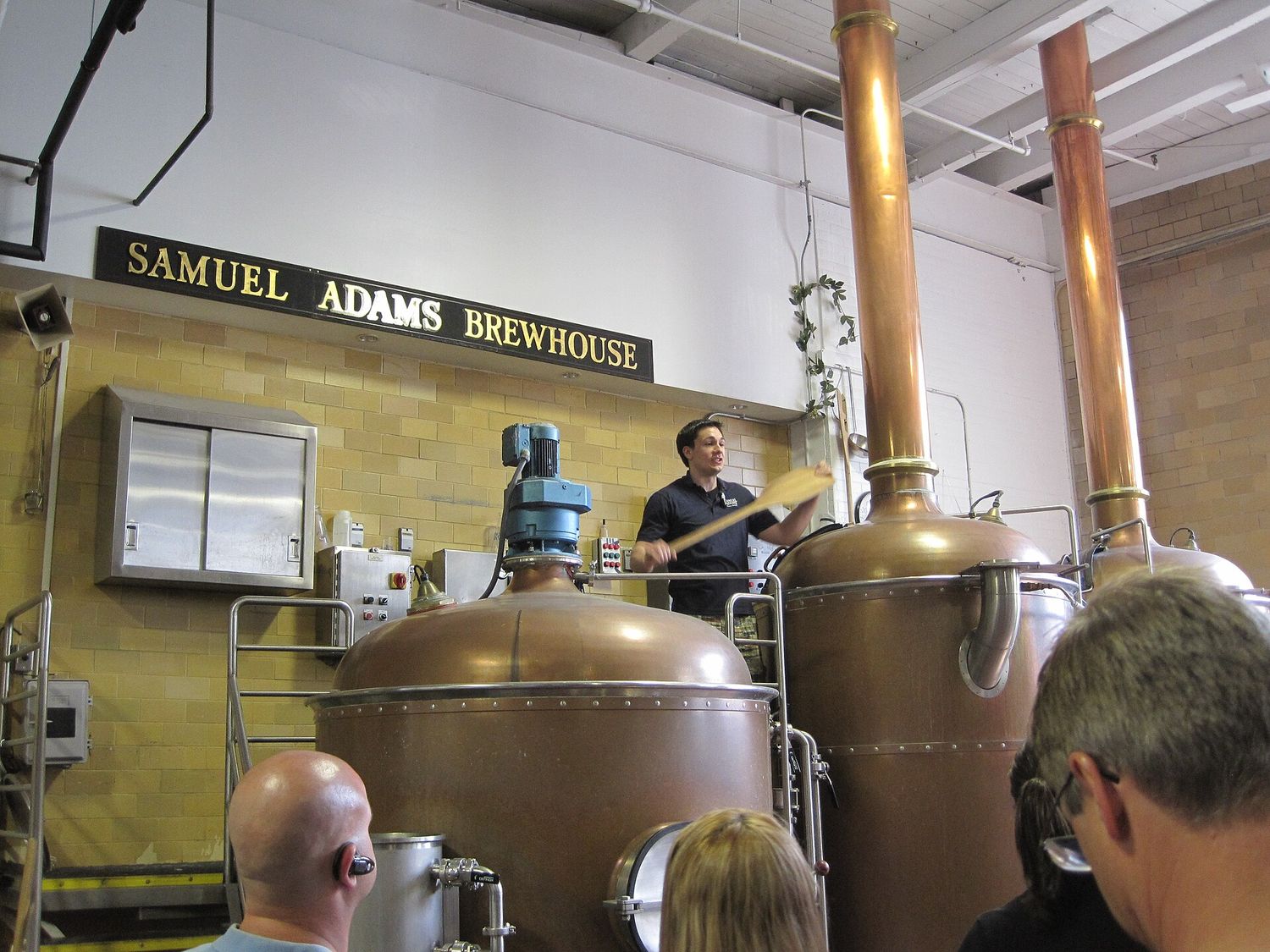
Samuel Adams, Jamaica Plain
The original brewery at 30 Germania Street in Jamaica Plain is open daily 11am to 9pm, with the kitchen closing an hour before and last bar call fifteen minutes before close. Tours and tastings run from the site; pricing was not published on the company’s own page at the time of writing, so check before you go rather than trusting a number from a third party. The phone number is 617-368-5080.
Getting there: Stony Brook on the Orange Line, then a short walk. It is a proper working brewery in a residential neighborhood rather than a visitor attraction bolted onto a warehouse, and Jamaica Plain around it is one of the pleasanter parts of the city to spend an afternoon. There is a separate, smaller Samuel Adams taproom at Faneuil Hall if you want the beer without the journey.
Harpoon, Seaport
A large beer hall on the waterfront with a pretzel bakery attached, long tables, and a permanent good-natured racket. It is the most family-tolerant of the taprooms in the early evening and the busiest of them later. Easy to reach on the Silver Line, and close enough to the Harborwalk to make an afternoon of it — see our Boston harbor and islands guide for that walk.
The rest
- Trillium — the name that made Boston beer a destination, with taprooms in the city and a large Fort Point location.
- Lamplighter, Cambridge — small, inventive, and the local favorite.
- Dorchester Brewing — a working brewery with a taproom and a barbecue kitchen, on the Red Line.
- Night Shift, Everett — out of the city and worth it if you have a car or patience.
- Downeast Cider, East Boston — unfiltered cider by the harbor, four minutes from downtown on the Blue Line and almost never busy.
On organized brewery bus tours: several operators run them, they solve the geography problem, and they cost several times what the beer does. If you are visiting two breweries in one neighborhood, do it yourself. If you want four across three towns without driving, the tour is doing real work for the money.
Live music
Boston’s live music scene has taken a beating over twenty years of venue closures and rising rents, and what remains is smaller than the city’s musical history would suggest. It is still good; it is just concentrated.
Cambridge and Somerville carry most of it. Central Square has the mid-size rooms and the long-running clubs. Somerville’s smaller venues run everything from folk to noise on any given week. This is where a visitor with catholic taste and no fixed plan should go.
Allston is where the students and the loud guitars are, and where the cheapest tickets in Greater Boston are found. It is a twenty-minute Green Line ride from downtown and it feels like a different city.
The mid-size and large rooms — the Orpheum, the Wilbur, Roadrunner, MGM Music Hall next to Fenway, and the arena shows at TD Garden — carry the touring acts. Tickets go through the usual platforms and the usual fees apply.
Jazz and classical deserve a mention because Boston is unusually strong here: Symphony Hall for the Boston Symphony, Jordan Hall at the New England Conservatory for chamber music that is often free, and a jazz scene centerd on the conservatories that produces very good playing in very small rooms. Our Boston museums and culture guide covers the concert halls properly.
Clubs, honestly
Boston is not a club city, and pretending otherwise does visitors no favors. The combination of a 2am last call, a transit system that stops at one, strict licensing and a city government that has historically been unenthusiastic about late-night venues has produced a small scene with a handful of large rooms, mostly on Lansdowne Street and around the Theater District, mostly playing to a student crowd.
If dancing until dawn is the point of your trip, Boston will disappoint you and New York is four hours away by train. If you want a good bar, a small live room, a long dinner or a neighborhood pub, Boston is better than its reputation. Choose accordingly rather than arriving with the wrong expectation.
Watching a game in a bar
This is a genuine Boston specialty and it is free. The city cares about its teams to an unusual degree, and a bar during a playoff game is one of the more memorable rooms you can be in as a visitor — better, arguably, than paying several hundred dollars to sit in the building itself.
Some rules. Avoid the bars immediately outside Fenway and TD Garden on game nights; they are full of people who could not get tickets and they charge accordingly. Go one or two neighborhoods out — Southie, Charlestown, Somerville, Dorchester — where the room will be locals, the beer will be cheaper and someone will explain the situation to you at length if you ask a question. Arrive before the first pitch or the puck drop; a Boston bar on a big night fills early and does not let people in over capacity.
The calendar makes this easy: with the Celtics and Bruins overlapping from October to April and the Red Sox running from late March to September, there is something on most nights of the year. See our Boston sports guide for what is on when.
Rooftops and views
Boston does rooftop bars in summer and abandons them entirely in winter, which is a shorter season than most visitors expect: realistically late May to early October, and cold in the shoulder weeks. The clusters are the Seaport, with harbor views, and Back Bay, with skyline views, plus a handful of hotel roofs downtown.
The honest verdict: the drinks are $18 to $24 and the view is the product. If the view is what you want, View Boston at the top of the Prudential is open daily until 10pm at $34 plus a $3 fee, and its evening “Sips & Sights” ticket at $48 puts you fifty-two floors up rather than eight — which is a different order of view for roughly the price of two rooftop cocktails. Do that once and drink somewhere with a better bar the rest of the time.
The free alternative is the Charles River Esplanade at dusk, or the Cambridge bank opposite Back Bay, where the skyline photograph everyone takes is taken. It costs nothing and the light in September is remarkable.
What Boston drinks
A few things this city does genuinely well, which are worth ordering rather than defaulting to what you drink at home.
New England IPA was substantially invented in this region — hazy, soft, heavily hopped, low on bitterness — and Boston and its suburbs remain one of the best places on earth to drink it. Order it fresh and on draft at a taproom rather than from a bar’s back stock.
Cider is a New England tradition older than the beer scene, and the local unfiltered ciders are dry and serious rather than sweet. Downeast in East Boston is the accessible introduction.
Cocktails in Boston skew classic and spirit-forward rather than fashionable, and the South End and the smaller downtown rooms do them very well. The city has a real bartending culture attached to its restaurant scene rather than to standalone cocktail destinations.
What to skip: the Irish-themed pubs clustered around the tourist streets downtown, which are a licensed aesthetic rather than a neighborhood. Real Irish bars in Boston exist in large numbers — in Dorchester, in Southie, in Brighton — and they do not have shamrocks in the window.
LGBTQ+ nightlife
The South End has been the center of gay Boston since the 1970s, and the neighborhood’s bars, restaurants and cafes remain the heart of it, with a further cluster in the Theater District and around Downtown Crossing. Jamaica Plain has long been the center of lesbian and queer women’s nightlife in the city. The scene is smaller than New York’s or Chicago’s and it is integrated into the general nightlife of those neighborhoods rather than concentrated in a strip.
Boston Pride runs in late May and early June; the organizing body has been rebuilt in recent years, so check the current organizer’s own listing rather than an older one, as we note in our Boston events guide. Massachusetts was the first US state to license same-sex marriage, in 2004, and the city is straightforwardly comfortable — you are unlikely to encounter difficulty anywhere central.
Nightlife by season
| Season | What changes |
|---|---|
| Late May – early October | Rooftops and patios open, outdoor seating spills onto sidewalks, the Seaport comes alive, and the harbor bars are worth the trip. The best months by a distance |
| September – November | Students return, which fills Allston, Fenway and the Cambridge squares almost overnight in early September. Bruins and Celtics start, so sports bars pick up |
| December | Holiday parties fill every restaurant bar in Back Bay and downtown from the first week. Book anything you care about. First Night on the 31st |
| January – March | The quietest and cheapest months. Neighborhood bars only, everything outdoors is shut, and February averages around twenty inches of snow. Good for a fireside pub, bad for a night out |
| April – May | Marathon weekend in April is the loudest night of the Boston year and the hardest to get a table on. Graduation season in mid-May does the same thing more quietly |
Two dates to know. Marathon Monday and the Saturday before it are the busiest drinking nights in the city, and the bars around Kenmore and Boylston are unenterable. St Patrick’s Day in South Boston is an all-day event that starts extremely early and is not really about the parade by mid-afternoon; go for the morning if you go at all.
Late-night food
This is the other structural gap. Boston kitchens close early — many stop serving by 10pm on a weeknight — and the city has never developed much of a late-night eating culture. What exists:
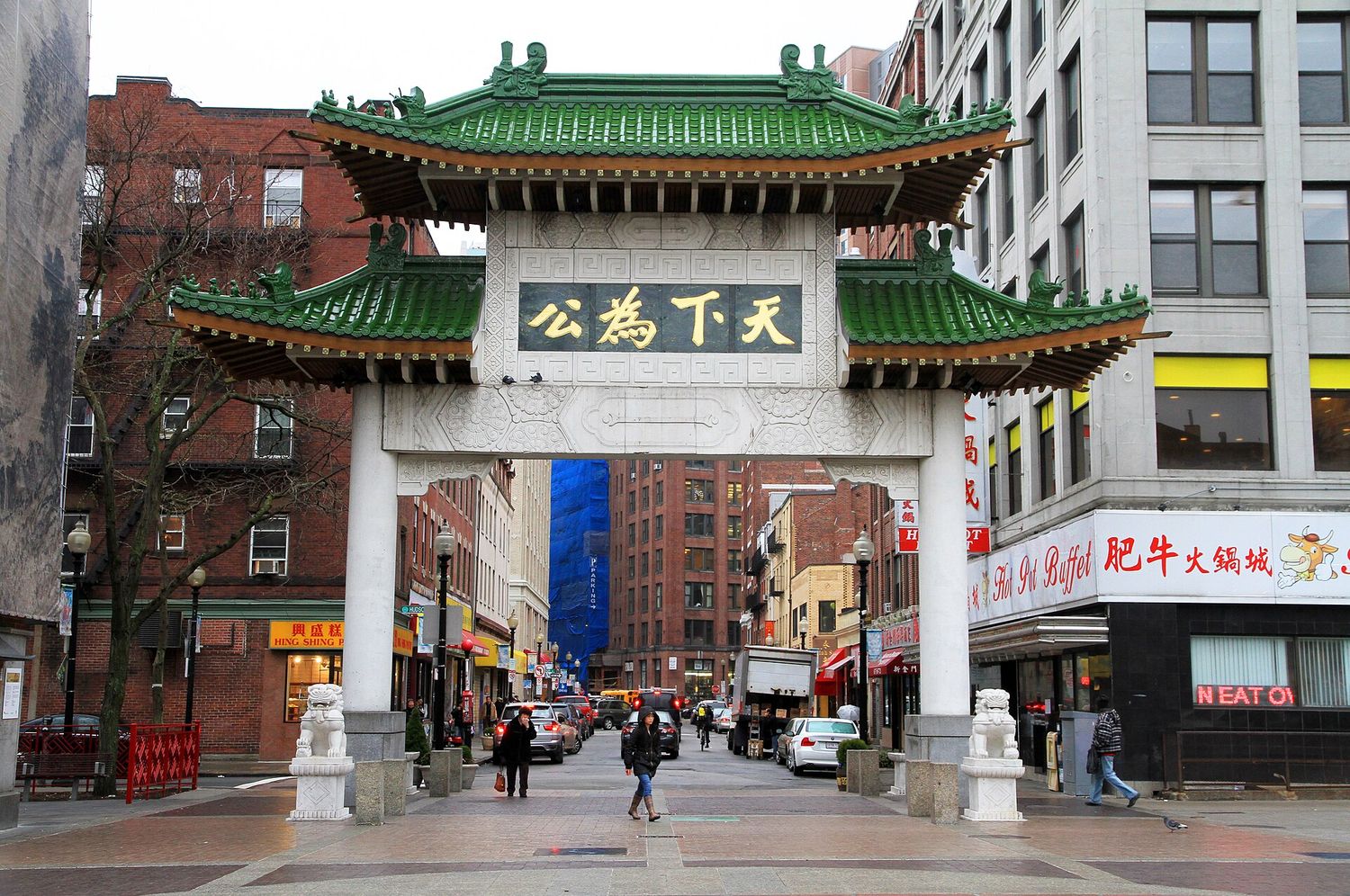
- Chinatown is the answer, and has been for decades. Several restaurants on and around Beach Street serve well past midnight, and it is the one part of central Boston where a 1am meal is normal rather than a project. Orange and Silver Lines, and walking distance from the Theater District and Downtown Crossing.
- Pizza by the slice in the North End and around Fenway, until the crowds thin.
- Diners in the outer neighborhoods and in Somerville, some of them genuinely 24-hour, none of them near your hotel.
- Roast beef sandwiches on the North Shore, which is a real regional institution and completely impractical without a car.
The practical move is to eat properly at a normal hour and treat anything after midnight as a bonus. Boston will not feed you at 2am the way Madrid or Taipei will.
What it costs
| Item | Typical Boston price | Note |
|---|---|---|
| Pint of local craft beer | $9–12 | Cheaper at the brewery taproom than in a bar |
| Cocktail, neighborhood bar | $14–17 | Back Bay and the Seaport sit at the top of that |
| Cocktail, hotel or rooftop bar | $18–24 | You are paying for the view |
| Glass of wine with dinner | $14–18 | North End house wine is often the value |
| Club entry, Lansdowne | $20–40 at the door | Higher on Saturdays and for guest DJs |
| Small live music venue ticket | $20–35 plus fees | Allston is the cheap end |
| Arena show, TD Garden | Substantially more | Book early; fees are heavy |
| Late-night rideshare after 2am | Surge pricing, often punishing | The reason to stay walking distance from bed |
| MBTA single | $2.40 | If you catch it — last trains around 12.30–1am |
Massachusetts adds a meals tax on prepared food and drink, and many municipalities add a local option on top, so the number on the menu is not the number on the bill. Tipping is expected at 18 to 20 percent, and at a bar, roughly a dollar or two a drink or 20 percent on a tab.
Four evenings that work
The one for a first visit
Dinner in the North End at 7, walking distance from most downtown hotels. Drinks afterwards on Hanover Street or one of the small bars off it. Walk back along the harbor if the weather allows. Home by midnight without ever thinking about a train. This is the most reliably good evening in Boston and it requires no planning at all.
The beer one
Orange Line to Stony Brook in the late afternoon, an hour or two at the Samuel Adams brewery, then dinner in Jamaica Plain, which has a good and unpretentious restaurant strip. Back on the Orange Line by eleven. Substitute the Seaport and Harpoon if you want the harbor version.
The music one
Red Line to Central Square, eat early and cheaply, see whoever is playing in one of the small rooms, and have a last drink in a Cambridge bar. Crucially: do this on a night you are sleeping in Cambridge or Somerville, or accept the cost of the ride home.
The grown-up one
The South End. A long dinner in a bowfront row house, cocktails somewhere small afterwards, and a walk back through Back Bay. No lines, no dress code you cannot meet, no crowd. It is the evening Boston does best and almost no visitor guide recommends.
Safety and practicalities
- Boston is a safe city at night by American standards, and the central districts are busy and well lit until well past last call. Ordinary urban caution is enough.
- Bring physical ID. Checks are near-universal and photocopies and phone photos are widely refused. A passport works; some venues are reluctant to accept out-of-state or foreign licenses, though most are fine.
- There is no happy hour in Massachusetts. Discounted drinks by the hour are illegal, so no venue will advertise them.
- Open containers in public are prohibited across the city except in specifically designated areas.
- Smoking is banned indoors in bars and restaurants statewide.
- Last call at 2am means lights up and out the door promptly. Boston bars do not linger.
- Around Fenway and TD Garden on event nights, everything nearby is full from two hours before the start. Book or go elsewhere.
Frequently asked questions
What time do bars close in Boston?
2am. A temporary pilot in summer 2026 let around 144 licensed venues extend to 3am, but that ran only through the end of July 2026 and has finished. The enabling state law still exists, so a similar scheme could return — check the Boston Licensing Board rather than assuming.
Does the T run all night in Boston?
No. Last trains leave downtown roughly between 12.30 and 1am, which is an hour or more before last call. This is the defining constraint of a Boston night out, and the reason to drink within walking distance of where you are sleeping.
Where is the best nightlife in Boston?
It depends what you want. Lansdowne Street by Fenway for large loud rooms; the South End for cocktails and a grown-up evening; Central Square in Cambridge and the Somerville squares for live music and better beer; the North End for a long dinner that becomes drinks. There is no single strip that covers all of it.
Is Boston a good city for clubbing?
Not especially. A 2am last call, a transit system that stops at one and restrictive licensing have produced a small scene concentrated on Lansdowne Street and the Theater District, playing largely to students. Boston is much better at bars, small live rooms and dinner than it is at clubs.
Why is there no happy hour in Boston?
Massachusetts prohibits discounted drink promotions by the hour, a rule dating from the 1980s. Bars work around it with food specials and fixed-price bar menus, but you will not see cheap drinks advertised by time of day anywhere in the state.
Where can you eat late at night in Boston?
Chinatown, primarily — several restaurants on and around Beach Street serve well past midnight, and it is walkable from the Theater District and Downtown Crossing. Beyond that, pizza by the slice near Fenway and the North End, and diners in the outer neighborhoods. Most Boston kitchens stop serving by around 10pm on a weeknight.
Which Boston brewery should you visit?
Samuel Adams in Jamaica Plain if you want the tour and the history — open daily 11am to 9pm, Stony Brook on the Orange Line. Harpoon in the Seaport if you want a big beer hall with a harbor walk attached. Lamplighter in Cambridge or Downeast Cider in East Boston if you want somewhere the locals go and the visitors do not.
Do Boston bars check ID?
Almost always, regardless of how old you look. Bring a physical passport or driving license; photocopies and photos on a phone are widely refused, and some venues are cautious about unfamiliar foreign documents. The legal drinking age is 21.
Is Boston safe at night?
Yes, by the standards of large American cities. The central nightlife districts are busy and well lit until after last call, and the usual sensible precautions are sufficient. The bigger risk to your evening is transport rather than safety.
How much does a night out in Boston cost?
A pint of local craft beer runs $9 to $12 and a cocktail $14 to $17 in a neighborhood bar, rising to $18 to $24 on a rooftop. Add a club door charge of $20 to $40 on Lansdowne, meals tax on top of the menu price, and 18 to 20 percent in tips. Staying within walking distance of your bed saves more than any of the individual choices.
If you want your night out to start with a story, a ghost walk makes a good first hour. Our guide to Boston ghost tours explains which ones are history in the dark and which are pub crawls with a spooky script, and how to end the evening with a drink at the Omni Parker House, the city’s most haunted hotel bar.