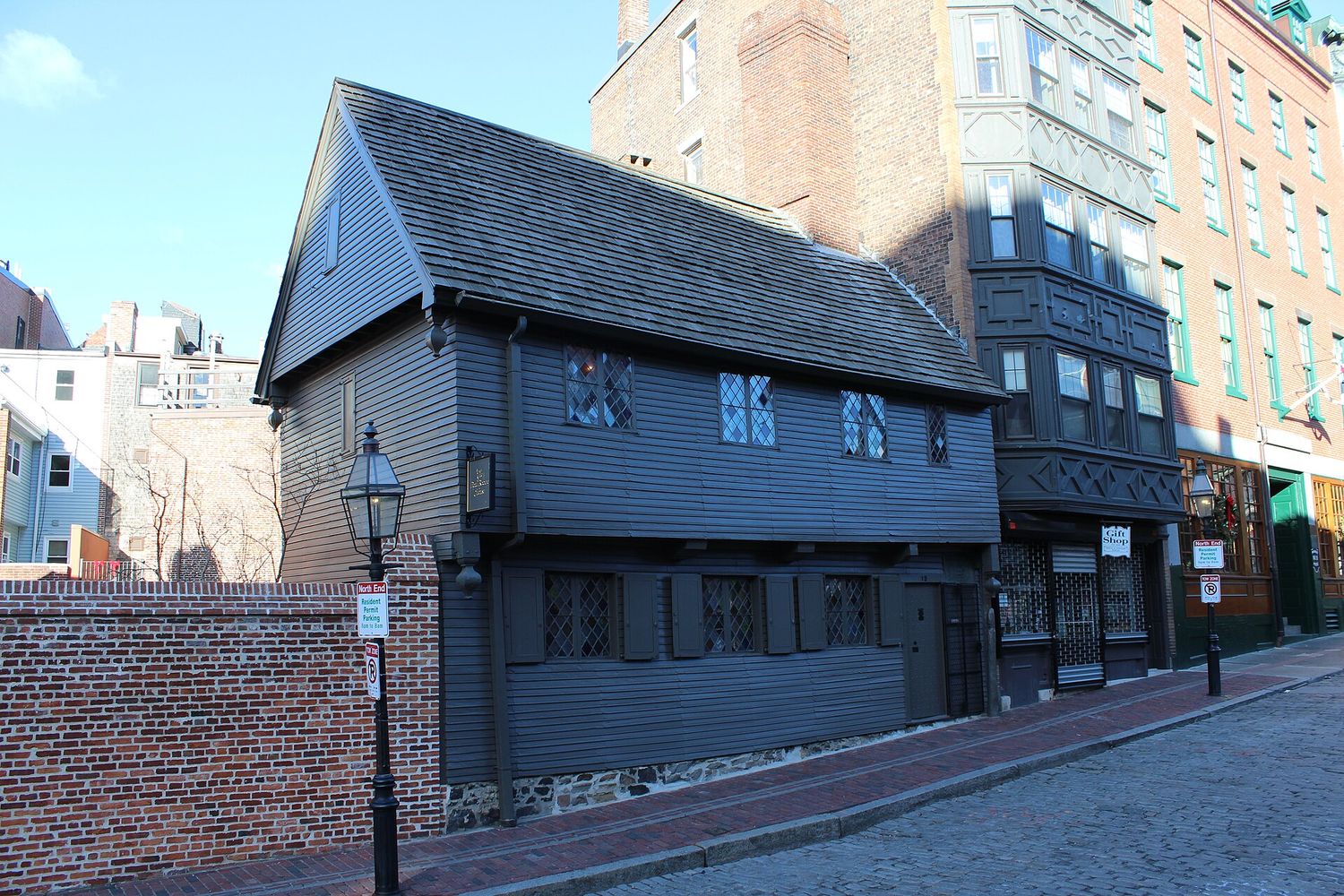
The first surprise is how small it is. You come around the corner into North Square expecting something grand for a man whose name every American schoolchild knows, and find a dark, two-story wooden house with diamond-paned windows, squeezed between brick buildings three times its height. The second surprise is that it is real: not a reconstruction, not a replica, but a house that was already nearly a century old when its most famous owner rode out of Boston on the night of 18 April 1775. The Paul Revere House is the oldest surviving house in downtown Boston, and for $6 it is one of the best-value hours on the Freedom Trail.
This guide covers what the house is and why it survived, what you will see inside, tickets and hours, how long to spend, when to go to avoid the line, the man himself and what the famous poem gets wrong, and what else to see nearby in the North End. Prices and hours were checked with the museum in September 2026; confirm before you go.
The Paul Revere House at a glance
| Detail | What to know |
|---|---|
| Address | 19 North Square, North End, Boston |
| Built | About 1680; owned by Paul Revere from 1770 to 1800 |
| Admission | $6 adults; $5.50 seniors and college students; $1 ages 5 to 17 |
| Hours, 15 April to 31 October | Daily, 10am to 5:15pm |
| Hours, 1 November to 14 April | Daily, 10am to 4:15pm; closed Mondays in January, February and March |
| Closed | Thanksgiving, Christmas Eve, Christmas Day, New Year’s Day |
| Time needed | 30 to 45 minutes |
| Freedom Trail | Stop 12 of 16 |
| Passes | Included in the Boston 250 Pass ($35.10) and Go City Boston |
| Nearest T | Haymarket (Orange, Green), about 8 minutes; Aquarium (Blue), about 10 minutes |
Why a seventeenth-century house survived
North Square was one of the most fashionable addresses in Boston in the late 1600s. The house was built around 1680 on the site of a parsonage that had burned in the great fire of 1676, and its first owner was a wealthy merchant. It was built in the style of the day: timber frame, overhanging second story, small leaded windows, a steep roof. By the time Paul Revere bought it in 1770, it was old-fashioned, and North Square was no longer smart. Revere, a busy silversmith with a large family, wanted something close to his shop and the waterfront, and this fit.
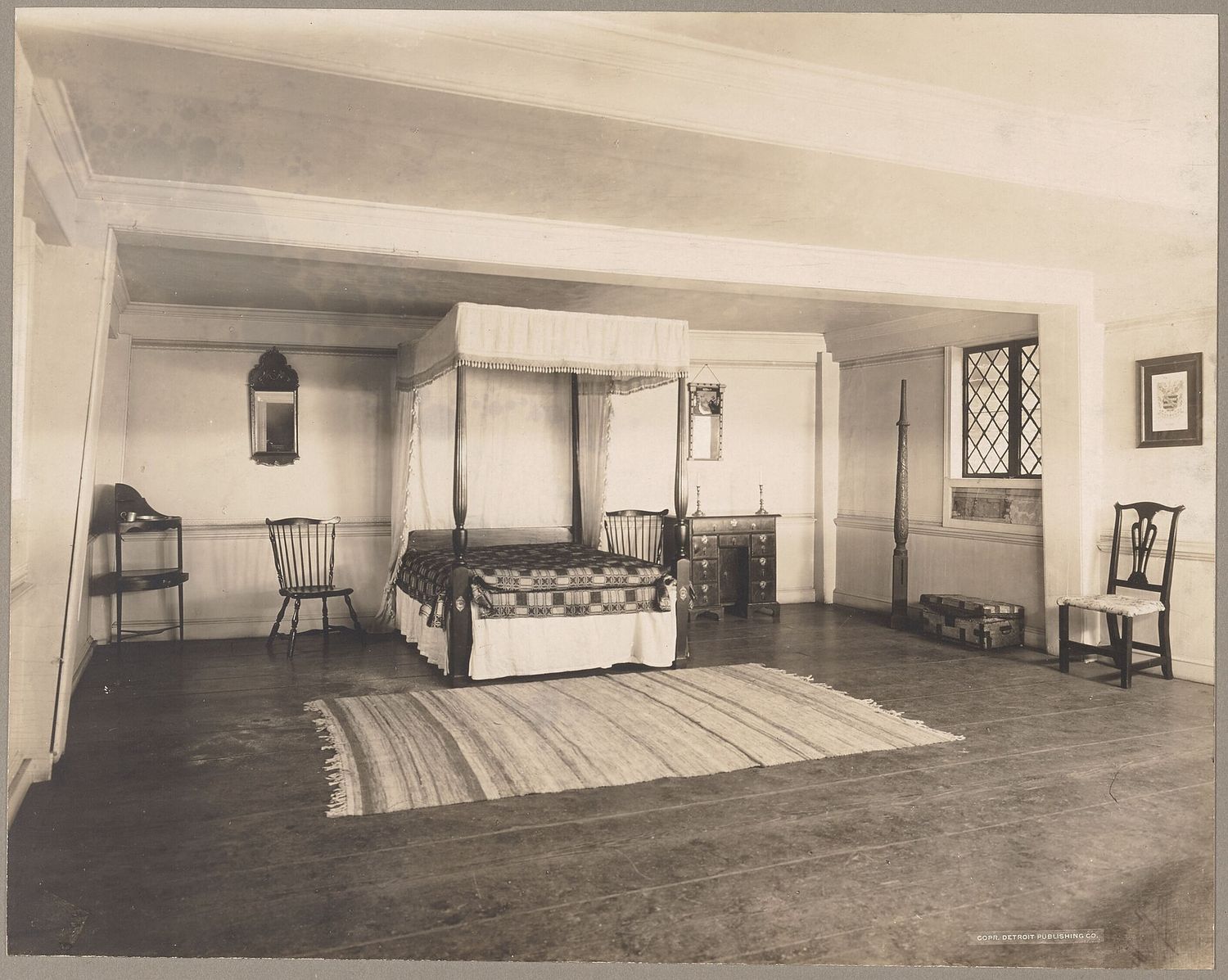
After Revere sold it in 1800, the house slid down the social scale with the North End itself. Through the nineteenth century the neighborhood filled with Irish, then Jewish, then Italian immigrants, and the old house became a tenement, with shops on the ground floor, among them a candy store, a cigar factory, a grocery and a bank. That is almost certainly what saved it: buildings that are useful and busy tend not to be torn down. In 1902 Revere’s great-grandson bought it to stop it being demolished, and after a restoration that stripped away later additions, including a third floor, to bring it back to something like its seventeenth-century appearance, it opened as a museum in 1908. It has been one since, run by the nonprofit Paul Revere Memorial Association.
The house through the centuries
| Year | What happened |
|---|---|
| 1676 | The great fire destroys much of the North End, including the parsonage that stood on this site |
| About 1680 | The present house is built for a merchant, in the timber-framed style of the day |
| 1770 | Paul Revere, 35, buys the house for his growing family |
| 18 April 1775 | Revere leaves from the North End on the night of his ride |
| 1800 | Revere sells the house; the North End’s decline as a fashionable district is under way |
| 1800s | The house becomes a tenement for immigrant families, with shops on the ground floor |
| 1902 | Revere’s great-grandson buys it to save it from demolition |
| 1908 | After restoration, it opens as one of the country’s early historic house museums |
Next door, the brick Pierce/Hichborn House, built in the early eighteenth century and once owned by Revere’s cousin Nathaniel Hichborn, is also looked after by the museum, but it was closed until further notice when we checked in September 2026. Look at it from the square; it shows how quickly Boston’s builders moved from timber to brick after the fires.
What you will see inside
The visit is self-guided, with staff in the rooms to answer questions, and it follows a short loop through four rooms on two floors plus the courtyard. It does not take long, which is part of its charm.
- The hall. The main downstairs room, where the family cooked, ate and lived, furnished as it might have been in the seventeenth century, with a big open hearth. This is the room that shows the house’s age most clearly.
- The kitchen. A lean-to at the back, where you get a sense of how much work it took to feed a household of this size.
- The upstairs chambers. Two rooms furnished to show the Revere family’s time in the house, with some pieces that belonged to the family. Paul Revere had sixteen children with his two wives, Sarah Orne and, after her death, Rachel Walker, and not all of them were in the house at the same time, but it was never quiet.
- Revere’s trades. Exhibits on his work as a silversmith, engraver and bell caster, which are a reminder that he was first and foremost a craftsman and a businessman, not a horseman. For his finest silver, go to the Museum of Fine Arts.
- The courtyard. A small brick yard beside the house, with space to stop and read, and a bell from the Revere foundry.
The stairs are steep and narrow, as they were in houses of the period, and the second floor is not easy for everyone to reach. Ask the staff about access before you buy a ticket if stairs are a problem.
Tickets, hours and when to go
Buy tickets at the admissions booth when you arrive; groups of ten or more need to book ahead. Admission is $6 for adults, $5.50 for seniors and college students, and $1 for children aged 5 to 17. The house is included in the $35.10 Boston 250 Pass, which also covers the Old State House, Old South Meeting House, Old North Church and King’s Chapel, and it is one of the attractions on the Go City Boston pass. At $6, though, it is cheap enough that there is no reason to buy a pass for it alone. Check the museum’s hours and prices page before you go.
From 15 April to 31 October the house is open every day from 10am to 5:15pm; from 1 November to 14 April it closes at 4:15pm and is also closed on Mondays in January, February and March. It is closed on Thanksgiving, Christmas Eve, Christmas Day and New Year’s Day.
When to go: the house is small and its rooms fill quickly, so lines form on summer and October weekends from late morning. Arrive at 10am, when it opens, or after about 3:30pm. Weekday mornings in the off-season are the quietest of all. The worst time is around midday on a Saturday in October, when the Freedom Trail walkers and the North End lunch crowd arrive together.
Is the Paul Revere House worth it?
Yes, with the right expectations. It is not a big museum, and you will be through it in half an hour to 45 minutes. What you are paying for is the chance to stand inside a house built before 1700, in the rooms of a man who helped start a revolution, for less than the price of a sandwich. It is the cheapest real interior on the Freedom Trail and, alongside the Old State House and Old North Church, one of the three most worthwhile. The only reason to skip it is a long line on a busy weekend, and even then it is usually worth coming back first thing the next morning. Our guide to the Freedom Trail stops ranks it against the other interiors.
Paul Revere, the man
The poem made Revere a horseman, but for most of his 83 years he was something much more interesting: a craftsman who became an industrialist. Born in Boston in 1734 to a French Huguenot silversmith father, he trained in his father’s trade and became one of the finest silversmiths in the colonies; the Museum of Fine Arts has his Sons of Liberty Bowl and much more of his work. He was also an engraver, whose famous and heavily partisan print of the Boston Massacre helped turn a street brawl into propaganda; a dentist of sorts, who wired false teeth and later identified the body of his friend Joseph Warren, killed at Bunker Hill, by his own dental work; a militia officer; and, after the war, a bell caster and the owner of a copper-rolling mill in Canton, Massachusetts, one of the first in the country. His copper covered the dome of the Massachusetts State House in 1802 and sheathed the hull of USS Constitution.
He was also a courier, and a good one. Long before April 1775, he rode dispatches for Boston’s revolutionary committees to New York and Philadelphia. He was a natural choice for the most important ride of all.
Where else to find Paul Revere in Boston
Revere’s traces are all over the city, and following them makes a good half-day for anyone who has caught the bug at North Square.
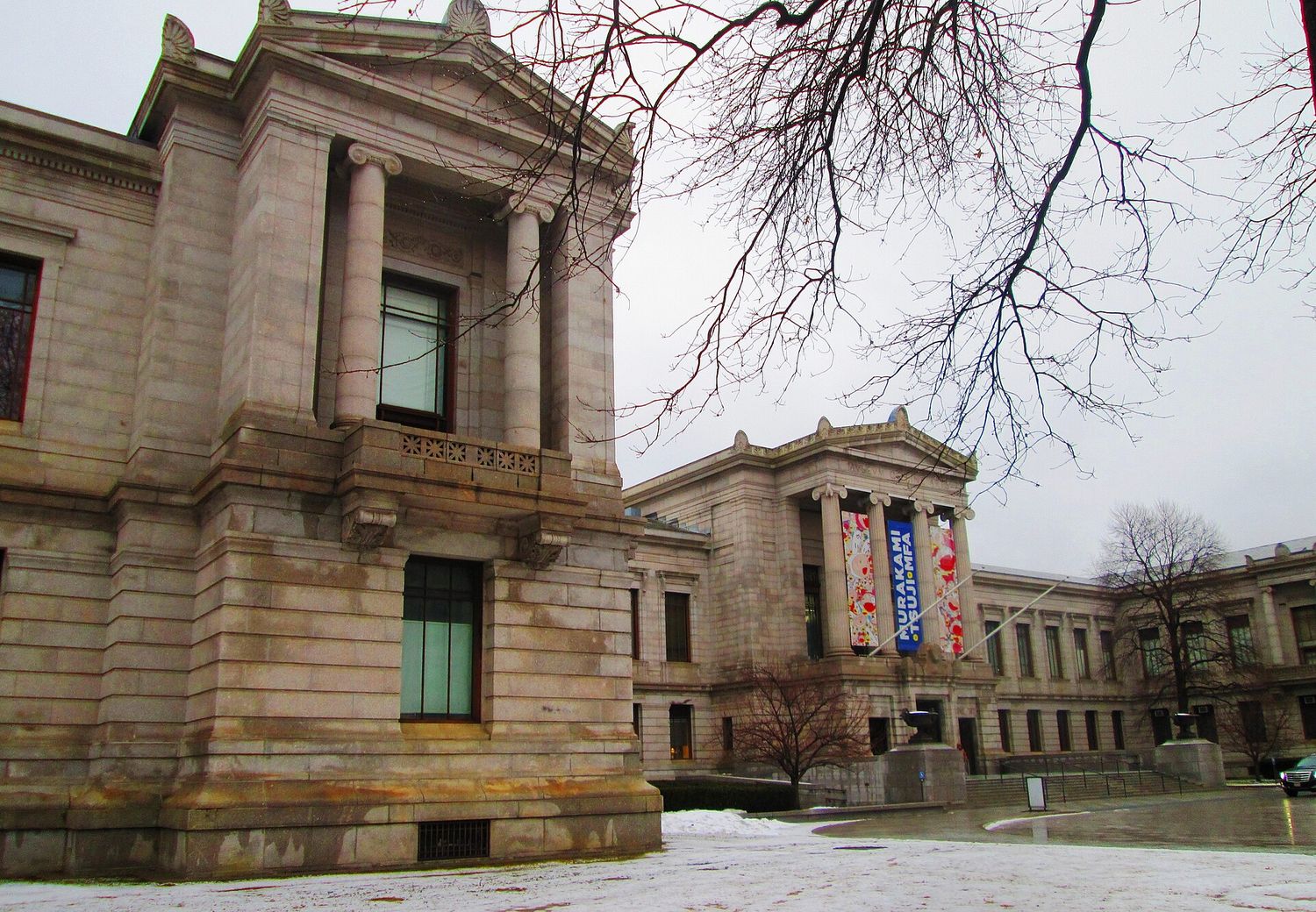
- The Museum of Fine Arts holds the finest collection of his silver, including the Sons of Liberty Bowl of 1768, made to honor the Massachusetts legislators who defied the Crown, and John Singleton Copley’s famous portrait of Revere in his shirtsleeves, holding a teapot. Adult admission is $30; it is closed on Tuesdays.
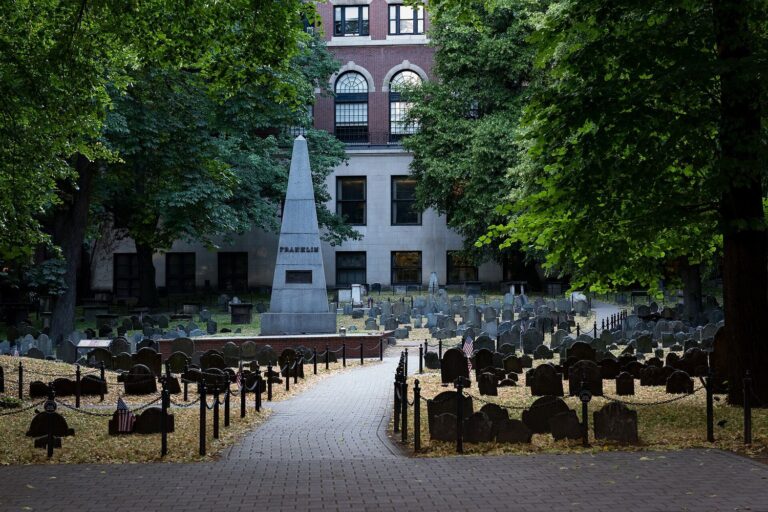
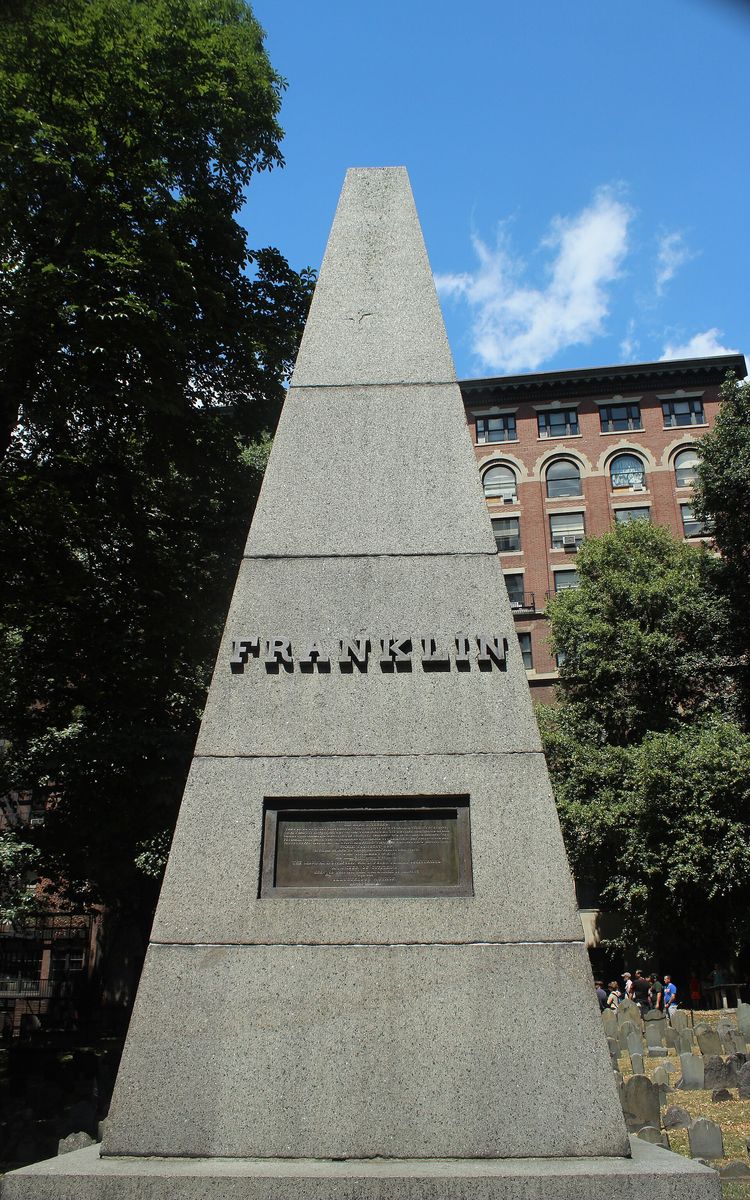
- The Granary Burying Ground, stop 4 on the Freedom Trail, is where he is buried, under a simple stone near a larger memorial.
- King’s Chapel, stop 5, has a bell cast by his foundry.
- The Massachusetts State House dome was first covered in copper rolled at his mill in 1802, before it was gilded.
- USS Constitution, stop 15, had her hull sheathed with Revere copper.
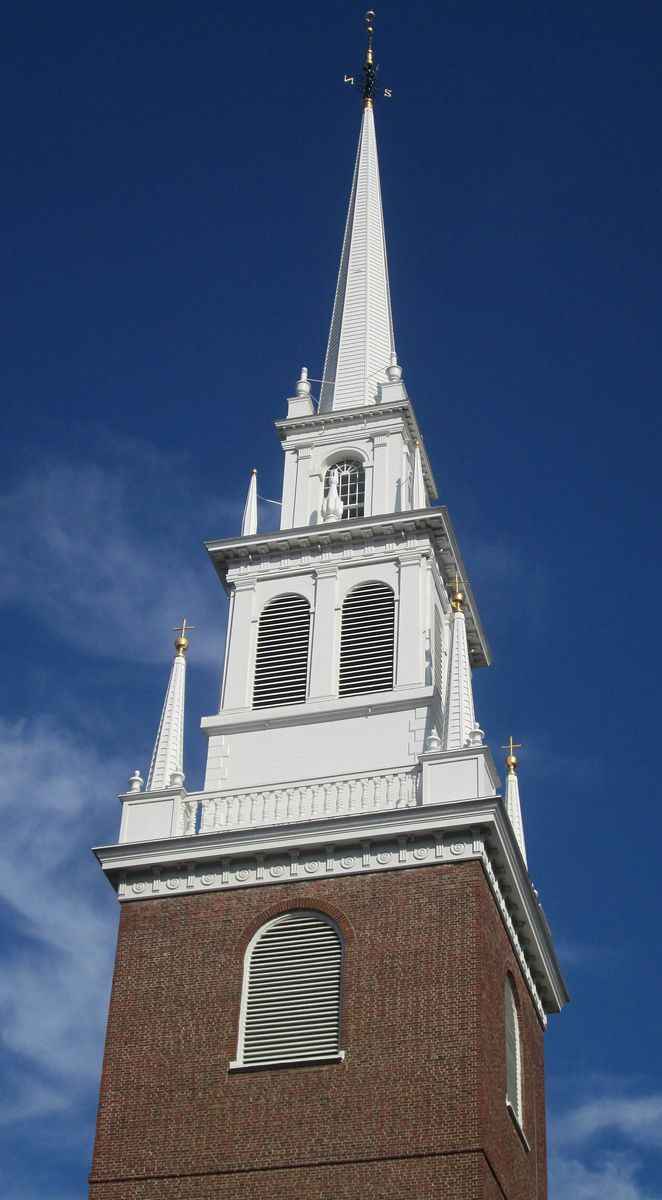
- Old North Church, where he arranged the lantern signal and, as a teenager, rang the bells.
The midnight ride, and what the poem gets wrong
On the night of 18 April 1775, Dr. Joseph Warren learned that British troops were about to march on Lexington and Concord, where they meant to seize militia weapons and, many believed, arrest Samuel Adams and John Hancock. Warren sent two riders by different routes to raise the alarm: William Dawes overland across Boston Neck, and Paul Revere by boat across the Charles River to Charlestown, where a horse was waiting. Before he left, Revere had arranged for two lanterns to be hung in the steeple of Old North Church to tell the patriots in Charlestown that the British were going by water, in case he was stopped.
Revere reached Lexington and warned Adams and Hancock. Dawes arrived soon after, and the two set off together for Concord, joined by a young doctor, Samuel Prescott. A British patrol stopped them on the road. Prescott escaped and got through to Concord; Dawes got away but was thrown from his horse; Revere was captured, questioned and released without his horse, and walked back to Lexington in time to help carry away a trunk of Hancock’s papers as the first shots were fired on the green.
Henry Wadsworth Longfellow’s poem “Paul Revere’s Ride,” written in 1860 on the eve of the Civil War, turned all of that into a lone hero galloping through the night. It is a wonderful poem and bad history. Revere was one of several riders, and dozens more took the alarm on from town to town; he did not reach Concord; the lanterns were a signal to others, not to him; and he almost certainly never shouted “The British are coming!” Most colonists still thought of themselves as British. The warning he is recorded as giving was that “the Regulars are coming out.” None of that makes the house less interesting. If anything, it makes the man more so.
What to see nearby
The house is at the heart of the North End, Boston’s oldest neighborhood, and the best way to visit it is as part of a walk. Our Boston neighborhoods guide covers the North End in full.
- North Square itself, a cobbled triangle with the Mariner’s House and Sacred Heart Church, which has been at the center of the Italian North End for more than a century.
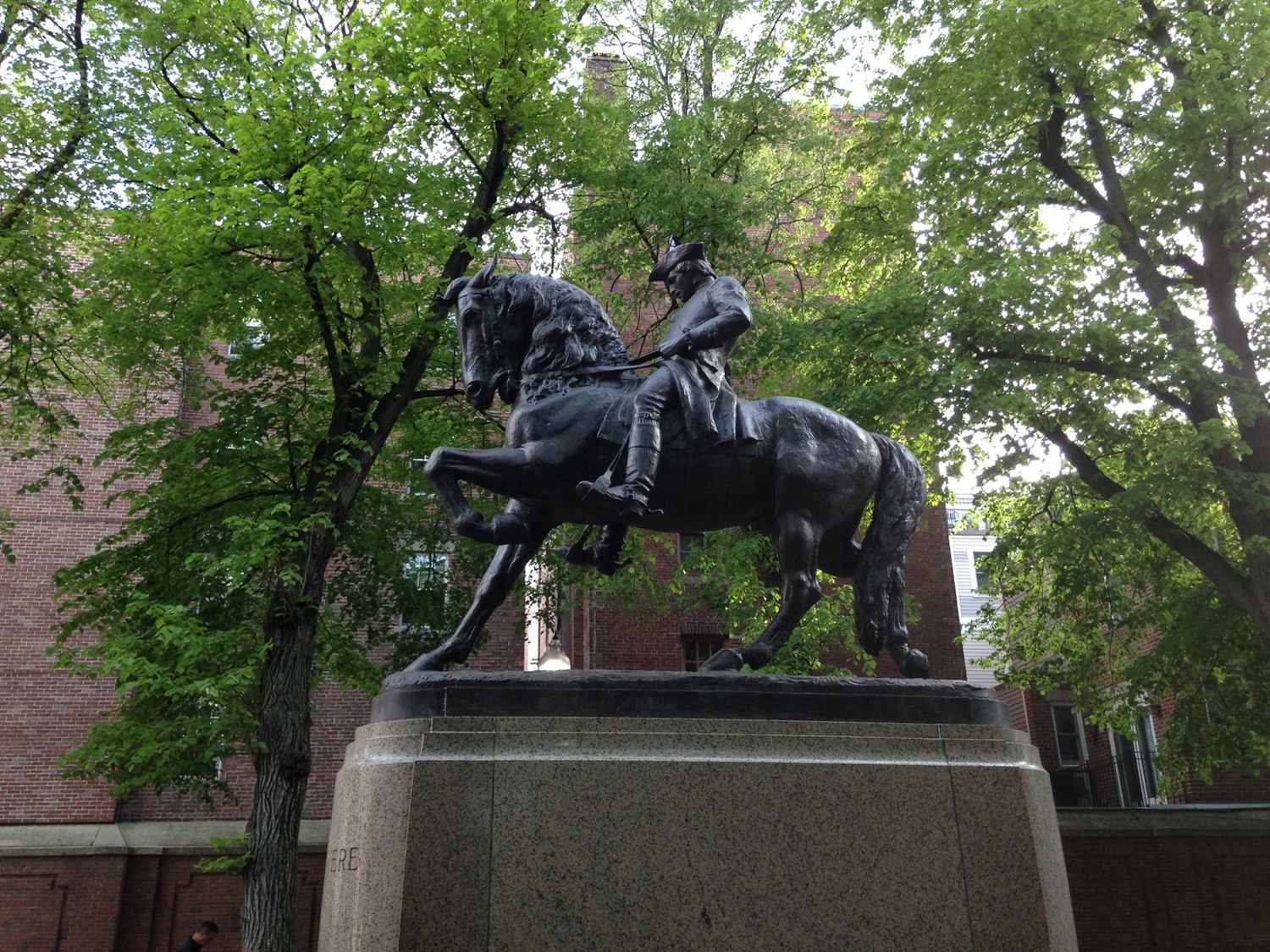
- The Paul Revere Mall, known locally as the Prado, a brick plaza between Hanover Street and Old North Church, with Cyrus Dallin’s statue of Revere on horseback.
- Old North Church, stop 13 on the Freedom Trail and five minutes away, where the two lanterns were hung. Entry is $10 for adults, crypt included.
- Revere’s grave in the Granary Burying Ground on Tremont Street, stop 4 on the trail, a few steps from Samuel Adams and John Hancock. It is back downtown, so it fits best at the start of the day.
- Revere’s bells. His foundry cast hundreds of bells, and one hangs in King’s Chapel on Tremont Street, stop 5.
- Hanover Street for lunch, coffee and cannoli. Our Boston food guide has the details.
A two-hour North End walk from the house
- 10am, the Paul Revere House, at opening, before the line.
- 10:45am, North Square, for a look at the Mariner’s House and Sacred Heart.
- 11am, the Paul Revere Mall, via Hanover Street, for the statue.
- 11:15am, Old North Church, with the crypt and, if you can manage the stairs, the bell chamber tour.
- 12pm, Copp’s Hill Burying Ground, up Hull Street, for the view across to Charlestown.
- 12:30pm, lunch on Hanover or Salem Street, before the crowds peak.
From Copp’s Hill, the Freedom Trail continues across the Charlestown Bridge to USS Constitution and the Bunker Hill Monument. Our Freedom Trail map shows the way, and our guide to how long the Freedom Trail takes helps you plan the rest of the day.
What the house does not tell you
A small house museum can only show so much, and a few parts of the story are worth knowing before you go. The house was rented out for part of the thirty years Revere owned it; he was a businessman, and property was an investment. The North End of 1775 was a crowded, working waterfront neighborhood of shipyards, taverns and tradesmen, not the picturesque village the restored house might suggest. Revere’s household, like many prosperous Boston households of the time, depended on the work of apprentices and servants as well as family. And the Revolution in the North End was not unanimous: neighbors, including many parishioners of Old North Church, remained loyal to the Crown, and some of them left Boston for good when the British evacuated in 1776. None of this makes the visit less worthwhile, but it gives the four small rooms more depth.
Visiting with children
At $1 for ages 5 to 17 and free for younger children, the Paul Revere House is the cheapest family stop on the trail, and small enough that children do not get bored. The open hearth, the low ceilings and the idea of a family of this size sharing a few rooms usually make an impression. Read them the Longfellow poem on the way, then let them work out what it gets wrong. Our Boston with kids guide has more ideas for the North End and beyond.
Getting there
The house is at 19 North Square, just off Hanover Street. From Haymarket station on the Orange and Green Lines, walk across the Rose Kennedy Greenway and down Hanover Street, about eight minutes. From Aquarium station on the Blue Line, walk north along the waterfront and cut up through the North End, about ten minutes. If you are following the Freedom Trail, the red line leads here from Faneuil Hall in about ten minutes. Parking in the North End is almost impossible for visitors; do not drive. See our guide to getting around Boston for fares.
Frequently asked questions
How much does it cost to visit the Paul Revere House?
$6 for adults, $5.50 for seniors and college students, and $1 for children aged 5 to 17, checked in September 2026. It is included in the Boston 250 Pass and in Go City Boston.
How long does it take to visit the Paul Revere House?
Most visitors spend 30 to 45 minutes. It is a small house with four rooms open on two floors and a courtyard, self-guided with staff on hand to answer questions.
Is the Paul Revere House original?
Yes. It was built around 1680 and is the oldest surviving house in downtown Boston. It was restored in the early twentieth century, when later additions were removed, but the frame and much of the structure are original.
Did Paul Revere really live here?
Yes. He owned the house from 1770 to 1800, and it was his home on the night of his ride in April 1775. He also lived elsewhere in Boston during those years at times, and he rented the house out for some of them.
When is the Paul Revere House open?
Daily from 10am to 5:15pm from 15 April to 31 October, and from 10am to 4:15pm from 1 November to 14 April, when it is also closed on Mondays in January, February and March. It is closed on Thanksgiving, Christmas Eve, Christmas Day and New Year’s Day.
Where is Paul Revere buried?
In the Granary Burying Ground on Tremont Street, stop 4 on the Freedom Trail, near Samuel Adams, John Hancock and the victims of the Boston Massacre.
The story continues five minutes away, through the Paul Revere Mall, at the church where the lanterns were hung. Our guide to Old North Church in Boston covers the signal, the crypt and the bell chamber Revere rang as a teenager, and explains the church’s new ticket options.
Revere died in 1818 and is buried downtown, in the Granary Burying Ground beside Park Street Church, in the same small burying ground as John Hancock and Samuel Adams. Our guide to the Granary Burying Ground shows where to find his marker and the other famous graves, and how to read the carvings on the old slate stones.
Revere never reached Concord. A British patrol stopped the riders in Lincoln, and only Samuel Prescott got through. To follow the rest of that day on the ground, from the Battle Green in Lexington to the North Bridge in Concord, see our guide to Lexington and Concord from Boston, with the train and bus routes and what is open in each season.