Ask ten Bostonians and nine will say October, which is both correct and slightly misleading — October is the loveliest month here and it is also the month when hotel rates are at their worst and every room within reach of the Charles is booked for a rowing regatta. The honest answer to best time to visit Boston depends almost entirely on whether you are optimizing for weather, for money, or for having the Freedom Trail to yourself, because in this city those three things point at three different parts of the calendar.
What follows is the year in detail: month-by-month temperatures, what is open and closed when, the dates that wreck hotel prices, and what to pack. Climate figures are long-run averages and any given week can depart from them wildly; event dates and prices were checked in September 2026, so confirm before you book.
The Short Answer
- Best overall: late September to late October. Warm days, cool nights, everything open, foliage from about the middle of October.
- Best value with good weather: late April to early June. Almost as pleasant, noticeably cheaper, and the city visibly relieved that winter has ended.
- Cheapest: January to March. Cold, sometimes snowy, hotel rates a fraction of October’s, and the museums are exactly as good.
- Avoid if you can: mid-April around the Marathon, the May graduation weekends, and the second week of October — not because the city is bad then but because the rooms are.
- Worst weather: July and August humidity, and any February day with an east wind.
Boston Weather, Month by Month
Average daily high and low, in Fahrenheit and Celsius. These are long-run normals — Boston is a coastal city on the boundary between continental and maritime air, and it is entirely capable of 70°F in February and a raw 55°F in June.
| Month | High °F | Low °F | High °C | Low °C | What it feels like |
|---|---|---|---|---|---|
| January | 37 | 22 | 3 | -6 | Cold, bright, windy. Snow likely. |
| February | 39 | 24 | 4 | -4 | The snowiest month, about 20 inches on average. |
| March | 46 | 31 | 8 | -1 | Raw and unreliable. Can snow. |
| April | 57 | 41 | 14 | 5 | Genuinely spring by the end of it. |
| May | 67 | 50 | 19 | 10 | Excellent. The best walking weather of the year. |
| June | 76 | 59 | 24 | 15 | Warm, long evenings, not yet humid. |
| July | 82 | 66 | 28 | 19 | Hot and humid. The brick holds heat. |
| August | 80 | 65 | 27 | 18 | As July, plus thunderstorms. |
| September | 73 | 58 | 23 | 14 | Close to perfect. |
| October | 62 | 47 | 17 | 8 | Crisp, clear, foliage. The classic month. |
| November | 52 | 39 | 11 | 4 | Gray, but quiet and cheap. |
| December | 42 | 29 | 6 | -2 | Cold and festive. First snow likely. |
Two things the table does not show. Boston gets around 49 inches of precipitation a year, spread fairly evenly — there is no dry season, and rain is as likely in July as in March. And snowfall averages roughly 57 inches a year but varies enormously; some winters bring almost nothing and others bring six feet.
The daylight problem nobody mentions
Boston sits at about 42 degrees north, which is further north than Rome and roughly level with Chicago, and the swing in day length across the year is large enough to reshape an itinerary.
In late June the sun is up before 5:10am and it is still light past 8:30pm — you can walk the Freedom Trail after dinner. In late December the sun sets around 4:15pm, which means that a day starting at 10am gives you roughly six hours of daylight, and a winter trip that plans two outdoor things and a museum will run out of light before it runs out of energy.
Two consequences. In summer, do the indoor things in the afternoon and save the parks and the Harborwalk for the evening, when the light on the water is at its best and the crowds have gone. In winter, front-load: outdoor sightseeing between 9am and 3pm, museums after. And accept that photographs of the Common in December will mostly be taken in the dark.
Spring in Boston
March
The worst month, and locals will tell you so freely. Winter has stopped being pretty and has not stopped being cold; the snow that is left is gray; and it is entirely capable of a serious storm. Rates are still low, the museums are quiet, and if you are here anyway there is nothing wrong with it — just do not plan a March trip for March.
The seasonal attractions are all still shut: no Swan Boats, no harbor island ferries, no whale watches. Frog Pond skating usually runs into the early part of the month.
April
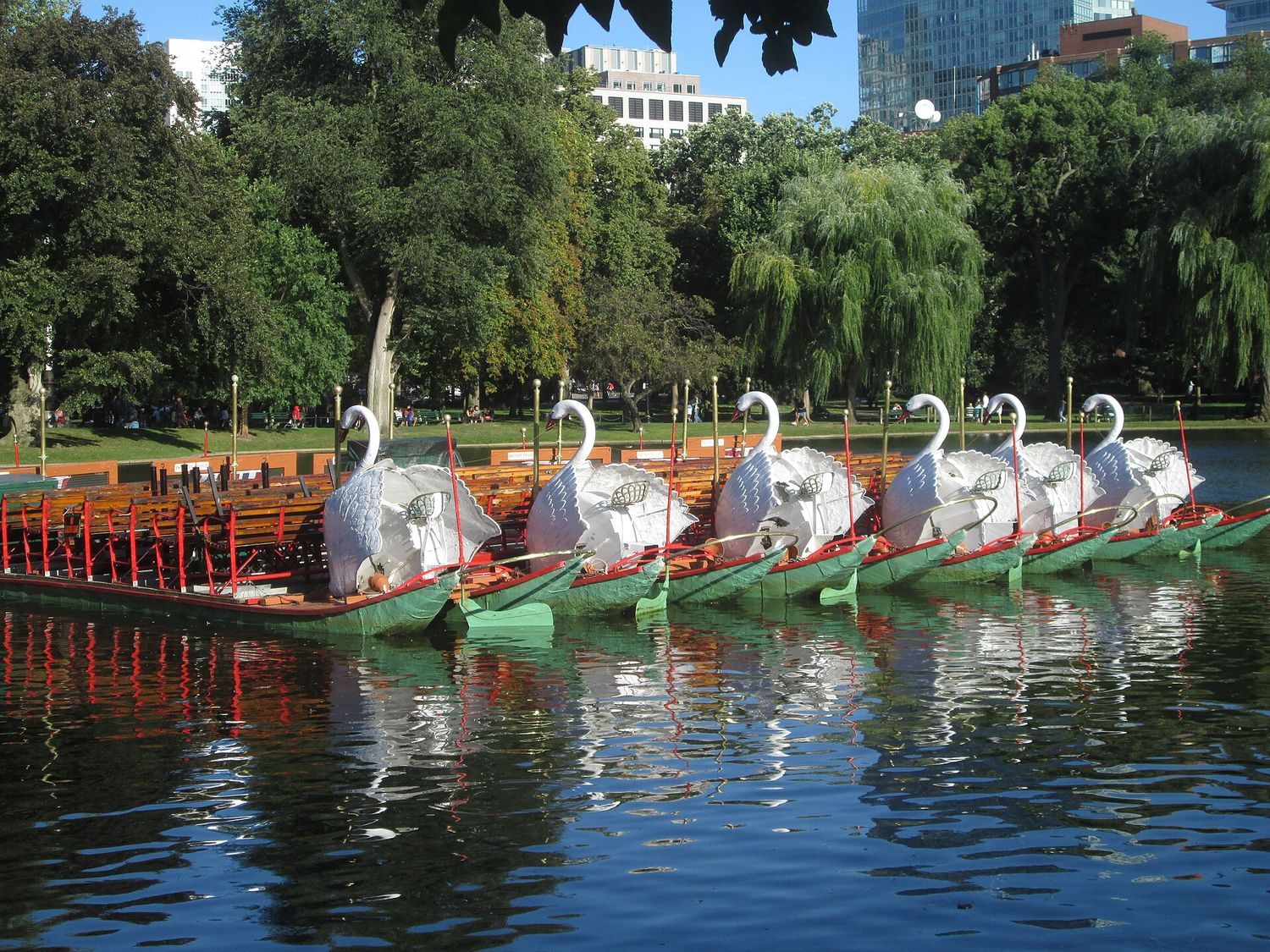
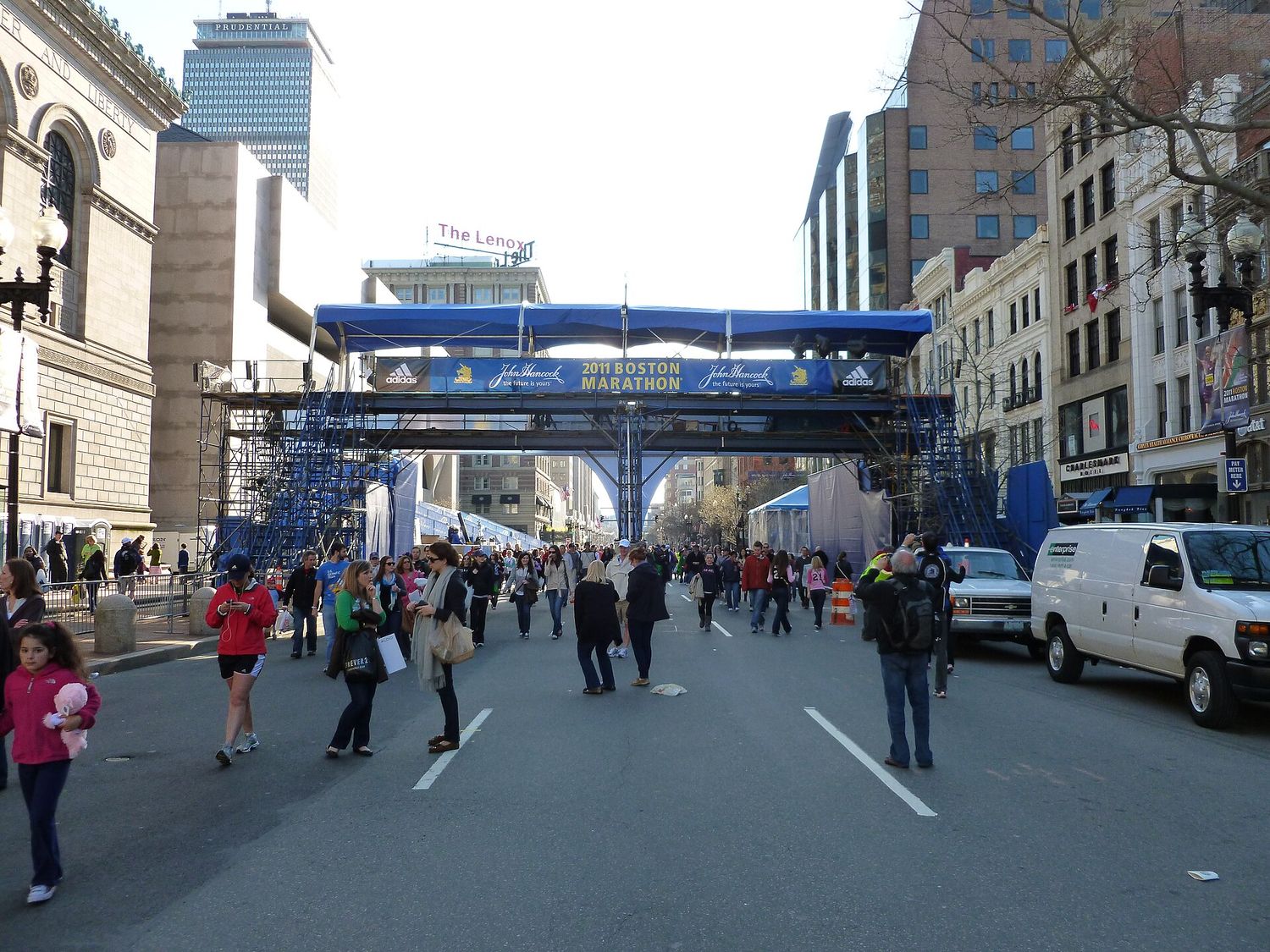
A month of two halves. The first two weeks can still be raw. By the last week the Public Garden’s magnolias and cherries are out along Commonwealth Avenue, the Swan Boats return — the 2026 season ran from 18 April — and whale watches restart from around the beginning of the month.
The dominating event is Patriots’ Day, the third Monday in April, which is a Massachusetts state holiday and the day of the Boston Marathon. In 2027 that falls on 19 April. The city effectively stops: a long corridor of streets closes, the trains are packed, there is an early Red Sox game at Fenway, and reenactments run at dawn in Lexington and Concord. It is a genuinely wonderful day to be in Boston and a genuinely terrible weekend to be looking for a hotel room at a sane price.
May
The best month for walking, and for my money the most underrated month to visit. Highs around 67°F, the trees fully out, the Esplanade busy in the evenings, everything open, and none of the summer humidity.
The one problem is graduation. Greater Boston has more than fifty colleges and universities, and their commencement weekends cluster through May, which pushes hotel rates to some of the highest of the year and fills restaurants with families of four in good clothes. Check the calendar for the specific weekend you want. Midweek in May is excellent value; the third Saturday is not.
Summer in Boston
June
Warm without being oppressive, with the longest evenings of the year — light until around 8:30pm. Everything is running: harbor island ferries from mid-May, Swan Boats, whale watches, the Red Sox, outdoor dining across the South End and the Seaport, and the free events season beginning on the Common and the Greenway.
June is also when the water finally becomes usable. The harbor is cold well into the season — this is the North Atlantic, and it does not warm the way the mid-Atlantic beaches do — but by late June Spectacle Island’s beach, Revere Beach and Crane Beach up in Ipswich are all in business. Whale watching is at its best from now through September, when the humpbacks are feeding on Stellwagen Bank thirty miles offshore.
Late June is arguably the single best week of the year: full summer programming, school groups gone, and the humidity not yet arrived. Bunker Hill Day on 17 June is a Suffolk County holiday with a parade in Charlestown.
July
Hot, humid and busy. Highs average 82°F but the number that matters is the dew point — the brick and granite downtown hold heat, the North End has almost no shade, and a 2.5-mile walk feels considerably longer than it did in May.
The Fourth of July is Boston’s biggest day of the year: the Boston Pops Fireworks Spectacular on the Esplanade, with an audience in the hundreds of thousands along the Charles, plus the annual turnaround of USS Constitution in the harbor. Book far ahead, arrive absurdly early, and accept that you will not move quickly anywhere that day.
Strategy for a July trip: start at 8 or 9am, do outdoor things in the morning, spend the middle of the day in an air-conditioned museum, and come back out after 5pm. The city is genuinely pleasant again by early evening.
August
As July, with thunderstorms and slightly shorter evenings. The North End’s saints’ day feasts run through the month and are the best free thing happening in the city — street processions, food stalls and bands in a neighborhood that has been doing this for a century.
Late August has a distinctive quirk: 1 September is when most of greater Boston’s leases turn over, so the last days of the month are full of moving trucks, discarded furniture on the sidewalks and the annual crop of vehicles wedged under the low bridges on Storrow Drive. It is a spectacle, and it makes driving anywhere near the student neighborhoods a poor idea.
Fall in Boston
September
Close to perfect and the connoisseur’s choice. Highs around 73°F, the humidity gone, the water still warm enough to swim, all the summer attractions still running, and the students back — which sounds like a drawback and is actually what makes the city feel alive again after August.
The harbor island ferries run into October, whale watches continue, and the Swan Boats close in the first week — the 2026 season ended on 7 September. Rates start climbing as conference season begins.
October
The famous month, and it deserves it. Clear cold mornings, warm afternoons, and the city’s foliage peaking mid-to-late October — later than the mountains, because the coast holds heat. The Arnold Arboretum, the Emerald Necklace, Mount Auburn Cemetery and the Common are all at their best.
Three things fill the city. The Head of the Charles Regatta, the largest three-day rowing event in the world, is 16 to 18 October in 2026 and packs both riverbanks. Salem’s Haunted Happenings runs the whole month, drawing enormous crowds thirty minutes up the line. And it is peak conference season. The result is the highest hotel rates of the year and the most competition for restaurant tables.
If you want October weather without October prices, come in the first week — before foliage peaks and before the regatta — or accept that you are paying for the best three weeks in the Boston calendar.
November
Underrated. The first half still has color and reasonable temperatures; the second half is gray and raw. Crowds collapse after the foliage goes, rates fall sharply, and you can walk the Freedom Trail on a Tuesday with almost nobody on it.
The seasonal changeover happens now: the harbor islands and whale watches close, the Duck Tours run until the Sunday after Thanksgiving, and Frog Pond skating opens around mid-November. Thanksgiving week is busy in a domestic rather than a touristic way — many restaurants close, and Plymouth becomes briefly relevant.
Winter in Boston
December
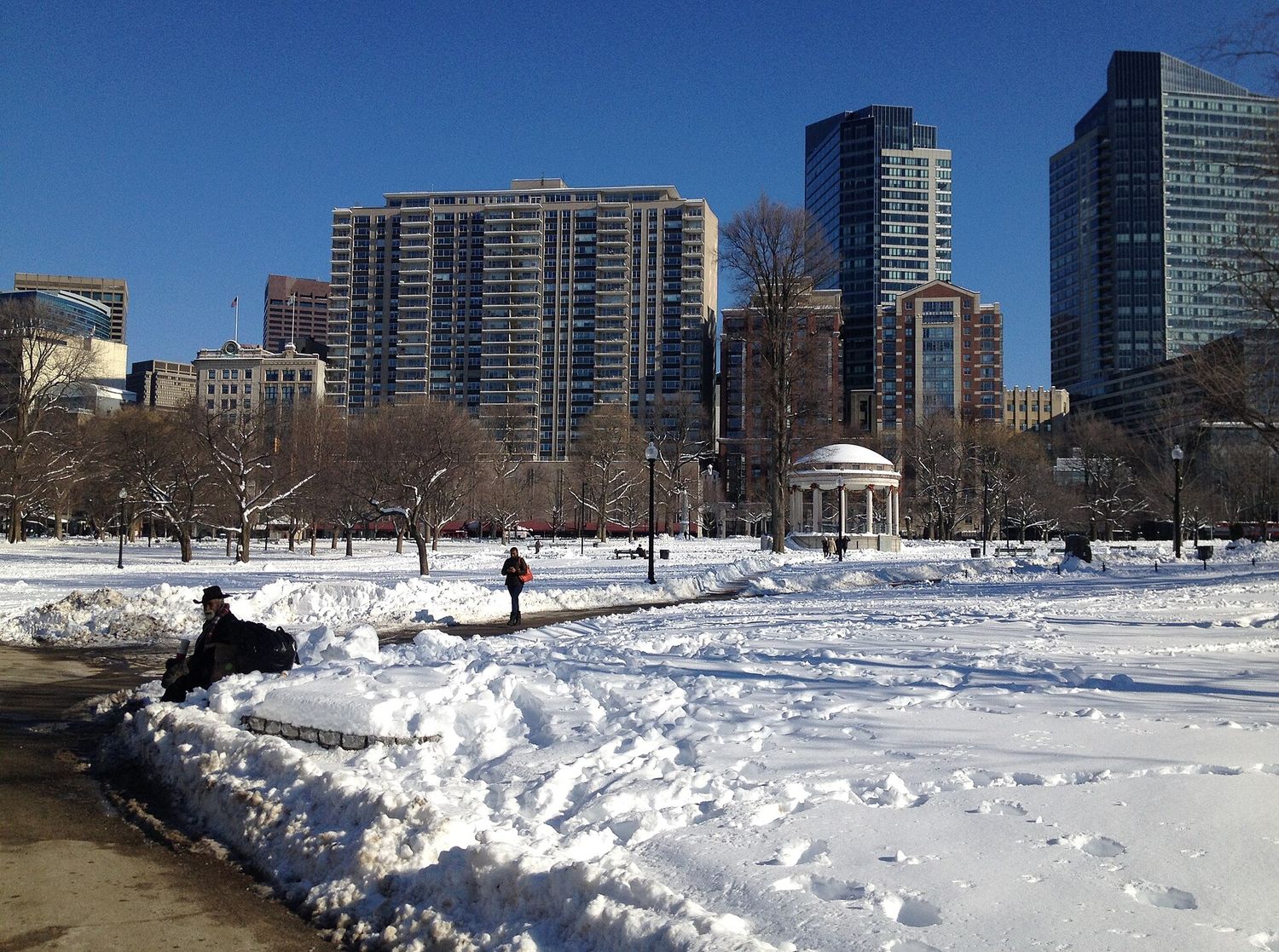
Cold and genuinely festive. The Christmas tree on the Common — an annual gift from Nova Scotia, sent every year since 1971 in thanks for Boston’s emergency help after the 1917 Halifax explosion — is lit in early December. The Boston Common Frog Pond is a skating rink, $10 for adults and free for children under 58 inches, with skate hire on top. Holiday markets, the Boston Ballet’s Nutcracker, and lights along Commonwealth Avenue.
Rates are moderate until the last week, when they spike, and First Night on New Year’s Eve takes over the city with free events and fireworks over the harbor.
January
The coldest month, averaging 37°F by day and 22°F at night, and the cheapest. This is the single best value window of the year: hotel rates a fraction of October’s, no lines anywhere, and the museums — which is what you will mostly be doing — exactly as good as in July.
What you lose: outdoor attractions, several historic sites on reduced or weekday-only hours, and the possibility that a storm eats a day. What you gain, beyond money, is a version of Boston that most visitors never see — the Common under snow, the Public Library reading room on a dark afternoon, the North End without a line outside anything.
February
The snowiest month, averaging around 20 inches, and the one most likely to include a genuine blizzard. Slightly warmer than January on paper and often feels colder because of the wind off the water.
There is also a specific pleasure to Boston in deep winter that is hard to sell and worth naming. The historic core was built for a walking city in a cold climate, and it looks right under snow in a way it does not in August — the gas lamps on Beacon Hill, the brick, the low sky over the Common. The North End’s restaurants are half empty and delighted to see you. The Boston Public Library reading room at three in the afternoon, with the lamps on and the wind outside, is one of the great rooms in America, and in February you can have a table in it.
School vacation week in the middle of the month fills the family attractions — the Museum of Science and the Aquarium in particular — and briefly lifts rates. Outside that week, February is January with a bit more snow and slightly longer days.
What Is Open When
| Attraction | Season |
|---|---|
| Freedom Trail sites | Year round; several on reduced winter hours |
| Massachusetts State House | Year round, weekdays only |
| Museums (MFA, Gardner, ICA, Science, Aquarium) | Year round; MFA and Gardner closed Tuesdays, ICA Mondays |
| Swan Boats, Public Garden | Mid-April to early September |
| Boston Harbor Islands ferries | Mid-May to Indigenous Peoples’ Day weekend, October |
| Whale watches | About April to November |
| Boston Duck Tours | About late March to the Sunday after Thanksgiving |
| Fenway Park tours | Year round; 9–5 April to October, 10–5 otherwise |
| Red Sox home games | Late March or April to September, and October if they make it |
| Frog Pond skating | Mid-November to March |
| Farmers markets and SoWa | About June to late October |
| Haymarket | Year round, Fridays and Saturdays |
The pattern is clear enough: everything indoors runs all year, and everything on the water is seasonal. A winter trip loses the boats and keeps the history and the art, which for most visitors is the larger half.
Best Time For Specific Things
| If you want | Come in | Note |
|---|---|---|
| Fall foliage | Mid to late October | City peaks later than the mountains |
| Cheap hotels | January to March | Rates a fraction of October’s |
| No crowds | Late January, November | The trail is almost empty |
| Best walking weather | May, September | Warm days, cool nights, no humidity |
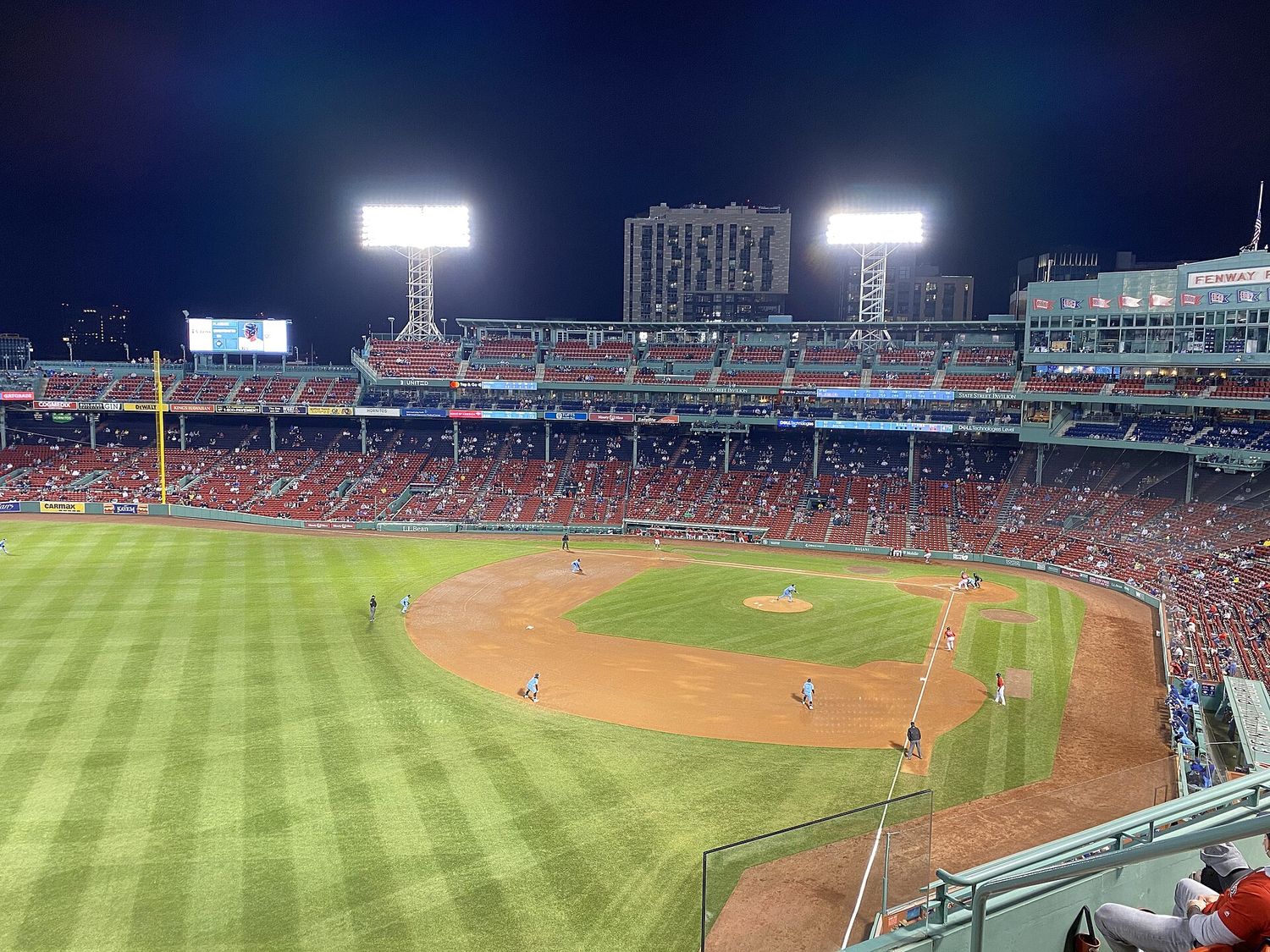
| Baseball | April to September | Fenway in June is unbeatable |
| Whale watching | June to September | Season runs about April to November |
| Beaches and the islands | Late June to early September | Ferries mid-May to October |
| Christmas atmosphere | Early to mid December | Before rates spike at the end of the month |
| Snow and skating | January and February | February is the snowiest month |
| The Revolution | Mid-April | Patriots’ Day reenactments |
| Family trips | Late June, early September | Warm, everything open, fewer school groups |
What the Season Does to the Bill
The attractions cost the same in February as in October. Everything else does not.
| Season | Hotel rates | Crowds | Attractions open | Daylight |
|---|---|---|---|---|
| Jan–Mar | Lowest of the year | Very low | Indoor only; several sites on reduced hours | Short — dark by 4:30 in December and January |
| Apr–early Jun | Moderate, with two spikes | Building | Nearly everything from late April | Long and improving |
| Late Jun–Aug | High and steady | High | Everything | Longest — light past 8:30pm in June |
| Sep–Oct | Highest of the year | Highest | Everything until mid-October | Shortening but still generous |
| Nov–Dec | Low, spiking at year end | Low until mid-December | Boats closing; skating opening | Short |
Put plainly: a January trip and an October trip to Boston are the same museums, the same restaurants and the same 2.5-mile brick line, at very different prices. What the expensive months buy you is daylight, the boats and the leaves. Whether that is worth double the room rate is a real question rather than a rhetorical one, and for a lot of visitors the answer is no.
The Free Seasonal Calendar
Boston runs an unusually good program of free public events, and knowing what falls when can shape a trip on its own.
- March — St Patrick’s Day and Evacuation Day on the 17th, marking the British withdrawal in 1776, with a large parade in South Boston.
- April — Patriots’ Day: dawn reenactments in Lexington and Concord, the Marathon itself, and the Public Garden’s magnolias.
- May — Lilac Sunday at the Arnold Arboretum, when the collection is at its peak and the Arboretum lifts its usual no-picnics rule for the day. Free, and lovely.
- June — Bunker Hill Day on the 17th with a Charlestown parade; the start of the free outdoor performance season on the Common and the Greenway.
- July — the Boston Pops Fireworks Spectacular on the Esplanade on the Fourth; USS Constitution’s turnaround cruise in the harbor.
- August — the North End’s saints’ day feasts, with processions, food stalls and bands over successive weekends.
- September — neighborhood festivals across the city as the students return.
- October — the Head of the Charles Regatta, free to watch from either bank, and the best foliage in the Emerald Necklace.
- November — Veterans Day parade; the tree arrives on the Common from Nova Scotia.
- December — the tree lighting in early December, holiday lights along Commonwealth Avenue, and First Night on New Year’s Eve with free events across the city and fireworks over the harbor.
Add to that the permanently free tier — the Freedom Trail itself, USS Constitution, the Boston Public Library, Faneuil Hall, the Harvard Art Museums, the Arnold Arboretum, the Harborwalk and the Esplanade — and Boston in any month has a full day in it that costs nothing.
Weather You Should Actually Prepare For
Four things worth knowing, none of which should stop you coming.
Nor’easters. The signature New England storm: a low tracking up the coast, driving wind and precipitation in from the northeast for a day or more. In winter that means heavy snow and coastal flooding; in spring and fall it means days of hard rain and serious wind. They are forecast well in advance, so watch the outlook a few days out and be prepared to move an outdoor day.
Tropical remnants. From August into early October, the tail ends of Atlantic systems occasionally reach New England. Direct hurricane strikes are rare this far north, but heavy rain and wind from a passing remnant are not, and they can disrupt ferries and flights for a day.
Heat waves. Two or three times a summer, several consecutive days above 90°F with high humidity. The older housing stock and some smaller hotels are not built for it. If you are here for one, restructure the day around the museums.
Ice. The most underrated winter hazard, and more disruptive to a visitor than snow. Boston’s freeze-thaw cycle leaves brick sidewalks and the granite steps of historic buildings genuinely slippery, and Beacon Hill and the North End are the worst for it. Boots with grip are not optional in January.
Dates to Plan Around
- Patriots’ Day and the Boston Marathon — third Monday in April; 19 April in 2027. Street closures, packed trains, high rates, and a genuinely great day.
- College graduations — clustered through May. The worst value two weeks of the year.
- Fourth of July — the Pops on the Esplanade and hundreds of thousands of people along the river.
- Head of the Charles Regatta — 16 to 18 October 2026. Fills every room near the river and closes bridges.
- Salem’s Haunted Happenings — all of October, with a parade on the first. Affects Boston rates too.
- Conference season — September through early November and again in spring, driving midweek rates up in the Seaport and Back Bay.
- February school vacation week — busy family attractions, briefly higher rates.
- 1 September — the great lease turnover. Traffic chaos in the student neighborhoods.
- Thanksgiving and late December — many restaurants close, rates spike at year end.
One quirk worth exploiting all year: because so much midweek demand in Boston is corporate, weekend rates downtown and in the Seaport are often lower than weekday rates, which is the reverse of a leisure city. A Friday-to-Sunday stay can be the best value in town even in October.
Choosing by Traveler
The right month depends as much on who is going as on the weather.
First-time visitors. September, early October or May. You want everything open, comfortable walking weather and long enough days to fit the Freedom Trail, a museum and a neighborhood into the same day. Avoid deep winter for a first trip — not because it is bad, but because you will spend it indoors and leave without having seen how the city fits together.
Repeat visitors. January, February or November, when the rooms are cheap and the neighborhoods are themselves rather than a performance. If you have already done the trail and the museums, this is when Boston is most rewarding — you can get a table anywhere, the Gardner is quiet enough to sit in, and Charlestown and the South End go back to being residential.
Families with school-age children. Late June or the first half of September, either side of the peak. Both give you the boats, the ballpark and warm evenings without the July humidity or the worst of the crowds. February vacation week works if you are committed to museums and skating, but expect company.
Couples on a short break. October for the look of the place, or February for the price and the quiet. Both are good; they are different vacations.
Anyone on a tight budget. January and February, without hesitation. The saving on a week’s accommodation will fund every admission on your list several times over, and the free tier — the trail, the library, the Harvard Art Museums, Faneuil Hall, USS Constitution — is unaffected by the season.
Runners and sports fans. Mid-April for the Marathon and the start of the baseball season in the same week; October if the Red Sox are still playing and you want the Head of the Charles as well. Both are expensive weekends and both are worth it if that is why you came.
What to Pack
Boston’s weather is coastal and changeable, and locals dress in layers year-round for a reason.
- All year: shoes you can walk five miles in. Brick, granite setts and colonial cobble punish thin soles, and this matters more than anything else on the list.
- All year: a hood. Rain here frequently arrives sideways off the water and an umbrella is often useless.
- Summer: light layers, because air conditioning indoors is aggressive and the contrast with 82°F outside is real. Sun protection — the harbor reflects.
- Spring and fall: a proper jacket and something warmer underneath. A 62°F October afternoon becomes a 47°F evening quickly, and the wind on the bridges is a different climate from the sheltered streets.
- Winter: a genuinely warm coat, hat, gloves, and boots with grip. Sidewalks are cleared unevenly and ice is common. Do not rely on being able to walk everywhere after a storm.
Frequently Asked Questions
What is the best month to visit Boston?
September or October for the best combination of weather and open attractions — warm days, cool nights, and foliage peaking mid-to-late October. May is nearly as good and costs less. If money matters most, January and February have the lowest rates of the year and the museums are unaffected by the season.
What is the cheapest time to visit Boston?
January through March by a wide margin, with November a close second. Hotel rates in the depths of winter are a fraction of what the same rooms cost in October, and the crowds effectively disappear. You lose the boats, the Swan Boats and the whale watches, and several historic sites cut their hours — but the Freedom Trail, the museums and the restaurants all carry on.
When is fall foliage in Boston?
Mid-to-late October in the city and along the coast, which is later than most people expect because the water holds heat. The mountains — the White Mountains, Vermont, the Berkshires — turn from late September, but they are three to four hours away and make a poor day trip. The Arnold Arboretum, Mount Auburn Cemetery and the Emerald Necklace all deliver excellent color within forty minutes of downtown.
How cold does Boston get in winter?
January averages 37°F by day and 22°F at night, February a degree or two warmer on paper and often colder in practice because of the wind. Snowfall averages about 57 inches a year and varies hugely — February is the snowiest month at around 20 inches. Bring a serious coat and boots with grip; the city clears the main paths quickly but side streets and sidewalks less so.
Is Boston too hot in summer?
July and August average highs of 80 to 82°F, which is manageable — the humidity is what makes it hard work. The brick and granite downtown hold heat and the North End has almost no shade. Start at 8 or 9am, spend the middle of the day in a museum, and come back out after 5pm. By early evening the city is pleasant again.
When should I avoid Boston?
Not for the weather but for the rates: Marathon weekend in mid-April, the May graduation weekends, and the peak of October around the Head of the Charles Regatta. March is the weakest month on merit — winter without the charm — though it is also cheap and perfectly workable if you plan around the indoors.
How many days do you need in Boston?
Three is the sweet spot: one for the Freedom Trail, one for Back Bay and a museum, one for Cambridge or the harbor. Four lets you add a day trip. In winter, weight the plan toward museums and indoor sites and allow an extra day, because outdoor time is shorter and a storm can cost you an afternoon.
Does it rain a lot in Boston?
About 49 inches of precipitation a year, spread fairly evenly across the months — there is no dry season, and rain is roughly as likely in July as in March. What is distinctive is the way it arrives: coastal wind drives it sideways, so a hood beats an umbrella more often than not.
When is the best time to visit Boston with kids?
Late June or early September. Everything seasonal is running — the Swan Boats, the harbor islands, whale watches, the Red Sox — the weather is warm without being punishing, and the worst of the school-group crowds have gone. December is the other strong option: Frog Pond skating, the tree on the Common and the museums, all indoors when it turns.
The great advantage of a winter trip is that the museums are entirely unaffected by the season, and half of them are free on a Thursday evening whatever the weather. Our guide to Boston museums and culture covers all of them with prices, closing days and the routes that fit two world-class collections into one afternoon.
The sporting calendar is one of the more reliable ways to choose a month here: the Marathon fixes April, the Head of the Charles fixes mid-October, and the Beanpot gives February a reason to exist. Our guide to Boston sports lays the whole year out month by month, with the value windows for tickets.
Weather is only half of what decides a month here; the other half is what happens to be on. Our guide to Boston events lays out the whole calendar with confirmed dates — the Marathon, the North End feasts, the regatta, First Night — and, just as usefully, what each of those weekends does to the price of a hotel room.
If buying clothes is part of the plan, January beats every other month here — post-holiday clearance on top of a permanent tax exemption. Our guide to shopping in Boston lays out the sale calendar month by month, including the August tax holiday weekend and why it is less useful than it sounds.
If the trip is for two and the dates are flexible, late September and October are the answer — best weather, peak city foliage and exceptional light. Our guide to romantic things to do in Boston works through the seasons for couples, including the graduation two weeks in May that empties every hotel in the region.
Whichever month you land in, the packing list changes more here than in most cities — a hood beats an umbrella, and February means real winter clothing. Our guide to Boston travel tips has the month-by-month temperatures alongside the fares, tipping and the seasonal closures worth checking before you book.
Because Boston’s rain is spread across the whole year, every trip needs a wet-weather plan, whatever the month. Our guide to things to do in Boston when it rains sets out the museums, libraries and markets that are best in bad weather, with four ready-made rainy-day plans and the attractions not worth paying for under low cloud.