Every city has a list of places tourists are told to see, and a second, better list that locals keep to themselves. Boston’s second list is unusually good, partly because the city is so old and so dense: behind an ordinary hospital door is the room where anesthesia was first demonstrated to the world, under a church library is a glass globe you can walk through, and a short subway ride south is a 281-acre tree museum where you might meet a dozen other people on a weekday morning. These hidden gems in Boston are mostly cheap or free, rarely crowded, and more memorable than half the things on the standard itinerary.
This guide covers twenty of them: odd museums and rooms, green spaces and burying grounds, and small street-level curiosities, with what each costs, when it is open and how to get there. A number of these places are open only on certain days — two of the best are weekdays only — so there is a table of opening days near the end. Prices and hours were checked in September 2026; confirm before you go, because small museums change their schedules.
Strange museums and remarkable rooms
1. The Mapparium, Mary Baker Eddy Library
Inside the Mary Baker Eddy Library on the Christian Science Plaza, near the Prudential Center, is a three-story globe made of stained glass, built in 1935. You walk into it along a glass bridge that runs straight through the middle, surrounded on every side by the countries of the world as they were drawn in the 1930s — which means borders and names that no longer exist. Then the lights and sound come up and the experience turns strange: because you are standing inside a sphere, the acoustics are extraordinary, and a whisper at one end of the bridge can be heard clearly at the other.
Admission is $6 for adults and free for under-18s, with timed tickets, sold as part of the library’s “How Do You See the World?” experience. Hours are not always published far ahead, so check marybakereddylibrary.org and book a slot. It takes about twenty minutes and is the most unusual $6 you can spend in Boston.
2. The Ether Dome, Massachusetts General Hospital
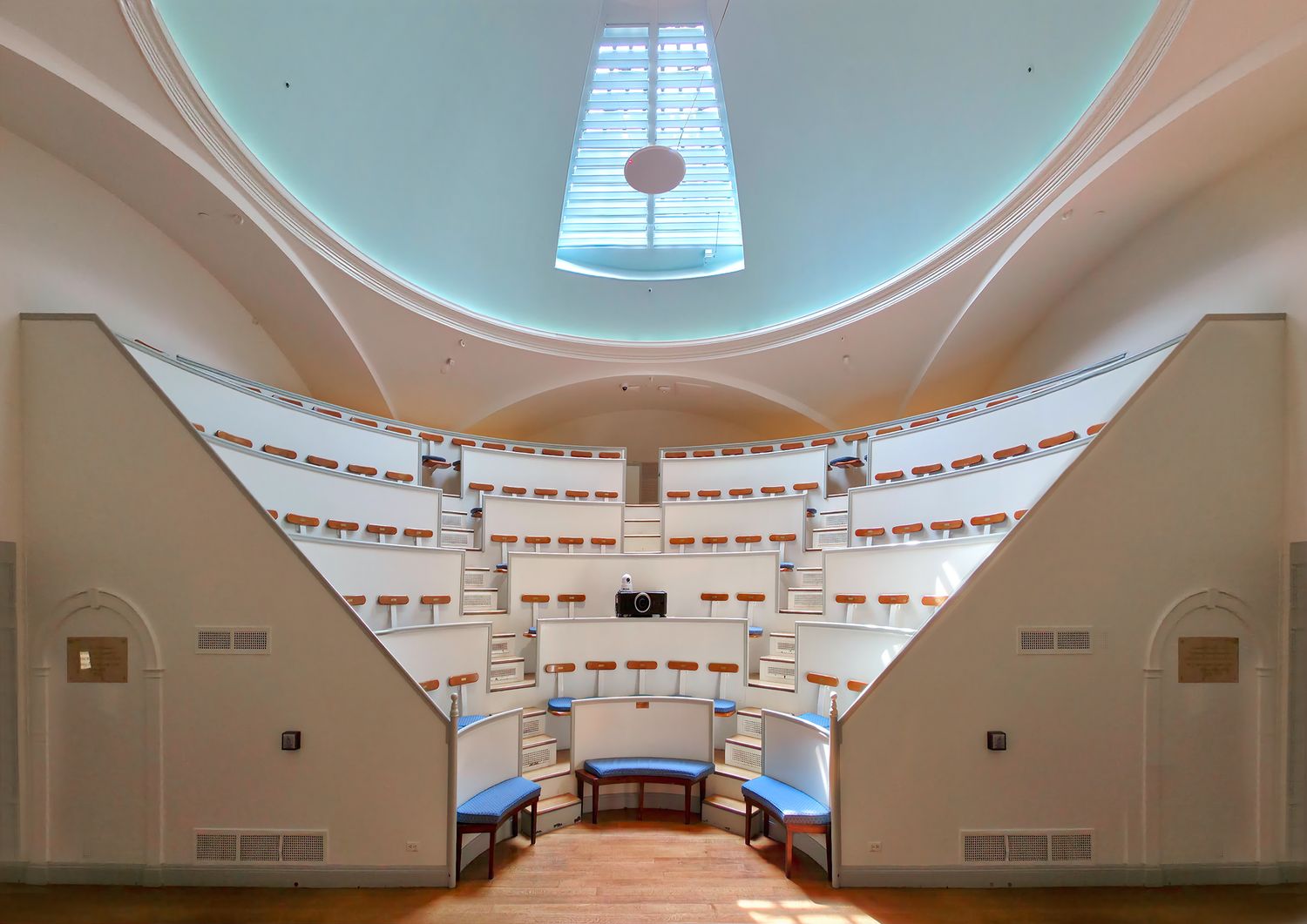
On 16 October 1846, in a steep, domed operating theater at the top of the hospital’s original granite building, a dentist named William Morton put a patient to sleep with ether while a surgeon removed a tumor from his neck. The patient felt nothing, and the audience of doctors in the tiered seats witnessed the first successful public demonstration of surgical anesthesia. It changed medicine forever. The room, in the Bulfinch Building designed by Charles Bulfinch in the 1810s, is still there, still called the Ether Dome, and still used for meetings.
You can visit it for free, on weekdays from 9am to 5pm, when it is not in use. Along with the tiered seats and the dome, the room holds an Egyptian mummy that the hospital was given in the 1820s, which is not something you expect to find in a hospital. Because the room is booked for meetings, call ahead on 617-724-8009 to check it is open. The hospital’s small Paul S. Russell Museum of Medical History at 2 North Grove Street is next door, and the whole campus is a few minutes’ walk from Charles/MGH on the Red Line. Details are on massgeneral.org/museum.
3. The Warren Anatomical Museum
On the fifth floor of Harvard’s Countway Library of Medicine, in the Longwood medical district, is a small gallery of about a hundred medical objects: anatomical specimens, surgical tools, plaster casts, models. The star is the skull of Phineas Gage, the railroad foreman who survived an iron rod being driven through his head in 1848 and whose change in personality made him one of the most famous cases in the history of neuroscience. The tamping iron that went through his skull is displayed beside it.
It is free, open Monday to Friday, 9am to 5pm, and closed at weekends. You need to show photo ID at the library’s security desk and sign the register. The library is at 10 Shattuck Street, a short walk from Longwood Medical Area on the Green Line E branch. What is on display is less than one percent of the collection, so it is small, but it is fascinating and very few visitors know it exists. Check the Countway Library before you go.
4. The Glass Flowers, Harvard Museum of Natural History
More than 4,300 glass models of more than 780 plant species, made by a father and son in Germany between the 1880s and 1930s for teaching botany at Harvard, and so realistic that visitors refuse to believe they are glass. The Glass Flowers are the best-known part of the Harvard Museum of Natural History in Cambridge, but most visitors to Boston never make it there. Adult admission rose to $20 on 1 July 2026, with seniors $18 and youth aged 3 to 18 $15; Massachusetts residents get in free on Sunday mornings from 9am to noon and Wednesday afternoons from 3 to 5pm. It is a ten-minute walk from Harvard Square. See our Cambridge and Harvard guide.
5. The Gibson House Museum, Back Bay
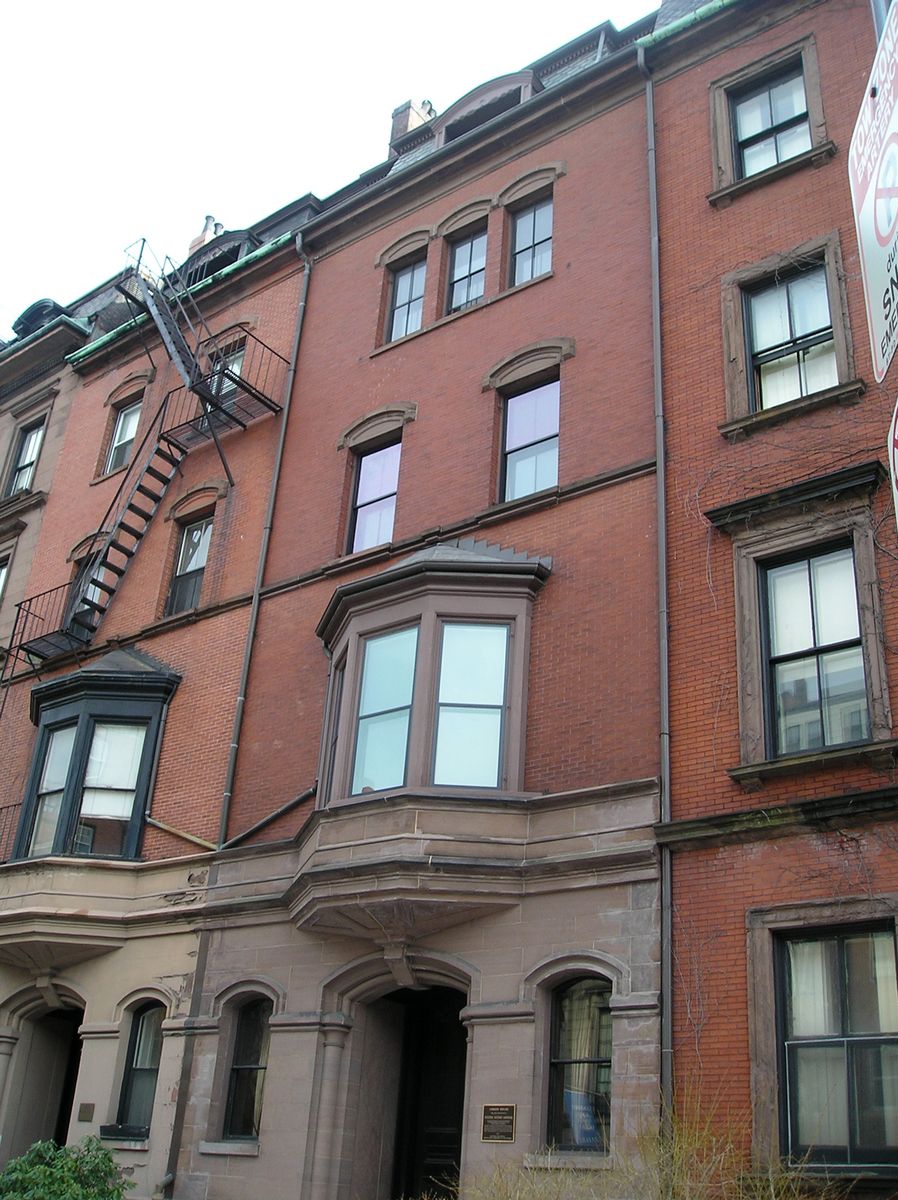
Thousands of people walk down Beacon Street every day without noticing number 137. Behind its front door is a Victorian Back Bay town house built in 1859 and preserved almost exactly as the Gibson family left it, down to the wallpaper, the furniture, the servants’ quarters and the kitchen. The last family member to live there, Charles Gibson Jr., a poet and eccentric, deliberately kept it as a shrine to the Victorian era and arranged for it to become a museum.
Visits are by guided tour only, on Friday, Saturday and Sunday at 1pm, 2pm and 3pm. Admission is $10 for adults, $8 for students and seniors 62 and over, and $3 for children under 12. Booking ahead through thegibsonhouse.org is sensible, as groups are small.
6. The Nichols House Museum, Beacon Hill
At 55 Mount Vernon Street, near the top of Beacon Hill, is a Federal-style house built in 1804 and attributed to Charles Bulfinch, home for most of her life to Rose Standish Nichols — landscape architect, suffragist, pacifist and one of the more interesting Bostonians of the twentieth century. She left it as a museum when she died, with her family’s furniture, art and books still in place. It is a small, personal house, and the guided tour is as much about her life as the architecture.
The museum is open Tuesday to Sunday, by guided tour: on weekdays at 10am, 11am and noon; on Saturdays from 10am to 2pm on the hour; on Sundays at 11am, noon and 1pm. Check nicholshousemuseum.org for current admission prices and to book.
7. The Boston Athenaeum
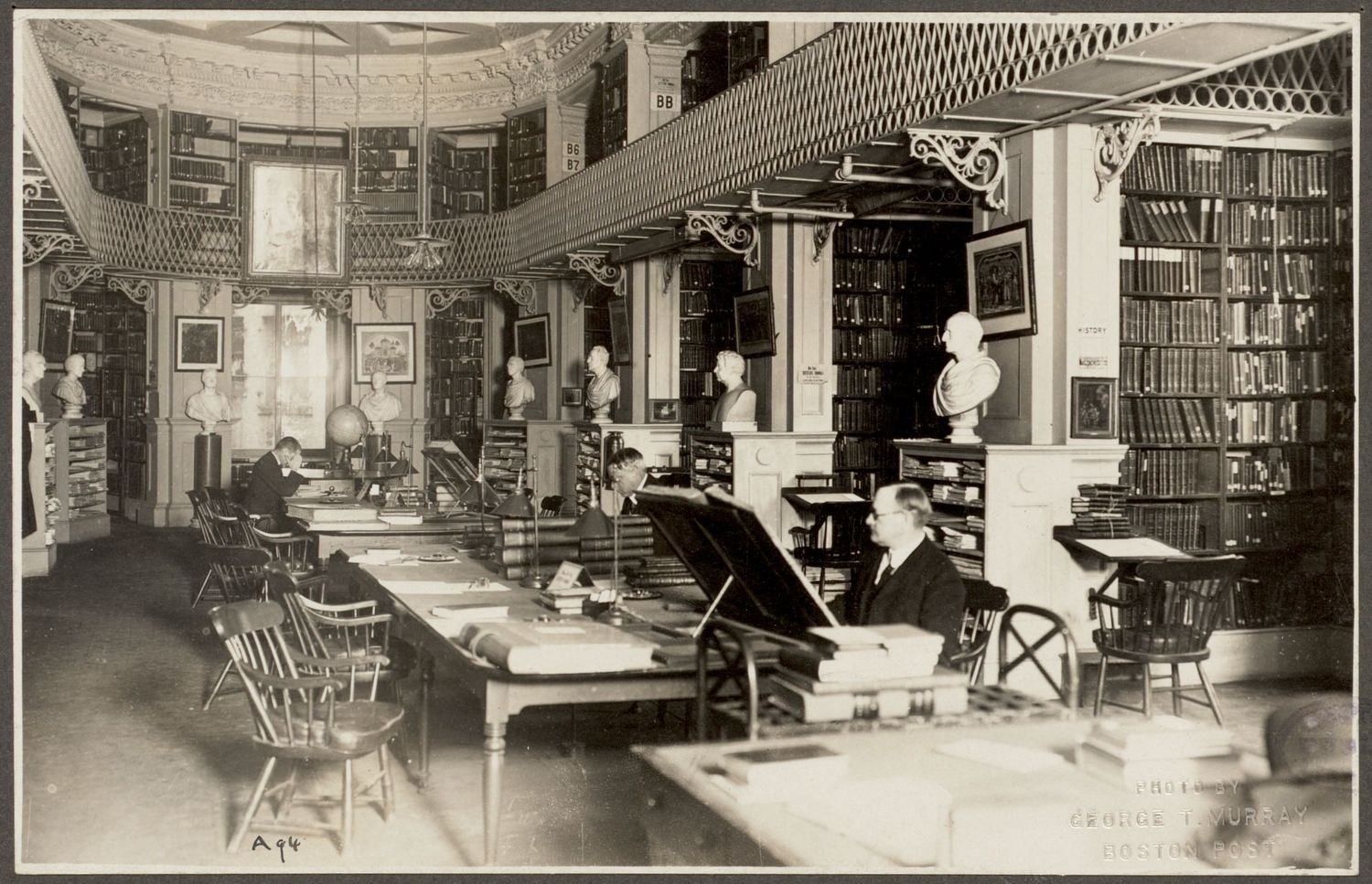
Founded in 1807, the Boston Athenaeum is one of the oldest independent membership libraries in the United States, housed since 1849 in a building at 10½ Beacon Street that overlooks the Granary Burying Ground. Its upper floors are beautiful: book-lined rooms full of marble busts and paintings, and a collection that includes a large part of George Washington’s own library from Mount Vernon. The upper floors are for members, but the ground floor, with its exhibitions, is open to the public, and the Athenaeum runs tours for non-members. Check bostonathenaeum.org for current visiting options and prices.
8. The Leventhal Map & Education Center
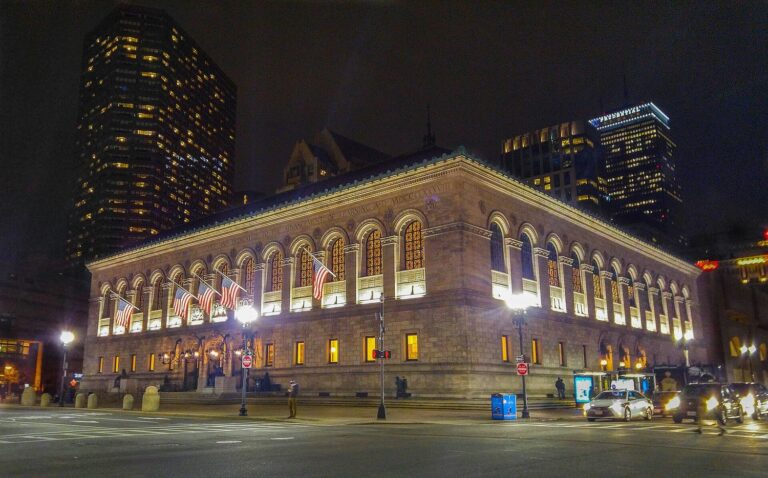
Just off the entrance hall of the Boston Public Library on Copley Square, this is one of the finest map collections in the country, with free exhibitions that change through the year. Most visitors come to see Bates Hall and walk straight past it. Our Boston Public Library tour guide covers the building room by room.
Green spaces and burying grounds
9. The Arnold Arboretum
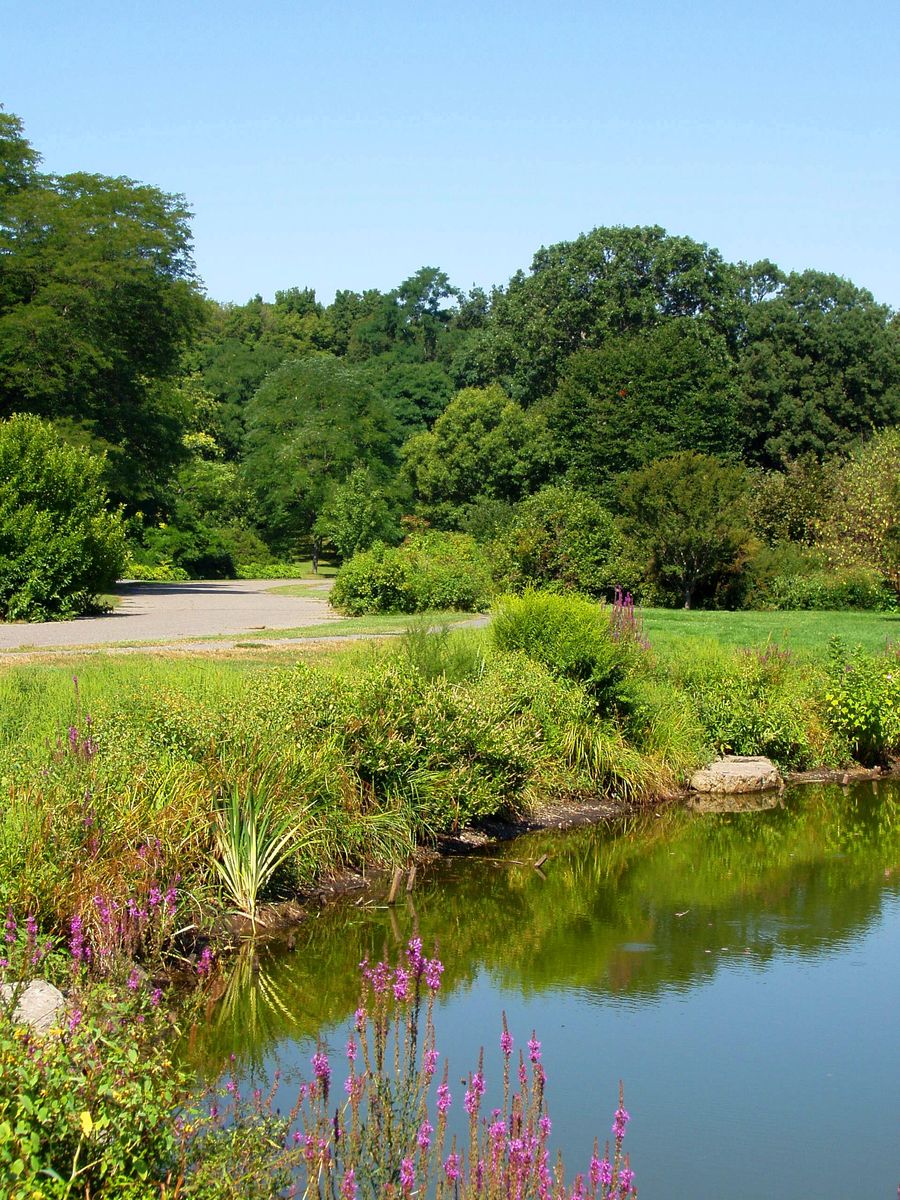
The Arnold Arboretum in Jamaica Plain is a 281-acre living museum of trees and shrubs, run by Harvard and laid out with the help of Frederick Law Olmsted in the 1870s and 1880s as part of the Emerald Necklace. It is free, open every day from sunrise to sunset, and on a weekday morning you can walk for an hour and meet almost no one. In spring, the lilacs, magnolias and crabapples are extraordinary, and on Lilac Sunday — the second Sunday in May — picnicking is permitted on the grounds, the only day of the year it is. In October, the maples turn. Climb Peters Hill for a view of the Boston skyline over the trees. Take the Orange Line to Forest Hills; the main gate is a short walk. See arboretum.harvard.edu.
10. Forest Hills Cemetery
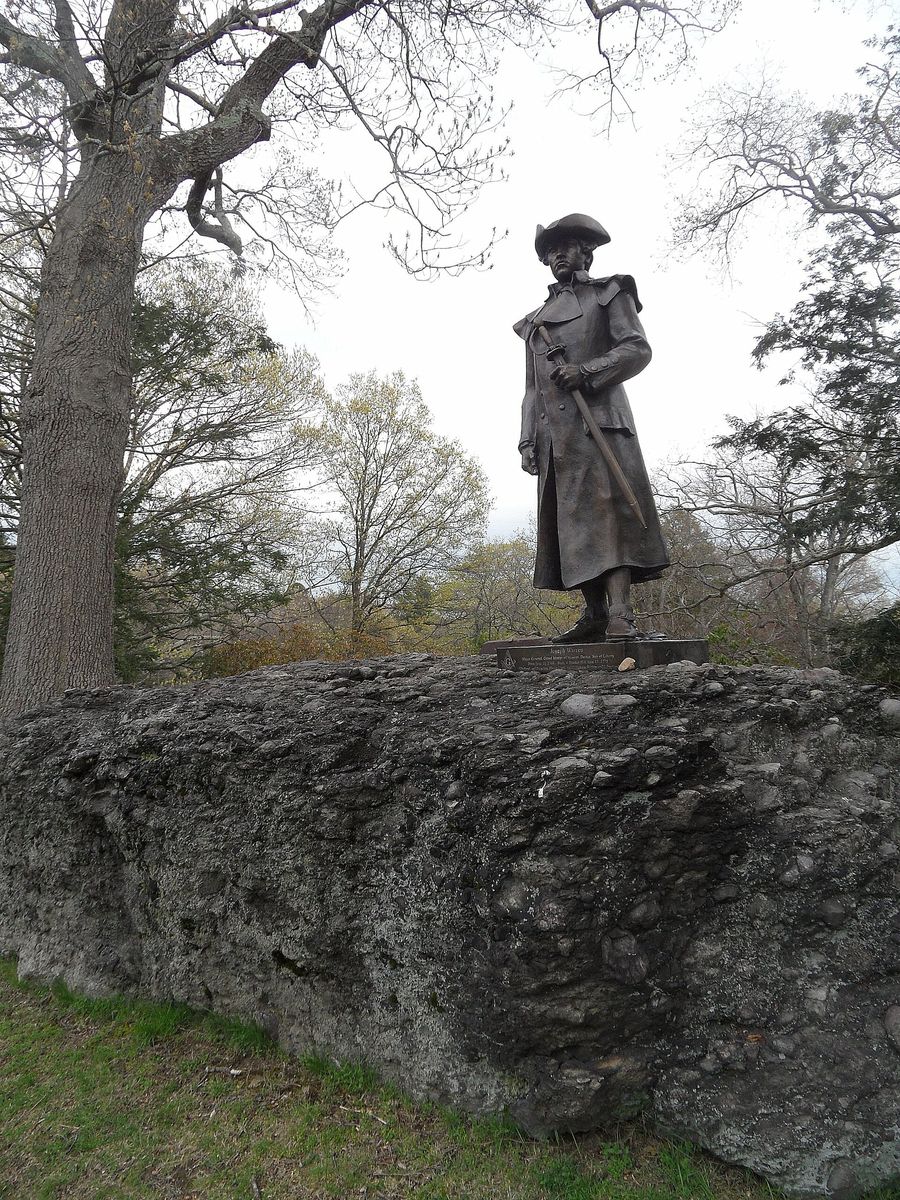
Right beside the Arboretum, Forest Hills Cemetery was founded in 1848 as one of the great Victorian garden cemeteries, and it remains a beautiful, quiet landscape of hills, ponds and monuments. Among those buried here are the playwright Eugene O’Neill, the poets Anne Sexton and E. E. Cummings, and Joseph Warren, the patriot doctor who sent Paul Revere on his midnight ride and died at Bunker Hill. Walking the grounds is free. Combine it with the Arboretum for a day in Jamaica Plain.
11. Jamaica Pond
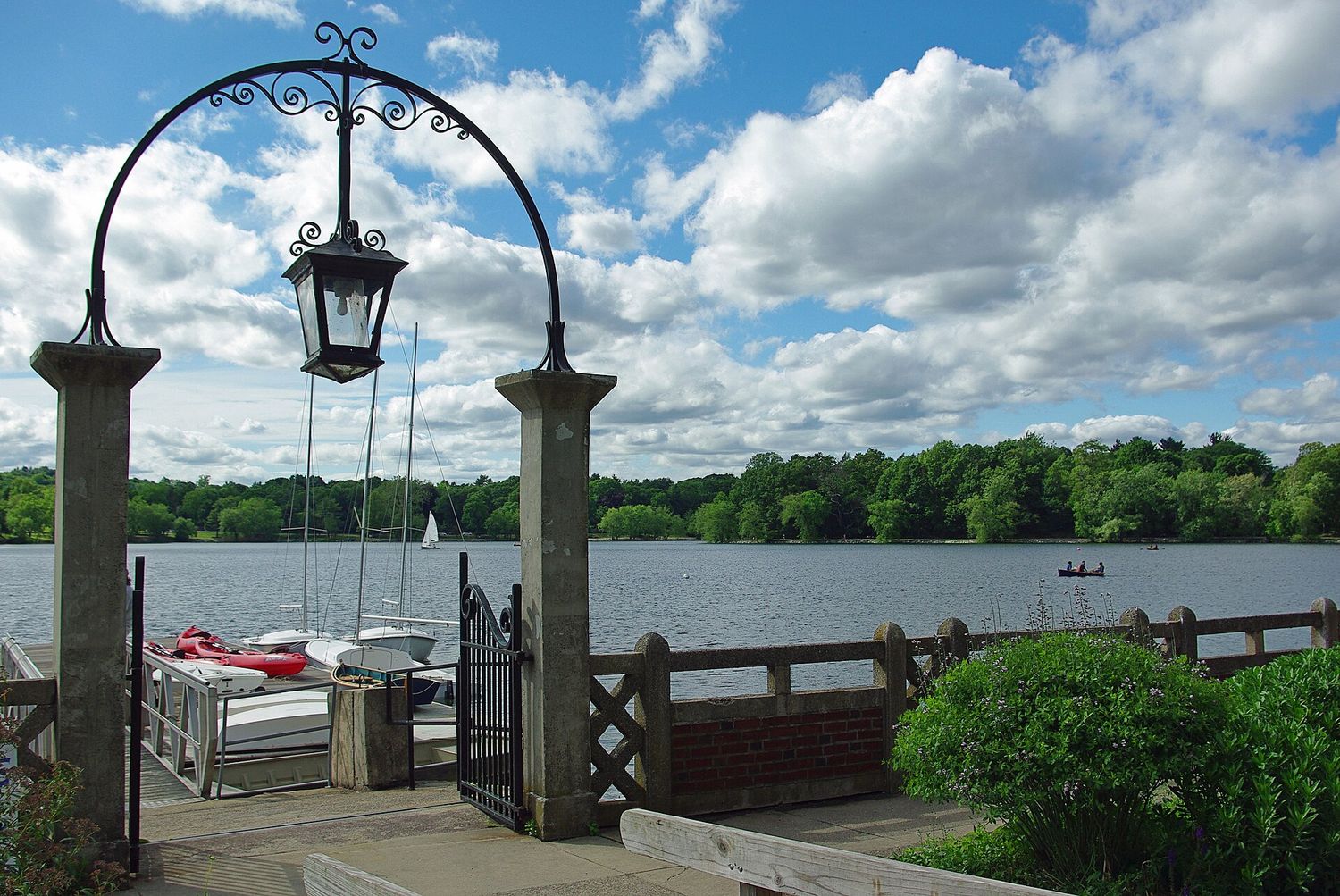
A deep, clear glacial pond with a mile-and-a-half path around its shore, Jamaica Pond is one of the jewels of the Emerald Necklace and the favorite walk of half of Jamaica Plain. It is free, with a boathouse where you can rent small boats in the warmer months. It is a fifteen-minute walk from the Arboretum and makes the perfect end to a green day south of the city.
12. Copp’s Hill Burying Ground
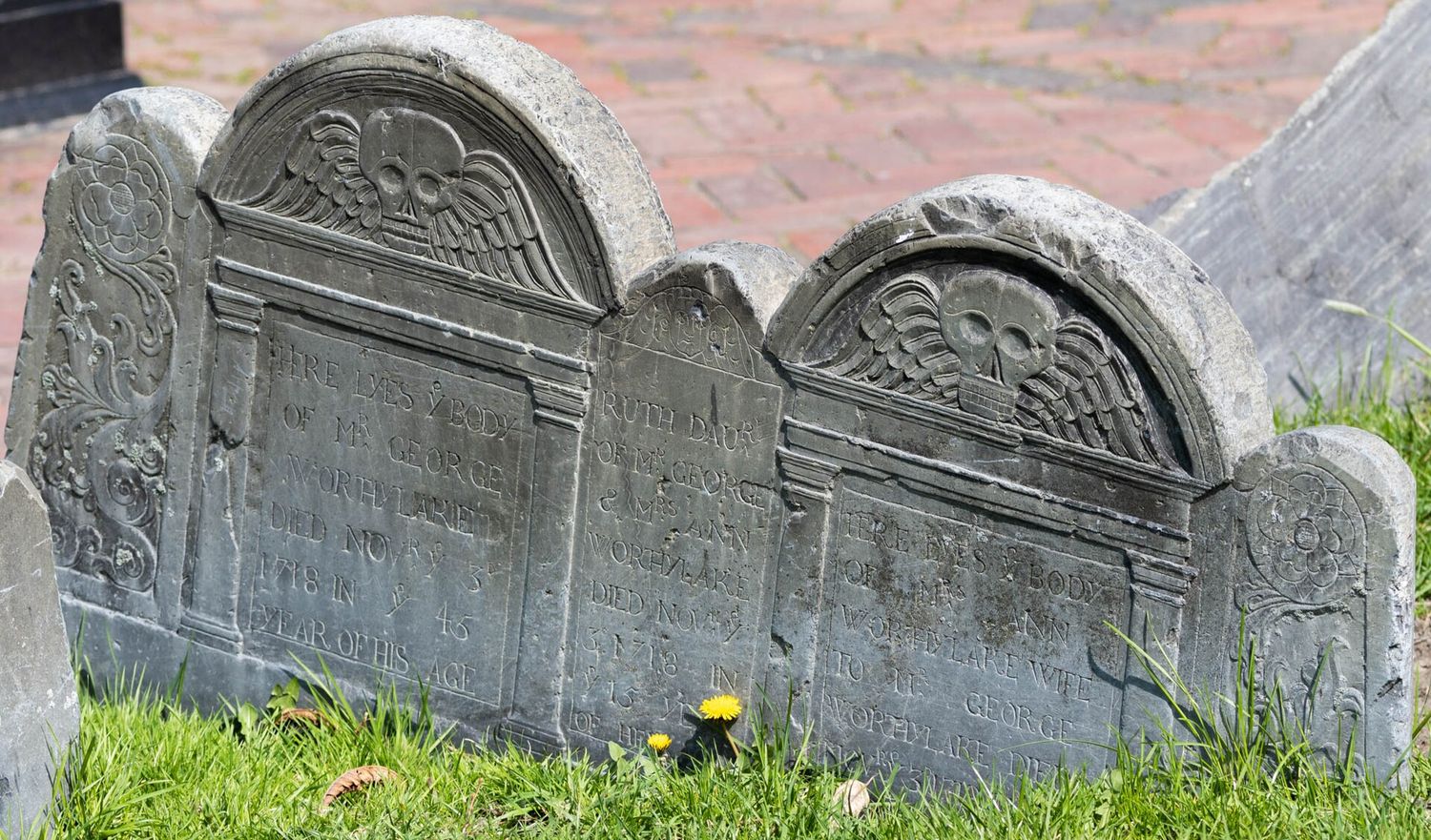
Copp’s Hill is on the Freedom Trail, but most walkers are tired by the time they reach it at the top of the North End and give it a glance through the railings. Go in. The second-oldest burying ground in the city, established in 1659, it sits on a hill with a view across the harbor to Charlestown, and it was from here that British guns fired on Charlestown during the Battle of Bunker Hill. Among its gravestones are those of the Mather family of Puritan ministers, including Cotton Mather; Prince Hall, the abolitionist and founder of Black Freemasonry in America; and many of the free Black Bostonians who lived in the North End.
Look for the three stones of the Worthylake family. George Worthylake was the first keeper of Boston Light, the lighthouse on the outer harbor, and in November 1718 he, his wife Ann and their daughter Ruth drowned together when their boat capsized on the way back to the island. A twelve-year-old Benjamin Franklin wrote a ballad about the tragedy and sold it on the streets. Our Freedom Trail guide covers the rest of the route.
13. The Central Burying Ground
The least visited of the historic burying grounds in central Boston is on the Common itself, on the Boylston Street side. Laid out in 1756, it holds the painter Gilbert Stuart, whose unfinished portrait of George Washington is the one on the dollar bill, as well as British soldiers from the occupation and many immigrants who could not afford plots elsewhere. See our Boston Common guide.
14. Dorchester Heights
The white marble tower on the hilltop in South Boston marks where George Washington’s cannon, dragged from Fort Ticonderoga, forced the British to evacuate Boston in March 1776. The National Park Service restored the monument, and it was rededicated on 17 March 2026 for the 250th anniversary. You can now climb the tower on its open days for a view over the harbor. It is free; check nps.gov/bost for climbing times. Our guide to the best views in Boston covers it along with a dozen other viewpoints.
15. Deer Island
This is the strangest walk in greater Boston. Deer Island, at the mouth of the harbor, is home to the huge wastewater treatment plant that cleaned up Boston Harbor, serving 43 communities, with its landmark egg-shaped digesters. Around the plant runs a free public loop trail along the shore, with wide views of the harbor islands, the city skyline and the planes coming in to Logan. You reach it on foot or by car through Winthrop; there is no ferry. It sounds unpromising, and it is one of the best harbor walks in the area. Our guide to Boston Harbor and the islands explains how the harbor went from one of the dirtiest in the country to one of the cleanest.
16. Piers Park, East Boston
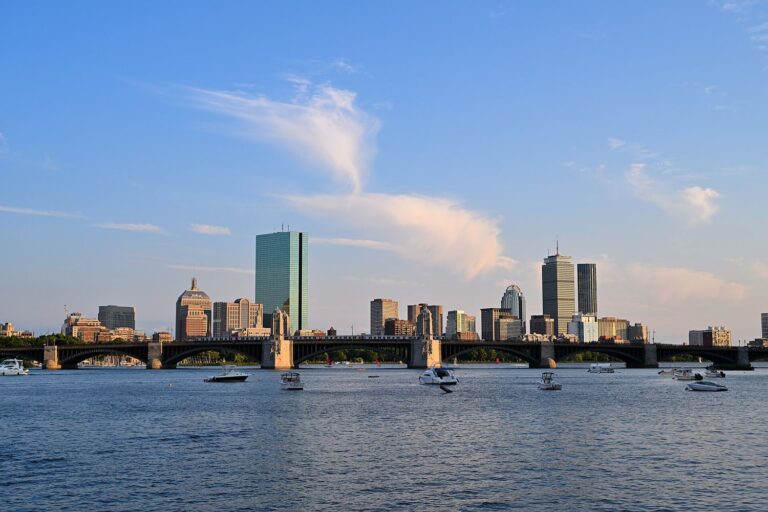
Across the harbor from downtown, reached by the Blue Line to Maverick and a short walk, Piers Park has the best free view of the Boston skyline, especially at sunset. Massport reopened its renovated playground and splash pad in June 2026. Very few visitors ever cross the harbor to see it.
Small wonders at street level
17. The Skinny House, North End
Across Hull Street from Copp’s Hill Burying Ground, at number 44, is a four-story house that is only about ten feet wide at its widest point. Local legend says it was built out of spite in the nineteenth century to block a neighbor’s light and view. It is a private home, so look and do not knock; a minute is enough, and you can see it on your way out of Copp’s Hill.
18. The purple windows of Beacon Street
At 63 and 64 Beacon Street, facing the Public Garden, several of the old window panes have a faint violet tint. They came from a batch of glass imported in the early nineteenth century that contained manganese oxide, which turned purple in the sun. The purple panes became a status symbol on Beacon Hill, and a few survive. Look up from the sidewalk on a sunny day.
19. Louisburg Square
At the heart of Beacon Hill, between Mount Vernon and Pinckney Streets, is a small, private, fenced garden square surrounded by some of the most expensive row houses in Boston. Louisa May Alcott lived at number 10. The garden itself is owned by the residents, so you cannot go in, but walking around it gives you the purest version of nineteenth-century Beacon Hill. Combine it with the Nichols House Museum, two minutes away.
20. The Blackstone Block
Between Faneuil Hall and the North End, the narrow lanes of the Blackstone Block — Marshall Street, Creek Square and Salt Lane — follow a street pattern from the seventeenth century, among the oldest surviving in the city. The Union Oyster House, America’s oldest continuously operating restaurant, is here, and on Marshall Street you can find the Boston Stone, a small stone set into a building wall that, according to local tradition, served as the point from which distances from Boston were measured. It is a five-minute detour from the crowds of Quincy Market and much more interesting.
Hidden gems by season
Some of the best of Boston’s second list only happens at certain times of year.
- October: the Head of the Charles Regatta, on 16–18 October 2026, is the largest two-day rowing race in the world and free to watch from the riverbanks and bridges upstream of Harvard. Locals picnic on the banks; visitors often do not know it is happening. The same month, the Arboretum and Forest Hills Cemetery are at their most colorful, and Salem, thirty minutes away by commuter rail, runs Haunted Happenings all month.
- Winter: the Athenaeum, the Gibson House and the medical museums are all indoors, warm and uncrowded. It is the best season to see them.
- Spring: the Arnold Arboretum’s lilacs peak in May, and on Lilac Sunday, the second Sunday of the month, it is the only day picnicking is allowed on the grounds. The magnolias on Commonwealth Avenue in Back Bay bloom in April.
- Summer: Deer Island’s harbor loop, Piers Park at sunset and Jamaica Pond, where you can rent a boat. The Harbor Islands ferries run from mid-May, and Spectacle and Georges Islands are a world away from the city.
Our guide to the best time to visit Boston covers the rest of the calendar month by month.
Opening days at a glance
Several of the best hidden gems are open only on certain days. Plan around this table.
| Place | Open | Cost |
|---|---|---|
| Mapparium | Check timed-ticket slots | $6 adult; free under 18 |
| Ether Dome | Weekdays only, 9am–5pm, when not in use | Free |
| Warren Anatomical Museum | Weekdays only, 9am–5pm | Free; photo ID |
| Glass Flowers (HMNH) | Daily | $20 adult |
| Gibson House | Friday–Sunday, tours 1, 2, 3pm | $10 adult |
| Nichols House | Tuesday–Sunday, by tour | Check website |
| Boston Athenaeum | Check website | Check website |
| Arnold Arboretum | Daily, sunrise to sunset | Free |
| Copp’s Hill, Central Burying Ground | Daily in daylight | Free |
| Dorchester Heights tower | Check NPS schedule | Free |
The practical upshot: do the medical museums on a weekday and the Gibson House at the weekend. If your trip is Saturday to Monday, you can fit both.
Three hidden-gem days
A weekday of medical Boston
Start at the Ether Dome (call first) and the Russell Museum at Mass General in the morning. Walk up Beacon Hill to the Nichols House for an 11am or noon tour, then see Louisburg Square and the purple windows on Beacon Street. After lunch, take the Green Line to Longwood for the Warren Anatomical Museum, and finish at the Mapparium on the way back through Back Bay.
A green day in Jamaica Plain
Take the Orange Line to Forest Hills. Spend the morning in the Arnold Arboretum, climbing Peters Hill for the view. Walk through Forest Hills Cemetery, then on to Jamaica Pond for a loop of the shore. End at the Samuel Adams Brewery on Germania Street, open daily from 11am to 9pm, near Stony Brook station. Our Boston nightlife guide has more on the city’s breweries.
A North End and Beacon Hill weekend day
Do the Freedom Trail in the morning but slow down at the end: go into Copp’s Hill and find the Worthylake stones, look at the Skinny House, then walk back through the Blackstone Block. In the afternoon, cross to Back Bay for a Gibson House tour at 2pm or 3pm.
Where locals eat and drink instead
The food equivalent of a hidden gem in Boston is usually just a place that is not on Hanover Street or in Quincy Market. A few pointers:
- Skip the Quincy Market food court. It is a mall food court in a handsome 1826 building. Faneuil Hall itself, and the free talks in the Great Hall upstairs, are the part worth your time.
- Cannoli: go to Modern. Mike’s Pastry has the line and the name; Modern Pastry, a few doors down Hanover Street, fills its cannoli to order, which is what keeps the shell crisp.
- Oysters: Neptune, if you can wait. The Union Oyster House has the history; Neptune Oyster in the North End has the oysters, and the line to match. Arrive before it opens.
- East Boston. After sunset at Piers Park, eat in East Boston rather than going back downtown. The neighborhood’s taquerias, Salvadoran and Colombian places and old-school pizza are some of the best-value food in the city.
- Breweries. Harpoon in the Seaport has a big beer hall with a pretzel bakery; Downeast Cider in East Boston and the Samuel Adams Brewery in Jamaica Plain are both easy to combine with the hidden gems nearby.
- Castle Island. Sullivan’s, the seasonal snack stand beside Fort Independence, has been selling hot dogs and fried clams to South Boston families for generations.
For the full picture, see our guide to Boston food and restaurants.
“Hidden gems” that aren’t worth the fuss
Every list of hidden gems in Boston includes a few that are neither hidden nor especially worth it. Honesty on these:
- Acorn Street is lovely, but it is the most photographed street in the city, not a secret, and the residents are tired of crowds. Go early, take one picture, move on.
- The Skinny House is a curiosity, not a destination. See it on the way out of Copp’s Hill; do not cross town for it.
- The Boston Stone is a small stone in a wall. It is worth a detour of one minute if you are already in the Blackstone Block, and no more.
- Cheers, on Beacon Street, is not a hidden gem by any definition. The interior looks nothing like the show.
- Paid “secret Boston” tours. Most of the places on this page are free or cost a few dollars, and you can reach all of them on the T.
For the free highlights of the city in one day, see our guide to free things to do in Boston.
Getting to the hidden gems
| Area | Hidden gems | T |
|---|---|---|
| Beacon Hill and MGH | Ether Dome, Nichols House, Louisburg Square, purple windows, Athenaeum | Charles/MGH (Red), Park Street (Red, Green) |
| North End | Copp’s Hill, Skinny House, Blackstone Block | Haymarket (Orange, Green), North Station |
| Back Bay | Mapparium, Gibson House, Leventhal Map Center | Prudential, Copley (Green), Back Bay (Orange) |
| Longwood | Warren Anatomical Museum | Longwood Medical Area (Green E) |
| Jamaica Plain | Arnold Arboretum, Forest Hills Cemetery, Jamaica Pond | Forest Hills, Green Street (Orange) |
| Cambridge | Glass Flowers | Harvard (Red) |
| East Boston | Piers Park | Maverick (Blue) |
A subway ride is $2.40, and under the MBTA’s pilot from 1 September 2026, transfers within two hours on the same payment method cost nothing extra. A $11 one-day pass covers everything if you are making three or more trips. See our guide to getting around Boston.
Hidden gems in Boston: frequently asked questions
What are the best hidden gems in Boston?
The Mapparium, a walk-through stained-glass globe; the Ether Dome at Massachusetts General Hospital, where anesthesia was first demonstrated; the Warren Anatomical Museum with Phineas Gage’s skull; the Gibson House, a preserved Victorian home; and the Arnold Arboretum, a free 281-acre tree museum in Jamaica Plain.
Are there free hidden gems in Boston?
Many. The Ether Dome, the Warren Anatomical Museum, the Arnold Arboretum, Forest Hills Cemetery, Jamaica Pond, Copp’s Hill and the Central Burying Ground, Dorchester Heights, Deer Island and Piers Park are all free.
Can you visit the Ether Dome?
Yes, for free, on weekdays from 9am to 5pm when it is not being used for meetings. Call 617-724-8009 to check before you go.
How much is the Mapparium?
$6 for adults and free for under-18s, with timed tickets, as of September 2026.
Where is Phineas Gage’s skull?
At the Warren Anatomical Museum, on the fifth floor of Harvard’s Countway Library of Medicine at 10 Shattuck Street. It is free, open weekdays from 9am to 5pm, and you need photo ID.
Is the Arnold Arboretum free?
Yes. It is open every day from sunrise to sunset and costs nothing. Take the Orange Line to Forest Hills.
What is the Skinny House in Boston?
A four-story private house at 44 Hull Street in the North End, about ten feet wide at its widest point, across the street from Copp’s Hill Burying Ground. It is not open to visitors.
When is the Gibson House Museum open?
By guided tour only, Friday to Sunday at 1pm, 2pm and 3pm. Admission is $10 for adults.
Many of these places are also among the best-looking in the city, and they never have a line. If you are planning your trip around photographs, our guide to the most Instagrammable places in Boston covers the famous shots, from Acorn Street to the Zakim at night, with the time of day each one works best and the ones that are not worth the wait.