Look for the slate stone that says simply “Boston.” It lay under the soil, missing from modern surveys of the graveyard, until a conservation project in 2026 brought it back to light. The man beneath it was Sebastian, formerly enslaved and later free, who died in 1728 or 1729 and lived to about 70; the City’s manager of historic burying grounds told WBUR that the stone is “exceedingly rare,” and WBUR reported it as likely one of the oldest gravestones of a free Black person in the country. It is a good place to start, because the Granary Burying Ground is far more than the resting place of Paul Revere and John Hancock. It is the burial place of thousands of ordinary Bostonians, and one of the most rewarding twenty minutes on the Freedom Trail.
This guide covers how to visit (where, when and for how long), where to find the famous graves, the history of the ground and its name, how to read the carvings on the old slate stones, and Boston’s other historic burying grounds, with an honest view of which are worth your time. Hours and details were checked in November 2026 on the City of Boston’s burying-ground pages and the Freedom Trail Foundation’s site; check before you go.
Visiting the Granary
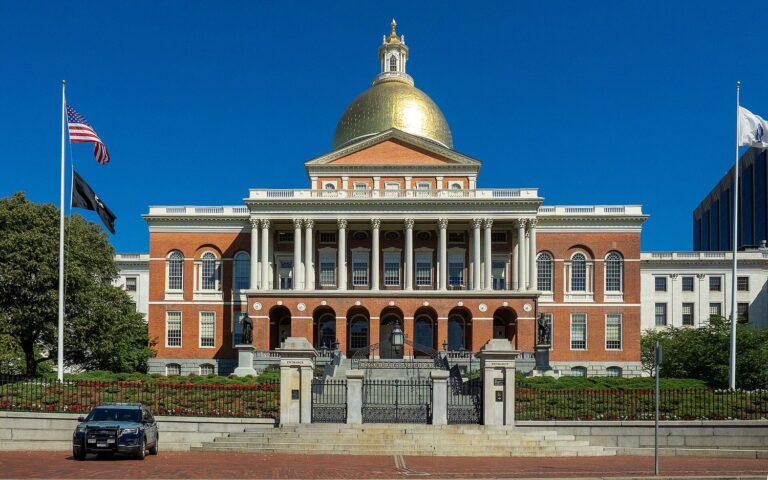
The Granary is on Tremont Street, between Park and School Streets, right beside Park Street Church and a minute’s walk from Park Street station on the Red and Green Lines. It is the fourth of the 16 official Freedom Trail sites, after Boston Common, the Massachusetts State House and Park Street Church, and it is looked after by the City of Boston’s Parks and Recreation Department through its Historic Burying Grounds Initiative.
The City lists the Granary as open daily from about 9am to 4pm. There is nothing to book: you walk in through the gate on Tremont Street, and the Freedom Trail Foundation notes that the ground is wheelchair accessible. Give it twenty to thirty minutes if you just want the famous graves, and longer if you get drawn into reading the stones, which you will. Follow the posted signs, keep to the paths and leave the stones alone; many are more than 250 years old, and some are fragile. Questions go to the City’s burying grounds office on 617-635-7361.
Visiting with children
Children can take to the Granary more readily than you might expect. The carved skulls and wings on the old stones are a natural game of spotting, the obelisk is easy to find, and the famous names make a link with the rest of the trail. Be ready for questions, too, because the many small stones for children, and the tomb that held more than 400 of them, are hard to miss. It is a gentle way to talk about how different life in colonial Boston was, and a short enough stop to hold a young child’s attention.
Where to find the famous graves
The Freedom Trail Foundation’s description of the ground makes a useful map, and the famous graves are easy to find once you know roughly where to look:
| Who | What marks the grave | Where |
|---|---|---|
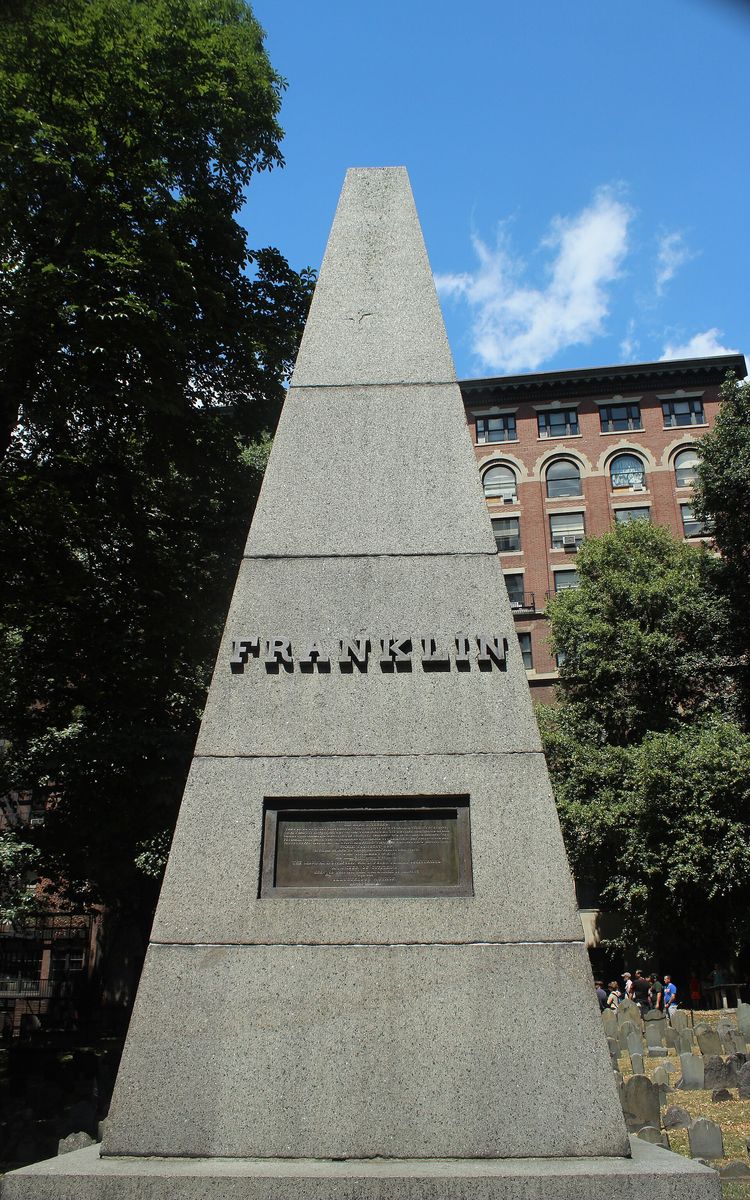
| Benjamin Franklin’s parents | A 25-foot granite obelisk | Near the center, by the Infants’ Tomb |
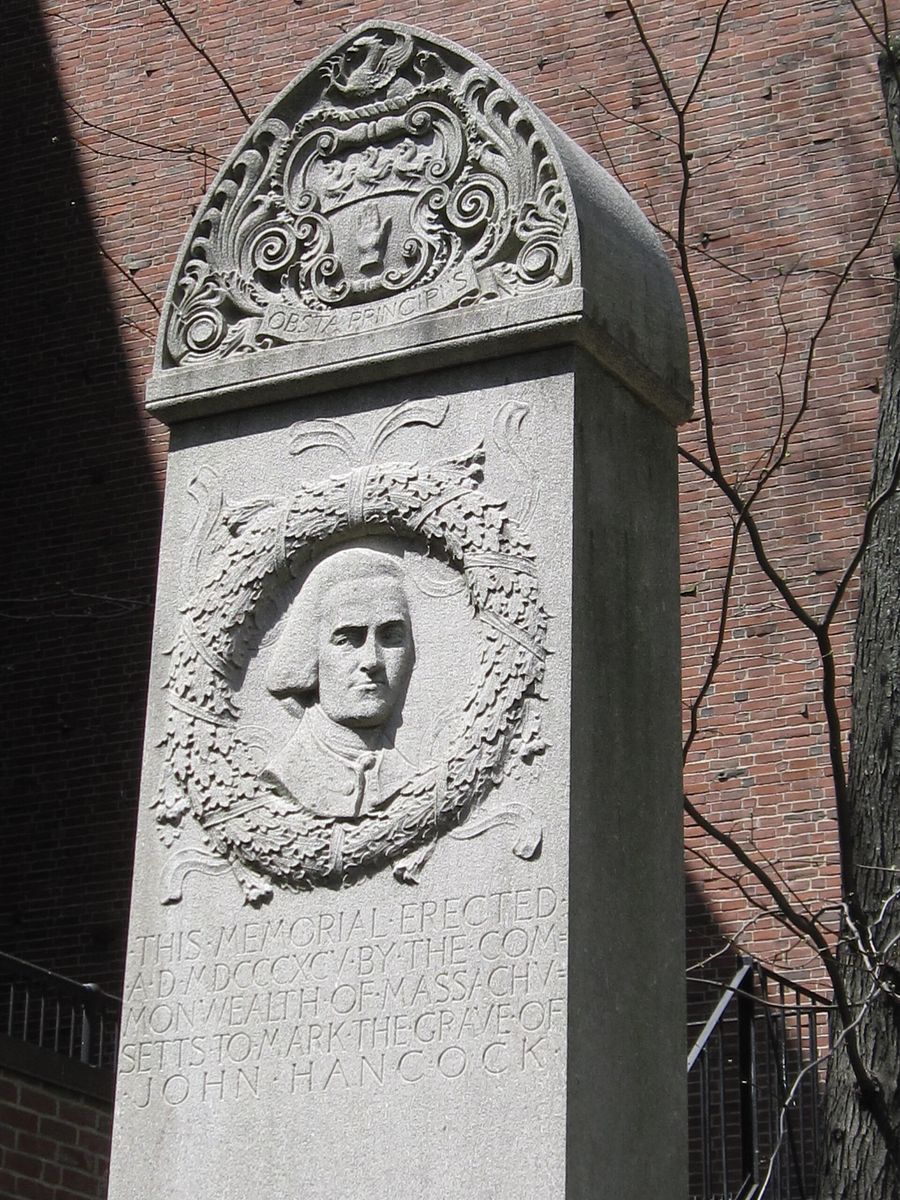
| John Hancock | An elaborately carved obelisk | Along the far wall |
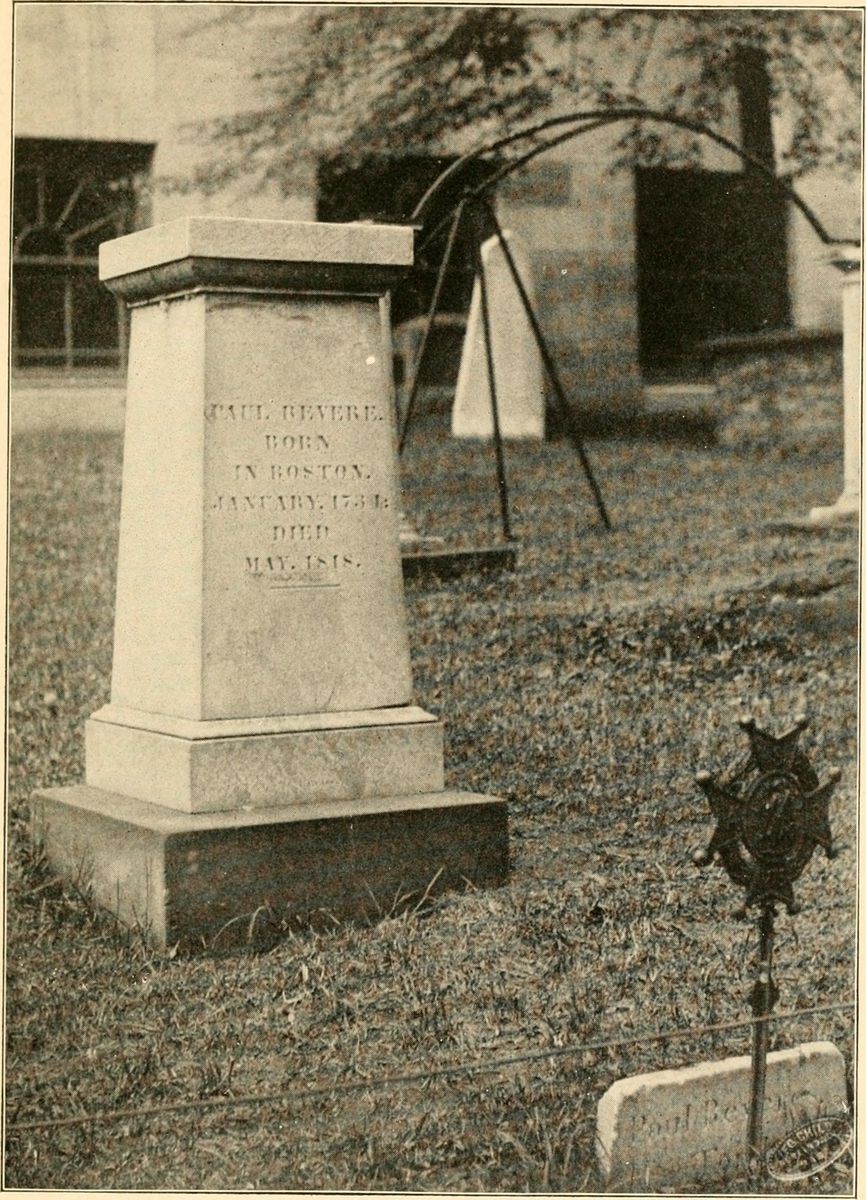
| Paul Revere | A large 19th-century marker beside a smaller, older slate stone | Near the back |
| James Otis and Samuel Adams | Matching stones | The two front corners |
| The victims of the Boston Massacre | A shared grave marker | Next to the stone for Samuel Adams |
| Robert Treat Paine | A plaque marking his tomb | On the right-hand wall |
| Sebastian (“Boston”) | A restored slate gravestone | At its original site, GR-A-141 |
Who is buried here
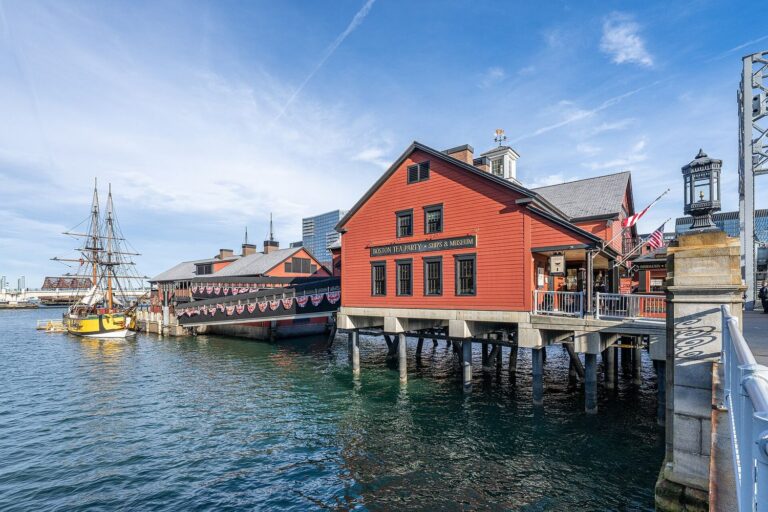
The roll call is astonishing for a plot of land this size. The City counts three signers of the Declaration of Independence: Samuel Adams, John Hancock and Robert Treat Paine. Hancock was also the first governor of the state of Massachusetts, and his tomb is marked by a tall carved obelisk with a portrait medallion. Samuel Adams, who led the Sons of Liberty, the group that organized the Boston Tea Party, lies under a much plainer stone in the front corner.
Paul Revere, whose North End house is a later stop on the trail, is buried near the back, where a large marker put up in the nineteenth century stands beside a smaller, older slate stone. James Otis, the lawyer and orator who argued against the Writs of Assistance, has one of the matching stones in the front corners. Peter Faneuil, whose gift gave Boston Faneuil Hall, is here too, along with nine Massachusetts governors, Boston’s first mayor and generations of Puritan clergymen.
Next to Samuel Adams is the grave of the five men killed in the Boston Massacre in March 1770, among them Crispus Attucks, whom the City describes as considered the first casualty of the American Revolution. They share their grave with Christopher Seider, a boy who was killed eleven days before the Massacre.
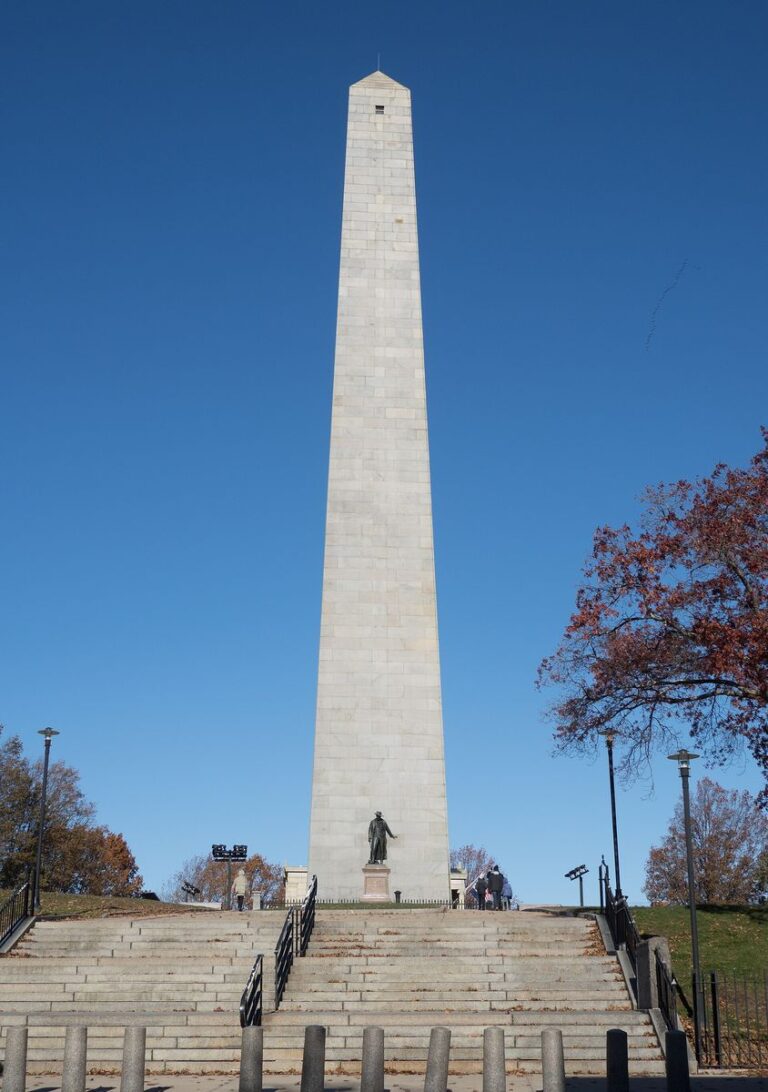
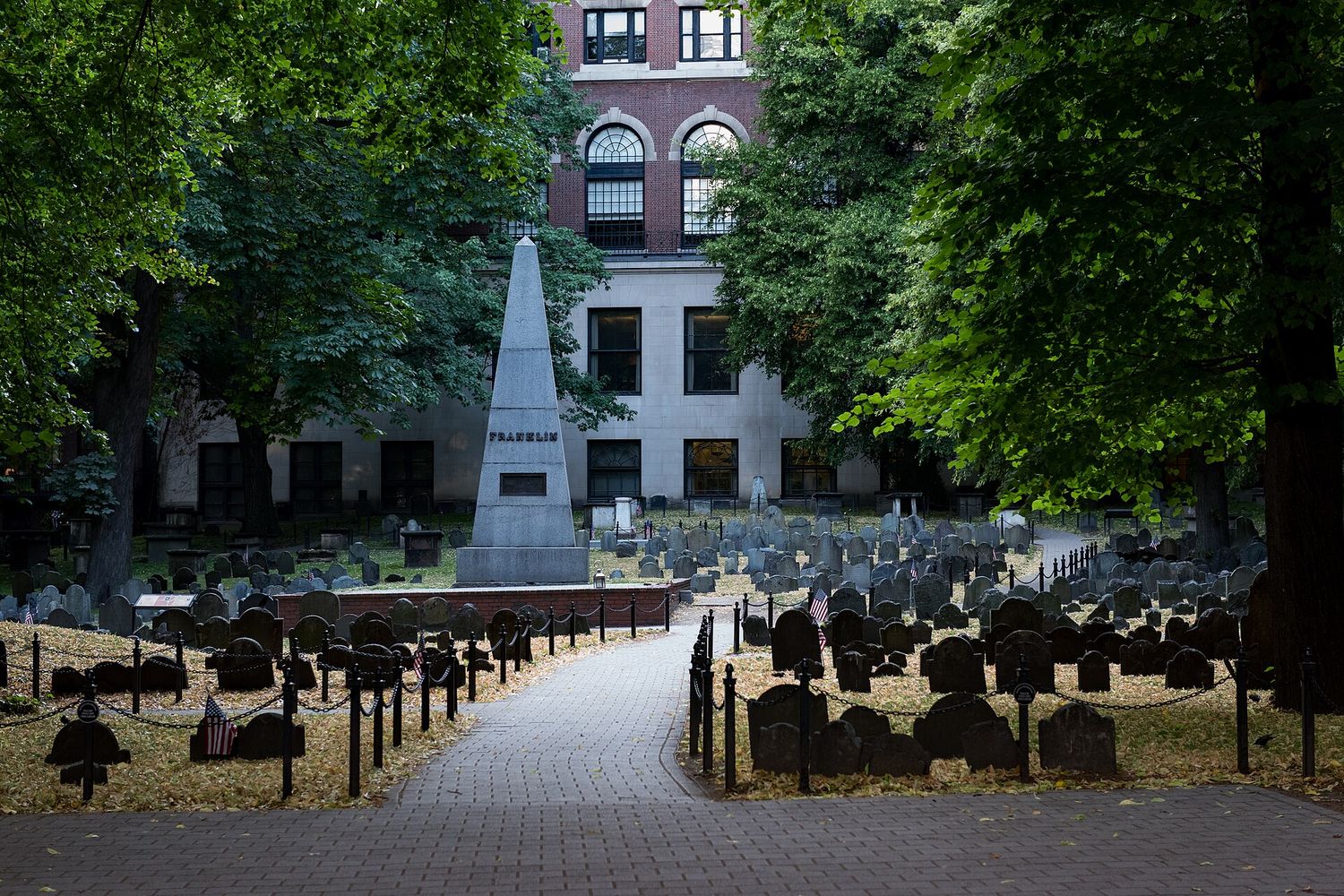
In the center stands the 25-foot obelisk for Benjamin Franklin’s parents, Josiah and Abiah Franklin, put up in 1827 to replace the family’s original gravestones, which had fallen into poor condition. Its granite came from the same quarry as the Bunker Hill Monument. Franklin was born in Boston, but he is buried in Philadelphia, so this is as close as Boston gets to his grave.
Governors, a mayor, a loyalist and an abolitionist
Several of the nine governors are names you will recognize from the rest of the trail. Hancock was the first governor of the state, James Bowdoin the second and Samuel Adams the fourth, and Increase Sumner, the fifth, is here too. John Phillips, the first mayor of the city of Boston, lies in the Granary, and so does Edward Rawson, the first secretary of the Massachusetts Bay Colony. Not everyone here was on the winning side in 1776: the Reverend Mather Byles, a prominent minister and a loyalist, was laid in Tomb No. 2.
One famous name has left. Wendell Phillips, the abolitionist and orator, was buried here in 1884 but reburied at Milton Cemetery in 1886, so you won’t find him. That is a useful reminder that a burying ground this old has been dug, rearranged, restored and argued over for more than three and a half centuries, and that its list of residents has never been quite fixed.
The ones the tour guides mention, and the ones they don’t
You may hear a guide tell you that Mary Goose, buried here in 1758, was the original Mother Goose. Enjoy the story, but don’t believe it: the name Mother Goose was already familiar in France by 1650, and the claim is a piece of local folklore rather than history. The Salem witch-trials judge Samuel Sewall is buried here, and so is the artist John Smibert.
The people the guides tend to skip are the majority. The City is clear that the Granary was never reserved for any one group: the remains of thousands of Bostonians of every class and color lie within its walls. It is believed that Black and Indigenous Bostonians were buried at the front of the ground, along with the poor from the nearby almshouse, prison and workhouse. Attentive visitors will notice how many of the stones are for children who died of diseases that are preventable or treatable today, and a tomb set aside for children held more than 400 of them. Sebastian’s restored stone, with its one-word epitaph, belongs to this other Granary, and it is the one most worth seeking out.
A route around the ground
The Granary is small enough to see in one loop, and the Freedom Trail Foundation’s description of where things are makes a route easy to follow:
- The front corners. Just inside the Tremont Street gate, the matching stones in the two front corners mark James Otis and Samuel Adams. Next to Adams is the shared grave of the Boston Massacre victims.
- The center. Walk toward the Franklin obelisk, which you can see from the gate, and look for the Infants’ Tomb beside it, where hundreds of children were buried.
- The far wall. Along the far wall stands John Hancock’s carved obelisk, with its portrait medallion.
- The back. Near the back is Paul Revere, with a large 19th-century marker beside a smaller and older slate stone.
- The right-hand wall. On the way out, look for the plaque marking the tomb of Robert Treat Paine on the right-hand wall.
In between, slow down. The best stones in the Granary are not the famous ones but the slate markers in the rows between them, many with winged skulls, long epitaphs and the ages of people who died young. Sebastian’s restored stone is among them, back at its original site.
A short history of the ground
By 1660 the town’s first graveyard, today’s King’s Chapel Burying Ground, was overcrowded, so the town set aside part of what was then Boston Common for burials. The new ground was Boston’s third burial site. At first it was called the South or Common Burying Ground, then the Middle Burying Ground once Central Burying Ground opened on the Common. It took its present name in 1737, when a granary, a building for storing the town’s grain, was moved to the spot where Park Street Church now stands; the Freedom Trail Foundation says it held 12,000 bushels.
The ground holds roughly 2,345 gravestones and tombs, mostly slate, but the City estimates that more than 5,000 people are buried here, many in unmarked graves and in the underground family tombs, small brick or stone crypts that line the whole perimeter. The neat rows you see are not original. Over the years the stones were rearranged into straighter lines, partly for nineteenth-century taste and partly, as the City notes with some candor, to make room for the lawnmower, so a stone’s position is no guide to where its owner lies. The front wall, the cast-iron fence and the Egyptian Revival gate on Tremont Street were added in the mid-nineteenth century; the Freedom Trail Foundation dates all three to 1840.
The work hasn’t stopped. The City’s conservation work continues, and it was during that work, in 2026, that Sebastian’s gravestone was found under the soil and restored. The Freedom Trail Foundation calls the Granary the most visited historic burying ground in the Northeast, with more than a million visitors a year, which is a lot of feet on a small, old and fragile site.
How to read the stones
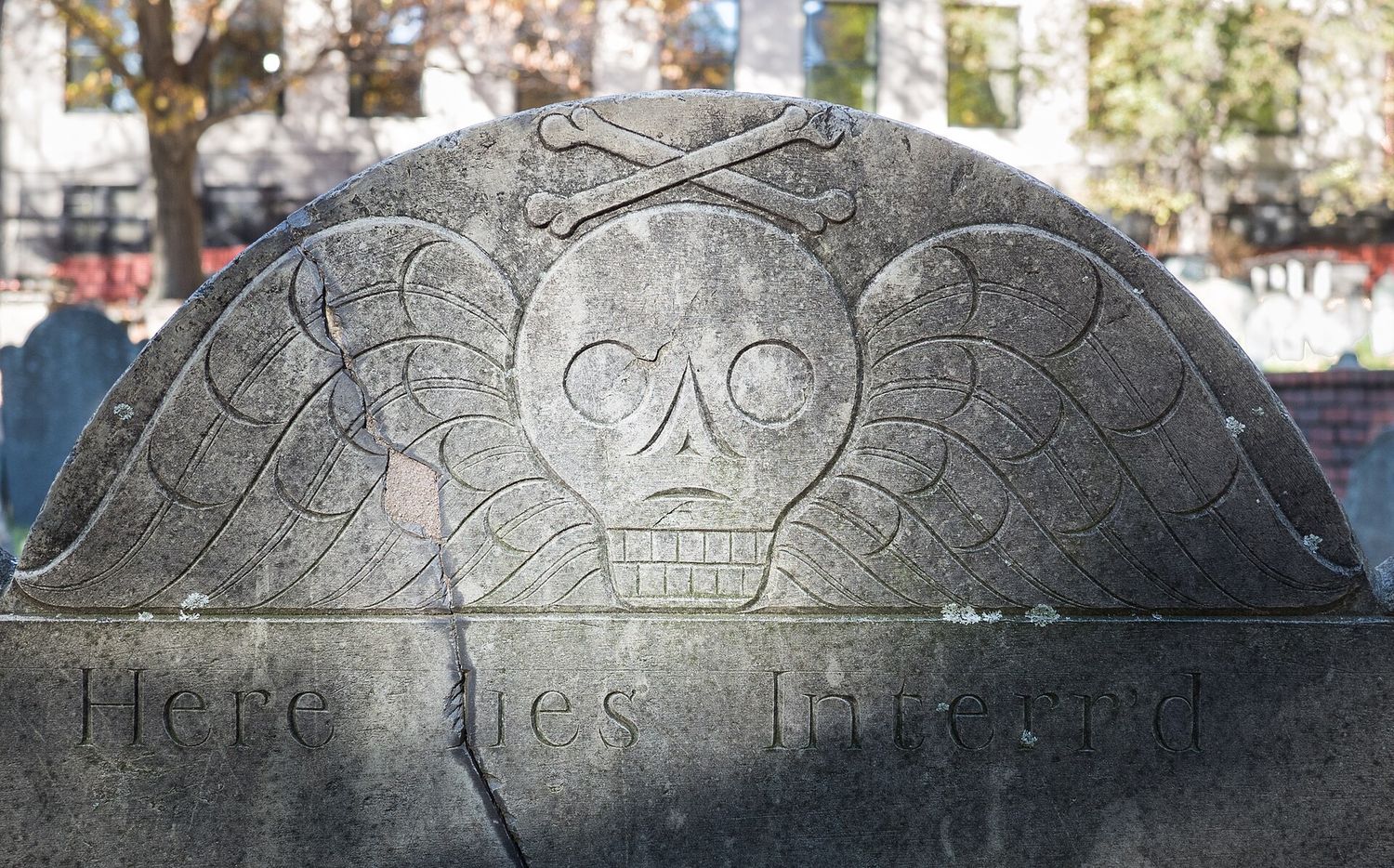
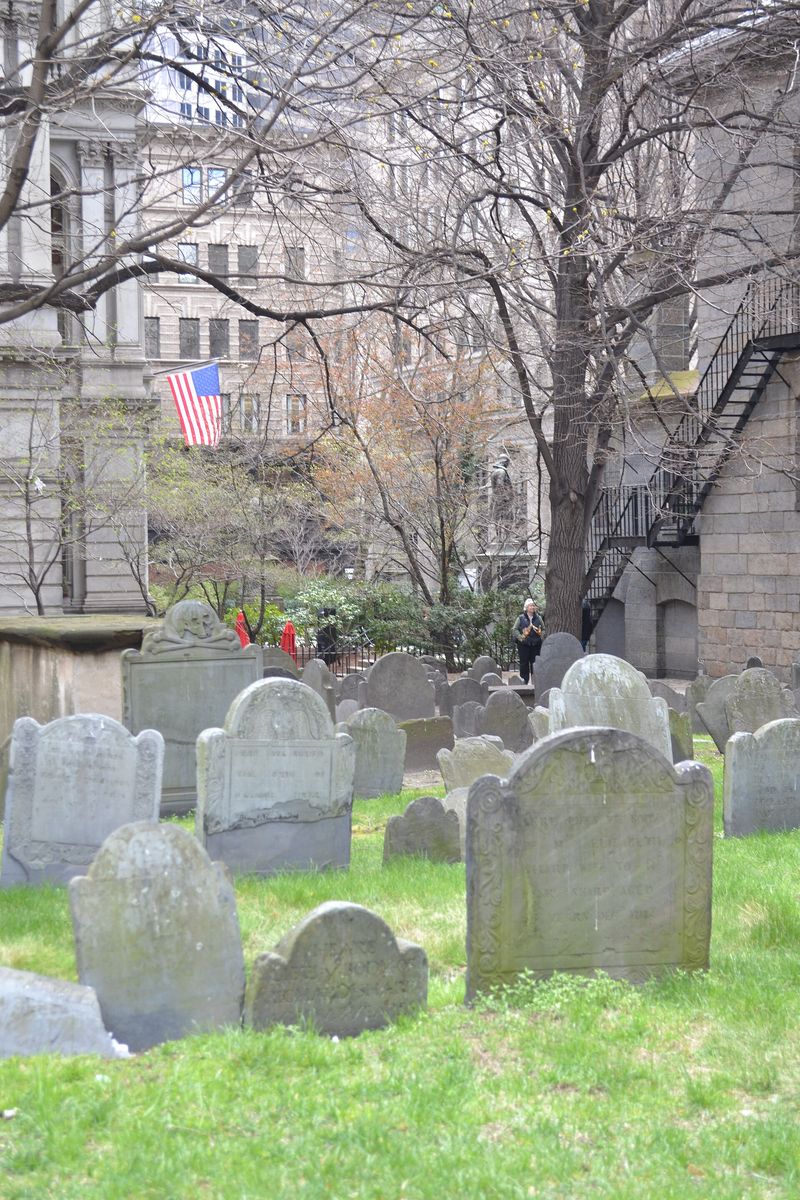
The Puritans who founded Boston kept religious images out of their meeting houses, so the gravestone became one of the few places where they expressed, in carving, what they believed about death and the afterlife. The most common motif in the Granary is what the Freedom Trail Foundation calls the “soul effigy”: a skull, or death’s head, with a wing on either side, representing the soul flying to heaven. Look for it at the top of the older slate stones, surrounded by scrollwork, and look for the poetic epitaphs underneath, along with the occasional Grim Reaper or Father Time.
A few things to watch for as you walk. Read the dates, and you will see how short many lives were, and how many children’s stones there are. Read the epitaphs, which range from the conventional to the startlingly personal. Notice the slate itself, the stone of choice here, and how sharp much of the carving still is. And remember the rows: a stone’s position tells you little about where its person lies.
Boston’s other historic burying grounds
The Granary is one of sixteen historic burying grounds, dating from 1630 to 1841, that the City of Boston manages through its Historic Burying Grounds Initiative. Six of them, including the Granary, King’s Chapel, Copp’s Hill and Central, are listed as open daily from about 9am to 4pm. Most of the rest are opened on request with 24 hours’ notice, though not on Sundays, by calling 617-635-7361. Three are worth knowing about if you have time for more than one.
King’s Chapel Burying Ground
A short walk down Tremont Street, beside King’s Chapel, is the ground the City calls Boston Proper’s oldest burying place; by tradition the first burial, of Isaac Johnson, took place in 1630. The City counts Massachusetts’ first governor, John Winthrop, among its notables, along with the Reverend John Cotton and Mary Chilton, believed to have been the first woman to step off the Mayflower. William Dawes, who rode out with Paul Revere toward Lexington in 1775, was buried here too, before being moved to Forest Hills Cemetery in the nineteenth century. A 1985 survey counted 586 markers, though there are well over a thousand burials, and the City notes that Black Bostonians, free and enslaved, were buried here too. It is smaller and quieter than the Granary, and the slate stones are just as fine.
Copp’s Hill Burying Ground
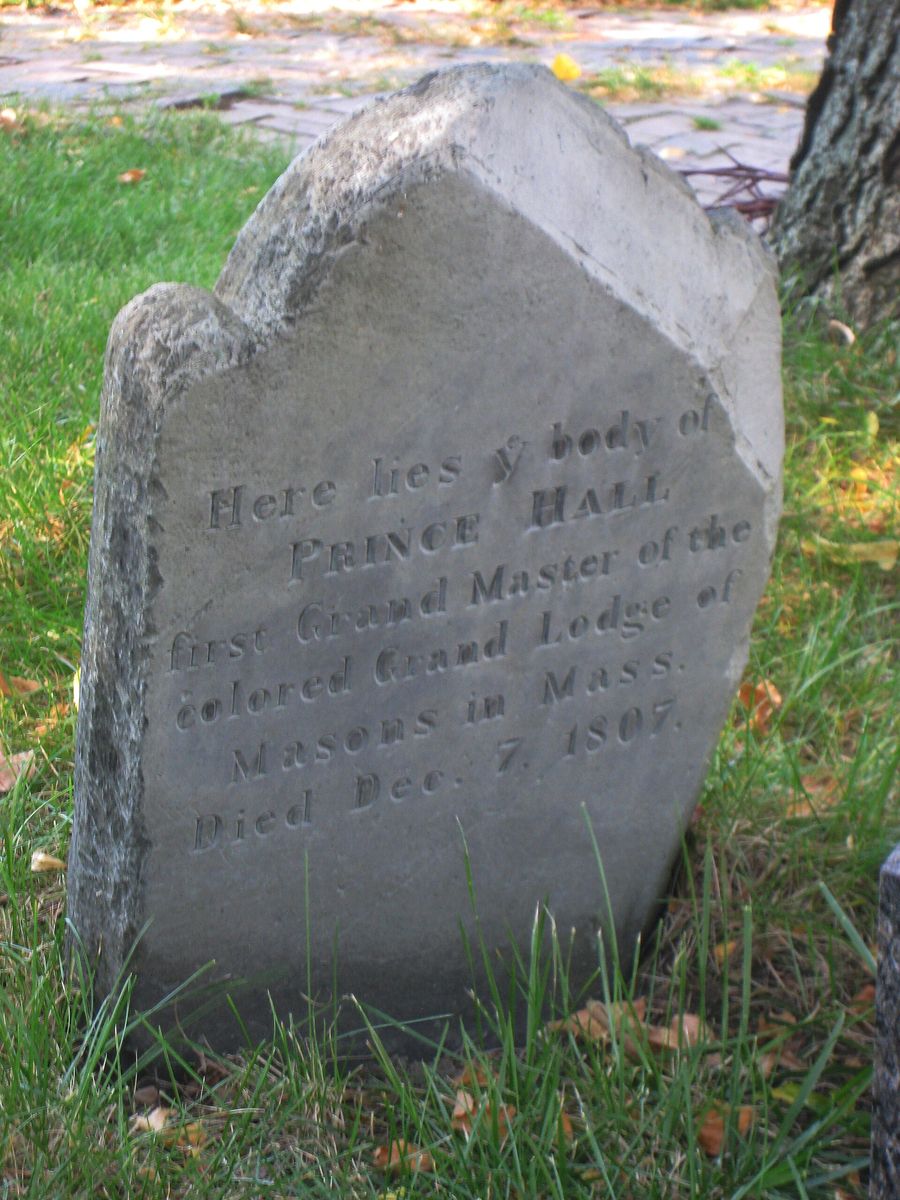
On the hill above the North End, at Hull Street and Snowhill Road, Copp’s Hill holds more than 10,000 burials. The Mather family tomb, with Increase, Cotton and Samuel Mather, is here, and so is Prince Hall, the founder of the Black Masonic order. The City notes that a section in the northwest quadrant was set aside for Black Bostonians, free and enslaved. Look for the scars on the Malcolm family stone, believed to have been made by British soldiers using it for target practice. It is the Freedom Trail stop after Old North Church, and from its edge you look across the water to Charlestown and the masts of USS Constitution.
Central Burying Ground
On Boston Common itself, along Boylston Street, is the Central Burying Ground, opened in 1756. The painter Gilbert Stuart is buried here, and the City counts fourteen participants in the Boston Tea Party among the graves. It is a National Historic Landmark and a Boston Landmark. Our guide to the Boston Tea Party Museum tells the story of the night those fourteen are remembered for.
Tours and ghost walks
Our comparison of Freedom Trail tours explains which guided walks cover which sites and what they cost. The Freedom Trail Foundation’s own Walk Into History tour starts from the Boston Common Visitor Information Center at 139 Tremont Street, a short walk away.
After dark, the burying grounds are the setting for Boston’s ghost tours. Ghosts & Gravestones, a seasonal 90-minute trolley tour, includes two walking portions of about 20 minutes each inside historic burying grounds; check the operator’s site for which grounds it visits and when it runs. Our guide to Boston ghost tours compares the options. In daylight, though, the stones tell better stories than any ghost tour.
Getting there, and what’s next door
Park Street station, on the Red and Green Lines, is at the corner of Tremont and Park Streets, a minute from the Granary’s gate; check mbta.com for any service changes before you travel. The Granary sits in the middle of the trail’s opening stretch, so it is easy to combine with its neighbors. Park Street Church, an active congregation since 1809, stands at the corner. The State House is at the top of Park Street, and King’s Chapel and its burying ground are a short walk down Tremont Street. Our Freedom Trail map shows how the stops connect, and our guide to all 16 Freedom Trail stops covers each one.
Is it worth it?
Yes, and it costs you nothing but twenty minutes. The Granary is the stop on the first half of the Freedom Trail most likely to stay with you, more than the State House or the churches, because the people in it feel so close. Hancock and Revere and the Massacre victims are a few steps apart, and the stones around them are full of names and ages and verses that make colonial Boston feel human in a way a museum label rarely does.
What isn’t worth it is rushing round the famous graves for photographs and leaving. Spend five minutes away from the crowds at the Revere marker, read a few of the children’s stones, and find Sebastian’s. Don’t plan your visit for late afternoon, either: the City’s hours run to about 4pm. And treat the stones gently; they are fragile and centuries old, and the City is working hard to keep them standing.
If you only have time for one burying ground, make it the Granary, for the names. If you have time for two, add Copp’s Hill, for the view and for Prince Hall, when you reach the North End. Our guide to how long the Freedom Trail takes helps you fit both in.
Frequently asked questions
Who is buried in the Granary Burying Ground?
Three signers of the Declaration of Independence (Samuel Adams, John Hancock and Robert Treat Paine), Paul Revere, James Otis, Peter Faneuil, the five victims of the Boston Massacre including Crispus Attucks, and Benjamin Franklin’s parents, along with nine Massachusetts governors and Boston’s first mayor. The City estimates that more than 5,000 people are buried here in all.
What are the Granary Burying Ground’s hours?
The City of Boston lists it as open daily from about 9am to 4pm. There is nothing to book; you walk in through the gate on Tremont Street.
Is Benjamin Franklin buried in the Granary Burying Ground?
No. Franklin was born in Boston but is buried in Philadelphia. The large obelisk in the center of the Granary marks the grave of his parents, Josiah and Abiah Franklin.
Is Mother Goose buried in the Granary Burying Ground?
A woman named Mary Goose, who died in 1758, is buried here, and local legend calls her the original Mother Goose. The name Mother Goose was already known in France by 1650, so the claim is folklore rather than fact.
Where is Crispus Attucks buried?
In the Granary Burying Ground, in a shared grave with the other four victims of the Boston Massacre and Christopher Seider, a boy killed eleven days before the Massacre. The marker is next to Samuel Adams’s stone, near the front.
How long do you need at the Granary Burying Ground?
Twenty to thirty minutes is enough to find the famous graves and read some of the older stones. Allow longer if you want to look closely at the carving.
What is the oldest burying ground in Boston?
The City of Boston describes King’s Chapel Burying Ground, a short walk down Tremont Street from the Granary, as the oldest burying place in Boston Proper, with a first burial traditionally dated to 1630. The Granary, founded in 1660, was the town’s third.
The five men killed in the Boston Massacre, who are buried here, died a short walk away, in the street outside the building now called the Old State House. Our guide to the Old State House covers the Massacre site beneath its balcony, the exhibitions inside and the joint ticket with Old South Meeting House.