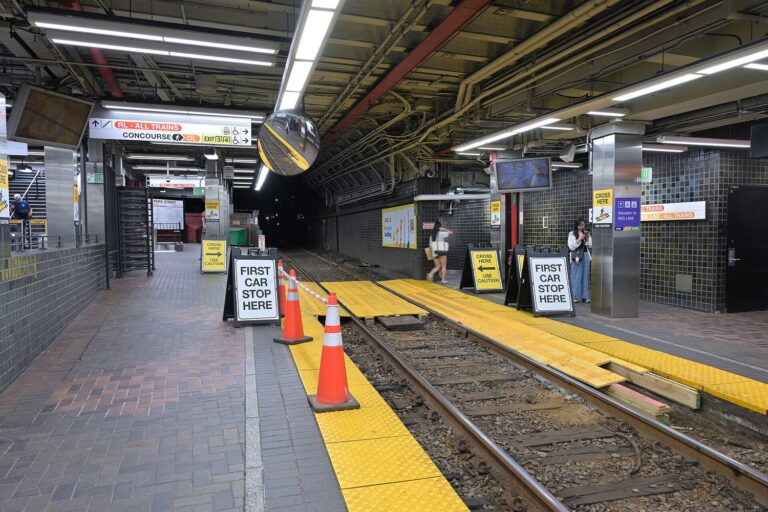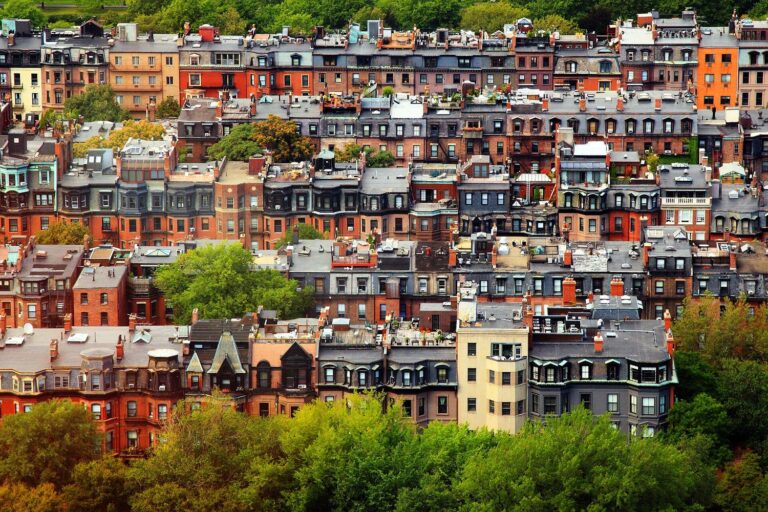
You can spend a full and genuinely excellent day in Boston and not pay for anything except lunch. Walk the 2.5-mile brick line from the Common to Charlestown, board a commissioned warship, stand in the hall where the Revolution was argued into existence, look at Impressionists in Cambridge, and finish on a river path at sunset — total cost, nothing. The list of free things to do in Boston is not a consolation prize for people on a budget; several of the best experiences in the city happen to have no ticket.
This guide covers the permanently free, the free-on-certain-days, the free-with-a-catch, and the handful of things worth paying for anyway. Everything was checked in September 2026 — confirm hours before you set out, particularly in winter.
The Ten Best Free Things
- The Freedom Trail — 2.5 miles, sixteen sites, eleven of them free.
- USS Constitution — board the oldest commissioned warship afloat, free, photo ID for adults.
- Faneuil Hall’s Great Hall — free, upstairs, and most visitors never go up.
- Harvard Art Museums — free to everyone since 2023, and a serious collection.
- Boston Public Library — Bates Hall and the Sargent murals, free, with free tours.
- The Black Heritage Trail — 1.6 miles across Beacon Hill, ranger-led free in season.
- The Arnold Arboretum — 281 acres, free, open every day of the year.
- The Charles River Esplanade — three miles of riverside path.
- Mount Auburn Cemetery — the first garden cemetery in America, free.
- The Bunker Hill Monument — 294 steps, free, and the view at the top costs nothing.
Why Boston Has So Much of It
This is not an accident, and knowing the reason helps you find more of it.
Boston’s founding institutions were built in the nineteenth century by private money with an explicitly public purpose, at a moment when the city’s merchant class had decided it wanted to be the Athens of America. The Boston Public Library was the first large free municipal library in the country and was deliberately built like a palace to make the point that a public institution should be as fine as a private one. The Common has been public land since 1634. Olmsted’s Emerald Necklace was designed as free green space threaded through working neighborhoods rather than around wealthy ones.
On top of that, the National Park Service runs a substantial part of the Freedom Trail, the Charlestown Navy Yard and the Boston Harbor Islands, and federal sites are largely free at the point of entry. And Harvard, sitting on the largest university endowment in the world, dropped admission charges at its art museums in 2023.
The practical consequence: in Boston, “free” usually means municipal, federal or endowed, not second-rate. The free tier here is not the leftovers.
Free History
The Freedom Trail
There is no ticket, no gate and no fee to follow the red brick line from Boston Common to the Bunker Hill Monument. Eleven of the sixteen official sites cost nothing: Boston Common, the Massachusetts State House, Park Street Church, the Granary Burying Ground, King’s Chapel Burying Ground, the Boston Latin School site, the Old Corner Bookstore, the Boston Massacre site, Faneuil Hall, Copp’s Hill Burying Ground and — at the far end — USS Constitution and the monument itself.
Only five charge, and none is expensive: Old North Church ($10 adults, crypt included), the Paul Revere House ($6), and a combined Old State House and Old South Meeting House ticket ($18 adult, $10 children 6–17). You can do the whole walk without paying any of them and still have a full day. Our complete Freedom Trail guide covers all sixteen stops in order.
USS Constitution and the Navy Yard
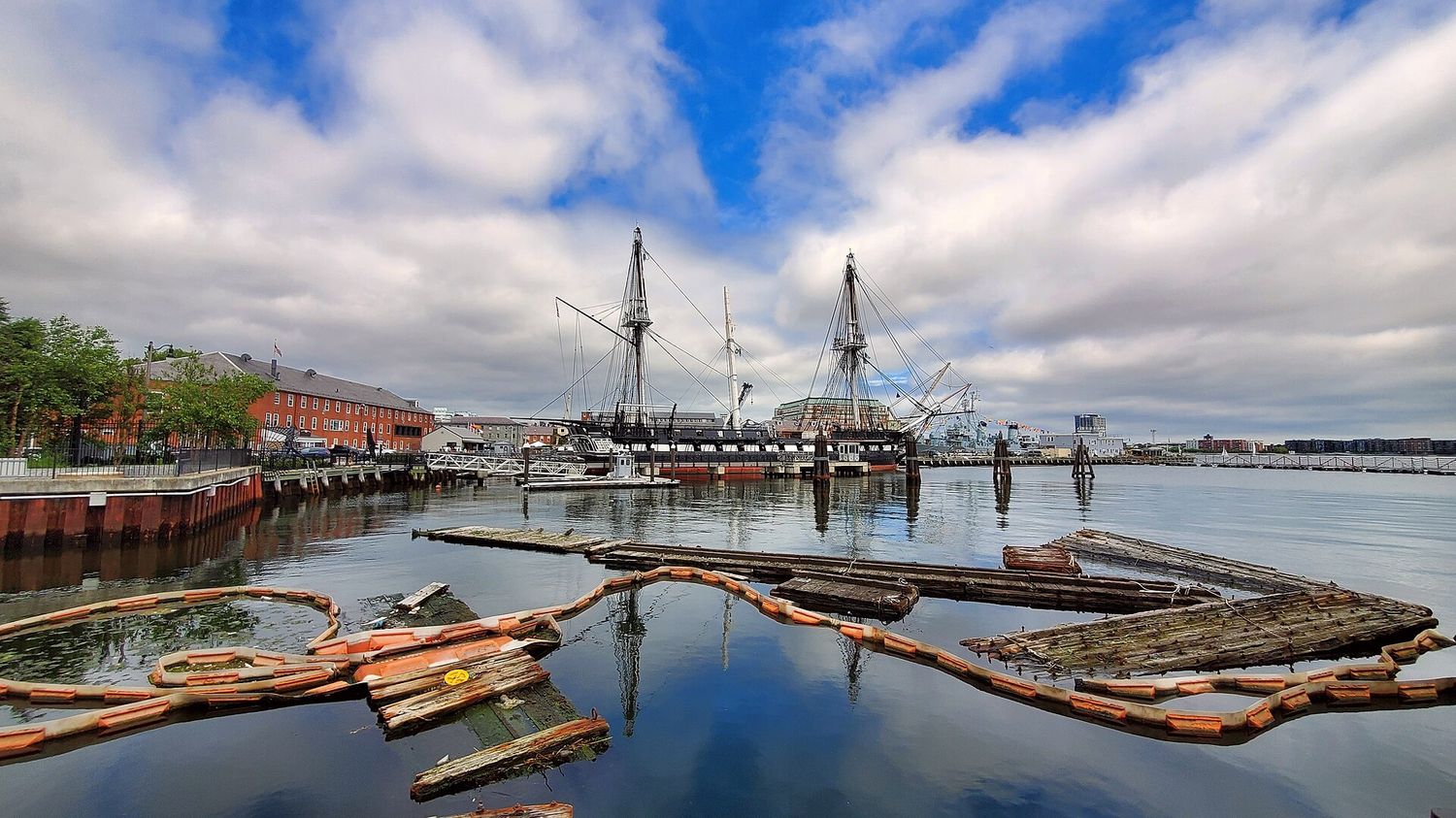
Launched in 1797 and still a commissioned United States Navy warship, crewed by active-duty sailors who show you around. Free to board — adults 18 and over need photo ID, and everyone goes through security, because this is a working military installation. The USS Constitution Museum next door is also free, with a suggested donation of $10–15 for adults, and is the most child-friendly hour in Boston.
Hours vary by season and the ship occasionally closes for maintenance, so check the National Park Service page the morning you go.
Faneuil Hall’s Great Hall
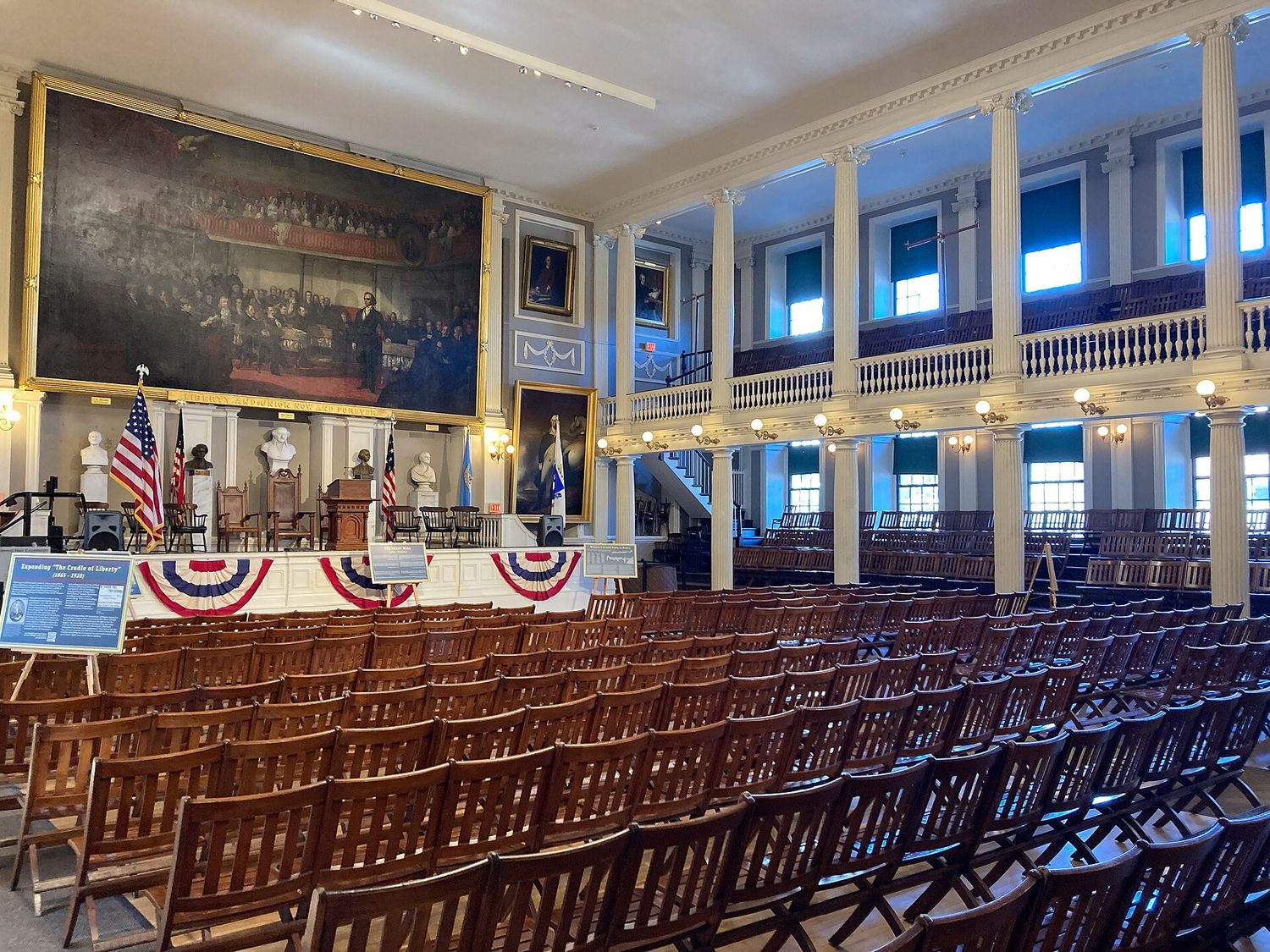
Peter Faneuil gave Boston a market with a meeting hall above it in 1743, and the hall upstairs is where the town meetings that led toward revolution were held. It is free, it is beautiful, National Park Service rangers give short talks there through the day, and an astonishing number of visitors walk past the staircase entirely because they are looking for the food court behind it.
Twenty minutes, no cost, and among the best value in the city. Check the ranger talk schedule at the ground-floor visitor center.
The Black Heritage Trail
A 1.6-mile route across the north slope of Beacon Hill linking the sites of the free Black community that made Boston a center of American abolitionism. It starts at the Robert Gould Shaw and 54th Massachusetts Memorial opposite the State House and ends at the African Meeting House of 1806, the oldest surviving Black church building in the United States.
National Park Service rangers lead it free in season. Walking it yourself costs nothing at any time of year, and it is, mile for mile, the more remarkable of Boston’s two heritage trails.
The burying grounds
All free, all open daily, and among the most rewarding twenty minutes in the city. The Granary holds Samuel Adams, John Hancock, Paul Revere and the victims of the Boston Massacre — and the headstones were rearranged into tidy rows in the 1840s so the grass could be mown, which means most of them are not standing over the person named on them. King’s Chapel Burying Ground, from 1630, is the city’s oldest. Copp’s Hill in the North End has the best free view on the Freedom Trail.
The Massachusetts State House
Free guided tours run weekdays, roughly 10am to 3:30pm, last about forty minutes and start in Doric Hall. The building is open weekdays 8:45am to 5pm and closed at weekends, which catches people out. Bulfinch’s 1798 dome was gilded in 1874 and painted gray during the Second World War, and the Sacred Cod still hangs in the House chamber.
The Bunker Hill Monument
Free to enter and free to climb — 294 steps and no elevator. The reward is four small windows and a view over the harbor and down onto downtown. The Bunker Hill Museum across the street is also free, and has restrooms, which at that stage of the trail is not a small thing.
Free Art and Architecture
Harvard Art Museums
Free to everyone since 2023, Tuesday to Sunday, 10–5, fifteen minutes from Park Street on the Red Line. Three collections under one Renzo Piano roof — French Impressionists and post-Impressionists, the best Bauhaus holdings outside Germany, and Asian and ancient Mediterranean art. There is no better free museum in the northeastern United States, and most visitors to Boston have never heard of it.
Boston Public Library
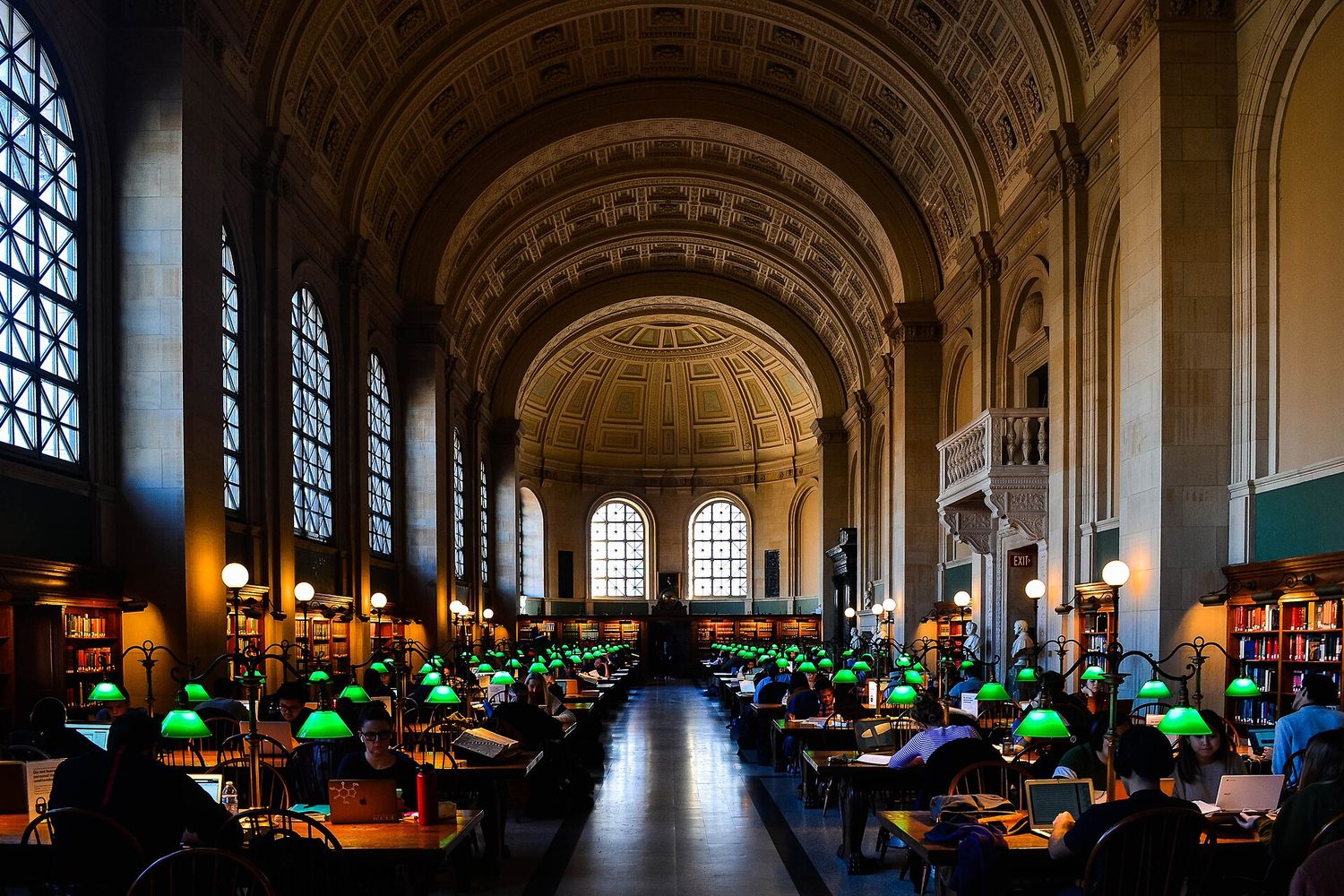
The McKim Building opened in 1895 as the first large free municipal library in America, deliberately built like a palace to make a point about what the public was owed. Bates Hall is the room everyone photographs; the third floor, which almost nobody visits, holds a mural cycle John Singer Sargent worked on for nearly thirty years. There are Puvis de Chavannes murals on the staircase, an Abbey series on the second floor, and an Italianate courtyard you can sit in.
Free architecture and art tours run most days. Two hours, no cost, and one of the great interiors in America.
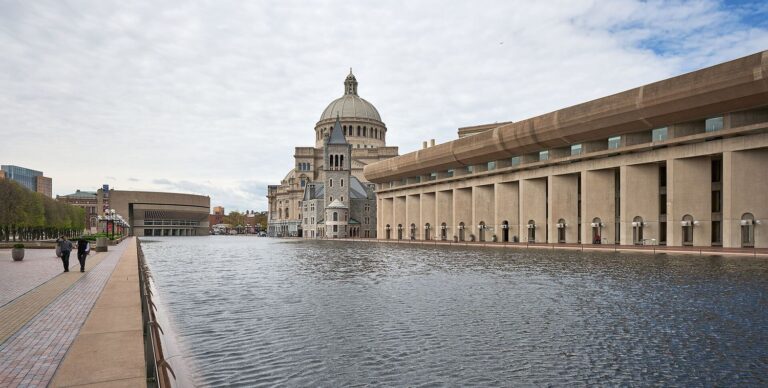
Christian Science Plaza
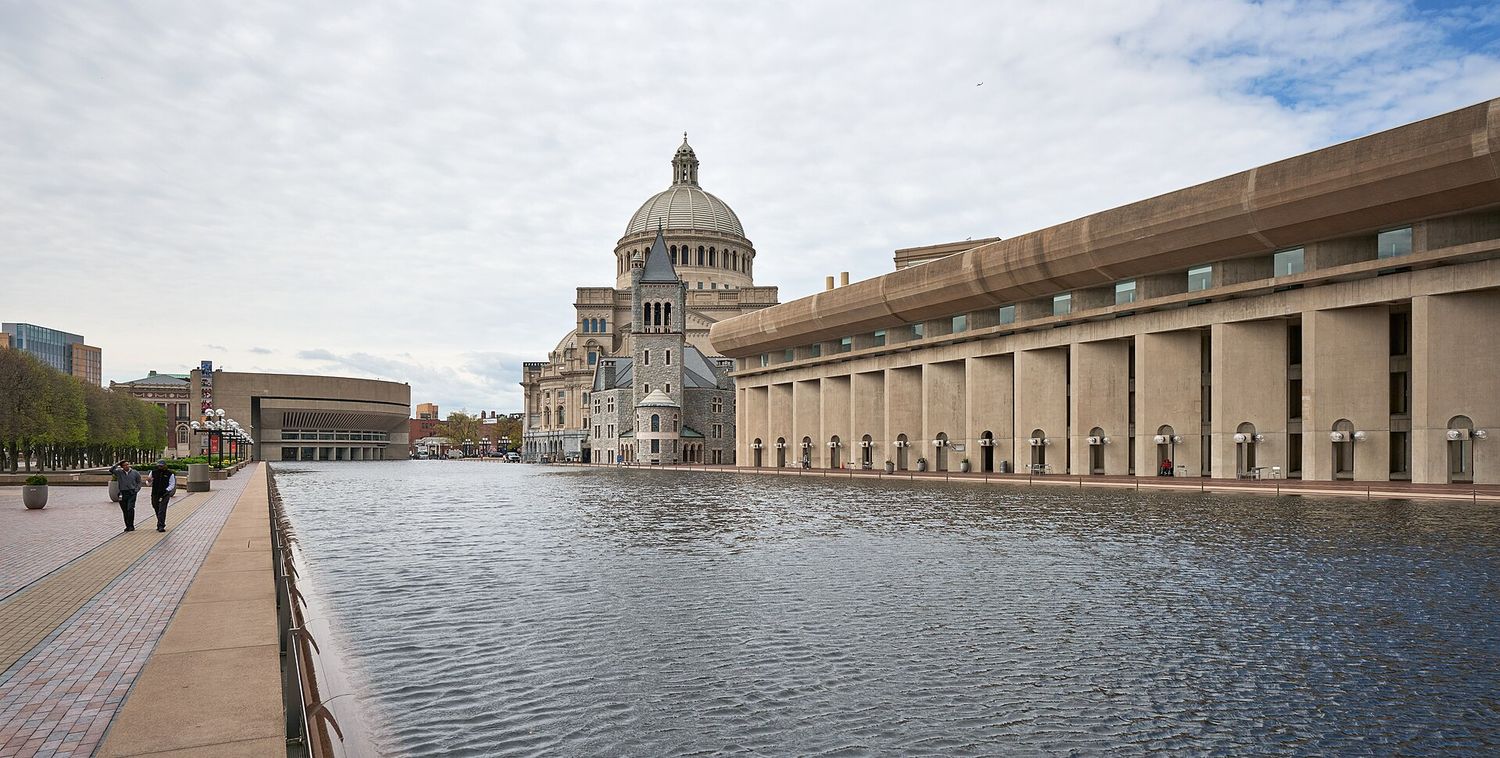
An enormous granite plaza laid out in the 1970s around a 670-foot reflecting pool, with the domed Mother Church at one end and a long colonnade down one side. It is one of the largest and least-visited pieces of civic architecture in Boston, it is completely free to walk through, and on a summer evening the fountain and the pool are among the most pleasant places in Back Bay.
Attached to it is the Mary Baker Eddy Library and the Mapparium — a three-story stained-glass globe you walk through on a glass bridge, showing the world as it was mapped in 1935. That one has a modest admission, and it is worth it.
Public sculpture and street-level art
Boston’s public art is unusually good and entirely free. The Shaw Memorial by Augustus Saint-Gaudens, facing the State House across Beacon Street, commemorates the Union Army’s first Black regiment recruited in the north and is the finest piece of public sculpture in the city — most Freedom Trail walkers glance at it for four seconds.
Beyond that: the Make Way for Ducklings bronzes in the Public Garden, the rotating public art commissions along the Rose Kennedy Greenway including large-scale murals, and the SoWa galleries in the South End, which open their studios free on the first Friday evening of the month.
Free Parks and Green Space
Boston Common and the Public Garden
Public land since 1634 and the oldest public park in the United States, fifty acres of it, right in the middle of the city. Across Charles Street, the Public Garden was the first public botanical garden in America, laid out in 1837, with the lagoon, the willows and the Ducklings. Both free at all times.
The Swan Boats on the lagoon are seasonal and cost $4.75 for adults and $3.25 for children 2–15 — cheap enough to count as nearly free, and running roughly mid-April to early September.
The Emerald Necklace and the Arnold Arboretum
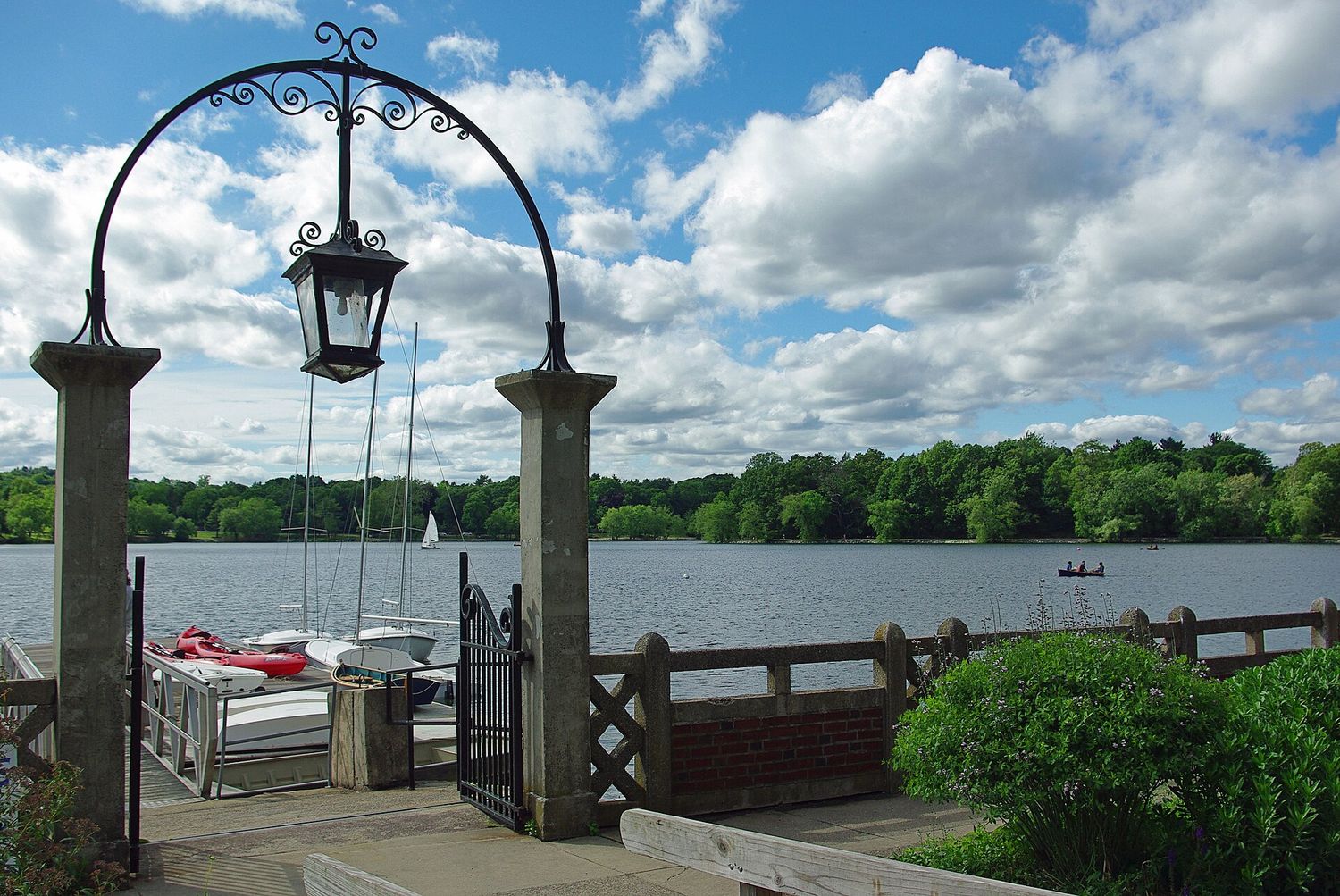
Frederick Law Olmsted’s chain of connected parks runs roughly seven miles and 1,100 acres from Boston Common out to Franklin Park, and every foot of it is free: the Commonwealth Avenue Mall, the Back Bay Fens with its Victory Gardens, the Riverway, Olmsted Park, Jamaica Pond and Franklin Park.
The Arnold Arboretum is the jewel — 281 acres run by Harvard, free, open every day of the year from sunrise to sunset, with one of the most significant collections of temperate woody plants anywhere. On a clear morning in May or October it is the best thing in Boston that almost nobody visits. Orange Line to Forest Hills.
The Esplanade and the Harborwalk
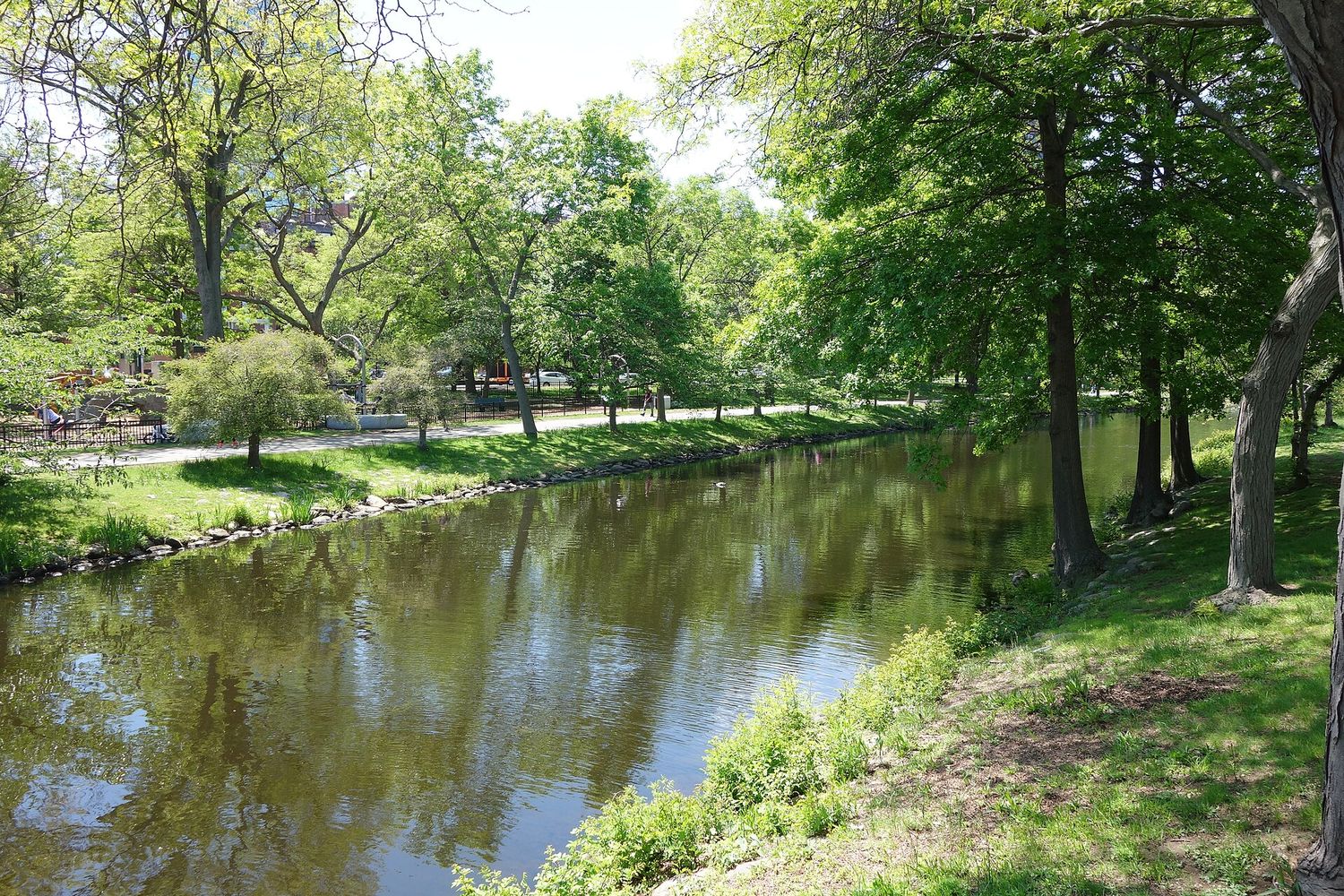
The Charles River Esplanade runs three miles from the Museum of Science to the BU Bridge, with lagoons, a bandstand and the best sunset in the city. The Harborwalk is 43 miles of continuous public waterfront linking most of the harbor-facing neighborhoods, and it is largely empty. Both are free, flat and genuinely lovely, and both double as transport.
Mount Auburn Cemetery
Free, in Cambridge, and much better than “a cemetery” suggests. Founded in 1831 as the first garden cemetery in America, it effectively invented a landscape tradition and directly influenced the design of public parks including Central Park. It is 175 acres of collection-grade trees, a tower with a view back across to Boston, one of the best spots on the East Coast for spring warbler migration, and the graves of Longfellow, Winslow Homer and Buckminster Fuller.
Castle Island and the beaches
At the eastern tip of South Boston, Castle Island is free, open all year, and holds Fort Independence, a granite star fort, with a loop walk around Pleasure Bay and aircraft coming in low over the water. The city beaches — Carson, M Street, Revere Beach on the Blue Line — are all free public beaches, and Revere was the first public beach established in the United States, in 1896.
Franklin Park, the Blue Hills and the bigger green
Two more that are free and that essentially no visitor reaches. Franklin Park is the largest link in the Emerald Necklace at over 500 acres — Olmsted considered it his finest work in Boston — with woods, a golf course, meadows and the zoo, which does charge. Walking the park costs nothing and on an October morning it is remarkable.
The Blue Hills Reservation, just south of the city, is 7,000 acres with 125 miles of trails, free, and the climb up Great Blue Hill gives you the best natural view of the Boston skyline there is. The oldest continuously operating weather observatory in the United States sits at the top. Red Line to Ashmont and a bus, or a short drive.
The Boston Harbor Islands are a national park area and free once you are on them — the only cost is the ferry, $25 for adults and $18 for children 3–11 return, running roughly mid-May to Indigenous Peoples’ Day weekend in October. Georges Island has a Civil War-era granite fort you can wander through, and Spectacle Island has a swimming beach and the best skyline view in the harbor.
Free by the Day and Time
| When | What | Note |
|---|---|---|
| Thursday 5–9pm | Isabella Stewart Gardner Museum | Normally $25 |
| Thursday 5–9pm | Institute of Contemporary Art | Normally $20 |
| Tuesday to Sunday | Harvard Art Museums | Always free |
| Weekdays 10–3:30 | Massachusetts State House tours | Closed weekends |
| Most days | Boston Public Library tours | Art and architecture |
| In season, daily | NPS ranger tours from Faneuil Hall | Check the schedule |
| In season | Black Heritage Trail ranger tours | Free, from the Shaw Memorial |
| First Friday evening | SoWa galleries and studios | South End |
| Any day | Harvard student-led campus tours | From the visitor center; get there early |
Free Events Through the Year
- March — the St Patrick’s Day and Evacuation Day parade in South Boston, on the 17th.
- April — Patriots’ Day: dawn reenactments in Lexington and Concord, and the Boston Marathon, which is free to watch from anywhere along the route.
- May — Lilac Sunday at the Arnold Arboretum, when the collection peaks and the usual no-picnics rule is suspended for the day.
- June — Bunker Hill Day on the 17th with a Charlestown parade; the free outdoor performance season begins on the Common and the Greenway.
- July — the Boston Pops Fireworks Spectacular on the Esplanade on the Fourth, and USS Constitution’s turnaround cruise in the harbor.
- August — the North End’s saints’ day feasts, with processions, bands and food stalls over successive weekends.
- October — the Head of the Charles Regatta, 16 to 18 October in 2026, free to watch from either bank.
- December — the tree lighting on the Common in early December, a gift sent from Nova Scotia every year since 1971 in thanks for Boston’s help after the 1917 Halifax explosion.
- 31 December — First Night, with free events across the city and fireworks over the harbor.
Nearly Free: $10 or Less
| What | Cost |
|---|---|
| Old North Church, crypt included | $10 adult, $5 youth |
| Paul Revere House | $6 adult, $1 children 5–17 |
| Swan Boats, in season | $4.75 adult, $3.25 children 2–15 |
| Frog Pond skating, mid-Nov to March | $10 adult, free under 58 inches; skate hire extra |
| A subway ride anywhere | $2.40 |
| Commuter rail weekend pass | $10 for unlimited Saturday and Sunday |
| North End counter lunch | A few dollars |
That commuter rail weekend pass deserves attention. Ten dollars buys unlimited travel across Saturday and Sunday on the whole network, which means Salem, Rockport, Concord and Plymouth are all reachable for the price of a coffee. It is the best transport bargain in New England, and our day trips guide covers where to take it.
Free With a Catch
- Library museum passes. Boston-area public libraries lend heavily discounted museum passes — a wonderful system, and it is for cardholders. Do not plan around it as a visitor.
- Harvard campus tours. Free and student-led, but capacity is limited and they fill in summer. Turn up early or walk the Yard yourself, which is also free.
- Free museum evenings. The Gardner and the ICA on Thursdays are genuinely free and genuinely busy. Arrive at 5, not 7.
- “Free” walking tours. Tip-based tours advertise as free and are not; the guide expects $10–20 a head and says so at the end. They can be good — just budget for them.
- Trinity Church. Copley Square outside is free and the exterior is the point; going inside carries a modest admission.
Free by Neighborhood
If you are already somewhere, here is what costs nothing within a few minutes’ walk.
| Neighborhood | Free things within ten minutes |
|---|---|
| Beacon Hill | Acorn Street, the purple window panes, the Black Heritage Trail, the Shaw Memorial, the State House on weekdays |
| Back Bay | Boston Public Library, Copley Square, Commonwealth Avenue Mall, Christian Science Plaza, the Esplanade |
| Downtown | Faneuil Hall’s Great Hall, the Granary and King’s Chapel burying grounds, the Boston Massacre site, the Greenway |
| North End | Copp’s Hill Burying Ground, Paul Revere Mall, the Molasses Flood plaque, the Harborwalk, summer street feasts |
| Charlestown | USS Constitution and its museum, the Bunker Hill Monument and museum, the Navy Yard waterfront |
| Seaport | The Harborwalk, Fort Point’s warehouse district, the ICA’s exterior steps and terrace |
| South End | Union Park and the garden squares, SoWa galleries on first Fridays |
| Fenway | The Back Bay Fens, the Victory Gardens, the Emerald Necklace path |
| Jamaica Plain | Jamaica Pond, the Arnold Arboretum, Franklin Park |
| Cambridge | Harvard Yard, the Harvard Art Museums, the river path, Mount Auburn Cemetery |
| South Boston | Castle Island, Fort Independence, Carson and M Street beaches |
| East Boston | Piers Park and the best skyline view in the city |
Free When It Rains
Boston rain arrives sideways off the water and a free outdoor day becomes unworkable fast. What still holds up:
- The Boston Public Library. Two hours indoors, free, with a courtyard, a mural cycle and somewhere to sit down. The single best wet-weather answer in the city.
- Faneuil Hall’s Great Hall, free and indoors, with ranger talks.
- The Harvard Art Museums, free, and large enough to absorb an afternoon.
- The USS Constitution Museum, free and indoors even when the ship’s deck is closed.
- Thursday evening at the Gardner or the ICA, if the rain has the decency to fall on the right day.
- The Prudential Center and Copley Place, connected by an indoor bridge, which is not culture but will get you across Back Bay dry.
A Free Day That Actually Works
9:00 — Boston Common Visitor Information Center. Walk up past the Shaw Memorial to the State House; if it is a weekday, take the free tour.
10:00 — Down the Freedom Trail: Park Street Church, twenty minutes in the Granary Burying Ground, King’s Chapel Burying Ground, the Boston Latin mosaic, the Old Corner Bookstore, the Boston Massacre site.
11:30 — Faneuil Hall. Upstairs to the Great Hall, and catch a ranger talk if the timing works.
12:30 — Lunch in the North End for a few dollars at a counter, not a restaurant.
13:30 — Copp’s Hill Burying Ground for the free view, then over the Charlestown Bridge.
14:30 — USS Constitution and the USS Constitution Museum, both free.
16:00 — The Bunker Hill Monument. Climb it if your legs will take it.
17:00 — Ferry back to Long Wharf, which is the only thing on this list that costs anything, and it is a couple of dollars for the best ten minutes in Boston.
Total spend: lunch and one fare. If it is a Thursday, add the Gardner from 5pm and you have had a $130 day for the price of a sandwich.
A second free day, across the river
10:00 — Red Line to Harvard. Walk the Yard; join a free student-led tour if one has space.
10:30 — Harvard Art Museums, free, two hours. Impressionists on one floor, Bauhaus on another, and a conservation lab you can look into.
12:30 — Lunch in Harvard Square, where the student population keeps the prices honest.
13:30 — Bus or a thirty-minute walk to Mount Auburn Cemetery. Free, 175 acres, and climb the tower for the view back to Boston.
15:30 — Walk down to the Charles and follow the river path east. Cross the Harvard Bridge to look for the Smoot marks — a fraternity pledge was rolled end over end across it in 1958 and the measurements are still repainted.
17:00 — Finish on the Esplanade at sunset, which is free and better than any paid viewpoint in the city.
Total spend: two subway fares and lunch.
What Costs Money and Should Not
- Hop-on hop-off buses. In a city where every stop is within walking distance of the next one, this is money for nothing.
- Boston Duck Tours at $57 adult and $42 child, plus a 5% Convention Center fee and a $2 booking fee. Buy it as a ride for children if that is what you want; it is not an orientation tour worth two hundred dollars for a family in a city you can cross on foot in forty minutes.
- Paid “witch” and haunted attractions, in Salem and increasingly in Boston. Dark rooms and mannequins for close to twenty dollars.
- Harbor dinner cruises. Banquet food at a premium. Walk the Harborwalk and eat on land.
- Observation decks in poor weather. View Boston is $34 plus a $3 fee. On a clear evening it is worth it; in cloud you are paying to look at cloud. The free view from Copp’s Hill or the top of the Bunker Hill Monument is not the same, but it is free.
- A pass you will not use. CityPASS at $84 saves around $53 if you do four big paid attractions. On a free-leaning trip it is a straight loss.
Eating Cheaply, Which Is the Other Half
Attractions are the easy part of a budget trip to Boston. Food is where the money actually goes, and the city is better at cheap eating than its reputation suggests.
- North End lunch counters. A Sicilian slice and an arancino from a counter on Hanover Street costs a few dollars. Cash, no seats, no ceremony, and better than most sit-down lunches downtown.
- Chinatown. The best value in central Boston by a wide margin, and where the city eats after midnight. Weekend dim sum feeds four for what two would spend on brunch elsewhere.
- Haymarket, on Blackstone Street on Fridays and Saturdays — an open-air produce market running since the 1830s, with prices that will startle you. Buy fruit for the week.
- The Boston Public Market near Haymarket station is indoors, year-round and full of New England producers; more expensive than Haymarket, cheaper than a restaurant.
- Oyster happy hour, roughly 4 to 6pm across the city, is the best-value ritual Boston has. Note that Massachusetts has banned discounted drinks since the 1980s, so happy hour here means cheap food, not cheap alcohol.
- Eat outside. A sandwich on a bench on the Esplanade, the Greenway or the Commonwealth Avenue Mall beats a mediocre restaurant, costs a fraction, and the setting is free.
Two structural points that matter more than any individual tip. First, in Boston ten minutes of walking almost always moves you from a tourist price to a resident price — the blocks around Faneuil Hall and the Greenway end of Hanover Street are the expensive ones. Second, Massachusetts meals tax and an 18 to 20% tip both sit on top of the menu price, so a listed cost is roughly four-fifths of what you will actually pay.
Frequently Asked Questions
What can you do in Boston for free?
A great deal. The Freedom Trail itself has no ticket and eleven of its sixteen sites are free, including USS Constitution, Faneuil Hall’s Great Hall, the Granary Burying Ground and the Bunker Hill Monument. Add the Harvard Art Museums, the Boston Public Library, the Arnold Arboretum, the Esplanade, the Harborwalk, Mount Auburn Cemetery and the Black Heritage Trail, and you have several full days that cost nothing.
Is the Freedom Trail free?
Yes. There is no ticket, no gate and no fee to follow the red line, and it is open at all times. Eleven of the sixteen official sites are free to enter. Only five charge — $10 at Old North Church, $6 at the Paul Revere House, and $18 for a combined Old State House and Old South Meeting House ticket — and you can skip all of them and still have a full day.
Are there free museums in Boston?
The Harvard Art Museums have been free to everyone since 2023, and hold a major collection of Impressionists and the best Bauhaus holdings outside Germany. The Boston Public Library, the USS Constitution Museum, the West End Museum and the Commonwealth Museum are all free. On top of that, the Isabella Stewart Gardner and the Institute of Contemporary Art are both free on Thursday evenings from 5pm.
When are Boston museums free?
Thursday evening, 5 to 9pm, at both the Isabella Stewart Gardner Museum and the Institute of Contemporary Art — normally $25 and $20 respectively. The Museum of Fine Arts is not free then but stays open until 10pm on Thursdays and Fridays. The Harvard Art Museums are free every day they open, Tuesday to Sunday.
Can you see Boston on a budget?
More easily than almost any comparable American city, because the walking is the sightseeing. Budget around $25 a day for food if you eat at North End counters and Chinatown, $2.40 a ride on the T or nothing at all if you walk, and $0 for attractions on a well-planned day. The main cost of a Boston trip is the hotel, so shifting the dates to January or February saves more than every free attraction on this list combined.
What is the best free view in Boston?
Copp’s Hill Burying Ground in the North End for the free view over the water to Charlestown; Piers Park in East Boston, one stop on the Blue Line, for the best skyline view in the city; and the top of Great Blue Hill in the Blue Hills Reservation for the best natural one. The Bunker Hill Monument’s view is free too, if you will climb 294 steps for it.
Are there free walking tours in Boston?
Genuinely free ones, yes: National Park Service rangers run programs from Faneuil Hall in season and lead the Black Heritage Trail, the Boston Public Library runs free art and architecture tours most days, and the Massachusetts State House gives free tours on weekdays. Tip-based commercial “free” tours are a different thing — the guide expects $10 to $20 a head at the end.
What free things can you do in Boston with kids?
USS Constitution and its museum in Charlestown, which is free and hands-on and the best hour on the Freedom Trail for anyone under twelve. Beyond that: the Make Way for Ducklings bronzes in the Public Garden, the Frog Pond in summer as a wading pool, Castle Island for the fort and the planes, the city beaches, and the Christian Science Plaza fountain on a hot day.
Is Boston expensive to visit?
The accommodation is expensive and almost everything else need not be. Hotel rates swing enormously with the season — October is the peak and January to March a fraction of it — while the attractions cost the same year round and the best of them are free. A visitor who walks, eats at counters and uses the free tier can have a full day for the price of lunch.
The free tier matters twice as much when you are paying four admissions instead of one. Our guide to Boston with kids picks out the free days that actually hold a child’s attention — the Tadpole Playground, USS Constitution, the Christian Science reflecting pool — and shows how alternating them with paid days cuts a family week by about a third.
The largest free things in Boston are not places at all but dates: the Pops on the Esplanade, the August feasts, three days of racing on the Charles. Our guide to Boston events covers the free calendar in full, including the neighborhood occasions that never make a visitor listing.
Two of the best free walks in Greater Boston are on the water: the Harborwalk, which runs 43 miles from Logan to the Neponset, and the loop trail around Deer Island, which has the finest unobstructed harbor view anywhere on land. Our guide to Boston harbor and the islands has both, along with Castle Island and the city beaches nobody uses.
Some of the best free hours in the region are on the Cambridge side of the river: Harvard Yard around the clock, the Harvard Art Museums for nothing, Mount Auburn Cemetery’s 175 acres, and a free National Park Service house on Brattle Street. Our guide to Cambridge and Harvard has all of them.
Most of what makes Boston good for two people is on this page already, which is the point: the Esplanade at sunset beats a $22 rooftop, and the library courtyard beats both. Our guide to romantic things to do in Boston puts the free hours in order and says which paid ones are still worth it.
The striking thing about ranking this city’s sights honestly is how much of the top of the list costs nothing. Our guide to the top attractions in Boston puts the Freedom Trail first, USS Constitution second and the Boston Public Library sixth — ahead of several attractions charging $30 and more.
The Common is the biggest free attraction in the city and one of the least explained. Our full guide to Boston Common covers what to see, the free summer spray pool and Shakespeare, winter skating where children under 58 inches go free, and how it differs from the Public Garden across Charles Street.
Of everything free in the city, the McKim Building on Copley Square rewards the most time. Our Boston Public Library tour guide covers the free guided Art & Architecture tours, the 30-minute audio tour you can download, and an hour-long self-guided route through Bates Hall, the Sargent murals and the courtyard.
Several of the city’s most unusual places also cost nothing. Our guide to hidden gems in Boston includes the free Ether Dome and Warren Anatomical Museum — both open on weekdays only — along with Forest Hills Cemetery, Deer Island’s harbor loop and the Worthylake gravestones at Copp’s Hill.
The biggest free thing to do in Boston is seven miles long. Frederick Law Olmsted’s chain of parks runs from the Common to Franklin Park, and our guide to the Emerald Necklace in Boston covers every section, the best half-day walk, and the few things along the way that cost money.