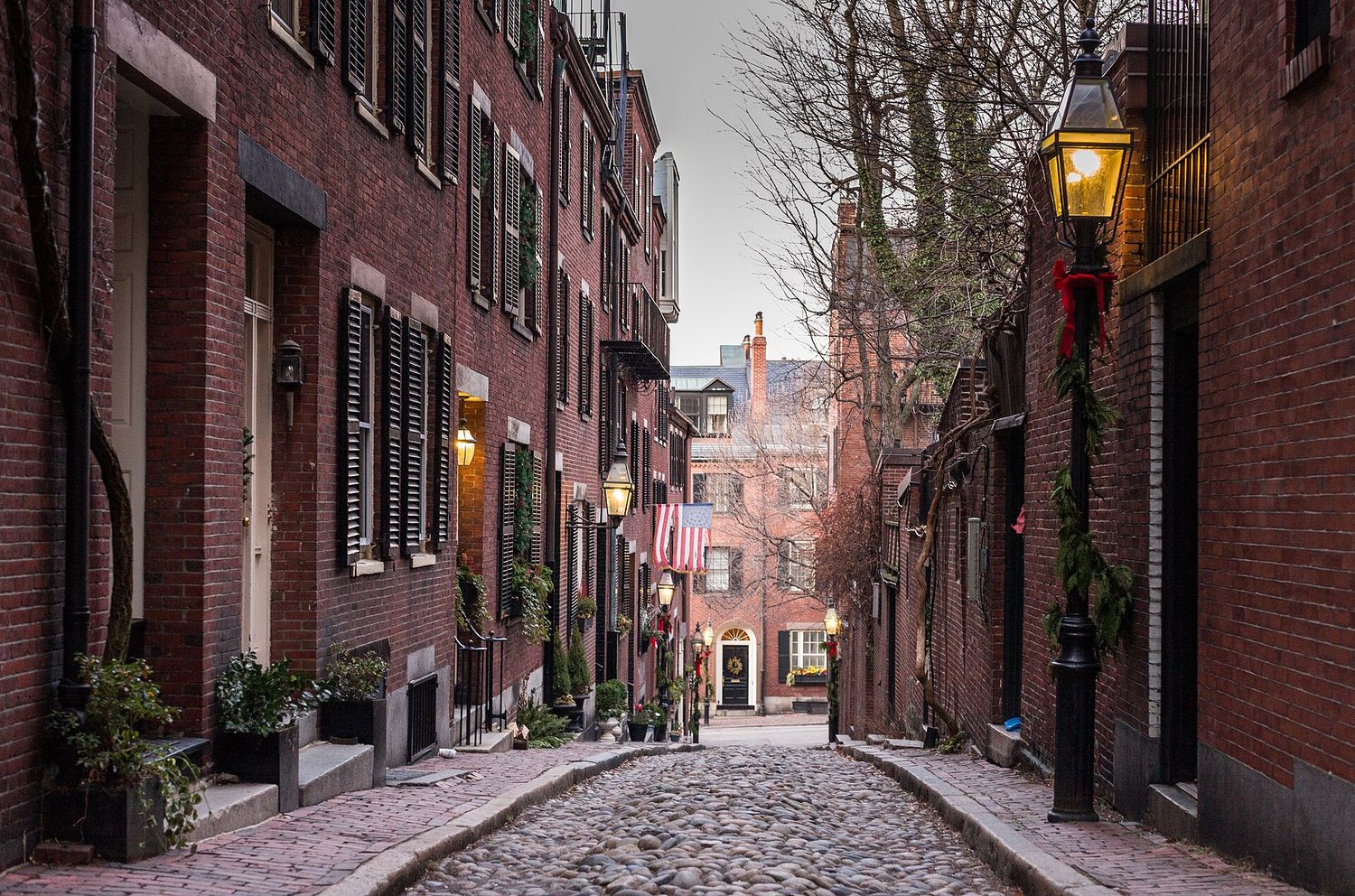
Stand at the bottom of Acorn Street at ten o’clock on a Saturday morning in October and you will see the problem with Boston’s photo spots: a line. Not a formal one, just a dozen people taking turns to stand in the middle of a cobbled lane for the same picture, while a resident with a bag of groceries waits for a gap. Boston is a genuinely beautiful city to photograph, but the most Instagrammable places in Boston reward people who know when to go, where to stand and which famous shots are not worth the wait.
This guide covers twenty of the best places to take photos in Boston, grouped by neighborhood so you can string them together on foot: what the shot is, the best time of day, the nearest T stop, and a few honest notes about what is overrated. It ends with a photo walk you can do in a morning, tips for shooting in the city, and etiquette, because many of these places are someone’s front door. Prices and details were checked in September 2026; confirm before you go.
The best photo spots at a glance
| Spot | Best time | Cost | Nearest T |
|---|---|---|---|
| Acorn Street, Beacon Hill | Before 8am | Free | Charles/MGH (Red), Park Street |
| Public Garden lagoon and footbridge | Early morning or late afternoon | Free | Arlington (Green) |
| Boston Public Library, Bates Hall and courtyard | Weekday mornings | Free | Copley (Green) |
| Christian Science Plaza reflecting pool | Still mornings, blue hour | Free | Symphony, Prudential (Green E) |
| Longfellow Bridge and the Charles | Golden hour | Free | Charles/MGH (Red) |
| Zakim Bridge at night | After dark | Free | North Station, Community College (Orange) |
| Greenway mural and carousel | Daytime | Free to view | Aquarium (Blue), South Station (Red) |
| Graffiti Alley, Cambridge | Any time | Free | Central (Red) |
| Fenway Park and the Green Monster | Game days, or a tour | Tour $30 | Kenmore (Green) |
| View Boston, 52nd floor | Sunset on a clear day | From $32 plus $3 fee | Prudential (Green E) |
Beacon Hill
1. Acorn Street
The narrow cobbled lane between West Cedar and Willow Streets is the single most photographed street in Boston, and for good reason: brick row houses, black shutters, iron boot scrapers and uneven stones that look exactly the same as they did in the nineteenth century. It is also a private way where people live, and its fame has not made them happier. The honest advice: go before 8am on a weekday, take your picture in five minutes, and move on. After about 10am on a fall weekend, it is a crowd with a cobbled floor, and the shot you want is impossible.
Do not sit on the steps, lean on the doors or block the lane, and never use a tripod here. The walk up from Charles Street is steep and slippery when wet.
2. Louisburg Square and Mount Vernon Street
Two minutes from Acorn Street, Louisburg Square is a private oval of grand bowfront houses around a fenced garden, and Mount Vernon Street, which runs past it, is the finest street of houses in Boston. Both are quieter than Acorn Street and, for many photographers, more interesting. In the fall, the gas lamps and the changing leaves make this the most atmospheric corner of the neighborhood.
3. The purple windows and the gold dome
At 63 and 64 Beacon Street, a few of the old panes have a lilac tint, from a batch of nineteenth-century glass with too much manganese that turned purple in the sun. They are subtle and easy to miss, so do not cross town just for them. Much more striking is the gilded dome of the Massachusetts State House at the top of the hill, which catches the late-afternoon sun from almost anywhere on Boston Common. Our Boston neighborhoods guide covers the rest of Beacon Hill.
Boston Common and the Public Garden
4. The Public Garden lagoon and footbridge
The Common is the city’s big green lawn, but it is the Public Garden next door, laid out in 1837, that fills camera rolls. The classic shot is from the small footbridge over the lagoon, looking along the water with weeping willows on each side and the Back Bay skyline behind. In spring and summer the Swan Boats glide below; their 2026 season ended on 7 September and they return in April, so fall visitors get the lagoon without them, which is arguably prettier.
5. Make Way for Ducklings
Near the corner of Beacon and Charles Streets, Nancy Schön’s 1987 bronzes of Mrs. Mallard and her eight ducklings, from Robert McCloskey’s 1941 book, are the most photographed statues in Boston, usually with a small child sitting on one of them. They get dressed up for holidays and the Boston Marathon. The ducklings are small and low, so crouch down to their level for the shot. Our Swan Boats guide covers the rest of the Garden.
Back Bay
6. The Boston Public Library
Bates Hall, the 218-foot barrel-vaulted reading room with its green lamps, is one of the great interiors of America, and the library is generally relaxed about quiet, flash-free photos of its public spaces; follow any signs posted on the day. Go on a weekday morning when it is quieter, keep your voice down, and do not photograph people who are studying. The arcaded courtyard in the center of the building is a lovely, calm place to frame a shot. Our Boston Public Library tour walks the building room by room.
7. Christian Science Plaza
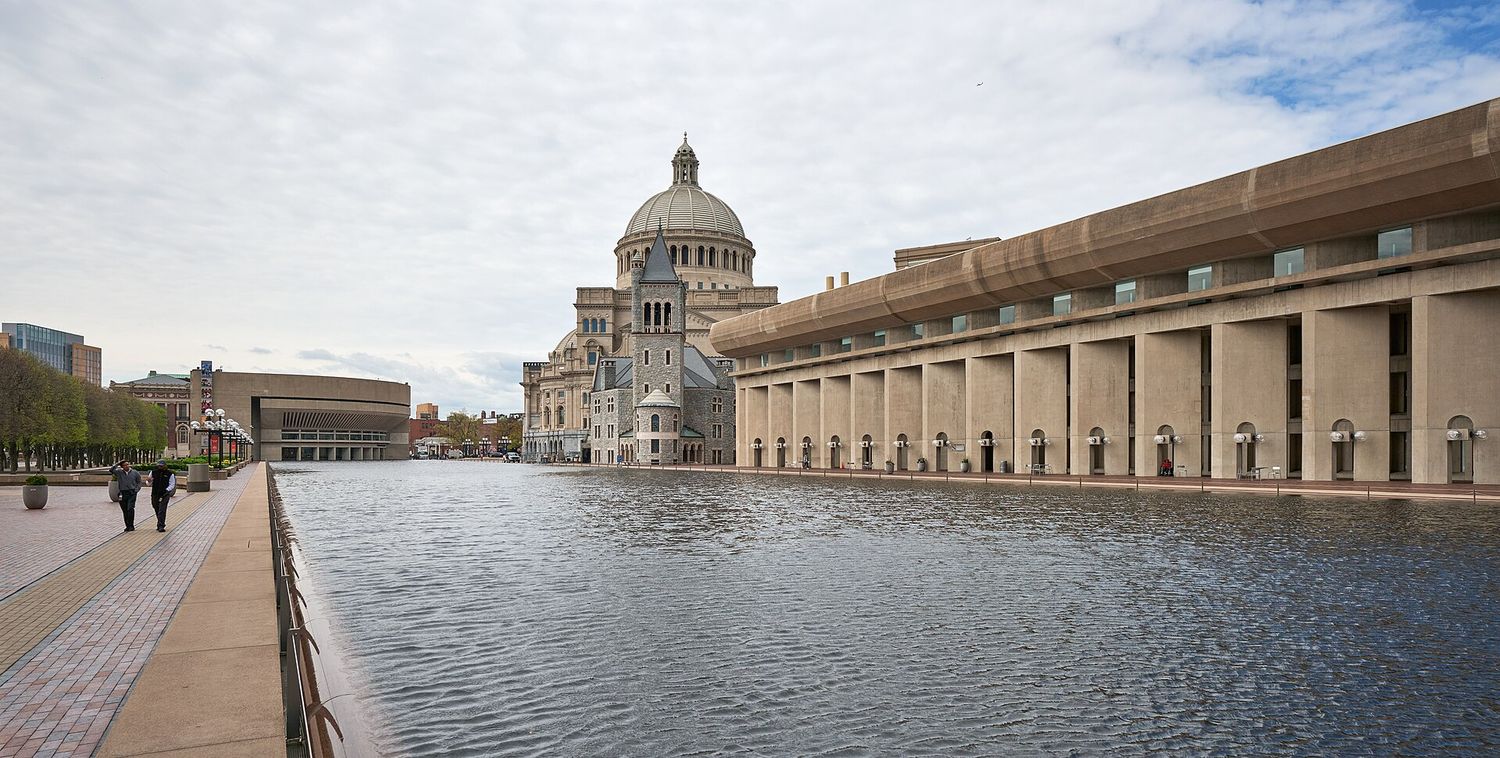
This is the best-kept secret on the list: a long, shallow reflecting pool running past the domed Mother Church of the Christian Science movement, with the brutalist towers of the plaza on one side. On a still morning or at blue hour, the reflections are perfect. It is free and open to walk through. Next door, the Mapparium, a three-story stained-glass globe you walk through, is a spectacular space, but it is timed-ticket only ($6 for adults, free for under-18s), and the library does not publish its photography policy, so ask at the desk before you raise a camera.
8. Commonwealth Avenue Mall
The tree-lined promenade running down the middle of Commonwealth Avenue through Back Bay, with brownstones on each side, is at its absolute best in the second half of April, when the magnolias bloom pink and white in front of the houses. In the fall the elms turn gold. Walk the mall from the Public Garden toward Massachusetts Avenue and it becomes the first stretch of the Emerald Necklace.
9. View Boston
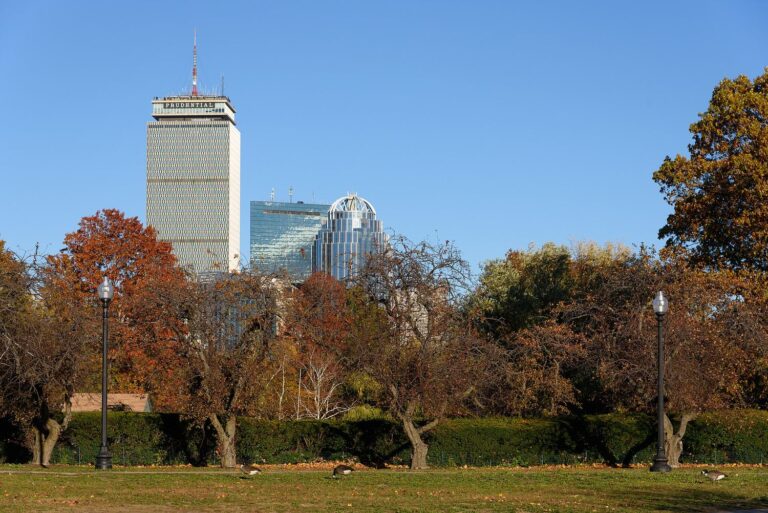
On the 52nd floor of the Prudential Tower, View Boston costs from $32 plus a $3 booking fee and is open daily from 10am to 10pm. The open-air Cloud Terrace on the 51st floor is the only place in the city where you can photograph the whole of Boston without glass in the way, and there is a “Big Picture” selfie camera that shoots you against the skyline. Go at sunset on a clear day. On a hazy or cloudy day, it is not worth the price: look up at the top of the Pru before you buy.
The Charles River
10. The Longfellow Bridge
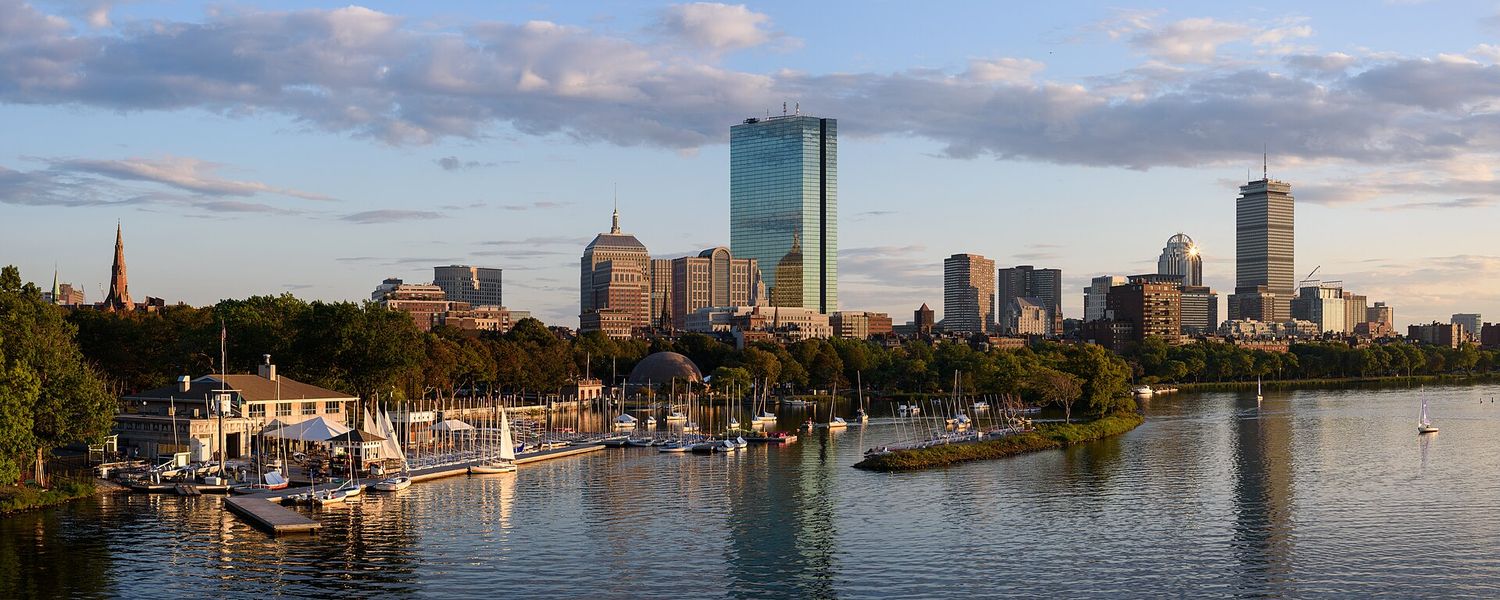
The Longfellow Bridge, with its four stone towers known locally as the salt-and-pepper shakers, carries the Red Line across the Charles, and its sidewalk has the best free skyline view in Boston. Walk out from Charles/MGH station, face west, and at golden hour you get the Esplanade, the sailing club’s boats, and the Hancock and Prudential towers lit up in gold. Face the other way and you can catch a Red Line train crossing the river with the towers behind it. This is the one to do if you only do one skyline shot.
11. The Esplanade
The riverside park along the Boston bank of the Charles, running west from the Longfellow Bridge, gives you the river at eye level: sailboats, rowing shells, runners, the Hatch Shell and the lagoons with their little footbridges. It is at its best in late afternoon, when the light comes across the water. Our best views in Boston guide has more places to see the skyline, most of them free.
Downtown, the Greenway and the North End
12. The Zakim Bridge at night
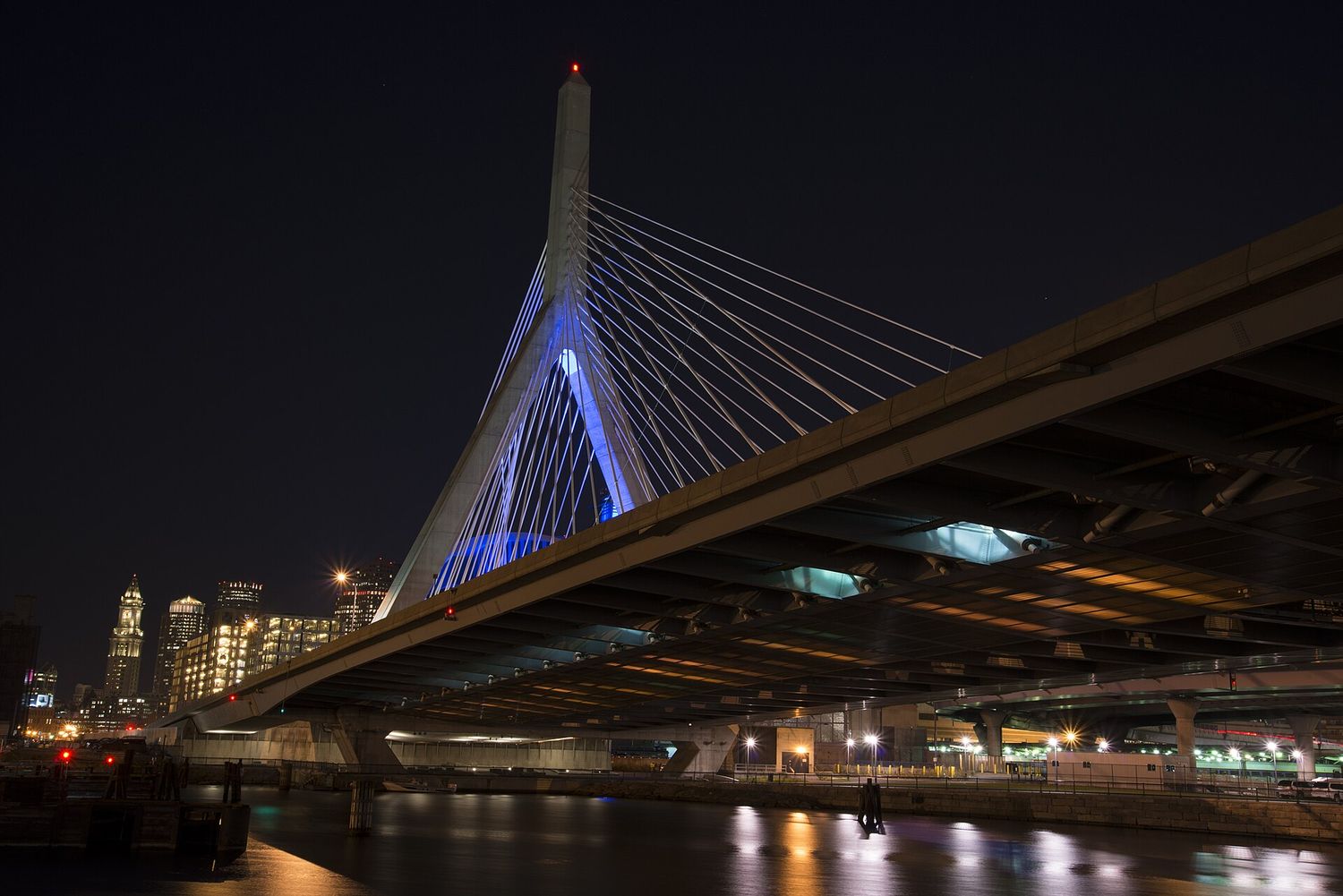
The Leonard P. Zakim Bunker Hill Memorial Bridge, finished as part of the Big Dig, is the modern symbol of Boston: two tall towers shaped to echo the Bunker Hill Monument, with cables fanned out like sails. By day it is impressive; at night, when it is lit, it is the best shot in the city. The parks near the river on the Charlestown and Cambridge banks, a short walk from North Station or Community College on the Orange Line, give you the whole span. Bring something to steady your camera, and check the lighting before you go, since it is sometimes changed for events and teams.
13. The Rose Kennedy Greenway
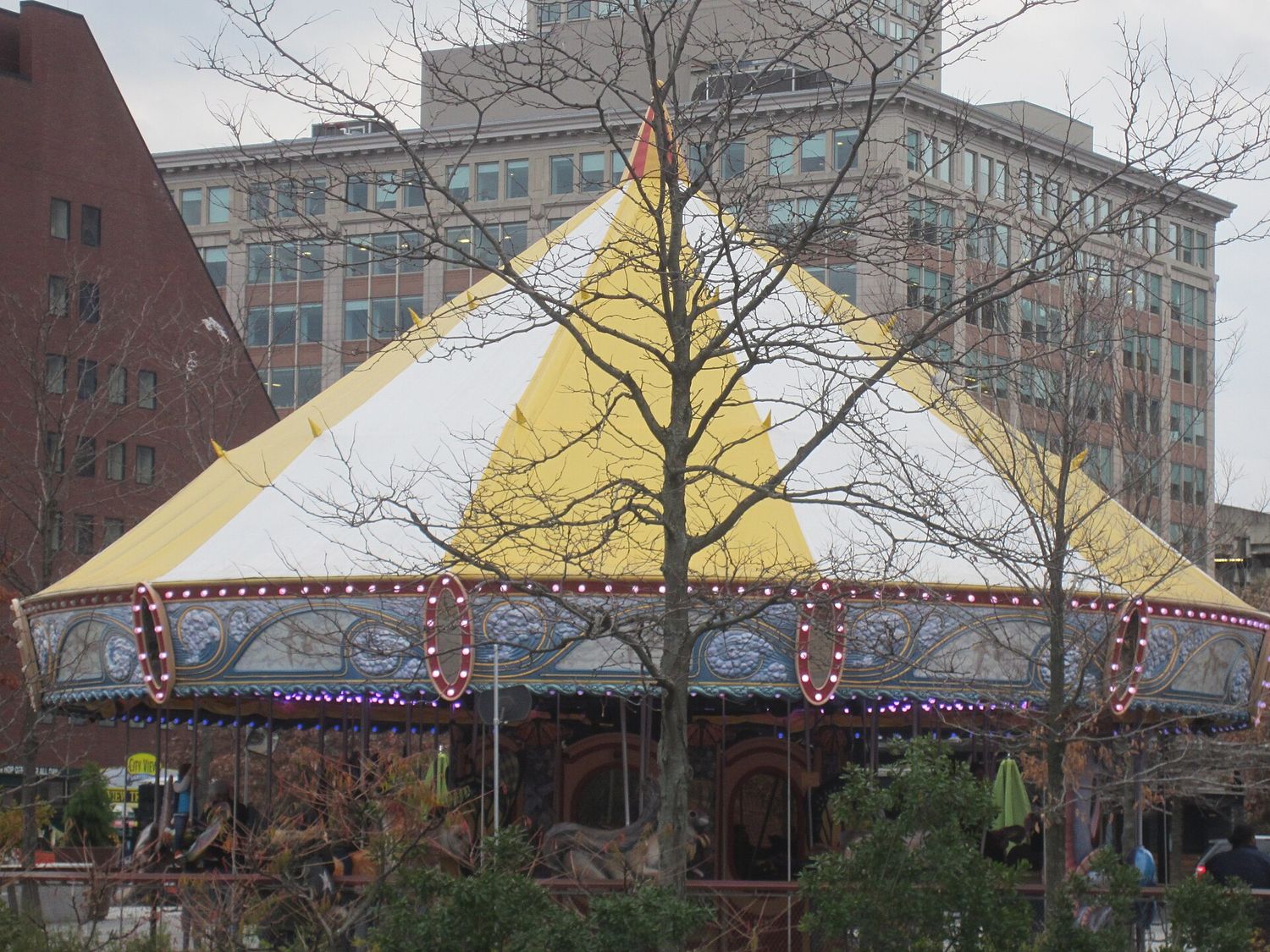
The mile-and-a-half ribbon of park that replaced the old elevated highway has three reliable photo spots. The Dewey Square mural, near South Station, is repainted every year; the 2026 work is The Midnight Ride, unveiled in June and made in partnership with Embrace and Everyone250 for the 250th-anniversary year. The Greenway Carousel, near the Aquarium end, has animals based on local wildlife and a candy-striped canopy; its hours change month by month, so check the Greenway website. And the Rings Fountain, where jets of water rise and fall in summer, is a good place for candid shots. Please do not photograph other people’s children in the fountain.
14. Old North Church from the Paul Revere Mall
In the North End, the brick-paved Paul Revere Mall, known locally as the Prado, runs from Hanover Street to the back of Old North Church, with Cyrus Dallin’s equestrian statue of Revere in the middle. Stand behind the statue and you can frame horse, rider and steeple in one shot, the most “Boston” photograph there is. The church itself, from 1723, is the oldest surviving church building in the city and is a stop on the Freedom Trail.
15. Hanover Street and the cannoli box
The obligatory North End food photo is a white box of cannoli from Mike’s Pastry or Modern Pastry, tied with string. Mike’s has the famous box and the long line; Modern fills its cannoli to order, which makes them better and less photogenic, since you eat them straight away. Either way, Hanover Street at night, with its lit restaurant fronts, is a better picture than the pastry.
16. Faneuil Hall’s grasshopper
On top of Faneuil Hall is a gilded copper grasshopper weathervane, one of the oldest in America and a Boston symbol since the 1740s. It is small and high up, and hard to photograph without a long lens. Frankly, the plaza below is more interesting for street photography than as a landmark shot. See our Faneuil Hall Marketplace guide for what is worth your time there.
Beyond downtown
17. Graffiti Alley, Cambridge
In Central Square, a short alley officially named Richard B. “Rico” Modica Way, beside 565–567 Massachusetts Avenue, is one of the only legal graffiti walls in Greater Boston. Artists have been painting it since around 2006, and the whole wall, about 16 feet high and 120 feet long, changes constantly, so no two visits give the same picture. It is right beside Central on the Red Line. Our Cambridge and Harvard guide covers the rest of the area.
18. Fenway Park
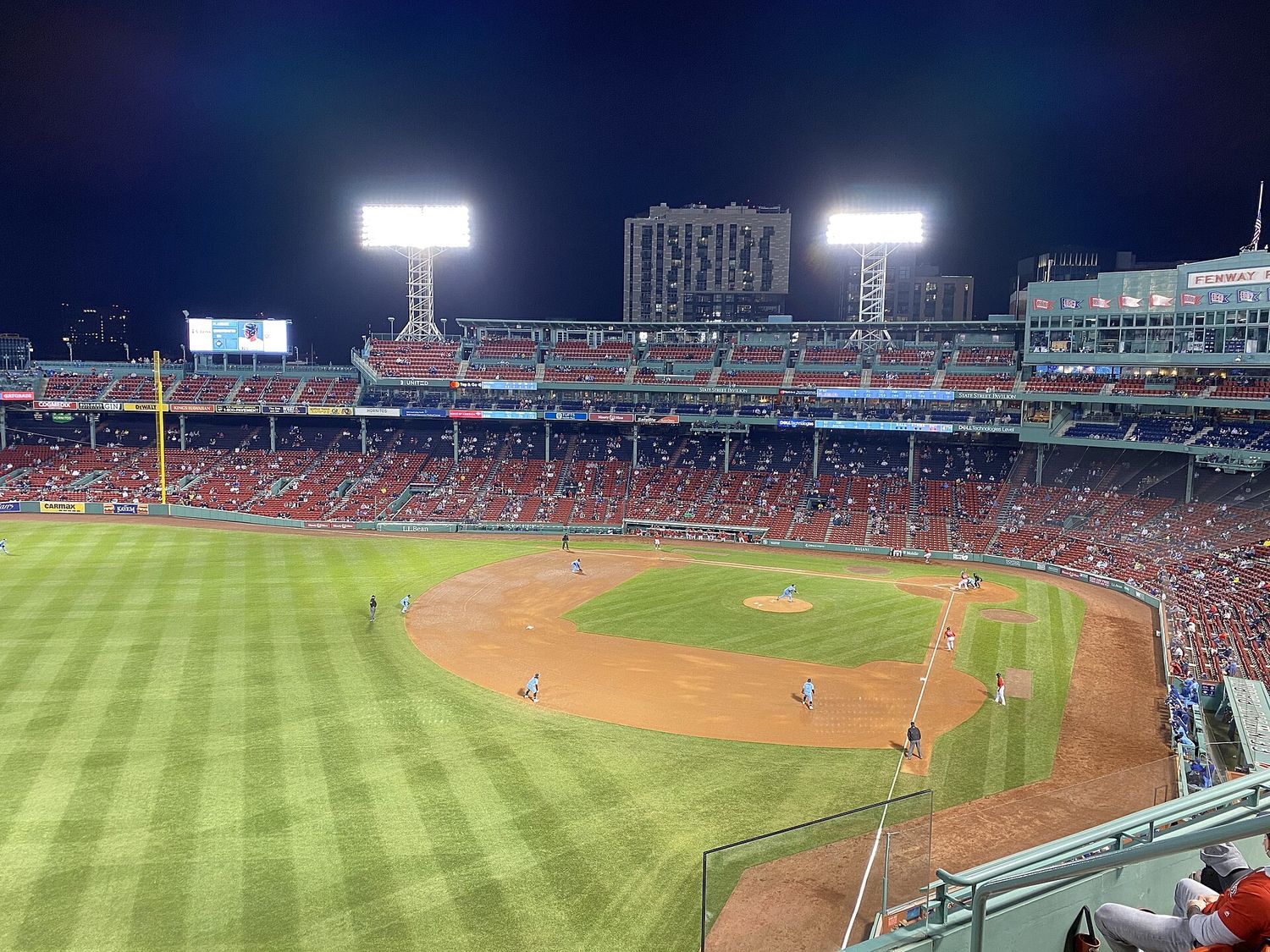
The oldest ballpark in the major leagues, opened in 1912, is the best-looking sports venue in the country, and its 37-foot Green Monster wall is instantly recognizable. On game days, Jersey Street outside the park is closed to traffic and is full of color. If you are not going to a game, the one-hour tour costs $30 for adults and $21 for children aged 3 to 12, and gets you inside with a camera when the stands are empty. Tours leave hourly from Gate D on Jersey Street, and the last one departs three hours before a game. Our Boston sports guide covers tickets.
19. Peters Hill, Arnold Arboretum
The highest point in the Arnold Arboretum gives you the downtown skyline rising above miles of trees, and in October the foreground is red and gold. It is free, open from sunrise to sunset and a walk from Forest Hills on the Orange Line.
20. The harbor from the Seaport
From the Harborwalk around Fan Pier and the Institute of Contemporary Art, you can shoot the downtown skyline across the water, with ferries and sailboats in the foreground. Sunset and blue hour are best. The ICA’s glass gallery, cantilevered out over the harbor, is itself a strong picture from outside.
A two-hour Boston photo walk
This route links the best of the list in a morning, about 2.5 miles, starting early to beat the crowds on Acorn Street.
- 7:30am, Acorn Street. Start at Charles/MGH on the Red Line and walk up Charles Street. You should have the lane almost to yourself.
- 7:50am, Louisburg Square and Mount Vernon Street. Two minutes away.
- 8:15am, the State House dome from the top of the Common, then down to the Public Garden.
- 8:30am, the Public Garden footbridge and the ducklings. The morning light is behind you looking west.
- 9am, Commonwealth Avenue Mall. Walk a few blocks west, then turn left toward Copley Square.
- 9:30am, the Boston Public Library. It opens to the public in the morning; check the time on bpl.org.
- 10:15am, Christian Science Plaza. A ten-minute walk down Huntington Avenue.
In the late afternoon, take the Red Line to Charles/MGH and walk out onto the Longfellow Bridge for golden hour. After dark, walk to the Zakim. Our guide to getting around Boston explains fares, and the MBTA site has live service updates.
When to shoot Boston
| Season | Best for |
|---|---|
| Spring (mid-April to May) | Magnolias on Commonwealth Avenue, tulips in the Public Garden, lilacs at the Arboretum |
| Summer (June to August) | Sailboats on the Charles, the Swan Boats, long golden evenings |
| Fall (mid-to-late October) | Peak color on Beacon Hill, the Public Garden and the Emerald Necklace; also the busiest time |
| Winter (December to March) | Snow on Beacon Hill, the Common’s Christmas tree, skaters on the Frog Pond; the quietest streets of the year |
City foliage peaks later than the mountains, usually mid-to-late October. A fresh snowfall on Beacon Hill is the most beautiful Boston gets, and the gas lamps stay lit through the day. Our best time to visit Boston guide has the month-by-month picture.
Three free viewpoints most visitors miss
If you want the skyline from above without paying for View Boston, these three are free, though each has a catch.
- Custom House Tower. Marriott’s Custom House, in the 1915 clock tower downtown, has a 26th-floor open-air balcony that is free to visit, but you need a reservation and there is usually only one visit a day. Sources disagree on the days, so call the front desk on 617-310-6300 before you plan around it. The view straight down onto Quincy Market and out to the harbor is one of the best in the city.
- Independence Wharf. At 470 Atlantic Avenue, a free 14th-floor observation deck looks out over the harbor, usually during business hours; bring photo ID for the lobby desk. It is lower than the towers, which puts boats and wharves at a better scale for photographs.
- Mount Auburn Cemetery’s Washington Tower. In Cambridge, a stone tower of about 100 steps rises above the trees of America’s first garden cemetery, founded in 1831, with a 360-degree view back to the Boston skyline. It is free and opens seasonally within cemetery hours; check mountauburn.org before you go. In October the foreground is a sea of color.
Light, lenses and phones: shooting tips for Boston
Boston is a low, dense city of brick and water, and a few habits make a real difference to the pictures you bring home.
- Chase the low sun. Brick glows in the first and last hour of daylight and looks flat and orange at noon. The narrow streets of Beacon Hill and the North End are in shade for much of the day, so aim for mornings there, when the light comes down the east–west streets.
- Use the water. The Charles, the harbor, the Public Garden lagoon and the reflecting pool all double the skyline on a calm day. Early mornings are usually stillest.
- Go wide in the lanes, long on the skyline. A phone’s ultra-wide lens suits Acorn Street and the library; a zoom works better for the gold dome, the grasshopper weathervane and the Zakim from across the river.
- Bring a small light-free support for night shots. A beanbag or a wall ledge will steady a phone for the Zakim or Hanover Street after dark, and avoids the tripod problem on narrow sidewalks.
- Wet days are not wasted. Rain on brick and cobbles, reflected lamps and umbrellas on the Common make some of the most atmospheric pictures in Boston. Our guide to things to do in Boston when it rains has somewhere dry to go afterwards.
Photo etiquette in Boston
- Beacon Hill is a neighborhood, not a set. Keep off the steps, do not touch the doors or window boxes, and never block the sidewalk on streets this narrow.
- No tripods on Acorn Street, and be careful with them anywhere on the narrow sidewalks of Beacon Hill and the North End.
- Libraries and churches are working buildings. No flash, keep quiet, and do not photograph people reading or praying.
- Drones need permission. Much of central Boston sits under Logan Airport’s controlled airspace, and city parks have their own rules. If you do not already know the rules, do not fly.
- Children are not scenery. In fountains, on the ducklings or on the carousel, take the picture of your own family, not someone else’s.
Overrated, and what to shoot instead
- Acorn Street at midday on a weekend. Shoot Mount Vernon Street instead, or come back at 7:30am.
- Quincy Market’s interior. It is a crowded food court under fluorescent light. Photograph the building from the plaza.
- View Boston on a cloudy day. Save your money and walk onto the Longfellow Bridge for free.
- The purple windows on Beacon Street as a destination in themselves. Worth a glance if you are passing.
For quieter places that most visitors never photograph, see our hidden gems in Boston guide.
Frequently asked questions
What is the most photographed street in Boston?
Acorn Street on Beacon Hill, a narrow cobbled lane of nineteenth-century brick row houses. It is a residential private way, so go early, be quick and quiet, and do not block the lane or sit on the steps.
Where is the best free view of the Boston skyline?
The Longfellow Bridge at golden hour, looking west across the Charles to Back Bay. Other good free options are the Esplanade, Peters Hill in the Arnold Arboretum, and the Harborwalk in the Seaport.
What time should I photograph Acorn Street?
Before 8am, ideally on a weekday. By mid-morning on weekends, and especially in October, there is often a line of people waiting for the same shot.
Can you take photos inside the Boston Public Library?
Respectful, flash-free photography of the public spaces, including Bates Hall and the courtyard, is generally fine. Do not photograph people who are reading or working, and keep your voice down in the reading rooms.
Where can I photograph the Zakim Bridge at night?
From the riverside parks on the Charlestown and Cambridge banks of the Charles near the bridge, a short walk from North Station or Community College on the Orange Line. The bridge’s lighting sometimes changes for events and teams.
Is View Boston worth it for photos?
On a clear day at sunset, yes: the 51st-floor Cloud Terrace gives you an open-air, glass-free view of the whole city. On a hazy or cloudy day it is not worth the ticket, from $32 plus a $3 booking fee.