Boston is a small city that behaves like a big one. The historic core, which is what most visitors come for, runs about three miles end to end. You can walk from the Public Garden to the North End in half an hour without hurrying, and the walk itself is one of the better things to do in the city. That geography shapes every decision you make here. You are not planning around traffic or long transit hops. You are planning around weather, around which museums close on Tuesdays, and around the fact that four centuries of history are stacked into an area roughly the size of a large university campus.
This guide is a working list rather than a wish list. Everything below is something you can actually do, with what it costs, roughly how long it takes, and where it sits on the map. Where something is overrated, it says so. Prices and hours are what the attractions were charging in early September 2026; museums adjust both more often than they used to, so treat the numbers as a planning baseline and confirm on the day you book.
First, get your bearings
Almost everything visitors want is in a rough arc: Back Bay and the Fenway to the west, Beacon Hill and the Common in the middle, Downtown and the waterfront to the east, the North End and Charlestown across the top, and the Seaport across the channel to the south. Cambridge sits over the Charles River, ten minutes on the Red Line.
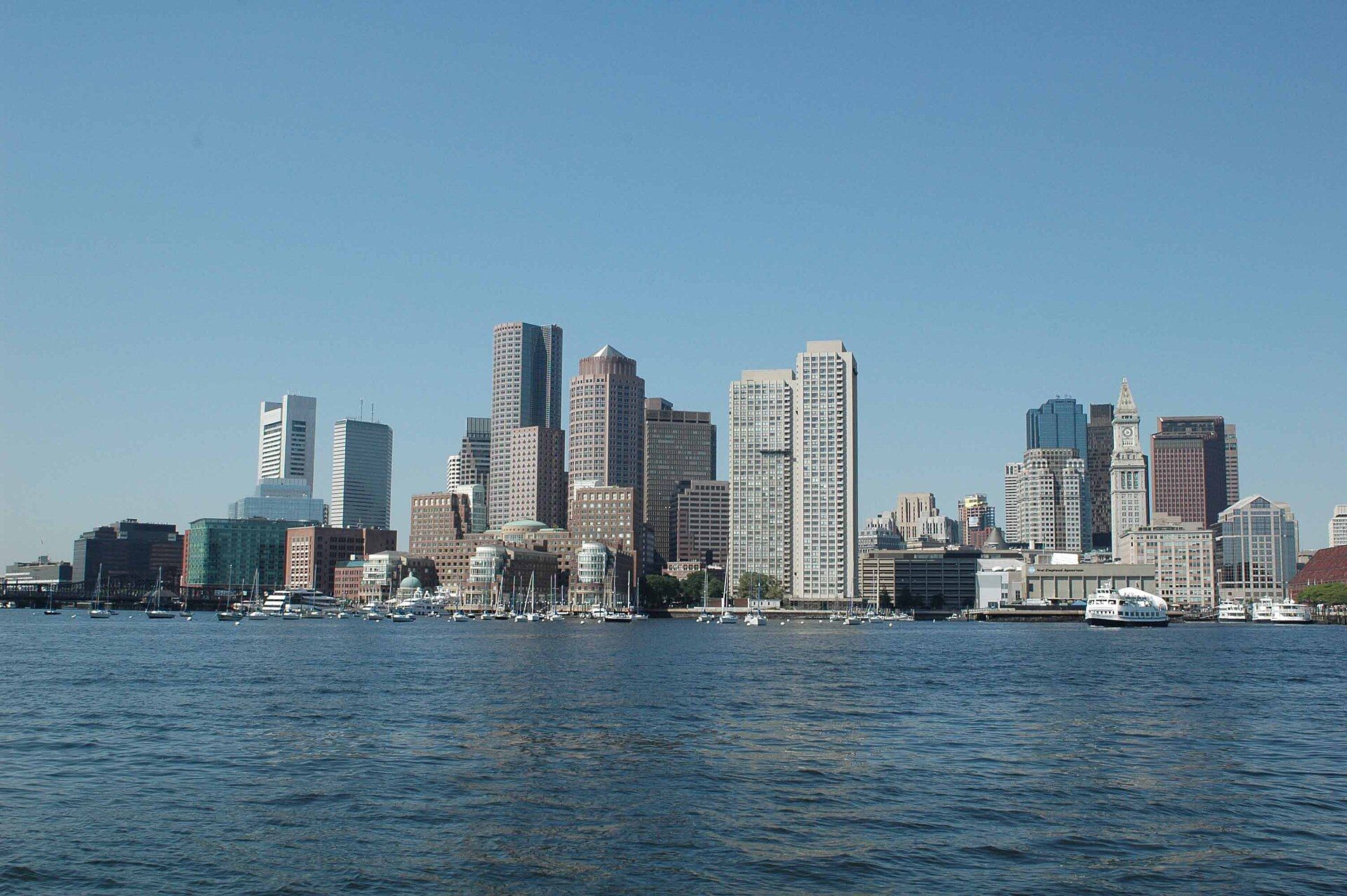
The subway, universally called the T, has four colored lines that all cross downtown. A single ride is $2.40 whichever way you pay: tap a contactless card or phone, use a CharlieCard, or pay cash on a bus. Local buses are $1.70. From 1 September 2026 the MBTA is piloting unlimited transfers within a two-hour window on the same payment method, so a bus-then-subway trip now costs you the higher of the two fares rather than both. A one-day pass is $11 and a seven-day pass is $22.50, which only makes sense if you are riding four or more times a day. Most visitors do not. You will walk more than you expect.
Two practical notes that catch people out. First, the T is not a 24-hour system; last trains leave downtown between roughly 12.30am and 1am. Second, Boston’s street layout is genuinely irrational in the old districts, because the streets predate the grid by about two hundred years. Download an offline map. Do not trust your sense of direction on Beacon Hill.
The ten things that earn the hype
Every city has attractions that survive contact with reality and attractions that don’t. These are the ten that do.
1. Walk the Freedom Trail
The Freedom Trail is a 2.5-mile line of red brick and paint set into the pavement, connecting sixteen sites from Boston Common to the Bunker Hill Monument in Charlestown. It sounds like a gimmick. It works because the sites are genuinely close together and genuinely old, and because following a line through a working city means you end up in neighborhoods you would never have found.
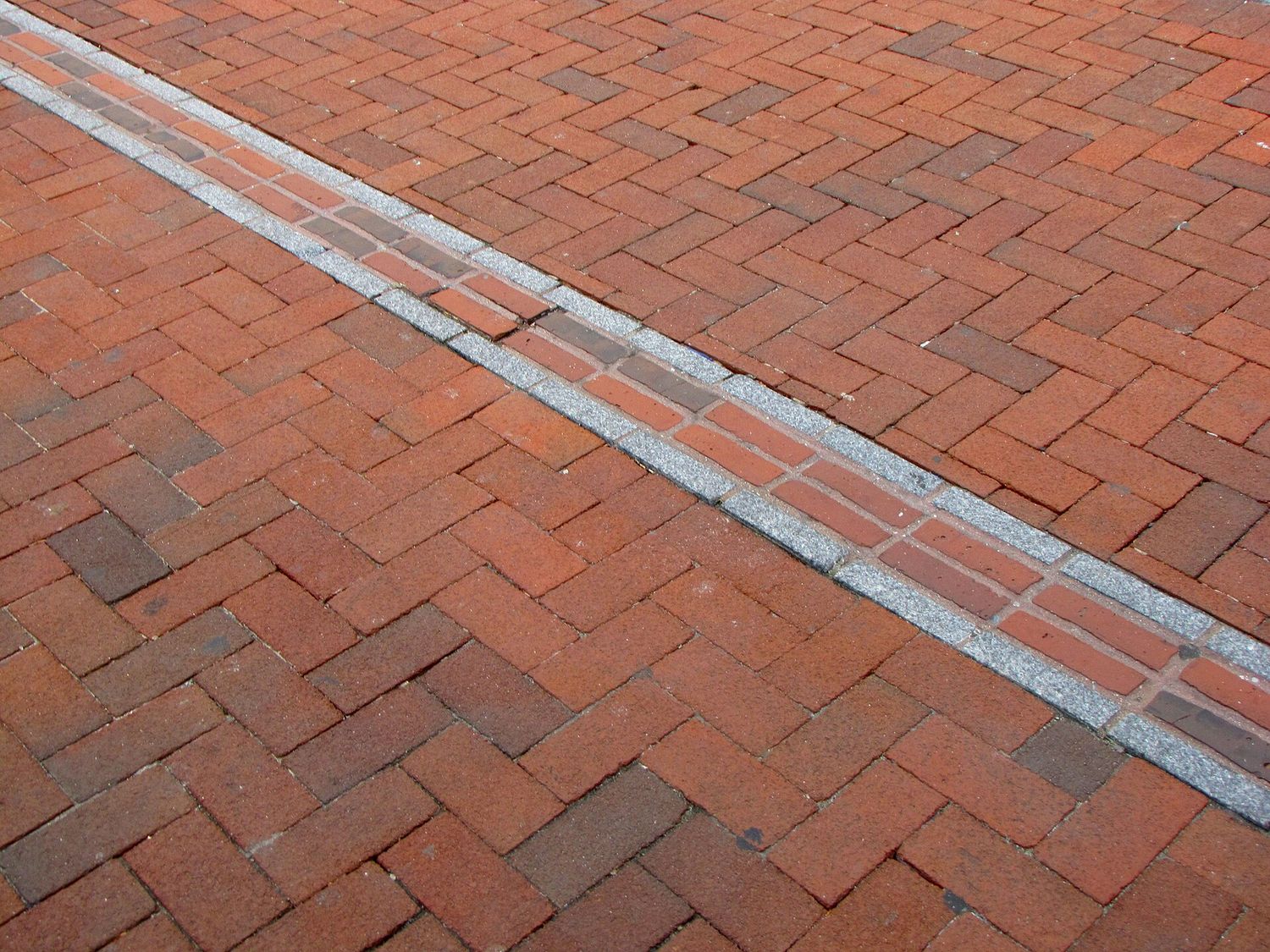
The trail itself is free and always open. Walking it end to end without stopping takes about 90 minutes. Walking it properly, with three or four site visits and lunch in the North End, takes most of a day. The Freedom Trail Foundation’s Walk Into History tour covers eleven of the sixteen sites in 90 minutes with a guide in period dress, and costs $17 for adults, $15 for seniors and students, $8 for children aged six to twelve, and nothing for under-sixes. It leaves from Boston Common at 10am, 11am, noon, 1pm and 2pm daily.
If you only have time for one paid site along the way, make it the Old State House. If you have time for two, add the Paul Revere House.
2. Boston Common and the Public Garden
The Common has been public land since 1634, which makes it the oldest public park in the country. It was a cow pasture, a militia drill field and a British encampment before it became a place to eat lunch. The Public Garden next door, separated by Charles Street, is younger and much prettier: the first public botanical garden in America, laid out in 1837, with a lagoon, a suspension bridge that is deliberately over-engineered, and the Make Way for Ducklings bronzes that every visiting child locates within about four minutes.
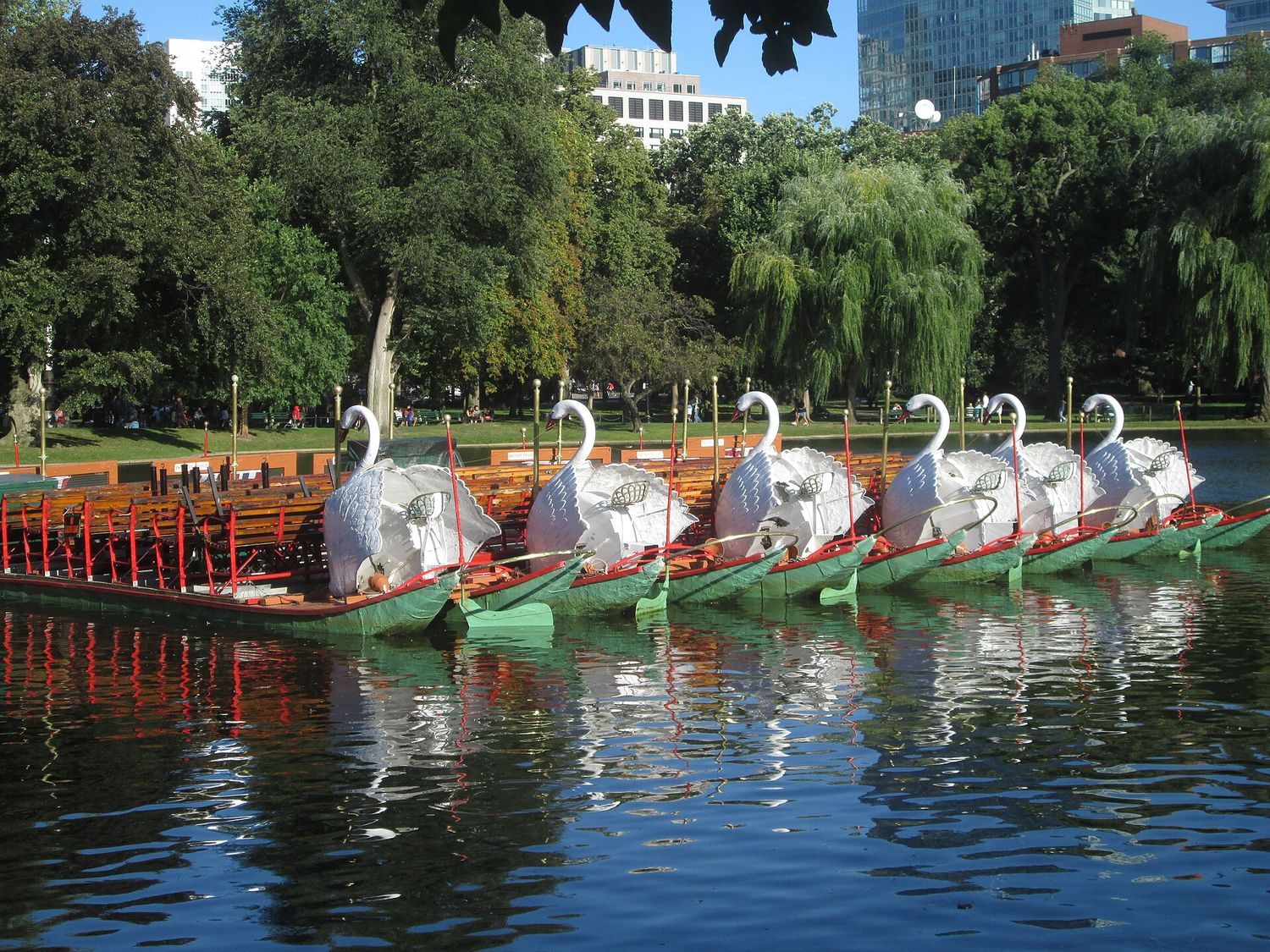
The Swan Boats are the Public Garden’s one paid attraction and one of the better bargains in American tourism: $4.75 for adults, $4.25 for seniors, $3.25 for children aged two to fifteen, for a slow fifteen-minute pedal-powered loop of the lagoon. The 2026 season ran from 18 April to 7 September, so if you are here in fall or winter you have missed them; they come back in mid-April. There is no booking system beyond the physical line at the dock.
In winter the Common’s Frog Pond becomes an outdoor skating rink, usually from mid-November through March. Admission is $10 for anyone 58 inches or taller, with skate hire at $15 for adults and $10 for children.
3. Fenway Park
Fenway opened in 1912 and has been patched, extended and refused-to-be-replaced ever since. It is the oldest ballpark in Major League Baseball and it feels it, in the good sense: the seats are small, the sightlines are eccentric, and the left field wall stands 37 feet high and close enough to home plate to change the way the game is played. That wall is the Green Monster, and you can buy a seat on top of it.
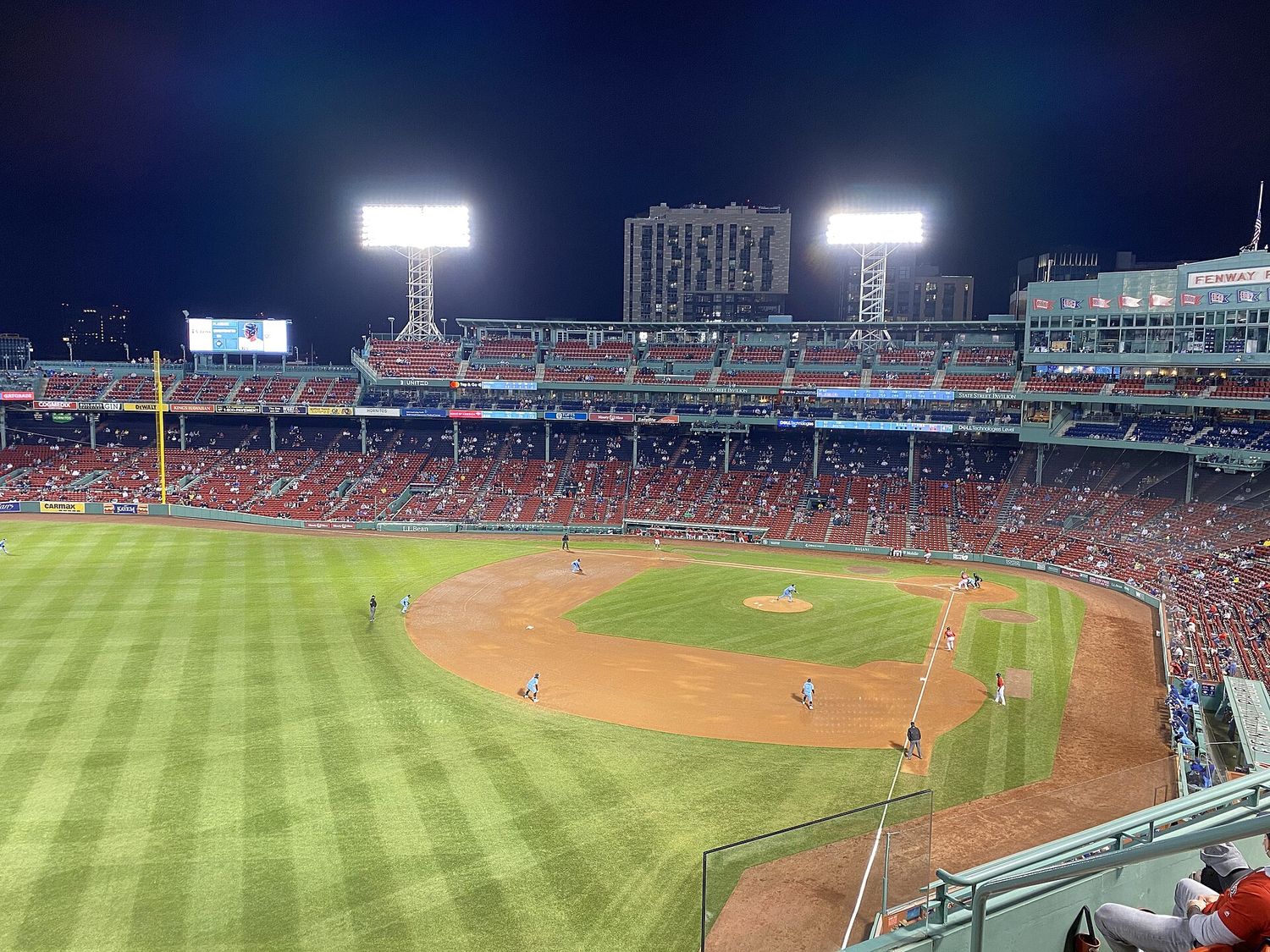
If the Red Sox are at home, go to a game. Ticket prices vary wildly; weeknight games against unglamorous opponents can be cheap, and standing room behind the plate is the best value in the building. If they aren’t at home, take the tour. The standard hour-long tour runs year-round and costs $30 for adults and $21 for children aged three to twelve, departing hourly from Gate D on Jersey Street. Hours are 9am to 5pm from April to October and 10am to 5pm from November to March; on game days the last tour leaves three hours before first pitch, so check the schedule before you turn up.
You do not need to care about baseball to enjoy either. Enough of the appeal is architectural and social.
4. The North End
Boston’s Italian quarter is about a third of a square mile of narrow streets north of the Greenway, and it is where the Freedom Trail stops being a history lesson and starts being lunch. Hanover Street is the spine. The cannoli argument, Mike’s Pastry against Modern Pastry, is a genuine local dispute that visitors are expected to have an opinion about. Modern fills its shells to order, which is the correct answer.
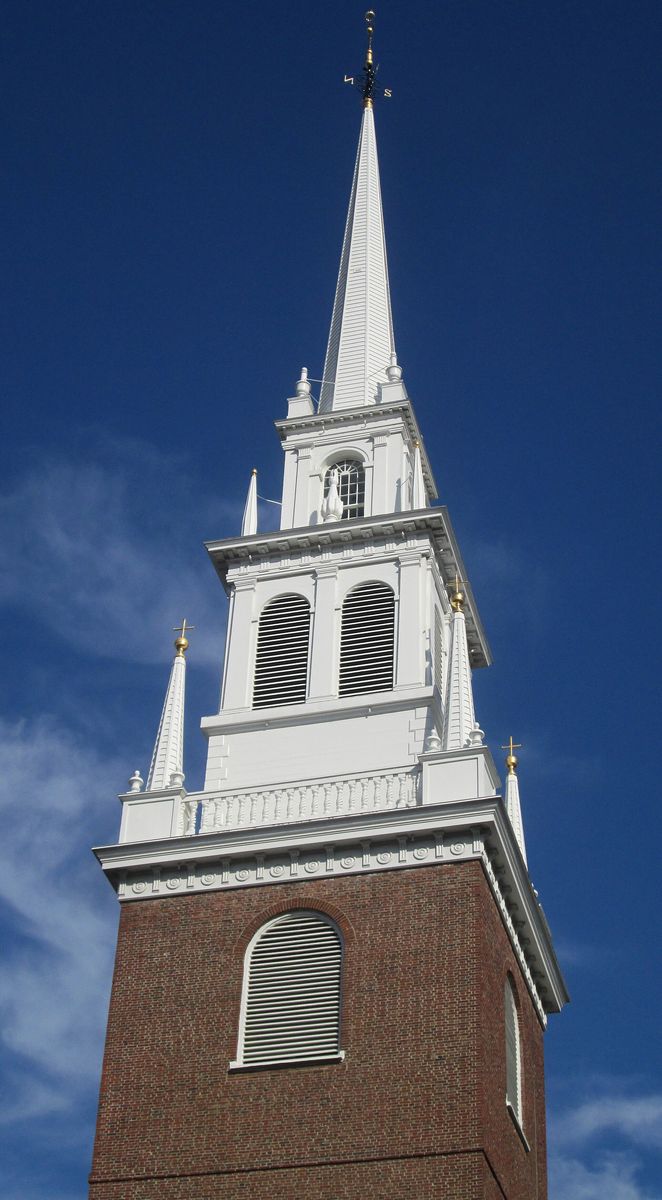
Two Freedom Trail sites sit here. The Paul Revere House, built around 1680, is the oldest surviving house in downtown Boston and costs $6 for adults, $5.50 for students and $1 for children aged five to seventeen; it is small, and forty minutes covers it. Old North Church’s Discovery Pass is $10 for adults and $5 for young people (checked September 2026) and now includes the crypt, with an audio guide; the 25-minute bell chamber tour brings it to $15, or $10 for young people. The bell chamber tour is the one worth paying extra for, if you can manage two steep flights of stairs.
Book dinner. The good restaurants here are small and they fill up, particularly at weekends.
5. The Isabella Stewart Gardner Museum
Isabella Stewart Gardner built a Venetian palazzo in the Fenway marshes, filled it with Titians, Rembrandts, Sargents and Botticellis, and left instructions that nothing was ever to be moved. The result is a museum that behaves like a house: rooms arranged by her eye rather than by chronology, no explanatory panels on the walls, and a four-story courtyard garden in the middle that is replanted nine times a year.
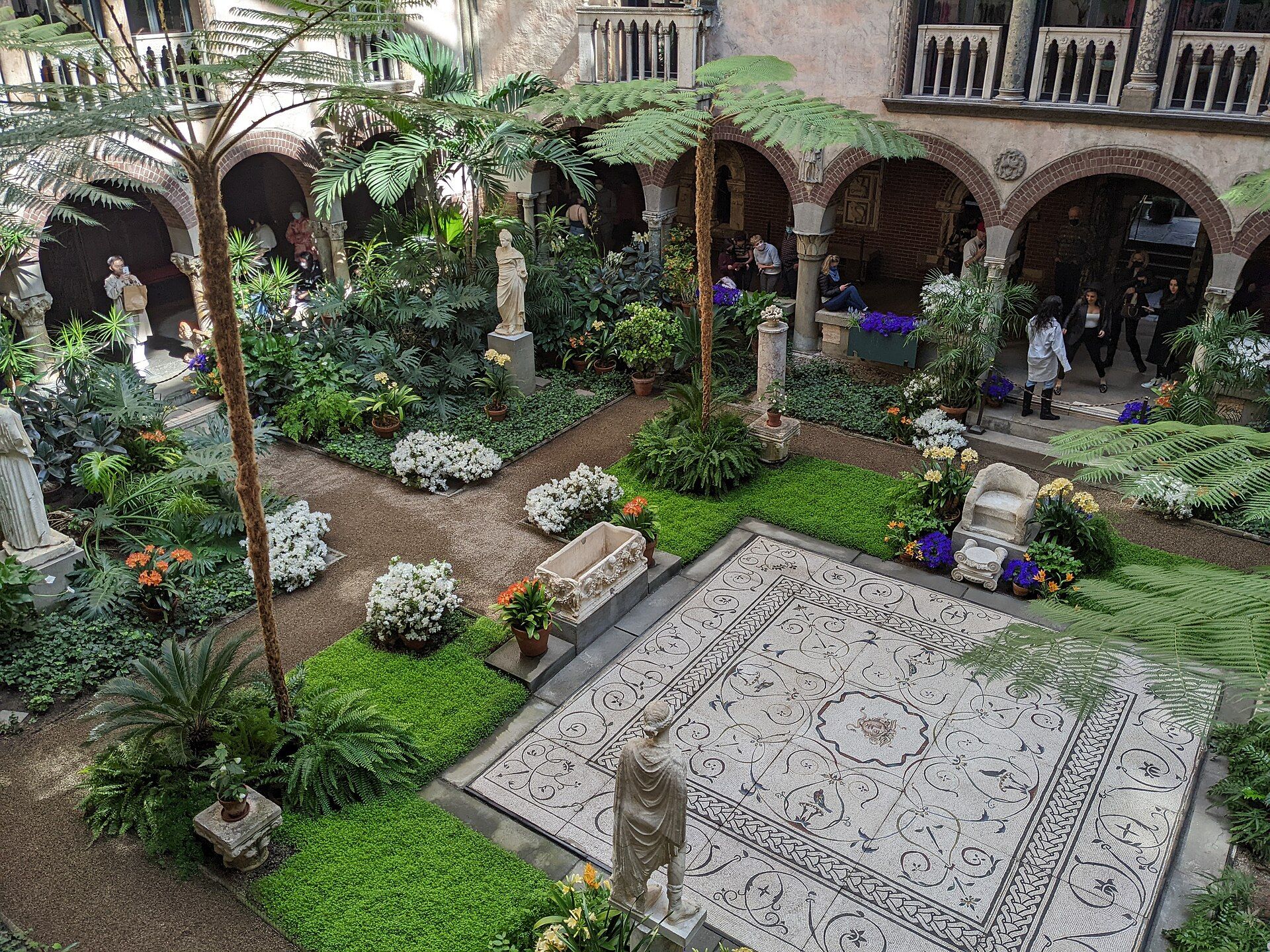
It is also the site of the largest unsolved art theft in history. In March 1990 two men dressed as police officers took thirteen works, including a Vermeer and three Rembrandts. Because the will forbids rearrangement, the empty frames still hang where the paintings were. Standing in front of them is a strange and genuinely affecting experience.
Admission is $25 for adults, $22 for over-65s, $15 for students and free for under-18s. It closes on Tuesdays. Thursday evenings from 5pm to 9pm are free for everyone, and anyone named Isabella gets free admission for life with 24 hours’ notice and ID.
6. USS Constitution and the Charlestown Navy Yard
“Old Ironsides” was launched in 1797, fought in the War of 1812, and is still a commissioned United States Navy warship with an active-duty crew. Boarding her is free. You will need photo ID if you are over 18, and the people who show you around are serving sailors rather than actors, which changes the tone considerably.
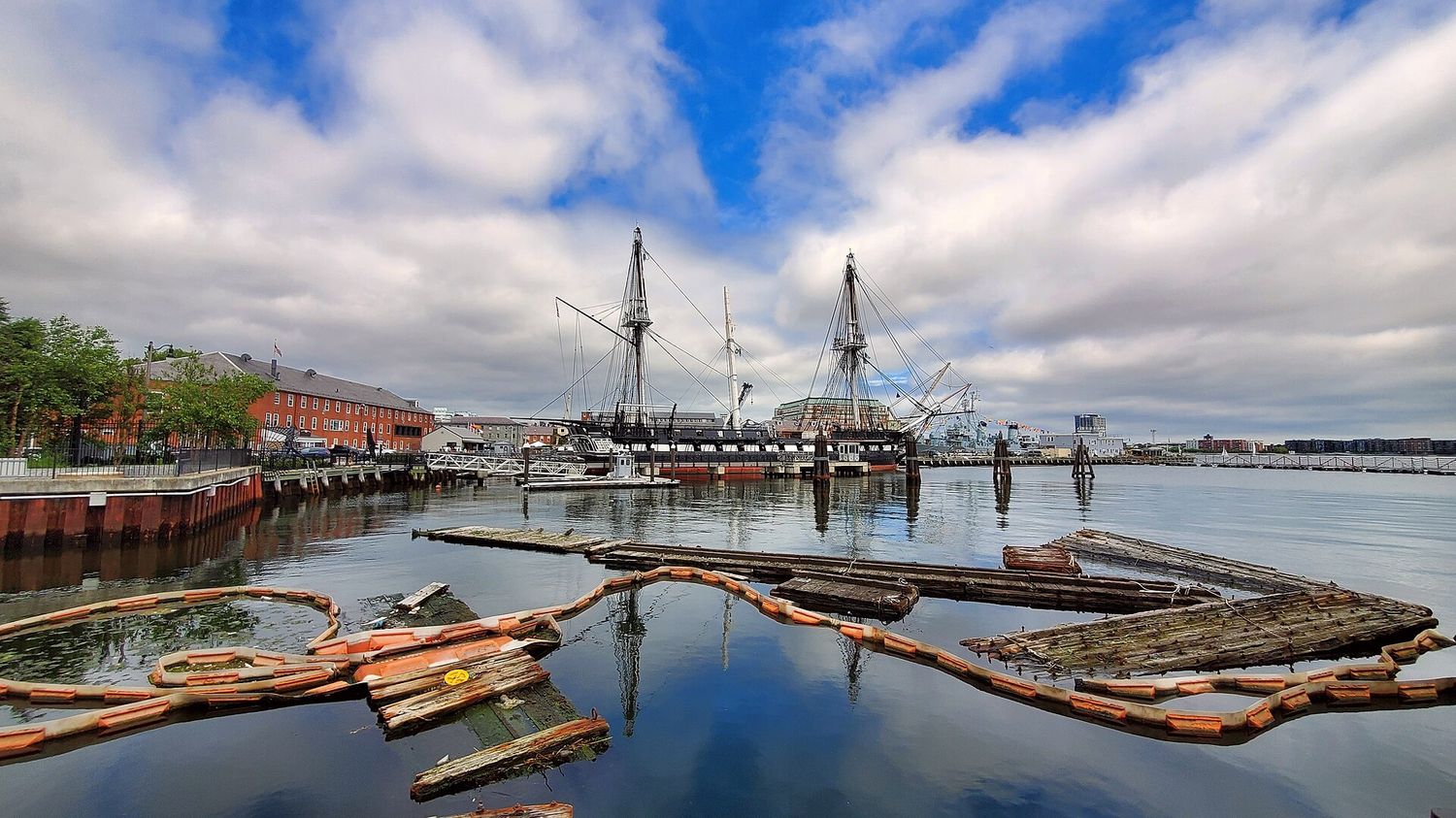
The USS Constitution Museum next door is also free, on a suggested-donation basis of $10 to $15 for adults and $5 to $10 for children, and it is unusually good on the practical texture of life aboard: what the food was, how the gun crews worked, what the pay was. Give the pair two hours.
Getting there is half the pleasure. The MBTA ferry from Long Wharf to the Navy Yard takes about ten minutes for a standard fare, and the view back at the city is the one on the postcards.
7. The Boston Public Library, McKim Building
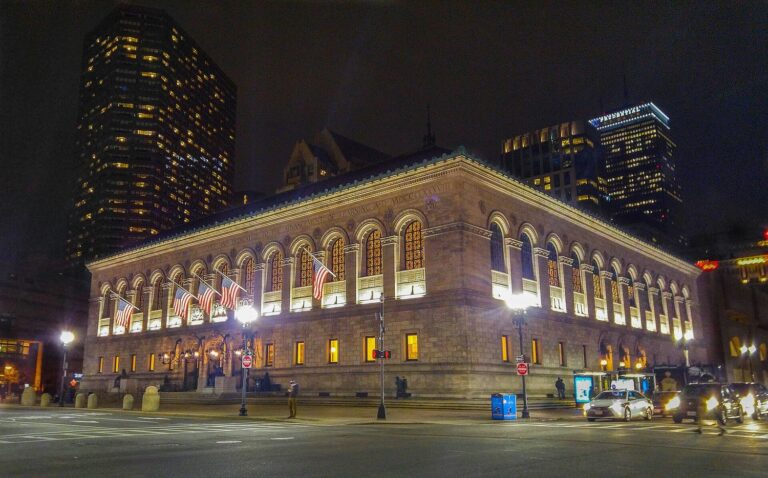
The 1895 McKim Building on Copley Square was the first large free municipal library in America and it was built to look like it mattered: a marble staircase flanked by Puvis de Chavannes murals, a Sargent cycle on the third floor, an Italianate courtyard, and Bates Hall, a 218-foot barrel-vaulted reading room with green-shaded lamps down both sides.
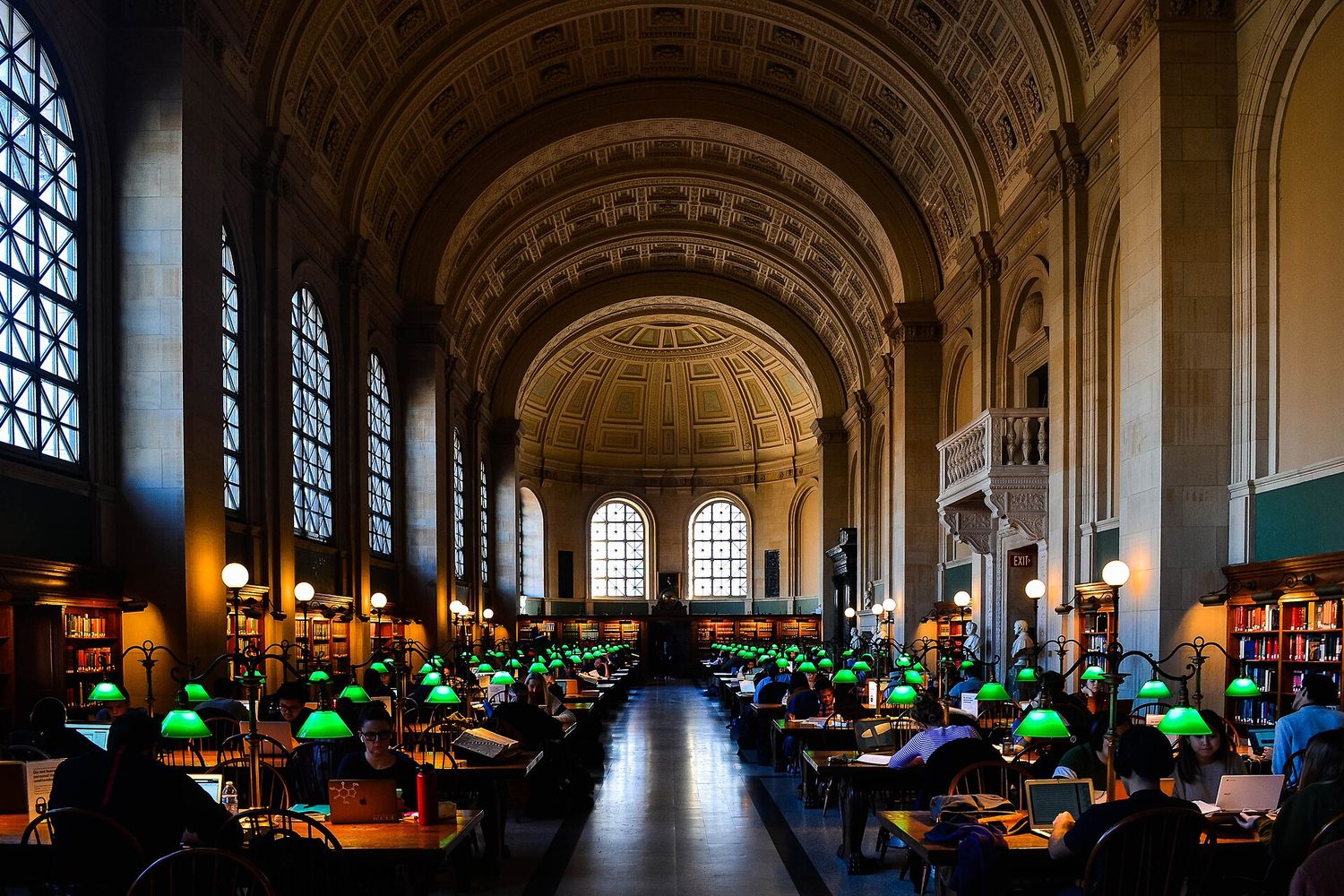
All of it is free and open to the public. Free art and architecture tours run most days; check the schedule at the Dartmouth Street entrance. Allow an hour, or considerably more if it is raining. This is the single best wet-weather building in Boston.
8. Beacon Hill
Beacon Hill is what people picture when they picture Boston: gas lamps, brick row houses, purple window panes on Beacon Street where a bad batch of nineteenth-century glass turned violet in the sun. Acorn Street is the most photographed lane in the city and, on a summer morning, has the line to prove it. Go early or go in the rain.
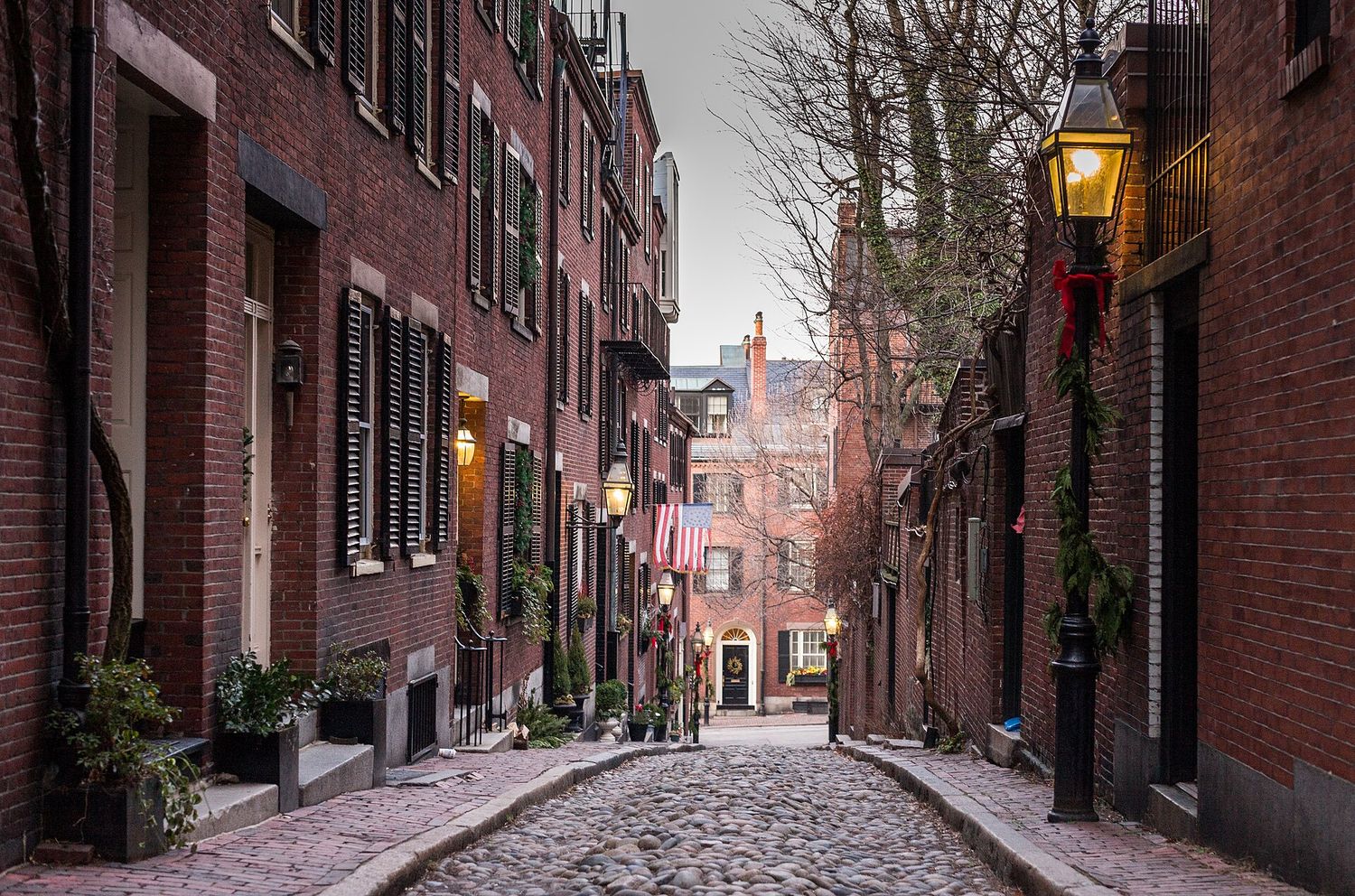
The Hill is also where the Black Heritage Trail runs, a 1.6-mile route through the free Black community that made this neighborhood the center of American abolitionism. It takes in the African Meeting House, the oldest surviving Black church building in the country, and the Shaw Memorial opposite the State House. National Park Service rangers lead it free in season. It is the most substantial thing on this list that most visitors walk straight past.
9. Get out on the water
Boston is a harbor city that spent most of the twentieth century ignoring the fact. That has been comprehensively fixed. The Harbor Islands, a national and state park of thirty-four islands, are twenty minutes from Long Wharf by ferry: Georges Island has a Civil War-era fort you can explore with a torch, and Spectacle Island has hills built from Big Dig spoil and the best skyline view in the city. The 2026 ferry season ran from mid-May to Indigenous Peoples’ Day weekend in October, with round trips at $25 for adults, $23 for seniors and $18 for children.
Whale watches run from the New England Aquarium’s dock from roughly April to November and go out to Stellwagen Bank, about thirty miles offshore. Sightings are not guaranteed but the operators’ success rates are high; the trip takes three to four hours and the water is colder than you think, even in August.
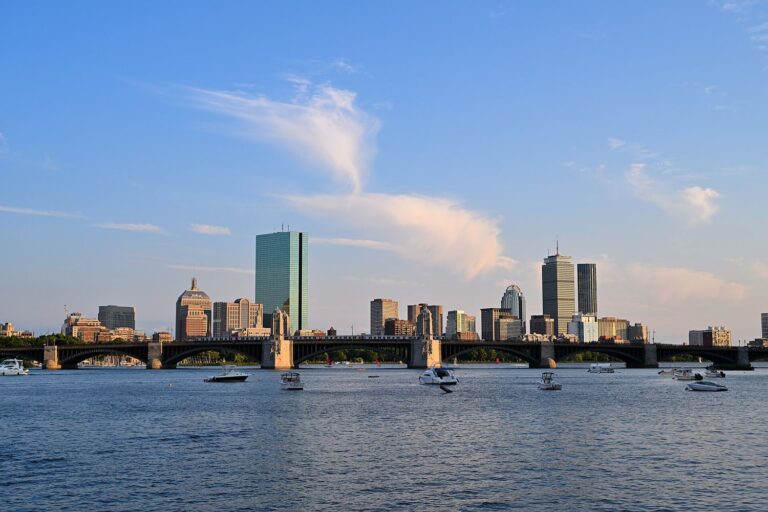
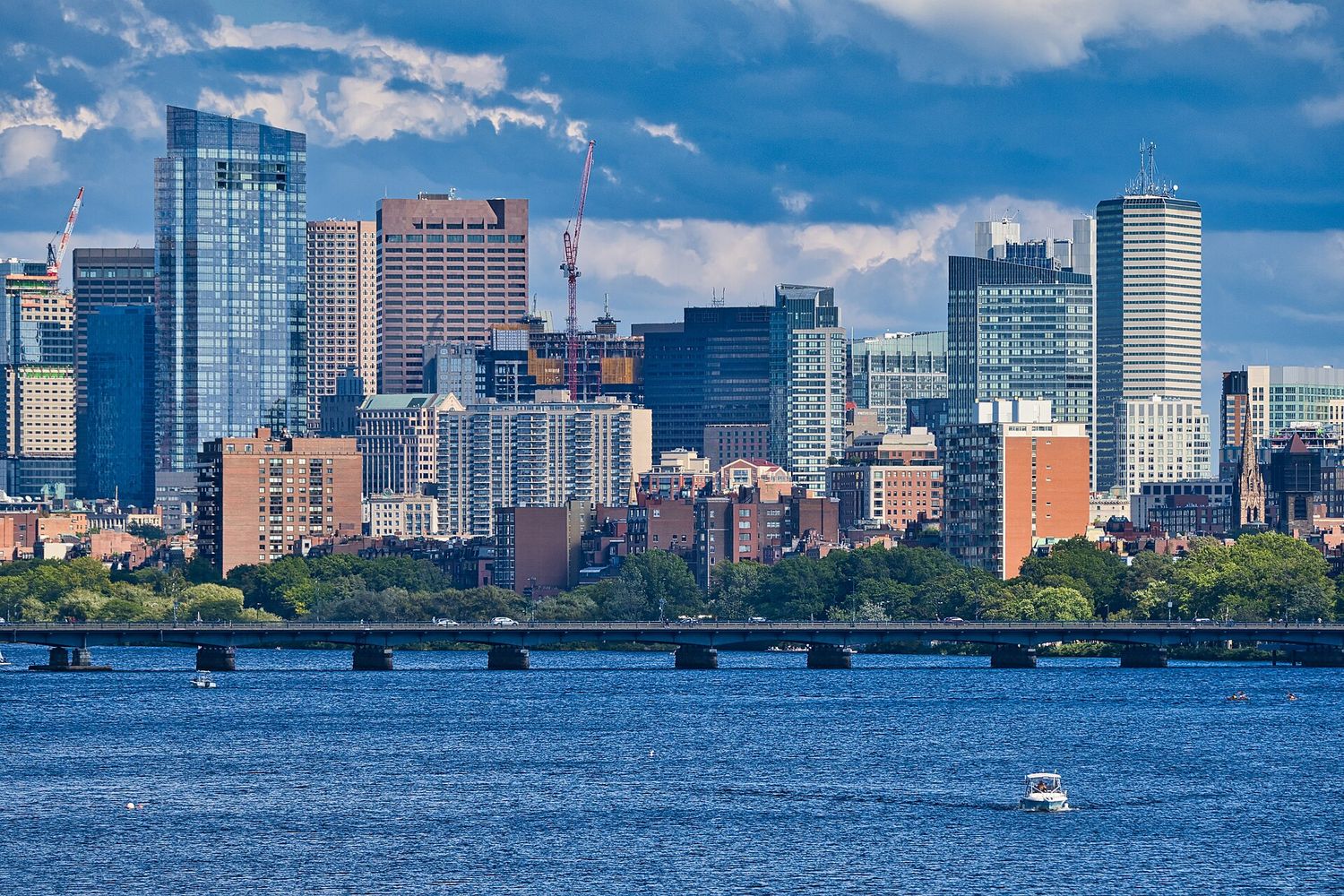
If you want the water without the commitment, the Charles River Esplanade runs three miles along the city side of the river with skyline views the whole way, and it is free.
10. A view from height
Boston’s skyline is low by American standards and that is precisely why the views work: from up high you can see the shape of the place, the harbor, the river, the islands, the way the old street pattern still shows through.
View Boston occupies the top three floors of the Prudential Tower, 52 floors up, and is open daily from 10am to 10pm. General admission is $34 for adults plus a $3 booking fee, and a running promotion lets one adult ticket bring in up to four under-13s free. The Sips and Sights ticket at $48 includes a drink at the rooftop bar. It is expensive for what it is, but the outdoor deck and the sunset slot are worth the money if the forecast is clear. Do not book it on a gray day.
The free alternative is older and harder work: the Bunker Hill Monument in Charlestown has 294 steps, no elevator, and a 360-degree view at the top that costs nothing at all.
Forty more, sorted by what you’re in the mood for
Revolutionary history beyond the Freedom Trail
The 250th anniversary of American independence has made 2026 an unusually good year to be interested in this. Programming runs through 31 December 2026 and the wider commemorative cycle continues to 2033, so expect reenactments, temporary exhibitions and special openings throughout.
- Old State House – the 1713 colonial seat of government, with the balcony from which the Declaration was first read in Boston and the Boston Massacre site marked in the cobbles outside. $18 adult, $16 senior, $10 youth, combined with Old South Meeting House.
- Old South Meeting House – where five thousand people met on 16 December 1773 before walking down to the harbor and throwing the tea in. Included in the Old State House ticket.
- The Boston 250 Pass – $33 gets adult entry to five sites: Paul Revere House, Old State House, Old North Church, Old South Meeting House and King’s Chapel. Bought separately the five cost $39 (checked September 2026), so it saves about $6 if you use them all, and it breaks even once you have done Old North, the Old State House and Old South, plus one more.
- Boston Tea Party Ships and Museum – floating reproductions in Fort Point Channel, costumed interpreters, and yes, you throw a crate overboard. $35 to $39 for adults, $26 for children aged three to twelve, timed entry. Divisive: children love it, some adults find it broad.
- Granary Burying Ground – Samuel Adams, John Hancock, Paul Revere, the Boston Massacre victims and Mother Goose, all in a small yard on Tremont Street. Free.
- King’s Chapel bell and bone crypt tour – the crypt below the 1754 chapel holds around a thousand burials. Small, atmospheric, ticketed separately.
- Bunker Hill Monument and Museum – the 1775 battle, the 221-foot obelisk, the free museum across the street. Free.
- Minute Man National Historical Park – Lexington and Concord, where the shooting started, about 40 minutes out by car or commuter rail. A half-day at minimum.
Museums
- Museum of Fine Arts – one of the great encyclopaedic collections, particularly strong on Egyptian art, American painting and Japanese prints. $30 adult, $14 for ages 7 to 17, free under 7. Closed Tuesdays; open until 10pm Thursday and Friday, which is the civilised time to go.
- Museum of Science – genuinely excellent for children and better than it needs to be for adults. Around $33 adult, $29 senior, $28 child, open daily 9am to 5pm, with the Planetarium and Omni theater at about $6 each on top.
- New England Aquarium – built around a four-story Giant Ocean Tank you spiral down around. $39.95 adult, $37.95 for over-60s, $30.95 for ages 3 to 11. New England residents get $5 off outside peak dates. Weekdays 9am to 5pm, weekends to 6pm.
- Institute of Contemporary Art – a cantilevered box over the water in the Seaport. $20 adult, $17 senior, $15 student, free for everyone 18 and under, and free for all on Thursday evenings from 5pm to 9pm. Closed Mondays.
- JFK Presidential Library and Museum – I. M. Pei’s building on Columbia Point, with the harbor on three sides. Strong on the 1960 campaign and the Cuban missile crisis.
- Harvard Art Museums – three collections under one Renzo Piano roof, free to everyone since 2023. Tuesday to Sunday, 10am to 5pm.
- Harvard Museum of Natural History – go for the Glass Flowers, four thousand botanical models made in glass by a father and son in Dresden over fifty years. There is nothing else like them anywhere.
- MIT Museum – robotics, holography and artificial intelligence, in Kendall Square. Small, sharp, worth an hour.
- Museum of African American History – the African Meeting House and Abiel Smith School on Beacon Hill, and the institutional home of the Black Heritage Trail.
- Mapparium – a three-story stained-glass globe you walk through on a bridge, at the Mary Baker Eddy Library. The acoustics are the point. Cheap and very odd.
Parks, gardens and long walks
- The Emerald Necklace – Frederick Law Olmsted’s 1,100-acre chain of parks running seven miles from the Common to Franklin Park. You can walk the whole thing in a long day.
- Arnold Arboretum – 281 acres of Harvard’s tree collection in Jamaica Plain. Free, open dawn to dusk, spectacular in the second week of May and again in mid-October.
- Charles River Esplanade – three miles of riverside path, the Hatch Shell, and free outdoor concerts in summer.
- Boston Harborwalk – 43 miles of continuous public waterfront path, from Charlestown around to Dorchester. The Fort Point and Seaport stretches are the most interesting.
- Castle Island and Pleasure Bay – a fort, a beach, a loop causeway and a legendary hot dog stand, in South Boston. Where locals go.
- Rose Kennedy Greenway – the mile and a half of parkland that replaced the elevated expressway, with fountains, a carousel and rotating public art.
- Franklin Park Zoo – 72 acres inside the Emerald Necklace, and one of the CityPASS options.
- Mount Auburn Cemetery – America’s first garden cemetery, in Cambridge, and one of the best birdwatching sites in the region. Free.
Neighborhoods worth an afternoon
- Cambridge and Harvard Square – bookshops, the Harvard campus tour, the river. Ten minutes on the Red Line.
- The Seaport – new, glassy, divisive, and where a lot of the best new restaurants have opened.
- The South End – Victorian bowfronts, the highest concentration of good restaurants in the city, and the SoWa Open Market on Sundays from May to October.
- Jamaica Plain – the Arboretum, Jamaica Pond, the Samuel Adams brewery, and a food scene worth the Orange Line ride.
- Chinatown – one of the largest in the country, and open late when almost nothing else is.
- Charlestown – the Navy Yard, the monument, and streets of Federal-era houses that most visitors never see.
Eating and drinking as an activity
- Boston Public Market – an indoor, year-round market of Massachusetts producers at Haymarket. The best cheap lunch downtown.
- Haymarket – the open-air fruit and vegetable market on Blackstone Street, Fridays and Saturdays. Loud, cash-only and largely unchanged since about 1830.
- Samuel Adams Boston Brewery – the original Jamaica Plain site, taproom open daily 11am to 9pm, tours bookable online.
- A raw bar – Union Oyster House has the tourist history, claiming to be America’s oldest continuously operating restaurant, but Neptune Oyster in the North End has the better oysters and a famously long wait.
- Time Out Market Boston – a food hall in the Fenway with a dozen of the city’s better kitchens under one roof.
- North End food tours – several operators run them, and they are a good way to eat your way through a neighborhood you would otherwise just walk through.
Sport
- Red Sox at Fenway – April to September, and October if things go well.
- Celtics and Bruins at TD Garden – basketball and ice hockey, October to April, in the same building above North Station.
- New England Patriots at Gillette Stadium – 25 miles south in Foxborough, with a dedicated match-day train from South Station.
- The Head of the Charles Regatta – the world’s largest three-day rowing event, 16 to 18 October 2026, free to watch from either bank.
- The Boston Marathon – the third Monday in April, which is Patriots’ Day. The finish on Boylston Street is one of the great free spectacles in sport.
Quirky, cheap and slightly odd
- The purple window panes on Beacon Street – look for numbers 63 and 64. Genuinely purple, and genuinely accidental.
- The Ether Dome at Massachusetts General Hospital – the operating theater where anaesthesia was first publicly demonstrated in 1846. Free, when it is not in use.
- Brattle Book Shop – one of America’s oldest antiquarian bookshops, with an outdoor lot of shelves filling a bombsite gap on West Street.
- The Boston Athenaeum – a private 1807 library that sells day passes and looks like it was designed for a film about libraries.
- The Warren Anatomical Museum – Harvard Medical School’s collection, including the skull of Phineas Gage. Not for everyone.
- Free Friday Flicks on the Esplanade – films on the Hatch Shell lawn in summer.
- Ghost and true-crime walking tours – variable quality, but the good ones use real archives, and the North End at night does the atmospheric work for them.
- The Skinny House – a four-story spite house in the North End, ten feet wide at its widest. You cannot go in. You can stand in front of it and marvel.
Day trips
- Salem – 30 minutes on the commuter rail from North Station. In October, Haunted Happenings takes over the entire month and the town is packed; the MBTA adds extra weekend services and a $10 weekend rail pass covers the trip. Go on a weekday if you can.
- Concord and Lexington – Revolutionary battlefields, Walden Pond and Louisa May Alcott’s house, all within a few miles of each other.
- Cape Ann – Rockport and Gloucester, both reachable by commuter rail, for working harbors and granite coastline.
- Plymouth – the rock, the reconstructed 1620s settlement at Plimoth Patuxet, and a decent waterfront. An hour south.
- Provincetown – the fast ferry from Long Wharf takes 90 minutes across the bay and is a far better trip than the drive.
Best things to do in Boston for…
First-time visitors with two or three days
Day one: the Freedom Trail from the Common to the North End, with the Old State House and the Paul Revere House on the way, lunch on Hanover Street, and the ferry across to USS Constitution in the afternoon. Day two: the Public Garden in the morning, then either the MFA or the Gardner, then Fenway or a harbor cruise. Day three: Cambridge in the morning, the Seaport and the ICA in the afternoon.
That is a full itinerary, not a relaxed one. If you would rather move slowly, cut the third day and spend the extra time in the North End and on the water.
Families
The Museum of Science and the New England Aquarium are the two reliable all-weather wins, and both are on the CityPASS list. Add the Swan Boats and the Make Way for Ducklings statues in season, the Boston Tea Party Ships for children who enjoy being shouted at by people in tricorn hats, and the Frog Pond for skating in winter or the splash pad and carousel in summer. Boston Children’s Museum on Fort Point Channel is aimed squarely at the under-tens and runs a $1 admission hour on Friday evenings.
Couples
Thursday evening at the Gardner, when it is free and quiet. Dinner in the South End rather than the North End. The Esplanade at dusk. A sunset slot at View Boston if the sky is clear. In fall, the Arboretum on a weekday morning.
Rainy days
The Boston Public Library first, because it is free, enormous and genuinely beautiful. Then the MFA, which is big enough to absorb an entire wet day, or the Aquarium, or the connected indoor world of the Prudential Center and Copley Place, which lets you cross Back Bay without going outside. Boston rain is often horizontal; a hood beats an umbrella.
Traveling on a budget
A surprising amount of the best of Boston is free: the Freedom Trail itself, the Black Heritage Trail, all the parks and the Harborwalk, the Boston Public Library, USS Constitution and its museum, Harvard Art Museums, the Arboretum, Mount Auburn, Bunker Hill, Granary Burying Ground. Add the ICA and the Gardner on Thursday evenings and you have several days of high-quality sightseeing for the cost of transport and lunch.
Repeat visitors
The Emerald Necklace end to end. The Harbor Islands, especially Peddocks and Lovells rather than the two busy ones. Mount Auburn Cemetery in spring migration. The Athenaeum. Dorchester and Roxbury, which have more history than their reputation suggests. And a game at Fenway that you buy a ticket for the same afternoon.
Boston by season
Spring, April to May, is unreliable and beautiful. The Public Garden’s magnolias and the Arboretum’s lilacs are the reason to come. Patriots’ Day and the marathon land on the third Monday in April, and the city is at its most itself that week. Pack layers; April can deliver 70F and sleet in the same week.
Summer, June to August, is warm, humid and busy. Everything is open: the islands, the whale watches, the Esplanade concerts, the Swan Boats. It is also when hotel rates peak and when the North End is at its most crowded. Book restaurants and any timed-entry attraction well ahead.
Fall, September to October, is the best time to be here, and it is not close. The humidity breaks in early September, the light is excellent, the students come back and the city feels busy in a good way. Foliage in the city itself peaks around the middle of October, later than in the mountains. The Head of the Charles fills the riverbanks from 16 to 18 October 2026, and Salem is a month-long carnival.
Winter, November to March, is cold, sometimes seriously so, and quiet. Hotel rates drop hard in January and February. The museums are empty on weekday mornings, the Frog Pond opens in mid-November, and the Christmas tree on the Common, an annual gift from Nova Scotia in thanks for Boston’s help after the 1917 Halifax explosion, is lit in early December. First Night on New Year’s Eve is the big civic party.
What things cost
| Attraction | Adult | Child | Notes |
|---|---|---|---|
| Freedom Trail, self-guided | Free | Free | Always open |
| Walk Into History guided tour | $17 | $8 (6-12) | 90 minutes, from Boston Common |
| Paul Revere House | $6 | $1 (5-17) | Allow 40 minutes |
| Old North Church | $10 | $5 | Crypt included; bell chamber tour $15 |
| Old State House + Old South | $18 | $10 (6-17) | One combined ticket |
| Boston 250 Pass | $33 | n/a | Five historic sites |
| USS Constitution + Museum | Free | Free | Museum donation suggested |
| Boston Public Library | Free | Free | Free tours most days |
| Museum of Fine Arts | $30 | $14 (7-17) | Closed Tuesdays |
| Isabella Stewart Gardner | $25 | Free (under 18) | Free Thursdays 5-9pm |
| Museum of Science | ~$33 | ~$28 (3-11) | Shows $6 extra |
| New England Aquarium | $39.95 | $30.95 (3-11) | New England residents $5 off |
| Institute of Contemporary Art | $20 | Free (under 18) | Free Thursdays 5-9pm |
| Harvard Art Museums | Free | Free | Closed Mondays |
| Fenway Park tour | $30 | $21 (3-12) | Hourly from Gate D |
| View Boston | $34 | Promo varies | Plus $3 booking fee |
| Boston Duck Tours | $57 | $42 (3-11) | Plus fees; seasonal |
| Boston Tea Party Ships | $35-39 | $26 (3-12) | Timed entry |
| Harbor Islands ferry | $25 | $18 (3-11) | Return; May to October |
| Swan Boats | $4.75 | $3.25 (2-15) | Mid-April to early September |
| Single T ride | $2.40 | $2.40 | Local bus $1.70 |
Are the passes worth it?
Boston CityPASS is $84 for adults and $72 for children aged three to eleven, and lets you pick any four of seven attractions: the New England Aquarium, Museum of Science, Boston Harbor City Cruises, View Boston, Franklin Park Zoo, Harvard Museum of Natural History and the Museum of Fine Arts. You have nine days from first use.
The maths is straightforward. Aquarium plus Museum of Science plus View Boston plus MFA at gate prices comes to roughly $137, so the pass saves about $53 per adult. If you would genuinely visit all four, buy it. If you would only visit two, you are better off paying at the door. Note that it does not include anything on the Freedom Trail, which is where a lot of first-time visitors spend their money.
Go City works differently. The all-inclusive pass, from about $79 for one day, $109 for two and $134 for three, covers entry to more than forty attractions for as many as you can fit in. That rewards the kind of traveller who genuinely wants to do five things in a day and punishes everyone else. The Explorer pass, from around $54 for a choice of two attractions, is the gentler option.
Our honest read: CityPASS suits families doing the big-ticket indoor attractions. Go City suits high-volume sightseers on a short trip. Most people who come to Boston for the history are better off buying the Boston 250 Pass at $33 and paying individually for anything else, because the historic sites are cheap and the expensive attractions are not what they came for.
What to skip
Not everything here is worth your money, and a guide that pretends otherwise is not much use.
Boston Duck Tours are the most heavily marketed attraction in the city and, at $57 for an adult before the 5% convention center fee and the $2 online booking fee, among the most expensive per hour. The amphibious vehicles are a genuine novelty and children love the river section. But 80 minutes on a slow road tour of a city you can walk across in 40 minutes is a strange way to spend a morning, and the narration leans hard on quacking. If you have mobility limits or small children, it earns its place. Otherwise put the money towards a harbor cruise or a whale watch, which gets you onto water you cannot reach on foot.
Quincy Market for food is the other one. Faneuil Hall itself is a genuine landmark and the Great Hall upstairs, with its National Park Service talks, is free and worth twenty minutes. The colonnade food hall next door is a mediocre mall food court in a beautiful 1826 building, priced for a captive audience. Eat in the North End, six minutes’ walk away, or at the Boston Public Market, three minutes’ walk away.
Hop-on hop-off bus tours make sense in cities where the sights are miles apart. Boston is not one of them. You will spend most of the loop in traffic on streets you could have walked faster.
And a general point: do not over-schedule. The most common mistake visitors make here is booking four timed-entry attractions a day in a city whose real pleasure is a slow walk through neighborhoods that are 300 years old.
Common questions
How many days do you need in Boston?
Three full days covers the historic core, one major museum, one neighborhood beyond downtown and a half-day in Cambridge. Two days is enough for a first visit if you focus on the Freedom Trail and one museum. Four or five lets you add the Harbor Islands, a day trip to Salem or Concord, and time to sit still.
What is the best time of year to visit Boston?
Late September to mid-October, without much argument. The weather is reliable, the humidity has gone, the foliage arrives in the second half of October, and the crowds are lighter than in July. May is the second-best month. January and February are cheap and cold.
Is Boston walkable?
Unusually so, by American standards. The core is roughly three miles across and the Freedom Trail is designed as a walk. You will still want the T for the Fenway, Cambridge, the Seaport and the outer neighborhoods, but plan on walking five to eight miles a day and bring shoes that agree with cobbles.
What free things to do in Boston are actually worth doing?
The Freedom Trail, the Black Heritage Trail, USS Constitution and its museum, the Boston Public Library’s McKim Building, Harvard Art Museums, the Bunker Hill Monument, the Arnold Arboretum, Mount Auburn Cemetery, the Esplanade and the Harborwalk. Add the Gardner and the ICA on Thursday evenings and you have a full itinerary that costs nothing but transport.
Do you need a car in Boston?
No, and it is actively a liability. Parking is expensive and scarce, the street pattern is hostile, and the T reaches everywhere a visitor needs to go. Hire a car only for the day you leave the city, if you are heading to Cape Cod, the Berkshires or northern New England.
Is the Freedom Trail free?
The trail itself is free and always open, and about half the sites on it, including the burying grounds, Faneuil Hall, Bunker Hill and USS Constitution, cost nothing to enter. The paid sites are inexpensive: $6 at the Paul Revere House, $10 at Old North Church, crypt included, $18 for the combined Old State House and Old South Meeting House ticket. Guided tours are extra.
What is there to do in Boston when it rains?
The Boston Public Library, the MFA, the Museum of Science, the New England Aquarium, the ICA and the Gardner will all absorb a full wet day. The Prudential Center and Copley Place connect indoors, so you can cross a large chunk of Back Bay in the dry. Rainy weekday mornings are also the best time to visit anything with timed entry.
Is Boston expensive?
Hotels are, particularly from May to October and during graduation weekends in May. Attractions are moderate by American city standards and several of the best are free. Food ranges widely; the North End, Chinatown and the Boston Public Market all offer very good eating well below Seaport prices.
What is happening in Boston for America’s 250th anniversary?
The semiquincentennial program runs through 31 December 2026, with reenactments, temporary exhibitions and special access at the Revolutionary sites, and the wider commemorative cycle continues to 2033 as each anniversary of the war comes round. Check the schedules at the individual Freedom Trail sites and with the National Park Service before you travel; the good events sell out.
If you only have time to do one thing properly, do this one. The Freedom Trail is a 2.5-mile brick line from Boston Common to the Bunker Hill Monument, eleven of its sixteen stops are free, and our stop-by-stop walkthrough covers what each one costs, which paid interiors actually earn their admission, and how to get back from Charlestown without walking the whole thing in reverse.
Knowing what is worth doing is half the problem; the other half is fitting it into the days you have. Our Boston itinerary plans run from a single day up to a full week, cluster each day by geography so you are not crossing the city twice before lunch, and cost out what a careful day and an all-in day actually come to.
Where you sleep quietly decides how much of this list you actually get through. Our neighborhood-by-neighborhood guide to where to stay in Boston covers Back Bay to Cambridge, what each area is really like after dark, which T line you would be on, and the two costs — tax and overnight parking — that catch visitors at checkout.
Not everything worth doing here has a ticket attached, and some of the best things do not. Our guide to free things to do in Boston covers the permanently free, the free-on-Thursdays and the free-with-a-catch, with a full day laid out that costs nothing beyond a sandwich and a ferry fare.
Traveling with children changes the arithmetic on almost everything above — the Duck Tour stops being a splurge and becomes a $210 splurge, and half the museums turn out to close on a Tuesday. Our guide to Boston with kids works through the family version: which attractions earn their ticket, the free days out children genuinely enjoy, and what a full day costs for two adults and two children.
Two of Boston’s best hours are inside sporting buildings on days when nothing is being played: the warning track at Fenway and the banner-hung upper levels of TD Garden. Our guide to Boston sports covers all five professional teams, both stadium tours with current prices, the free occasions that beat most of the paid ones, and why Gillette Stadium no longer runs a public tour at all.
Almost everything on this page is here every day of the year. The other Boston is the one that appears for a weekend and vanishes: a feast in the North End, a regatta on the Charles, a free orchestra on the Esplanade. Our guide to Boston events covers that calendar month by month, with dates, where to stand, and which ones are worth a plane ticket.
The thing most visitors miss entirely is that Boston has a national park sitting four miles offshore, with a Civil War fort on it and a beach clean enough to swim from. Our guide to Boston harbor and the islands covers the ferries and what they cost, which island to pick, the 43-mile Harborwalk, and the court-ordered cleanup that made all of it possible.
Boston’s evenings run on a different clock from its days: last call is 2am, the last train leaves downtown around half past midnight, and the gap between those two numbers decides where you should drink. Our guide to Boston nightlife goes neighborhood by neighborhood, covers the breweries and the live music that survived, and explains the 3am closing rule that lasted six weeks in 2026 and no longer applies.
Fifteen minutes on the Red Line puts you in a different city with two of the world’s most famous universities in it, and a surprising amount of it is free. Our guide to Cambridge and Harvard covers the free Harvard tours and Art Museums, the Glass Flowers, the MIT Museum’s family ticket, Mount Auburn Cemetery and the four squares, with current prices.
One piece of Massachusetts law changes the arithmetic of a Boston trip more than any attraction on this page: clothing and footwear are exempt from sales tax up to $175 an item. Our guide to shopping in Boston works through what that actually saves, then goes district by district — Newbury Street, Charles Street, the markets and the outlets — and says which are worth the walk.
Traveling as a couple shifts the list considerably: the walks matter more than the attractions, and several of the best hours in Boston cost $6 or nothing at all. Our guide to romantic things to do in Boston covers the Public Garden and Beacon Hill at dusk, the Mapparium, the free Gardner evenings, and the weekends away within an hour of the city.
Before any of this: the Silver Line from Logan is free inbound, the T stops around half past midnight, and four of the museums on this page close one day a week. Our guide to Boston travel tips collects the practical information — arrival, fares, tipping, tax, packing and safety — into one place.
If you want the same ground with the sights put in order of what they are actually worth, our guide to the top attractions in Boston ranks the twelve best by value rather than fame — with current prices, closing days, seasonal warnings, and the pass arithmetic set out side by side. Three of the top five are free, and the most heavily advertised attraction in the city does not make the list.
The amphibious Ducks are the most visible tour in the city, and the most divisive. Our guide to Boston Duck Tours works out the real price once the 5% Convention Center fee and the booking charge are added — about $62 for an adult — and says plainly who gets their money’s worth: families with young children, usually; history-minded adults, rarely.
Before you hand over money on the sidewalk outside Faneuil Hall, it helps to know what each kind of tour actually delivers. Our comparison of Boston sightseeing tours sets guided walks, trolleys, the Ducks, harbor cruises and whale watches side by side on price and value — and lists the free ranger-led and building tours most visitors never hear about.
Most visitors cross the Common on the way to somewhere else, and miss the best of it. Our guide to Boston Common tells the story of America’s oldest public park, from the cows that grazed it until 1830 to the Saint-Gaudens memorial facing the State House, and lays out a one-hour loop that takes in everything worth stopping for.
The cheapest paid attraction in central Boston is also one of the oldest. Our guide to the Swan Boats in Boston explains when the season runs — mid-April to early September only — what the fifteen-minute ride is really like, and what to see in the Public Garden around the lagoon at any time of year.
Once the big sights are done, the city’s second list is where Boston gets interesting. Our guide to hidden gems in Boston covers twenty places most visitors walk past — the Mapparium’s walk-through glass globe, the Ether Dome at Mass General, Phineas Gage’s skull at the Warren Anatomical Museum, the Gibson House and the Arnold Arboretum — with a table of the days each is open.
A last piece of advice
Pick fewer things and walk between them. Boston rewards that more than almost any American city, because the distance between two attractions is usually the interesting part: a burying ground, a pub older than the country, a street of houses that were standing when the Revolution started. The list above will fill a week. Three good days will do it justice.